

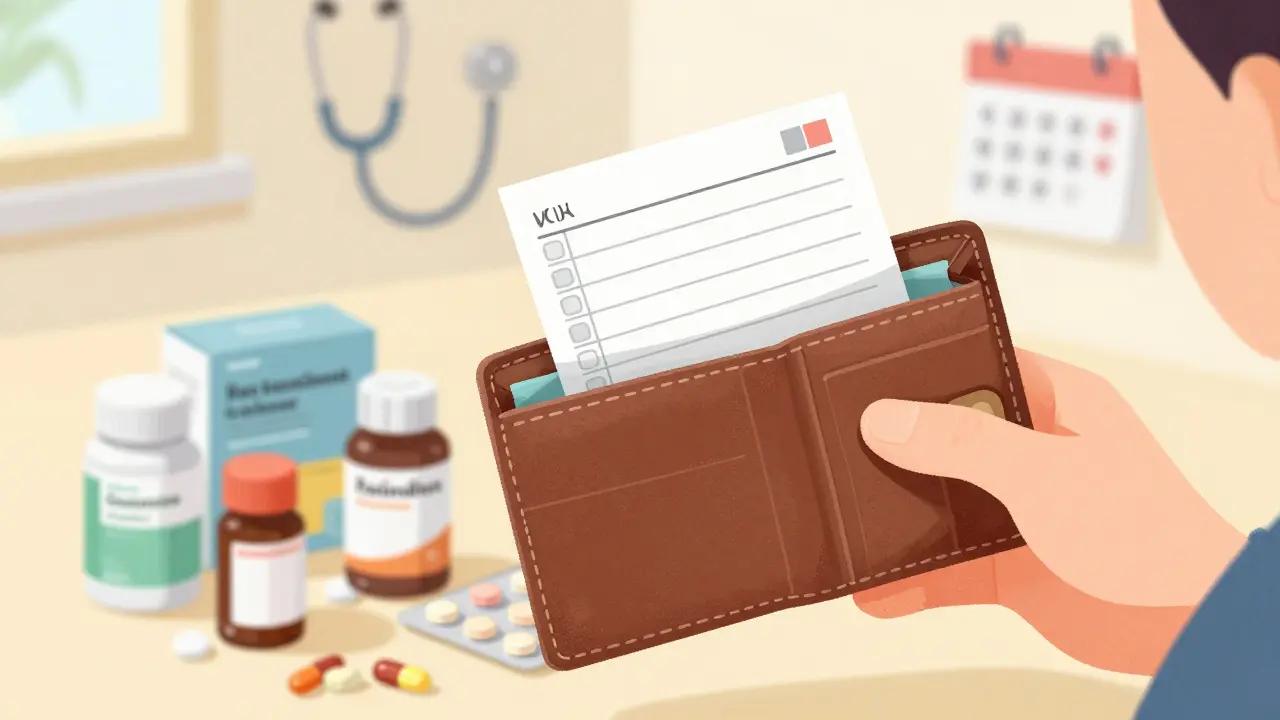

Medication List Checker
Check Your Medication List
This tool helps you verify if your personal medication list includes all critical elements. According to CDC data, 30% of adverse drug reactions occur because OTC medications and supplements are missing from lists.
Example: Lisinopril 10 mg / Zestril 10 mg
Example: 5 mg (half of 10 mg tablet)
Example: Take in the morning with breakfast
Example: For high blood pressure
Example: Ibuprofen, acetaminophen
Example: Fish oil, vitamin D
Example: St. John's wort, echinacea
Example: Blue round pill with "A" on one side
Example: Rash after penicillin
Example: Spouse - 555-1234
Check Results
Check your list by selecting items above, then click "Check My List" to see what's missing.
Every year, over 1.5 million people in the U.S. end up in the emergency room because of medication mistakes. Many of these cases aren’t caused by doctors or pharmacists - they’re caused by incomplete or outdated information you hold. A simple, accurate personal medication list can stop that before it starts. It’s not just for older adults or people on dozens of pills. If you take anything - prescription, over-the-counter, vitamins, or herbal supplements - you need this list. And you need it updated, current, and always with you.
Why Your Medication List Matters More Than You Think
Think about the last time you saw a doctor, went to the ER, or even visited a dentist. Did they ask what you’re taking? Probably. But did you give them the full picture? Chances are, you forgot something. Maybe it was that daily ibuprofen for your knee. Or the turmeric supplement you started last month. Or the sleep aid you only use once a week. These aren’t ‘just supplements.’ They interact with prescription drugs. They can make blood thinners stronger. They can turn antidepressants into dangerous combinations. The CDC says 30% of unexpected adverse drug reactions happen because OTC meds and supplements were left off the list. The Agency for Healthcare Research and Quality found that half of all medication errors during hospital transfers happen because the patient’s list didn’t match what the provider thought they were taking. That’s not a rare mistake. That’s routine. And it’s preventable.What to Put on Your Medication List
A good list isn’t just a scribble on a napkin. It’s a clear, complete record. Here’s exactly what to include - no more, no less.- Full name of each medicine - both brand and generic. Don’t write ‘the blue pill.’ Write ‘Lisinopril 10 mg’ and ‘Zestril 10 mg’ if you take both. Some people get confused when they switch brands.
- Dosage and strength - 5 mg, 10 mg, 25 mg? Write it. Don’t assume ‘one pill’ is enough. If you take half a pill, write ‘5 mg (half of 10 mg tablet).’
- How often and when to take it - ‘Take once daily’ isn’t enough. Write ‘Take in the morning with breakfast’ or ‘Take at bedtime.’ If you take it every 8 hours, write that. Timing matters for effectiveness and safety.
- Why you’re taking it - ‘For high blood pressure,’ ‘For arthritis pain,’ ‘For anxiety.’ This helps doctors spot duplicates or unnecessary meds.
- Over-the-counter drugs - Ibuprofen, acetaminophen, antacids, cold medicine. Yes, even the ones you buy without a prescription. These are the most commonly missed items.
- Vitamins and supplements - Fish oil, vitamin D, magnesium, melatonin, ginkgo biloba. These aren’t harmless. They can interfere with blood thinners, blood pressure meds, and even chemotherapy.
- Herbal products - St. John’s wort, echinacea, garlic pills. These are powerful. They can cause serious reactions.
- Physical description of pills - Color, shape, markings. If you’re ever unsure which pill is which, a quick photo or description helps. Many people mix up similar-looking pills - especially if they take multiple meds.
- Allergies and bad reactions - Not just ‘allergic to penicillin.’ Write ‘rash after penicillin,’ ‘swelling after sulfa,’ ‘severe nausea from codeine.’ Details save lives.
- Emergency contacts - Name and phone number of someone who knows your meds. A spouse, adult child, or close friend. If you’re unconscious, this person can tell the ER what you’re really taking.
How to Keep It Updated - Because Lists Get Out of Date Fast
A medication list that’s six months old is worse than no list at all. It gives false confidence. The AHRQ found that 35% of medication errors come from outdated lists. Here’s how to keep yours current:- Update immediately after any change - Your doctor adds a new drug? Change the list. You stop a pill? Cross it out. You switch from 10 mg to 20 mg? Update it. Don’t wait.
- Review it monthly - Set a reminder on your phone. Every first of the month, sit down with your pills and your list. Are they still the same? Are any expired? Did you stop taking one without telling your doctor?
- Use the same pharmacy - CVS, Walgreens, Boots - pick one. They track everything. If you use multiple pharmacies, they can’t see what you’re taking elsewhere. Patients who use one pharmacy have 37% fewer drug interactions.
- Write notes on pill bottles - Stick a small label on the bottle: ‘For high blood pressure.’ ‘Take with food.’ This prevents double prescriptions and helps you remember why you’re taking it.
How to Store and Carry Your List
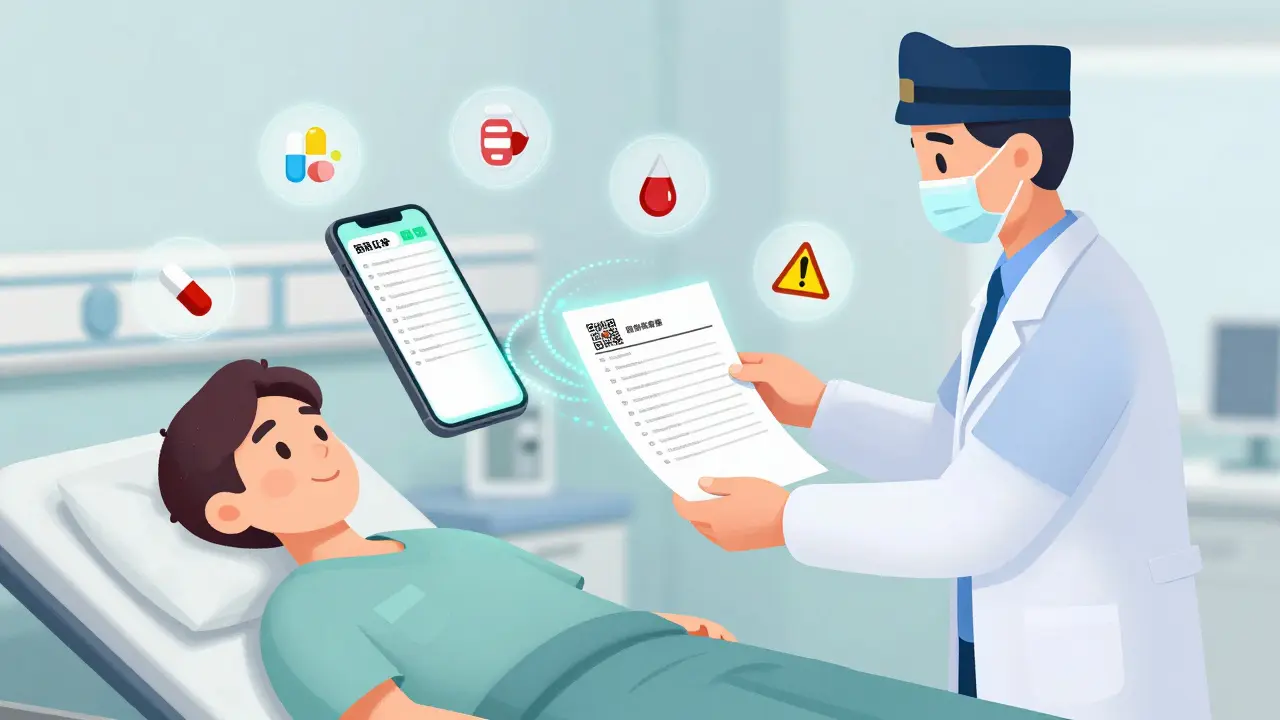
A list that’s locked in a drawer is useless in an emergency. You need it accessible.- Keep a printed copy in your wallet or purse - Fold it small. Put it in a clear plastic sleeve. Make sure it’s easy to pull out.
- Save a digital copy - Use your phone’s Notes app, a dedicated app like MyMedSchedule, or even a Google Doc. Make sure someone else has access to it - your partner, adult child, caregiver. Set up sharing so they can open it if you can’t.
- Use a QR code - The CDC released a new template in 2024 with a QR code that links to a live drug interaction checker. You can generate one for free using tools like QR Code Generator. Scan it at the hospital and they get your full list instantly.
- Share it with every provider - Not just your GP. Dentists, physical therapists, chiropractors, even optometrists. Some eye drops interact with heart meds. Some painkillers affect your blood pressure. Everyone who treats you needs to know.
Technology Can Help - But Don’t Rely on It Alone
There are apps, scanners, and smart pillboxes now. The FDA’s MyMedSchedule app can recognize pills from photos with 92% accuracy. The University of Michigan’s system lets you photograph labels and auto-populates your list. These are great tools. But they’re not magic. Only 38% of people use the electronic health record downloads they’re legally entitled to under the 21st Century Cures Act. And apps can fail. Phones die. Wi-Fi drops. Your list needs a backup - paper or digital, but always ready.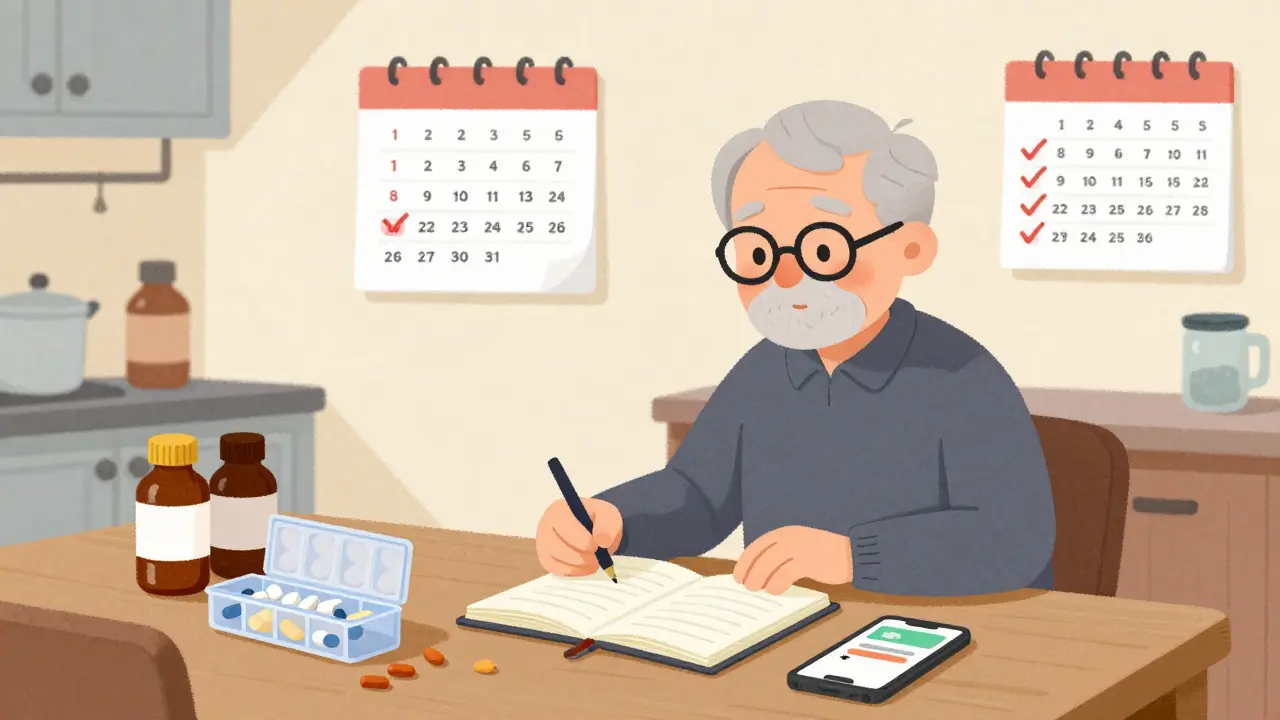
Who Benefits the Most?
Adults over 65 are the most likely to have a list - 74% do, according to AARP. That’s because they’re on more meds. On average, adults aged 40-79 take 4.8 prescription drugs and 3 or more supplements. That’s a lot of chances for conflict. But it’s not just seniors. People with chronic conditions - diabetes, heart disease, depression, asthma - are at high risk. If you take five or more medications weekly, you’re in the 40% of older adults the CDC says are at highest risk for dangerous interactions.What Happens When You Don’t Have One?
Imagine you fall and can’t speak. The ER team sees you’re on blood pressure meds - but they don’t know you’re also on a blood thinner and a daily aspirin. They give you a drug that thickens your blood. You bleed internally. That’s not hypothetical. That’s happened. Or you’re admitted for pneumonia. The doctor prescribes a new antibiotic. They don’t know you’re taking St. John’s wort - which makes antibiotics useless. Your infection gets worse. You stay in the hospital longer. You pay more. You suffer more. These aren’t rare stories. They’re common. And they’re avoidable.Start Today - Here’s Your Simple Action Plan
You don’t need to be perfect. You just need to start.- Grab every pill bottle, supplement container, and OTC box in your home.
- Write down every single thing you take - name, dose, frequency, reason.
- Include allergies and past bad reactions.
- Add an emergency contact.
- Print one copy. Put it in your wallet.
- Save a digital copy on your phone. Share it with one person.
- Set a monthly reminder to update it.
Medication safety isn’t about trusting your memory. It’s about having a backup. And that backup? It’s yours to make.
Do I need to list vitamins and supplements on my medication list?
Yes. Vitamins, minerals, herbal products, and supplements are part of your total medication load. Many interact with prescription drugs - like St. John’s wort reducing the effect of birth control or blood thinners, or garlic pills increasing bleeding risk during surgery. The CDC and FDA both list supplements as critical to include. About 30% of unexpected drug reactions happen because these were left off the list.
Should I include medications I only take occasionally?
Absolutely. Even if you take a pill once a week - like a sleep aid, pain reliever, or antacid - it still affects your body. If you’re admitted to the hospital and they don’t know you take ibuprofen every Friday, they might give you another NSAID. That could cause stomach bleeding or kidney damage. Always include occasional meds with their frequency noted.
Can I use a smartphone app instead of a paper list?
Yes, and many people find apps easier to update. Tools like MyMedSchedule or GoodRx’s tracker let you scan barcodes, set reminders, and share lists digitally. But never rely on the app alone. Always carry a printed copy. Phones can die, get lost, or have software glitches. A paper list works when nothing else does.
How often should I update my medication list?
Update it immediately after any change - new prescription, stopped medication, dosage change. Then review it every month. The Agency for Healthcare Research and Quality found that 35% of errors come from outdated lists. If you wait until your next doctor’s visit, you’re already at risk.
What if I don’t know the generic name of my medicine?
Look at the bottle. The generic name is always listed. If it’s not clear, ask your pharmacist - they can tell you in seconds. Or take a photo of the pill and use the FDA’s MyMedSchedule app, which can identify medications by image with 92% accuracy. Don’t guess. Write down exactly what’s on the label.
Do I need to tell my dentist about my medication list?
Yes. Many dental procedures involve anesthesia, painkillers, or antibiotics that can interact with your regular meds. Blood thinners can increase bleeding during extractions. Some heart meds react badly with epinephrine in local anesthetics. Dentists need your full list to keep you safe - just like your doctor does.


Dusty Weeks
1 Jan 2026 at 13:26I literally just made this list last night 🙃 my grandma died because they didn't know she was taking fish oil with her blood thinner... don't be her. update yours now.