

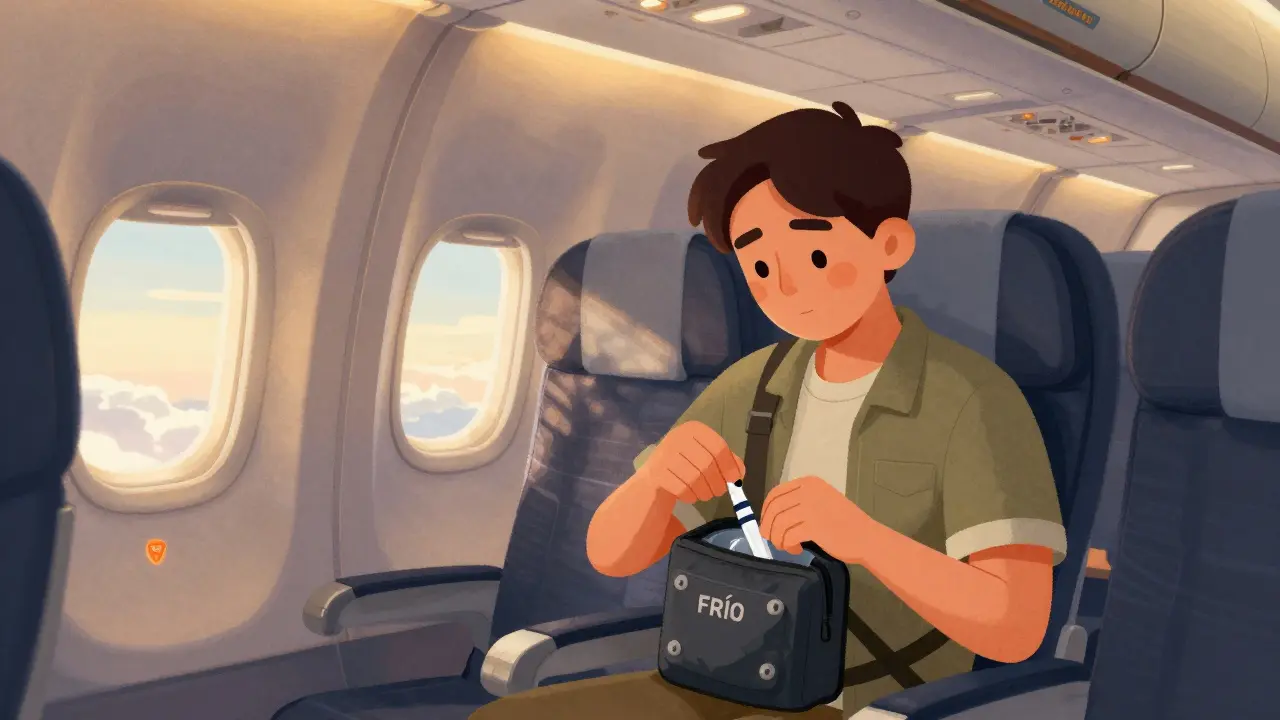

When you're flying across time zones with insulin or biologics like Ozempic, your medication isn't just a vial or pen-it's your lifeline. One wrong move, like leaving it in an overhead bin near a window, and you could be risking your health without even knowing it. Temperatures inside an airplane aren't what you think. While the cabin might feel comfortable, the walls can hit 95°F (35°C) on a sunny day, and the cargo hold can plunge to -40°F (-40°C). Insulin doesn't care about your seat number. It only cares about temperature. If it gets too hot or freezes, it breaks down. And once it's damaged, no amount of checking your blood sugar will fix it.
Why Temperature Matters More Than You Think
Insulin is a protein. Like milk left out on the counter, it spoils when exposed to extreme heat or cold. The FDA says unopened insulin must stay between 36°F and 46°F (2°C-8°C). Once you start using it, it can handle room temperature (59°F-86°F or 15°C-30°C) for up to 28 days. But that’s not a suggestion-it’s a hard limit. Some types, like Insulin Degludec, last longer-up to 56 days at room temperature-but most don’t. Biologics like GLP-1 agonists (Ozempic, Wegovy, Saxenda) are even more sensitive. They need to stay cold until first use, and once opened, they only last 56 days at room temperature.
Here’s what happens when things go wrong: a 2021 study in the Journal of Diabetes Science and Technology documented a traveler whose insulin was exposed to 95°F for 12 hours. Their blood sugar spiked dangerously high. They ended up in the ER. No one saw it coming. The insulin looked fine. It was clear. No clumps. But it had lost potency. That’s the scary part-it doesn’t always look broken.
What Happens in the Airplane?
Most people assume the cabin is cool and stable. It’s not. Boeing 787s, for example, keep cabin air between 65°F and 75°F (18°C-24°C). That sounds safe. But near windows? That’s a different story. Sunlight heats the outer skin of the plane. The pocket behind your seat, where you might stash your bag? That can hit 90°F (32°C) on a long flight. Overhead bins? Even worse. A 2023 survey by the American Association of Clinical Endocrinologists found that 41% of travelers who stored insulin in overhead bins experienced temperature excursions above 86°F.
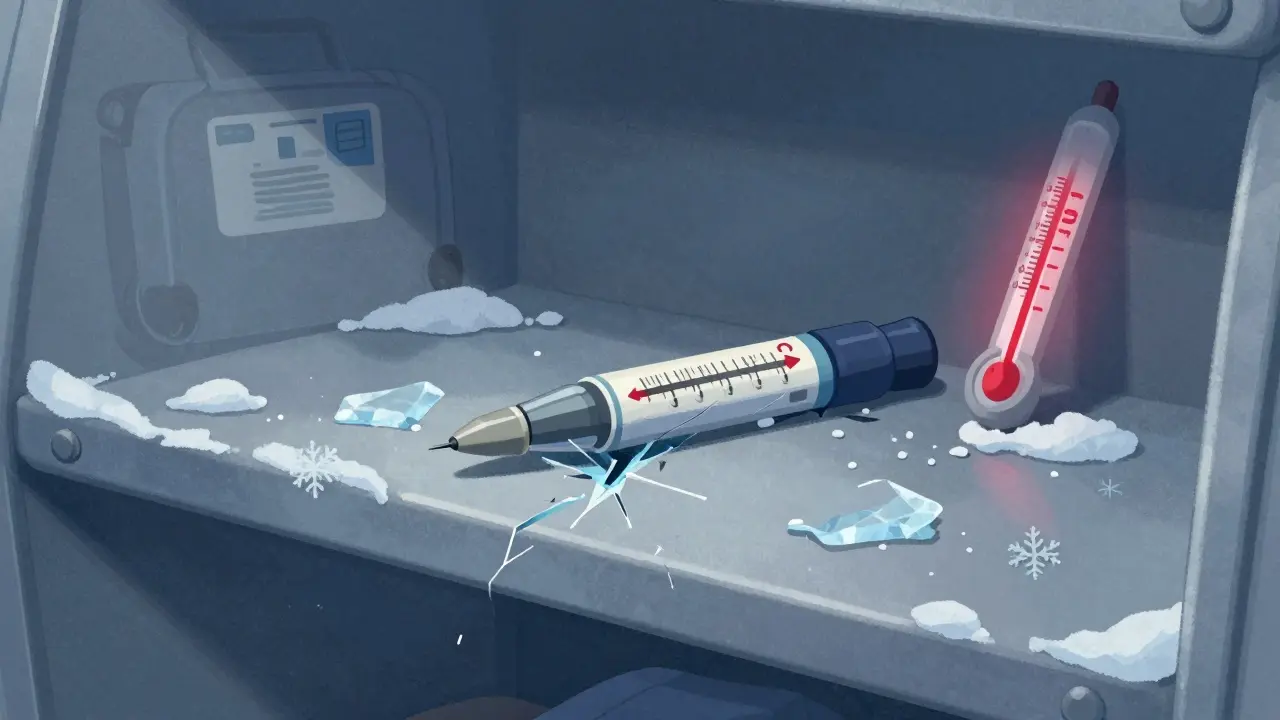
And don’t forget the hold. If you check your bag, your insulin could be sitting in a compartment that drops to -40°F. That’s not just cold-it’s destructive. Freezing insulin ruins its structure. It won’t work anymore. And you won’t know until your blood sugar skyrockets hours later.
The Best Ways to Keep It Safe
You have options. Not all are equal.
- FRÍO Wallet: This is the most popular choice among travelers. It’s a water-activated cooling pouch. You soak it in water for 15 minutes, and it keeps insulin between 59°F and 72°F (15°C-22°C) for up to 45 hours-even in 104°F heat. It’s lightweight, fits in a purse or carry-on, and doesn’t need ice. Diabetes UK tested it in 2022 and found it reliable. Price: around $35.
- BreezyPack Pro: Uses phase-change material to maintain 50°F-72°F for 72 hours. Independent testing by ConsumerLab.com in 2023 showed 98.7% temperature stability. It’s pricier ($50), but if you’re on a 20-hour flight with a layover, it’s worth it.
- Traditional cooler with ice packs: Risky. If your insulin touches the ice pack directly, it can freeze. A 2022 University of Colorado study found 23% of samples froze when placed within 1cm of standard ice packs. If you use this method, wrap the insulin in a towel or put it in a small ziplock bag with air between it and the ice.
- Evakool Thermostatic Case: A high-end option. Maintains 39°F-46°F for 120 hours. But it’s heavy (2.2 lbs), expensive ($130), and needs pre-cooling. Overkill for most travelers.
- TempMed Smart Case: New in 2023. Bluetooth-enabled. Alerts your phone if temps go above 82°F. Clinical trials showed 99.2% efficacy preservation. Ideal if you’re tech-savvy and want real-time peace of mind.
Forget the airplane’s fridge. Airlines don’t offer refrigeration for passengers. Don’t ask. Don’t expect it.
Where to Store It During the Flight
Location is everything.
- Best spot: Your seat-back pocket. Boeing data shows it stays between 68°F and 75°F (20°C-24°C)-perfect for in-use insulin. Keep it close. You can check it every few hours.
- Second best: Under the seat in front of you. Use a small insulated bag. Avoid putting it in the overhead bin entirely.
- Avoid: Anywhere near windows, vents, or the front of the plane. These spots get hottest. Also avoid the bathroom-humidity and temperature swings are unpredictable.
One traveler on Reddit (r/diabetes, August 2023) reported that after a 16-hour flight, their insulin looked cloudy. They’d stored it in the overhead bin. They threw it out and used a backup. No complications. That’s the kind of discipline you need.
What About Biologics Like Ozempic?
They’re not the same as insulin. Ozempic, Wegovy, and similar drugs must stay refrigerated until first use. Once opened, they can sit at room temperature for 56 days. But if they get too hot before you open them? Gone. That means if you’re flying with a new, unopened pen, keep it cold the whole time. Use a FRÍO or BreezyPack. Don’t assume it’s okay because you’re not using it yet.
Also, don’t mix insulin and biologics in the same cooler unless you’re sure the temperature stays between 36°F and 46°F. Too cold? Risk of freezing. Too warm? Both degrade.
Security Checkpoints: Don’t Get Stopped
TSA allows insulin and biologics through security. But you need to be ready.
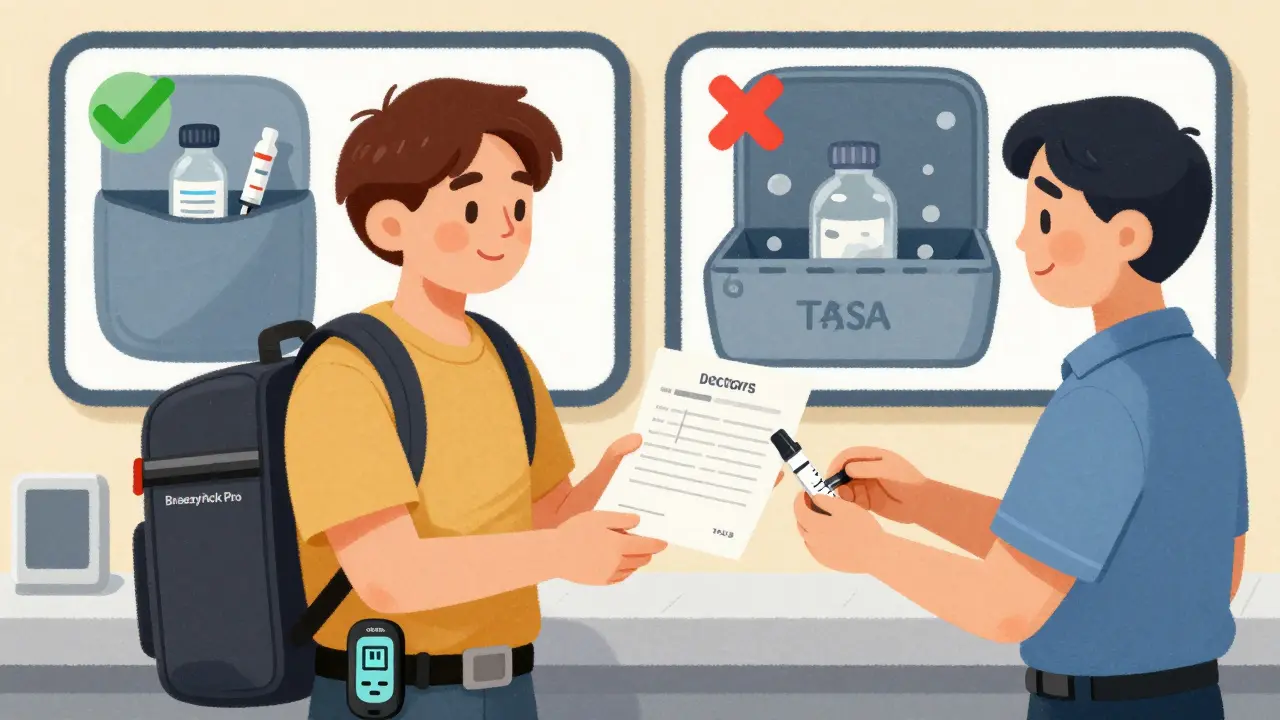
- Carry a doctor’s letter dated within the last 6 months. It should say you have diabetes or a condition requiring biologics, list your medications, and confirm they’re for personal use.
- Keep original pharmacy labels on all vials and pens. These are your proof. TSA accepts them 98% of the time.
- Have digital copies on your phone. If your physical copy gets lost, you’re covered.
- Don’t pack ice packs over 3.4 ounces (100ml) unless they’re frozen solid. TSA allows medically necessary liquids in excess, but you must declare them. Declare your cooling wallet too.
- Don’t try to hide it. If you do, you’ll get pulled aside. Be calm. Say, “This is medical equipment for insulin.” Most agents know the rules now.
Over 12,000 insulin-related incidents were reported to TSA in 2022. Most were delays caused by poor documentation-not the medication itself. Be prepared. You’ll breeze through.
Time Zones and Dosing Changes
Long flights aren’t just about storage-they’re about timing.
- Eastbound flights (losing time): If you cross more than 6 time zones, your long-acting insulin might last longer than expected. The American Association of Clinical Endocrinologists recommends reducing your dose by 20% for the first day or two.
- Westbound flights (gaining time): You might need to take extra doses. Increase your long-acting insulin by 15% if you’re adding hours to your day.
- For rapid-acting insulin, stick to your usual schedule based on meals. Don’t try to match local time until you’ve adjusted.
Use your CGM. If you have one, keep it on. It’ll show you if your insulin is working. If your numbers start climbing unexpectedly, suspect degraded insulin.
What to Do If Something Goes Wrong
Even with the best plan, things can fail.
- If your insulin looks cloudy, clumpy, or has particles-throw it out.
- If you suspect it was exposed to heat above 86°F for more than 4 hours-discard it. Dr. Robert Gabbay of the ADA says this clearly: “It’s compromised.”
- If you’re in a foreign country and run out, go to a pharmacy. Bring your prescription. Most countries will fill it if you have documentation.
- Always carry at least 200% of your expected dose. CDC recommends this. Delays happen. Flights get canceled. You need backup.
Final Checklist Before You Fly
- ☑️ Insulin and biologics stored in a cooling wallet (FRÍO, BreezyPack, or similar)
- ☑️ No direct contact with ice or cold packs
- ☑️ Doctor’s letter dated within 6 months
- ☑️ Original pharmacy labels on all containers
- ☑️ Digital copies of prescriptions on phone
- ☑️ At least 2x your total dose for the trip
- ☑️ Backup insulin and syringes/pens
- ☑️ CGM batteries charged
- ☑️ Cooling device pre-activated (if water-based)
- ☑️ Stored in seat-back pocket, not overhead bin
There’s no magic trick. Just preparation. Insulin doesn’t care if you’re on vacation, visiting family, or going to a business meeting. It only cares if you keep it safe. Get it right, and you’ll land with your health intact. Get it wrong, and you might end up in a hospital halfway across the world.
Can I put insulin in checked luggage?
No. Checked luggage goes into the cargo hold, where temperatures can drop below freezing or rise dangerously high. Always carry insulin and biologics in your carry-on. The FAA and CDC both require this. Even if your bag is labeled "medical," airlines won’t guarantee temperature control in the hold.
How long can insulin last at room temperature during travel?
Most insulins are stable for up to 28 days at room temperature (59°F-86°F or 15°C-30°C). Insulin Degludec lasts up to 56 days. Biologics like Ozempic can stay at room temperature for 56 days after opening. But these are maximums. If the temperature exceeds 86°F for more than 4 hours, the insulin may degrade-even if it looks normal. Always err on the side of caution and replace it if you’re unsure.
Do I need to declare insulin at airport security?
You don’t need to declare it like a liquid, but you should inform the TSA agent that you’re carrying medical supplies. Show your doctor’s letter and original labels. If you’re using a cooling wallet, say it’s for medical use. TSA allows medically necessary items, but being upfront prevents delays. In 2022, 23% of insulin-related incidents involved confiscation of ice packs due to poor communication.
Can I use a regular cooler bag from the grocery store?
You can, but it’s risky. Grocery coolers aren’t designed for medical use. They don’t maintain consistent temperatures, and ice packs can freeze insulin if it touches them directly. A 2022 study found 23% of samples froze in standard coolers. Use a purpose-built medical cooling device like FRÍO or BreezyPack instead. They’re designed to avoid freezing while keeping insulin cool.
What if my flight is delayed and my insulin runs out?
Always carry at least 200% of your expected dose. If you’re delayed, use your backup. If you run out completely, go to a local pharmacy. Bring your prescription, doctor’s letter, and original packaging. Most countries will fill it. In the U.S., pharmacies are required to dispense insulin without a prescription in emergencies under the 2022 Insulin Access Act. Outside the U.S., call your embassy or use the International Diabetes Federation’s emergency network.





Michael Burgess
2 Jan 2026 at 13:57Just got back from Tokyo and used my BreezyPack Pro-no issues. Seriously, if you're flying long-haul, don't gamble with your insulin. I saw a guy in security trying to sneak ice packs in a grocery cooler. TSA agent just sighed and said, 'Sir, that's not a cooler, that's a death trap.' 😅