


Medication Guide Rights Simulator
Select a Scenario:
Choose a situation you might encounter at the pharmacy counter.
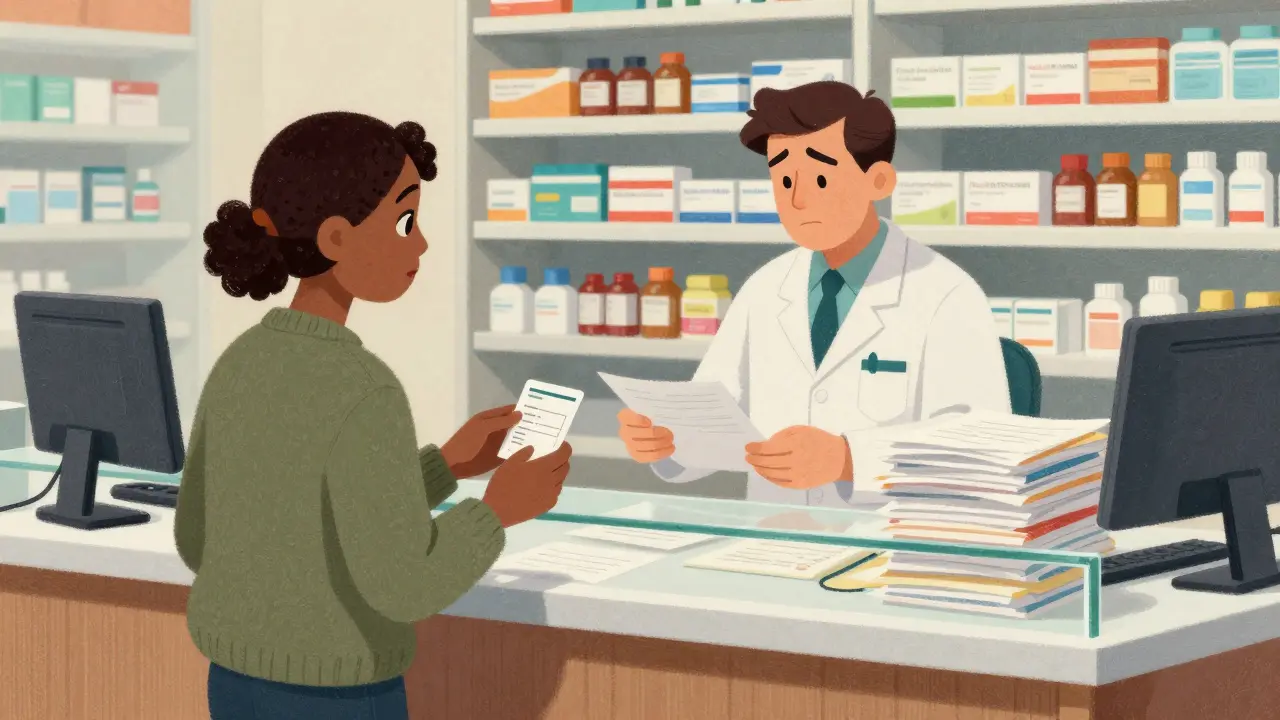
Imagine picking up a new prescription for a serious condition. You pay the pharmacist, grab your bag, and walk out. Did you just miss critical safety information that could have prevented a dangerous side effect? For many Americans, this is exactly what happens. The U.S. Food and Drug Administration (FDA) requires specific drugs to come with a printed document called a Medication Guide. These are not optional brochures or marketing flyers. They are legally mandated documents designed to warn you about serious risks. You have the right to receive this guide every time you fill a qualifying prescription. But here is the catch: pharmacies often forget to hand them over, or they hide them in a pile of papers. Worse, if you prefer digital copies, you might be forced to take paper ones because the pharmacist doesn't know you can opt out. This article breaks down exactly which drugs require these guides, your legal rights to request them, and how to handle the transition to newer digital formats.
What Is a Medication Guide?
A Medication Guide is a patient information document required by federal law for certain prescription drugs. It is distinct from the standard package insert (which doctors read) and the usual pharmacy leaflet. The FDA mandates these guides only when a drug poses a "serious and significant public health concern." As of late 2023, approximately 150 prescription drugs fall into this category. This represents about 5% of all prescription medications on the market. If your medication is on this list, the manufacturer must provide the guide, and the pharmacy must give it to you. Common examples include blood thinners like warfarin, certain antidepressants, and powerful antibiotics like fluoroquinolones. The guide must contain specific warnings about adverse reactions, interactions with other drugs, and crucial instructions for use. The language must be non-technical and understandable. However, studies show that many guides still read at an 11th-grade level, which can be confusing for average patients. Despite this, the content is scientifically accurate and approved directly by the FDA.
Your Legal Right to Receive a Medication Guide
Under 21 C.F.R. Part 208, federal regulations governing medication guides, you have a clear legal right to receive this document. The regulation states that the guide must be dispensed to the patient (or their agent) in paper form when the product is dispensed. This means the pharmacist cannot wait for you to ask for it. They must proactively provide it. Here is what you need to know about your rights:
- Mandatory Distribution: If your drug requires a guide, the pharmacy must give it to you. They cannot skip it due to busy schedules or lack of stock.
- Timing: The guide must be provided "at the time of dispensing." This usually means handing it to you as you pick up your prescription, not mailing it later.
- Content Integrity: The guide must include the verbatim statement: "This Medication Guide has been approved by the U.S. Food and Drug Administration" at the bottom. If it lacks this, it may not be compliant.

Can You Request Electronic Delivery Instead?
Do you hate carrying around stacks of paper? You are not alone. Many patients prefer to store medical information digitally. Good news: the rules changed recently. In May 2023, the FDA issued a clarification (Federal Register Notice 88 FR 34898) allowing patients to request electronic delivery of Medication Guides in lieu of printed forms. Pharmacists cannot force you to accept a paper copy if you prefer an electronic version. You can request the guide via email, text message, or through a pharmacy app. However, there are conditions:
- You must explicitly request the electronic format.
- The pharmacy must have the capability to send it electronically.
- The electronic version must be identical in content to the paper version.
How to Ask for Your Medication Guide Effectively
Knowing your rights is one thing; exercising them is another. Pharmacists are often overwhelmed, dealing with high volumes of prescriptions and insurance issues. A confrontational approach rarely works. Instead, use clear, direct communication. Try saying this when you pick up your prescription:
"Hi, I know my medication requires a Medication Guide under FDA regulations. Could you please provide that with my prescription today?"If you prefer digital:
"I'd like to receive the Medication Guide electronically instead of on paper. Can you email it to me?"If the pharmacist hesitates, ask: "Is there a reason you aren't able to provide the FDA-required guide?" This prompts them to check their system or consult a supervisor. Most pharmacists want to comply but simply forget amidst the chaos. A gentle reminder often solves the problem immediately. Keep a record of which drugs require guides. You can find the full list on the FDA's website. Knowing ahead of time saves time at the counter and ensures you get the information you need without awkward delays.
Why Compliance Fails: The Pharmacy Perspective
Why do so many pharmacies fail to distribute these guides? It isn't always negligence. It's often systemic. A study published in the Journal of the American Pharmacists Association found that verifying and distributing a Medication Guide takes 15-20 seconds per prescription. During peak hours, this adds up quickly. Many community pharmacies lack automated systems to flag which prescriptions require guides. Chain pharmacies like CVS, Walgreens, and Rite Aid implemented electronic printing systems between 2015 and 2017, making distribution easier. Independent pharmacies, however, often rely on manual checks or outdated software. A 2022 audit showed community pharmacies averaged 2.7 compliance deficiencies per site, compared to 1.4 at chain pharmacies. Additionally, pharmacists report that 63% face inconsistent distribution due to overwhelming workloads and lack of clear tracking systems. If you notice your pharmacist struggling, consider asking during off-peak hours (early morning or mid-afternoon) when they have more time to focus on patient counseling and documentation.
The Future: Patient Medication Information (PMI)
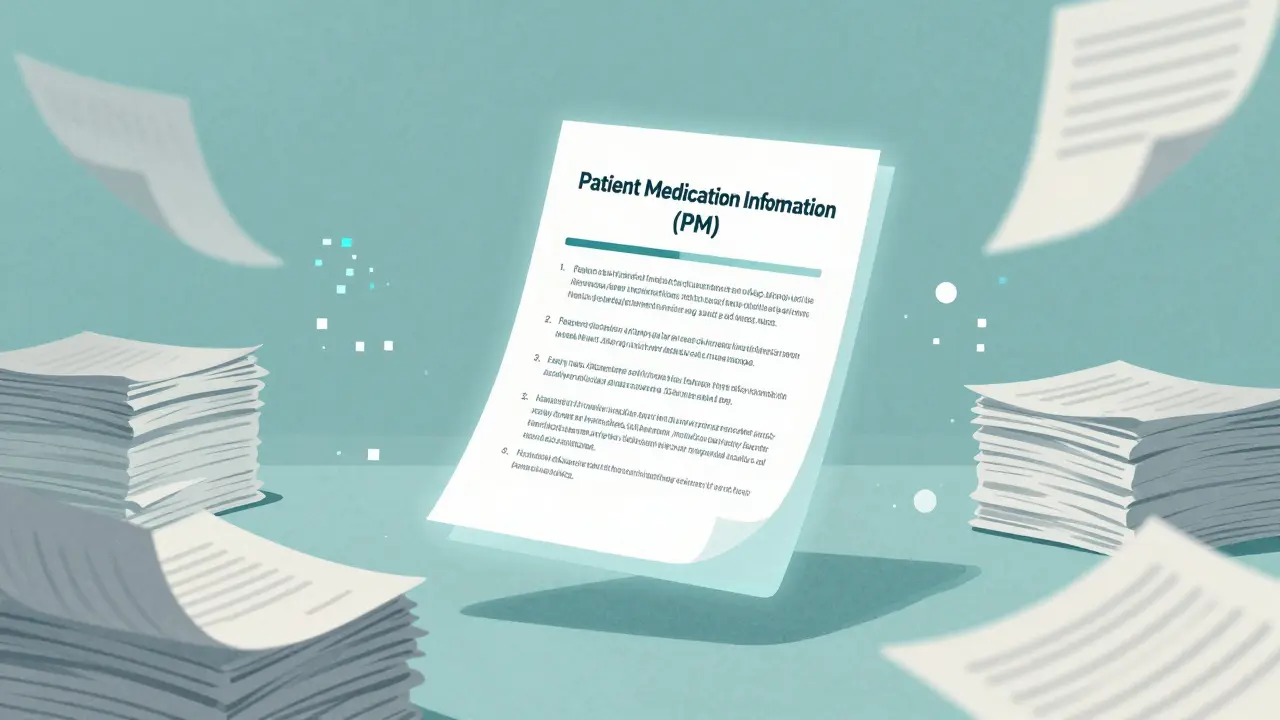
The current Medication Guide system is changing. The FDA announced plans to replace traditional guides with Patient Medication Information (PMI), a standardized single-page document replacing variable-format Medication Guides. This transition aims to address complaints about inconsistent formatting and low patient comprehension. Key changes include:
- Standardized Format: All PMIs will look similar, making it easier for patients to find critical information quickly.
- Improved Readability: Prototypes tested by the FDA showed a 37% improvement in patient comprehension compared to current guides.
- Digital-First Approach: PMI is designed to work seamlessly with electronic health records and pharmacy apps.
Which drugs require a Medication Guide?
Approximately 150 prescription drugs require Medication Guides. These typically include blood thinners (e.g., warfarin), certain antidepressants (e.g., SSRIs), powerful antibiotics (e.g., fluoroquinolones), and drugs with serious risks like birth defects or severe allergic reactions. You can check the FDA's official list online to see if your medication is included.
Can I refuse to take a paper Medication Guide?
Yes. Since May 2023, the FDA allows patients to request electronic delivery of Medication Guides instead of paper copies. You must explicitly ask for this option, and the pharmacy must be capable of sending it digitally (via email, text, or app). They cannot force you to accept paper if you prefer electronic.
What should I do if my pharmacy doesn't give me a Medication Guide?
Politely remind the pharmacist that FDA regulations require them to provide the guide at the time of dispensing. If they continue to refuse, you can file a complaint with the FDA or your state board of pharmacy. Keeping a record of the incident helps support your case.
Are Medication Guides the same as package inserts?
No. Package inserts are detailed scientific documents intended for healthcare professionals. Medication Guides are simplified, patient-friendly versions written in non-technical language. They focus on critical safety information that patients need to know for safe use.
When will the new Patient Medication Information (PMI) system start?
The FDA plans to fully transition to the PMI system by 2027. Until then, the current Medication Guide regulations remain in effect. The new system will feature standardized formatting and improved readability to help patients understand critical safety information better.



Write a comment