

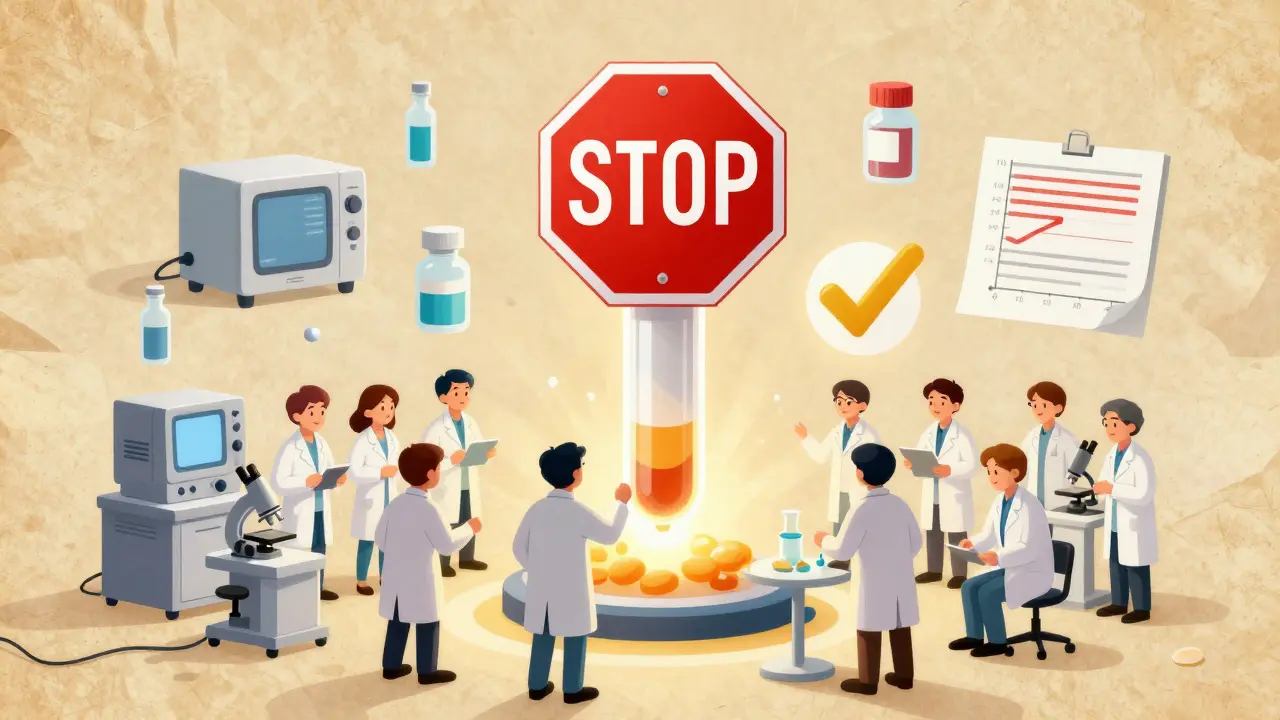

Every pill, injection, or vial that reaches a pharmacy shelf has passed through one final, non-negotiable gate: batch release testing. This isn’t just paperwork. It’s the last line of defense between a patient and a potentially dangerous medication. If a batch fails here, it never leaves the facility. No exceptions.
What Exactly Is Batch Release Testing?
Batch release testing is the full suite of lab tests and document reviews done on every single batch of a drug before it’s shipped out. Think of it like a final inspection on a car before it leaves the factory-except here, the stakes are human lives. Each batch, no matter how small or large, must be tested to prove it matches the exact formula approved by regulators. This isn’t optional. It’s required by law in the U.S. under 21 CFR 211.165, in Europe under EudraLex, and in nearly every country with a functioning drug supply. The goal? To confirm four things: identity (is it the right drug?), strength (does it have the right dose?), purity (are there no dangerous impurities?), and quality (is it stable and safe to use?).The Core Tests: What Gets Checked?
The exact tests depend on the drug type-whether it’s a simple tablet, a complex biologic, or a sterile injection-but every batch goes through a standard set of checks:- Identity testing: Uses techniques like HPLC or FTIR to confirm the active ingredient is what it claims to be. A single mix-up here could mean a patient gets the wrong medicine entirely.
- Assay/potency: Measures how much active ingredient is actually in the product. Acceptable range? Usually 90-110% of the labeled amount. Outside that, the batch fails.
- Impurity profiling: Looks for unwanted chemicals formed during manufacturing. ICH guidelines limit unknown impurities to 0.10% in new drugs. Even tiny amounts can cause serious side effects.
- Microbial limits: For non-sterile products, no more than 100 colony-forming units per gram. Sterile products? Must be completely free of microbes. One contaminated vial can cause sepsis.
- Endotoxin testing: Critical for injectables. Endotoxins from bacteria can trigger fever, shock, or death. Limits are strict-5.0 EU/kg/hr for spinal injections.
- Dissolution testing: Does the pill break down properly in the body? Generic drugs must match the brand-name version’s dissolution profile with an f2 similarity factor above 50.
- Particulate matter: For injections, particles larger than 10 microns can block blood vessels. Limits are 6,000 particles/mL for those ≥10μm and 600 for those ≥25μm.
- Visual inspection: Every single vial or syringe is checked by hand (or automated camera) for discoloration, particles, or leaks. No exceptions.
Stability and Documentation: The Hidden Rules
Testing doesn’t stop at release. Stability testing runs in parallel-samples are stored under heat and humidity (40°C/75% RH) for months to predict how the drug will hold up over time. This data supports the expiration date on the label. But here’s the catch: every single test result must be documented. Raw chromatograms, instrument printouts, analyst notes-all saved. By law, records must be kept for at least one year after the product expires. In the U.S., electronic batch records are now mandatory for companies with over $1 million in annual sales under the Drug Supply Chain Security Act. A missing signature, an unexplained deviation, or a corrupted file can delay a batch for weeks. In 2023, a major manufacturer released 12,000 vials of a monoclonal antibody with subpotent levels because their review process was sloppy. The result? A $9.2 million recall and an 18-month import ban.
Who Signs Off? The Qualified Person
In the European Union, no batch can be released without a Qualified Person (QP) signing off. This isn’t just any manager. A QP must have at least five years of pharmaceutical experience and specific GMP training. They’re legally responsible for ensuring every batch meets all standards. Europe is facing a 32% shortage of QPs, according to EMA’s 2024 report. That means bottlenecks. A single complex biologic batch can take 40-60 hours just to review the paperwork. In the U.S., there’s no formal QP title, but the quality unit must still certify each batch with two independent reviews.Where Things Go Wrong
Most batch failures happen in three areas:- Dissolution testing (32% of failures)
- Impurity profiles (28%)
- Microbial contamination (23%)
Costs, Trends, and the Future
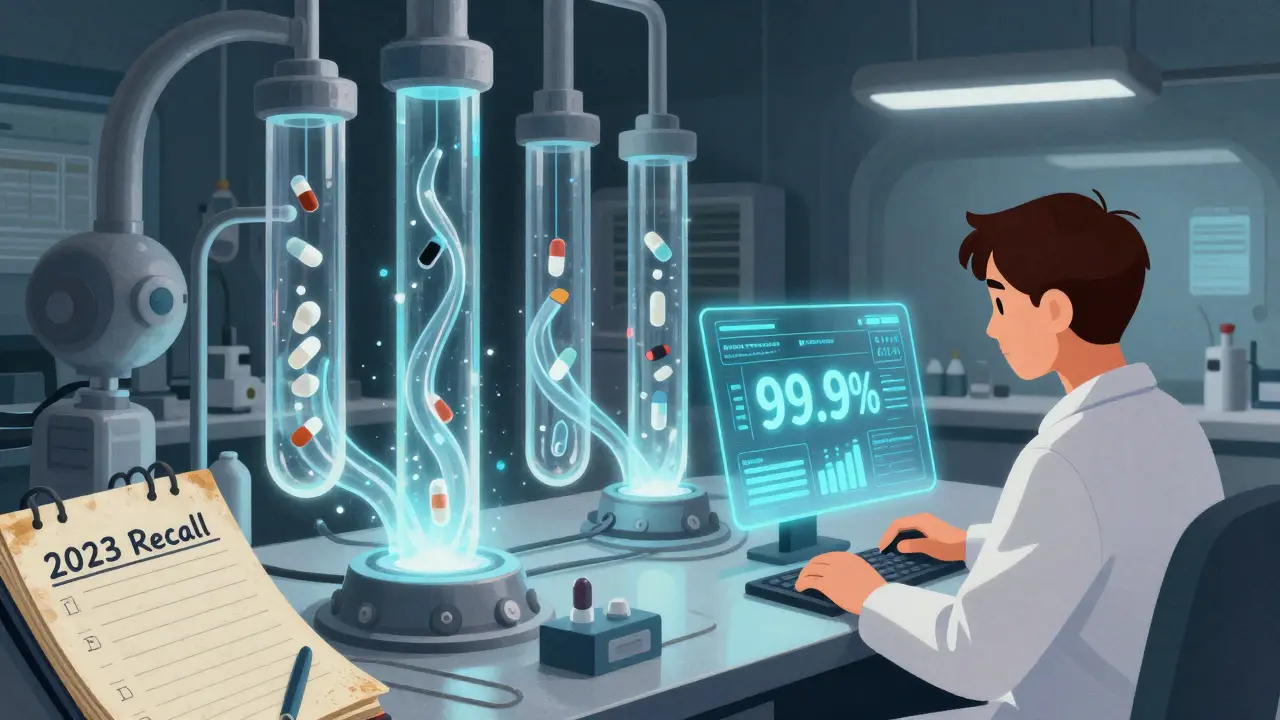
Batch release testing is a $2.8 billion industry growing at 6.7% per year. Why? Because drugs are getting more complex. Biologics-like cancer treatments and vaccines-require far more testing than simple pills. Testing a biologic can take 21-35 days. A generic tablet? 7-10 days. Costs are rising too. Since 2020, average testing expenses have jumped 22% due to stricter rules. China now requires batch release testing for all imported vaccines, adding 14-21 days to timelines. The future is moving toward real-time testing. The FDA’s 2025 pilot program lets 12 companies use process analytical technology (PAT) to monitor quality as the drug is made-no waiting for lab results. If the system detects a problem, it stops production immediately. AI is also creeping in. Companies using predictive analytics report 34% fewer batch failures. But regulatory approval for AI-driven releases is slow. The EMA found AI was 78% accurate-but the FDA demands 99.9% confidence before allowing it. That gap slows adoption.Why This Still Matters
Some say we don’t need to test every batch anymore. With better manufacturing, maybe we can test fewer. But regulators aren’t convinced. In a 2025 ISPE survey, 97% of industry experts agreed: some form of discrete batch verification will still be needed through 2040. Why? Because even the most automated system can fail. A sensor can glitch. A technician can misread a label. A supplier can send bad raw material. Batch release testing isn’t about perfection. It’s about layers of safety. One test catches a contamination. A second catches a potency error. A third catches a documentation gap. Together, they prevent recalls-each of which costs an average of $10.7 million, according to FDA 2023 data. And beyond money? It’s about trust. Patients need to know that when they take a pill, it’s safe. That’s not something you can outsource to algorithms alone.Is batch release testing required for all drugs?
Yes. Every batch of a marketed pharmaceutical product-whether it’s a generic tablet, a biologic injection, or an over-the-counter cream-must undergo batch release testing before distribution. This is mandated by regulatory agencies worldwide, including the FDA, EMA, and NMPA.
What happens if a batch fails release testing?
The batch is quarantined and cannot be shipped. The manufacturer must investigate why it failed-was it a contamination? A measurement error? A process deviation? Once the root cause is found and corrected, the batch may be reprocessed, retested, or destroyed. If the issue is systemic, the entire production line may be shut down for review.
Can AI replace human reviewers in batch release?
AI can assist by flagging anomalies in data, predicting failures, and speeding up documentation reviews. But no regulatory agency currently allows AI to fully replace human certification. The final sign-off still requires a qualified professional who can interpret context, investigate deviations, and accept legal responsibility.
Why does testing take so long for biologics?
Biologics are large, complex molecules made from living cells. Their structure is harder to characterize than small-molecule drugs. Tests for potency, purity, and stability require specialized techniques like cell-based assays, mass spectrometry, and advanced chromatography-all of which take longer to run and validate. Each batch is essentially unique, so every one must be individually confirmed.
What’s the difference between batch release testing and stability testing?
Batch release testing confirms a batch meets specifications at the time of release. Stability testing tracks how the product changes over time under different conditions (heat, humidity, light). Stability data helps set the expiration date, but it’s not used to approve a batch for shipment. Both are required, but they serve different purposes.
Are there any shortcuts for high-volume products?
The FDA allows reduced testing for facilities with proven, highly controlled processes-especially those using continuous manufacturing. But this isn’t a loophole. It requires years of data showing consistent quality. Even then, critical attributes like identity and sterility are still tested on every batch. No one skips the essentials.
How do regulatory differences between the U.S. and EU affect global drug supply?
The U.S. focuses on process control and data integrity, while the EU requires full testing of every batch and mandates a Qualified Person for release. This creates delays for companies trying to sell the same product in both markets. Many manufacturers now run parallel testing systems or submit separate batches to meet each region’s rules, increasing costs and complexity.



steve rumsford
7 Jan 2026 at 05:59Man, I used to work in pharma QA and let me tell you, batch release is where dreams go to die. You spend months building a process, then some junior analyst mislabels a vial and suddenly you're staring at a 3-week delay. No drama, no emojis, just pure, unadulterated stress.