


Green Tea INR Impact Calculator
Estimate your vitamin K intake from green tea and see potential impact on INR levels while taking warfarin.
Enter your tea type and daily amount to see potential impact.
If you're taking warfarin, you've probably heard to watch your diet. But what about green tea? It's healthy, calming, and widely loved - yet it can quietly mess with your blood thinning. You might be drinking one or two cups a day without a second thought. But if you're sipping more than that - especially matcha or large batches - your INR could drop without warning. And that’s not just a theory. Real people have ended up in the hospital because of it.
How Warfarin Works - And Why Vitamin K Matters
Warfarin, sold as Coumadin or Jantoven, stops your blood from clotting too easily. It does this by blocking vitamin K from helping your liver make clotting factors. Without enough vitamin K, those factors can’t do their job. That’s why doctors check your INR - a number that tells them how long your blood takes to clot. For most people on warfarin, the goal is between 2.0 and 3.5. Go below that, and you risk clots. Go above, and you risk bleeding.
Vitamin K is the key. Your body needs it to make those clotting proteins. So if you suddenly eat or drink a lot of vitamin K, warfarin can’t keep up. That’s where green tea comes in. It contains vitamin K - not as much as spinach or kale, but enough to matter if you’re drinking gallons a day.
Green Tea Isn’t Just One Thing - Preparation Changes Everything
Not all green tea is the same. The vitamin K content depends on how it’s made.
- Brewed green tea (hot water steeped leaves): Only about 0.03 mcg of vitamin K per 100 grams. That’s tiny. One cup (240 mL) has less than 0.1 mcg.
- Matcha (powdered whole leaves): You’re eating the whole leaf. That means 10 to 20 times more vitamin K than brewed tea. One teaspoon of matcha can have over 1 mcg of vitamin K - and people often drink two or three servings a day.
- Cold-brewed green tea: Lower vitamin K than hot-brewed. The cooler water pulls out less of the nutrient.
So if you’re drinking matcha daily - even just two cups - you’re not just having a trendy beverage. You’re adding a measurable amount of vitamin K to your system. And that can lower your INR.
The Real-World Cases - When Green Tea Changed INR
It’s not just theory. There are documented cases.
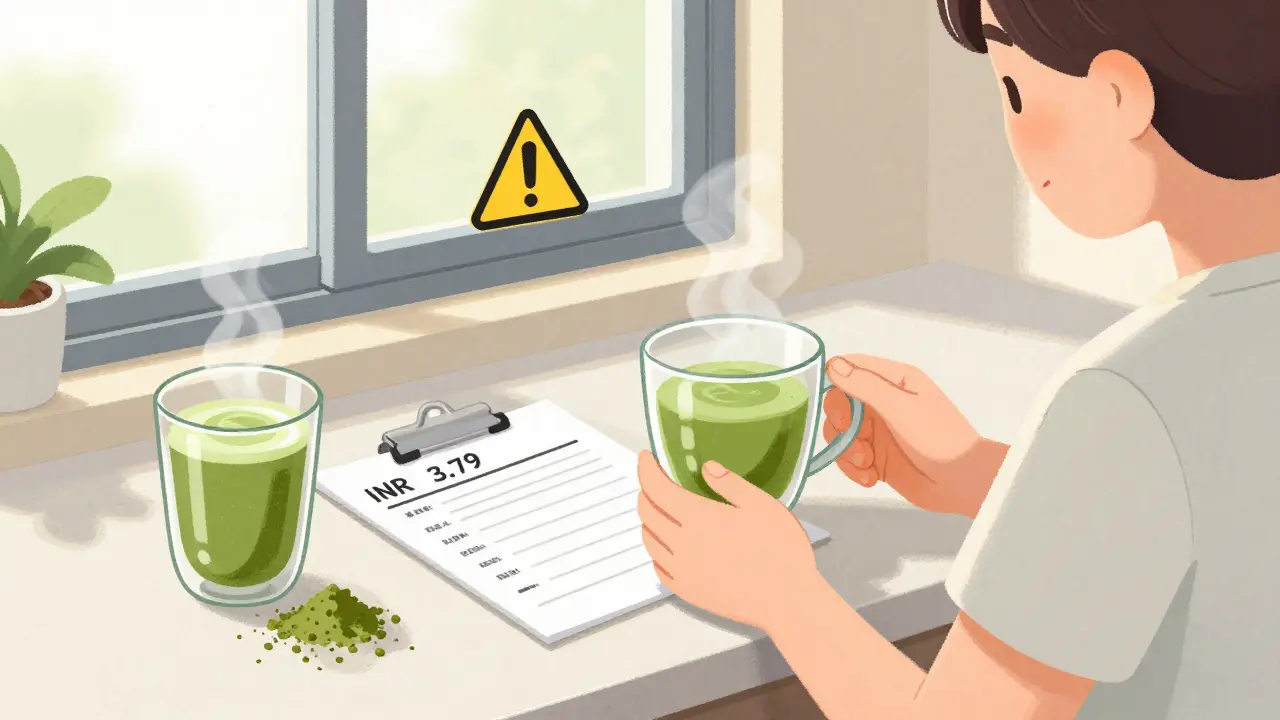
In 2006, a 44-year-old man was on 7.5 mg of warfarin daily. His INR was stable at 3.79. Then he started drinking half a gallon to a full gallon of green tea every day. Within weeks, his INR crashed to 1.37 - dangerously low. He had to cut out the tea and increase his warfarin dose to get back in range.
More recently, a Reddit user named ‘ClotFreeSince2018’ reported drinking four cups of matcha daily for two weeks. His INR dropped from 2.8 to 1.9. His doctor had to raise his warfarin dose by 15%. Another user on PatientsLikeMe, who drank over 500 mL of green tea daily, saw their INR fluctuate every time they changed their intake.
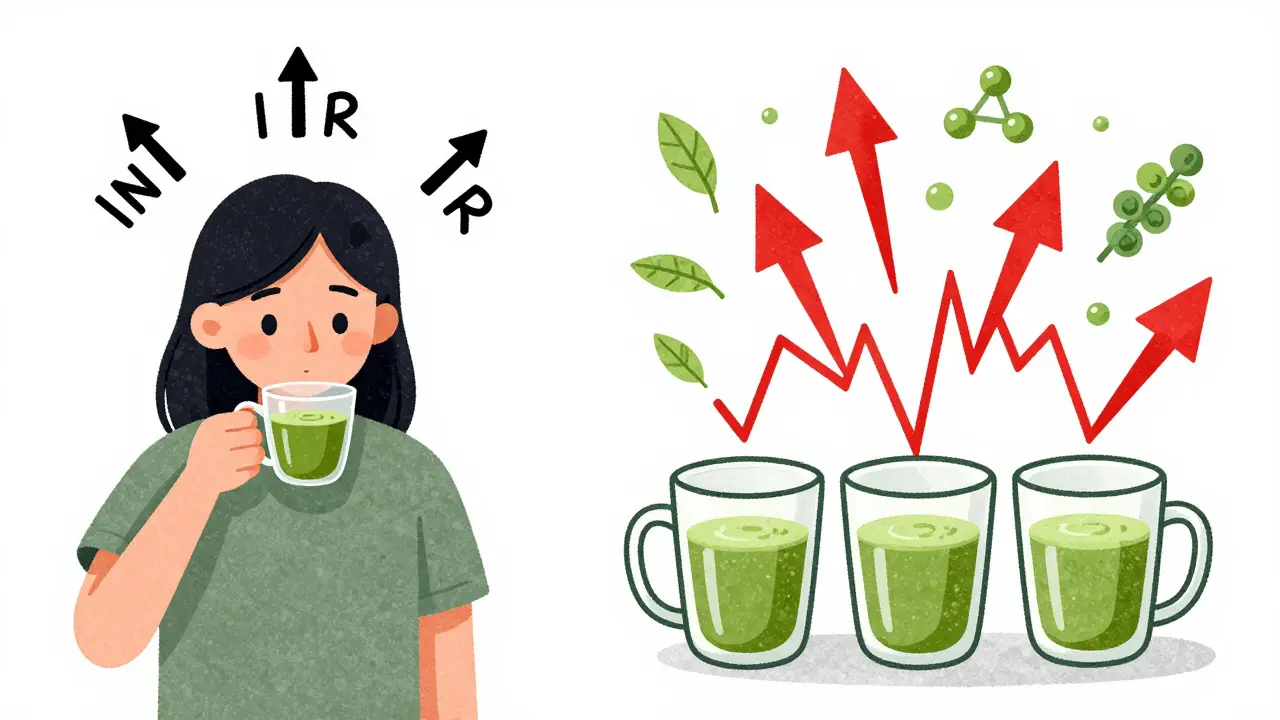
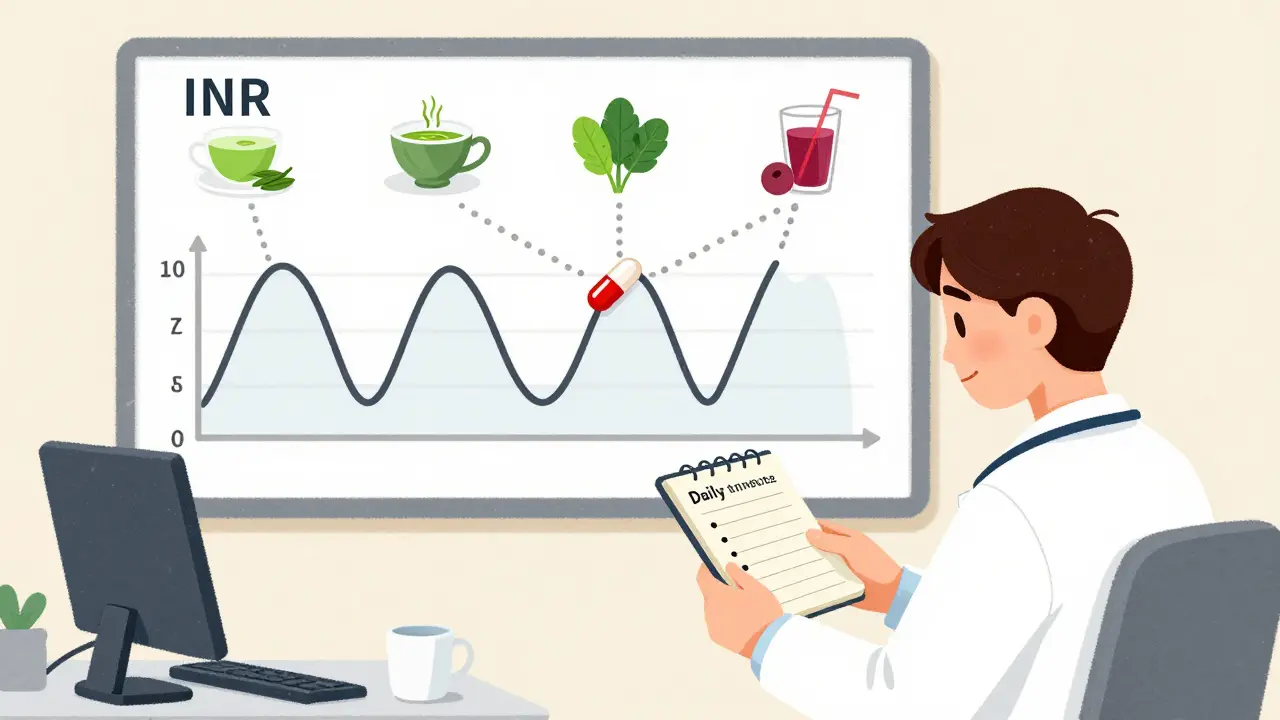
But here’s the twist: not everyone has this problem. Many people drink two cups of regular green tea every day for years with no change in INR. The difference? Consistency. If you drink one cup daily, your body adjusts. But if you go from zero to five cups, or switch from brewed to matcha, your INR can swing fast.
Green Tea vs. Other Foods - What’s the Real Risk?
People often panic about green tea because they hear it has vitamin K. But let’s put it in perspective:
- Spinach: 483 mcg per 100g
- Kale: 472 mcg per 100g
- Broccoli: 141 mcg per 100g
- Brewed green tea: 0.03 mcg per 100g
- Matcha: 0.3-0.6 mcg per gram (so 1 tsp = ~1-2 mcg)
So no, green tea isn’t as bad as spinach. But here’s the catch: you eat spinach once a day. You might drink green tea three or four times a day. And matcha? That’s concentrated. A single serving can have more vitamin K than a whole serving of broccoli.
Also, green tea isn’t just vitamin K. It has catechins - plant compounds that can actually thin blood further by stopping platelets from clumping. So you’ve got two forces at play: vitamin K making blood clot more, and catechins making it clot less. The net effect? It’s unpredictable. That’s why doctors don’t just say “avoid it.” They say: be consistent.
What Experts Say - And What You Should Do
The American Heart Association says you can safely drink up to three cups of green tea a day - as long as you don’t change your intake. The Mayo Clinic agrees: 1-3 cups daily is fine. But they warn: matcha is different.
Dr. John Smith at Mayo Clinic says: “We’ve seen INR drops in patients switching to matcha. Not everyone. But enough to require dose changes in about 15% of cases.”
The Anticoagulation Forum gives clear guidance:
- Less than 500 mL per day? No change needed - just keep it steady.
- 500-1,500 mL per day? Get your INR checked every two weeks.
- More than 1,500 mL per day? You need a warfarin dose increase. Talk to your doctor.
And if you suddenly stop drinking green tea after years of daily consumption? That can raise your INR. One woman stopped her daily black tea (similar to green tea in vitamin K content) and her INR jumped from 1.7 to 5.0 in a week. That’s a bleeding risk. So don’t quit cold turkey.
What About Other Herbal Teas?
Green tea isn’t the only one. Ginkgo, goji berry tea, and even chamomile can affect bleeding risk. Ginkgo stops platelets from sticking together - like aspirin. Goji berry has one documented case of major bleeding in a warfarin user drinking 3-4 glasses a day. Cranberry juice? That’s different - it slows down how fast your body clears warfarin, so INR goes up. Green tea? It’s mostly about vitamin K.
That’s why the Guthrie Health system groups green tea with cranberry juice and alcohol: “Enjoy in moderation.” Not “avoid.” Not “dangerous.” Just - be mindful.
How to Stay Safe - Practical Tips
You don’t have to give up green tea. But you do need a plan.
- Stick to one type. If you drink brewed green tea, don’t switch to matcha without telling your doctor.
- Keep your daily amount the same. Two cups? Keep it at two. Five cups? Don’t suddenly drop to one. Consistency beats restriction.
- Track your intake. Use a journal or app like WarfarinWise. Log how much and what kind you drink each day.
- Know your cup size. A “cup” is 8 oz (240 mL). Don’t guess. Use a measuring cup.
- Get your INR checked if you change habits. Even if you think it’s “just tea.”
- Don’t assume herbal = safe. Just because it’s natural doesn’t mean it won’t interfere with your medicine.
And if you’re thinking about switching to a newer blood thinner like apixaban or rivaroxaban? Talk to your doctor. Those drugs don’t interact with vitamin K - so green tea won’t affect them. But they’re not right for everyone. People with mechanical heart valves, for example, still need warfarin.
Why This Matters - And What You’re Up Against
Warfarin-related hospital visits cost Medicare over $400 million in 2022. Nearly 19% of those cases involved diet changes - and green tea is one of the top 5 culprits patients don’t realize they’re changing.
And here’s the sad part: 62% of warfarin users didn’t even know green tea could affect their INR until they had a problem. Many avoid it completely out of fear - even though they could safely drink two cups a day. That’s unnecessary stress. And unnecessary dietary restriction.
The goal isn’t to eliminate green tea. It’s to control the variable. Your body can handle small, consistent changes. But sudden shifts? That’s when things go wrong.
If you’re on warfarin and you love green tea - keep drinking it. Just keep it steady. And if you’re thinking of switching to matcha, or suddenly drinking more - talk to your anticoagulation clinic first. A quick INR test can save you from a clot, a bleed, or a trip to the ER.
It’s not about fear. It’s about awareness. And control.




Aysha Siera
19 Jan 2026 at 01:54The FDA knows about this but they let it slide because Big Tea is funding their research