



Imagine trying to follow a conversation at a busy restaurant, but every word gets lost in the clatter of dishes and overlapping voices. For someone with hearing loss, this isn’t just frustrating-it’s exhausting. Hearing aids help, but they can’t fix the physics of sound. Every time you move just a few feet away from the person talking, the speech signal drops by about 6 decibels. That’s like turning down the volume halfway. And in noise levels above 60 dB-common in cafés, meetings, or family dinners-that’s enough to make understanding speech nearly impossible.
This is where remote microphone systems change everything. These aren’t just accessories. They’re medical devices designed to bypass the natural limitations of hearing in noise. Instead of relying on your hearing aid to pick up speech from across the table, a remote microphone captures the speaker’s voice just 6 to 8 inches from their mouth and sends it directly to your hearing device. The result? Speech that’s clear, consistent, and loud enough to understand-even in the noisiest places.
How Remote Microphone Systems Work
At its core, a remote microphone system has two parts: a small transmitter worn by the speaker and a receiver connected to your hearing aid or cochlear implant. The transmitter, often clipped to a shirt or held in hand, picks up speech with high fidelity. It then sends that signal wirelessly-usually over a 2.4 GHz frequency band-directly to your hearing device. This eliminates the distance problem and cuts out background noise before it even reaches your ears.
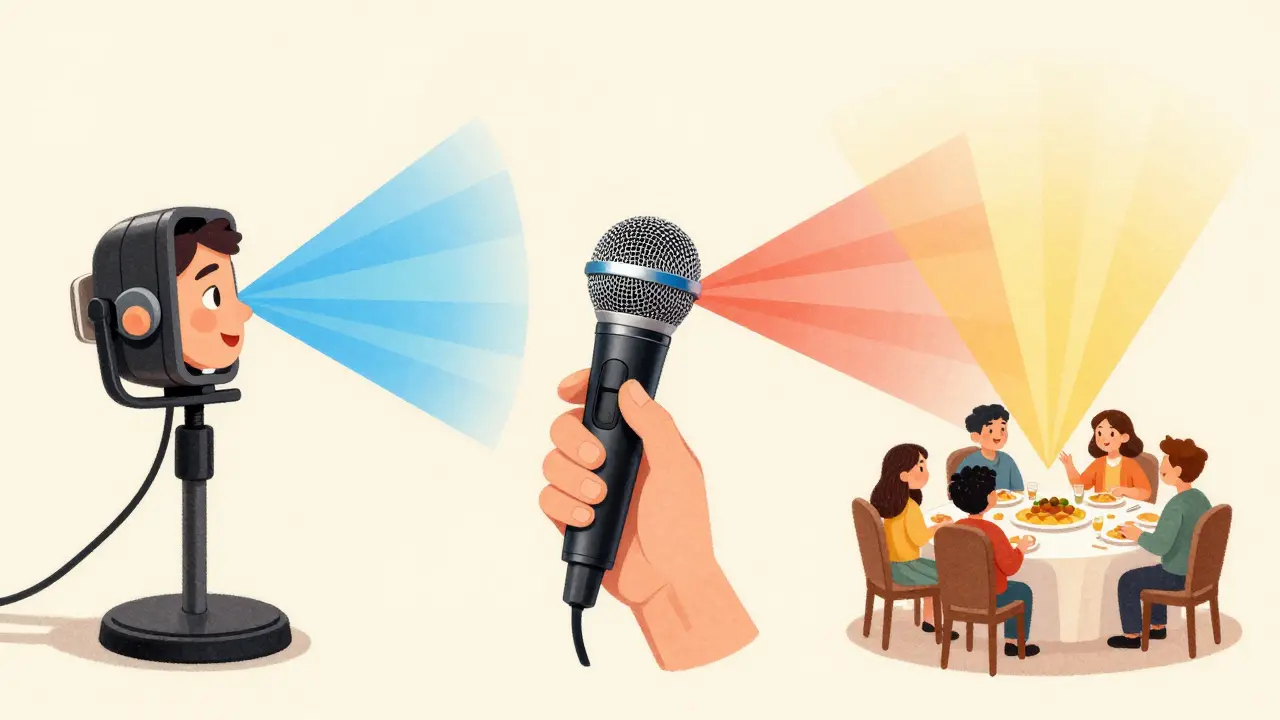
Older systems used FM technology, which operated on fixed radio frequencies and were prone to interference. Today’s systems use digitally modulated (DM) technology, like Phonak’s Roger platform. These systems hop between frequencies automatically to avoid interference from Wi-Fi, Bluetooth, and other devices. They’re also much smaller: devices like the Roger Select or ReSound Multi Mic are about the size of a thumb, weighing less than an ounce. You can clip them to a lapel, hold them like a pen, or even place them in the center of a table during a group meeting.
Why They Outperform Hearing Aids Alone
Hearing aids use directional microphones and noise reduction algorithms to help in noisy environments. But even the best ones can’t overcome the physics of distance. A 2019 study by Dr. Linda M. Thibodeau found that people with hearing loss understood speech up to 61% better when using a remote microphone system compared to their hearing aids alone. In a 75 dB noise environment-typical of a crowded restaurant-some users went from understanding 20% of the conversation to 85%.
Research from AudiologyOnline in 2021 showed that these systems improve speech recognition by 11 to 19.5 dB in adults and 10 to 18.9 dB in children. That’s not a small gain. A 10 dB improvement means speech sounds twice as loud. In real-world terms, it’s the difference between guessing what someone said and clearly understanding every word.
One key reason is the signal-to-noise ratio. Your hearing aid hears everything-the voice, the clinking glasses, the laughter. A remote microphone focuses only on the voice you care about. It’s like putting a spotlight on one person in a dark room, while everything else stays in shadow.
Types of Systems and Performance Differences
Not all remote microphone systems are the same. There are three main types:
- Directional systems (like the Phonak Roger Select or ReSound Multi Mic) use advanced algorithms to detect where the speaker is and focus on their voice. They adapt in real time, even if the speaker moves around.
- Omnidirectional systems (like the ReSound Mini Mic) pick up sound from all directions. They’re simpler and cheaper, but they don’t block background noise as well.
- Adaptive-gain systems automatically adjust volume based on the environment. For example, if you walk from a quiet room into a noisy hallway, they boost the speech signal without you having to press a button.
Studies show directional systems outperform omnidirectional ones by 15 to 20 percentage points in noise levels above 65 dB. Adaptive systems like the Roger Select give users 16% better speech recognition than fixed-gain models like the Roger Pen-especially in tough situations like a restaurant with multiple tables talking at once.
The latest innovation, the Roger Focus II (released in 2023), can connect to multiple microphones at once. In group settings, it switches between speakers automatically. A Phonak field study found users understood speech 45% better than with hearing aids alone in multi-talker environments. That’s huge for family dinners, work meetings, or classrooms.
Compatibility and Setup
These systems don’t work with just any hearing aid. They need wireless connectivity-either through Bluetooth Low Energy or proprietary 2.4 GHz protocols. Major brands like Phonak, ReSound, Oticon, and Starkey all make compatible receivers. Some connect via a neckloop, others stream directly into the hearing aid. Many newer hearing aids, like Oticon’s More series, now have Roger technology built right in, eliminating the need for a separate receiver.
Setting up a system usually takes two to three visits with an audiologist. First, they check your hearing aid settings. Then they pair the microphone and test performance in real-world noise. Finally, they train you on how to use it-where to place the mic, how to switch modes, and how to manage battery life. Most users get comfortable within two to four weeks. But if the system isn’t properly programmed, up to 35% of users don’t see full benefits, according to Dr. Ruth Bentler’s 2022 review.
Real-World Impact and User Stories
Users report life-changing results. In a 2023 survey of 1,247 hearing aid users, 87% said remote microphones made listening in restaurants significantly easier. Seventy-eight percent said they could follow group conversations better than ever before.
One Reddit user, u/HearingHelp123, shared: “Before Roger Select, I understood maybe 20% of what my family said at dinner. Now, it’s 85%. I actually enjoy time with them again.” Another, u/AudiologyPatient, said their Phonak Roger Pen “added five years to my working life as a nurse.” In a job where you need to hear patients, coworkers, and alarms, that’s not just a convenience-it’s a career saver.
Starkey’s 2023 user report showed 89% of users would recommend the system to others. Average ratings across Amazon, AudiologyOnline, and Trustpilot hover around 4.6 out of 5.

Cost, Insurance, and Accessibility
The biggest barrier? Price. Basic models like the ReSound Multi Mic start at $499. Advanced systems like the Phonak Roger Select cost up to $799. Most insurance plans-including Medicare-cover less than 15% of the cost. In 2024, Medicare only paid for $118 of a $799 device. That leaves users to pay the rest out of pocket.
That’s why 42% of negative Amazon reviews cite cost as the main reason for dissatisfaction. Some users feel embarrassed asking others to wear the mic. One Trustpilot reviewer wrote: “People think I’m recording them when I ask them to wear the mic at meetings.”
But the tide is turning. By 2027, the Hearing Industries Association predicts 60% of new hearing aids will have remote microphone tech built in. That shift-from add-on device to standard feature-could cut costs by 25 to 30%. Oticon’s 2024 More hearing aid, which includes Roger technology inside the device, is a sign of where things are headed.
The Future: AI and Integration
Next-generation systems are getting smarter. Phonak’s 2024 Roger X uses AI to separate speech from background noise, improving recognition by an additional 9% in crowded rooms. Starkey’s upcoming Evolv AI platform, launching in late 2024, will use artificial intelligence to automatically enhance speech without manual input.
These aren’t just upgrades. They’re evolution. The goal is no longer to carry a separate mic. It’s to have your hearing aid do it all-without you even noticing.
When to Consider a Remote Microphone System
You might benefit if:
- You struggle to hear in restaurants, meetings, or group settings-even with hearing aids.
- You’re frequently asked to repeat yourself because you miss words.
- You avoid social events because listening is too tiring.
- You have a child with hearing loss who needs support in school.
It’s not a magic fix. It won’t help if multiple people talk at once without a mic. It won’t work if the mic isn’t placed correctly. But when used properly, it’s the most effective tool available for speech understanding in noise.
Do remote microphone systems work with all hearing aids?
No. They require hearing aids with wireless connectivity, either through Bluetooth Low Energy or proprietary 2.4 GHz protocols. Most modern hearing aids from Phonak, ReSound, Oticon, and Starkey are compatible. Older models or those without wireless features won’t work. Always check with your audiologist before purchasing.
Can I use a remote microphone system without a hearing aid?
Not directly. These systems are designed as accessories to hearing aids or cochlear implants. The receiver connects to your existing device to deliver the signal. If you don’t have a hearing aid, the system won’t function on its own. However, some systems include a standalone receiver with headphones for temporary use, but these are not meant as long-term solutions.
How long do the batteries last?
Most remote microphones last 8 to 12 hours per charge, depending on usage. Models like the Roger Select and Roger Pen use rechargeable batteries and come with charging cases. A full charge typically lasts a full workday. Spare batteries or portable chargers are recommended for extended outings.
Are these systems covered by insurance?
Medicare and most private insurers cover only a small portion-often less than 15%-of the cost. Some state programs or vocational rehab services may help. Private insurance rarely covers them unless you have a specific diagnosis and prior authorization. Always check with your provider before buying.
Can I use one microphone for multiple people?
Yes, but only with advanced systems like the Roger Focus II or Roger X. These can connect to multiple microphones simultaneously and switch between speakers automatically. For basic models, only one microphone can be active at a time. In group settings, you’ll need to pass the mic around or use a table-top model placed in the center.








Stephanie Paluch
14 Mar 2026 at 20:17This changed my life. I used to dread family dinners. Now I laugh at all the jokes. 🥹❤️