


Pediatric Dosing Calculator
How to Use This Calculator
This calculator helps you understand proper dosing based on weight. Remember: never use kitchen spoons for medication. Always use the measuring device that comes with your medicine.
Dosing Results
Enter your child's weight and medication concentration to see the recommended dose.
Important Safety Information
Why This Matters
Children's bodies process medications differently than adults. Even small errors in dosing can have serious consequences.
One teaspoon equals 5 milliliters. Using kitchen spoons or confusing units can lead to dangerous overdoses. For example:
- 1 teaspoon = 5 mL 5x overdose risk
- 1 tablespoon = 15 mL 3x overdose risk
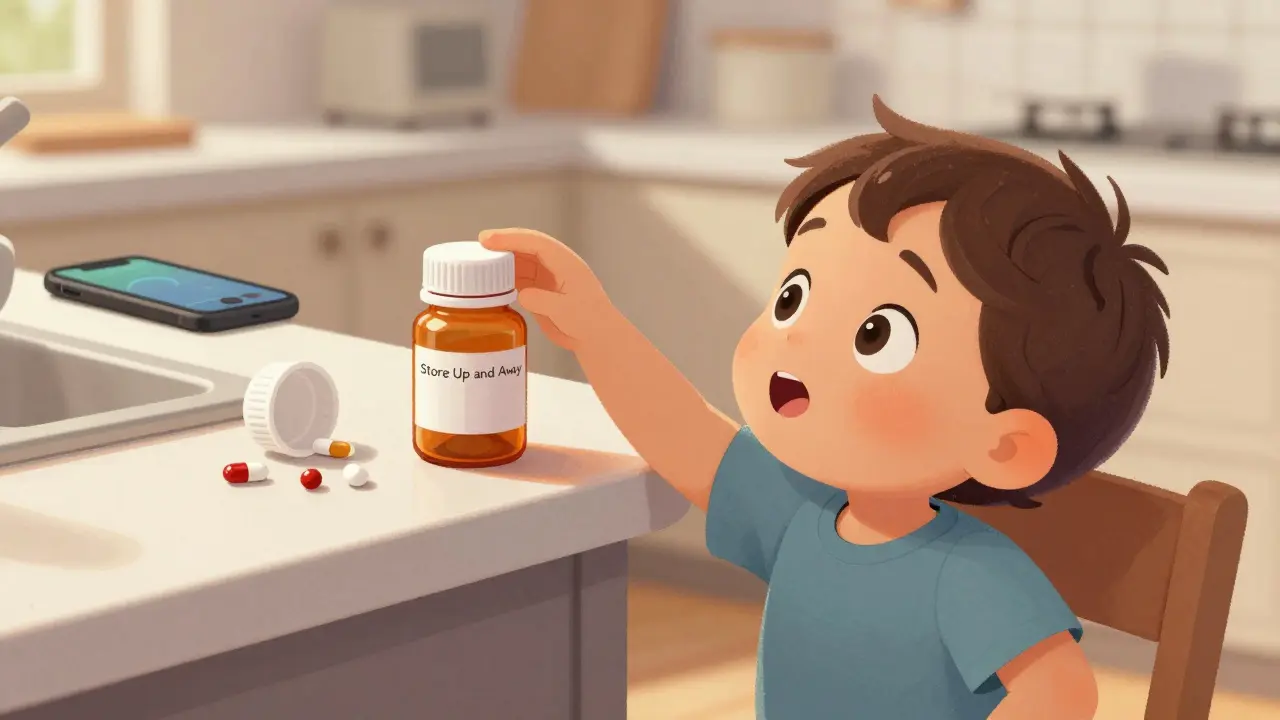
Every year, tens of thousands of children end up in emergency rooms because they got into medicine they weren’t supposed to. Some swallowed a pill they thought was candy. Others were given the wrong dose because a caregiver mixed up teaspoons and milliliters. These aren’t rare accidents-they’re preventable, and they happen because we treat children like small adults when it comes to medicine.
The truth is, kids aren’t just tiny versions of grown-ups. Their bodies process drugs differently. Their organs are still growing. Their ability to tell you what’s wrong? Limited. And that’s why pediatric medication safety isn’t just a best practice-it’s a necessity built on hard data, not guesswork.
Why Kids Are at Higher Risk
Children face a unique set of dangers when it comes to medications. Their weight can range from under 2 kilograms in a newborn to over 60 kilograms in a teenager. That’s a 60-fold difference in how much medicine their body can safely handle. A dose that’s perfect for a 10-year-old could be deadly for a 6-month-old.
And it’s not just about size. Kids’ livers and kidneys-organs that break down and flush out drugs-are still developing. This means medicines stay in their system longer or break down unpredictably. A drug that’s safe for an adult might build up to toxic levels in a child, even at the "correct" dose.
Then there’s communication. A toddler can’t say, "My stomach hurts" or "I feel dizzy." They cry, they fuss, or they just go quiet. By the time a parent notices something’s wrong, it might already be too late.
The numbers don’t lie. According to the CDC’s PROTECT Initiative, about 50,000 children under age 5 visit emergency rooms each year because of medicine poisoning. And that’s just the ones we know about. Many more go unreported because the child didn’t tell anyone, or the parent didn’t realize what happened.
Common Medication Errors in Kids
Most pediatric medication errors aren’t caused by malice or ignorance-they’re caused by simple mistakes that seem harmless until they’re not.
One of the most dangerous? Confusing teaspoons and milliliters. One teaspoon equals 5 milliliters. Give a child 1 teaspoon of medicine when the dose is 1 milliliter? That’s a fivefold overdose. Give a tablespoon (15 mL) instead of a teaspoon? That’s a threefold overdose. And yet, many medicine bottles still list dosing in teaspoons and tablespoons. The American Academy of Pediatrics says this must stop. Liquid medications for home use should be labeled and dispensed only in milliliters.
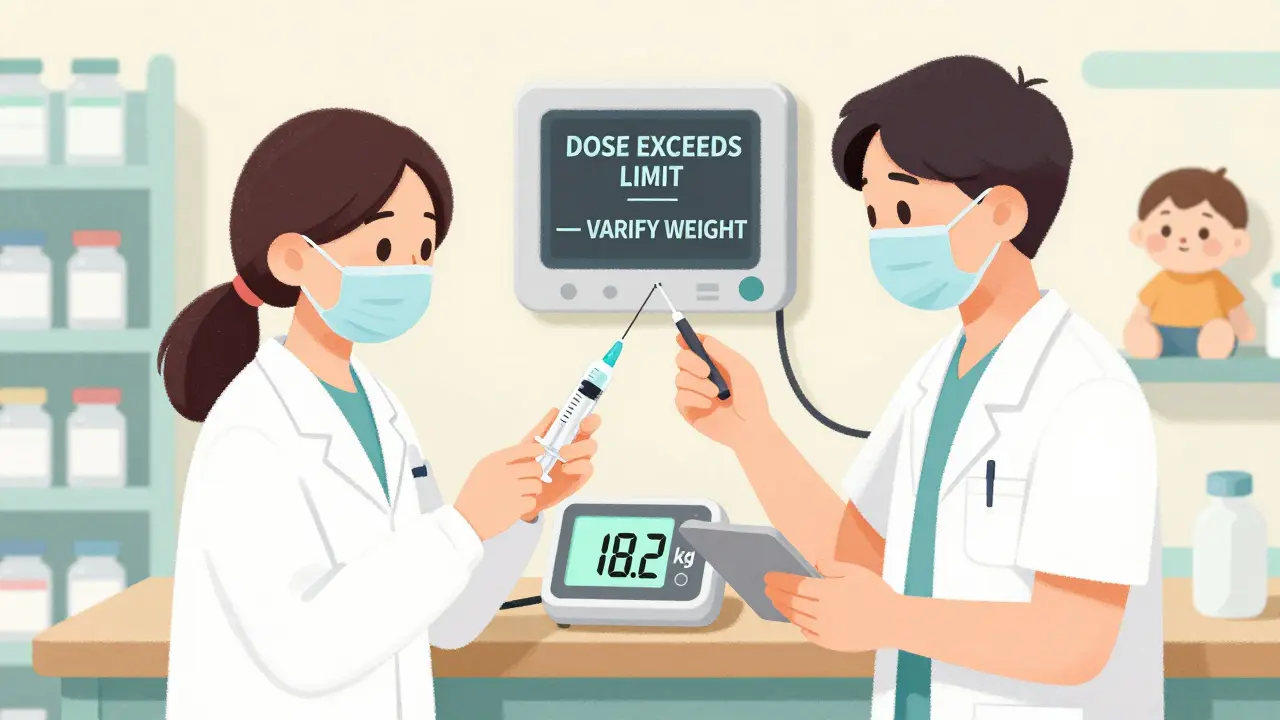
Another big problem? Weight calculation errors. In hospitals, using pounds instead of kilograms for dosing is a leading cause of serious mistakes. A nurse might think a child weighs 30 pounds (about 13.6 kg) when they actually weigh 40 pounds (18 kg). That 4.4 kg difference? It can mean the difference between a safe dose and a lethal one.
Even packaging matters. Adults often take pills out of child-resistant bottles and leave them on counters, nightstands, or in purses. A 2020 study found that 45% of pediatric pill ingestions happened because the medicine was removed from its original container. Kids aren’t just curious-they’re fast. Research shows they can open a bottle with a child-resistant cap in under 30 seconds if it’s not fully closed.
What Hospitals Are Doing Right
Hospitals that treat kids regularly have learned the hard way. The American Academy of Pediatrics laid out 15 key safety steps in 2018, and hospitals that follow them have seen error rates drop by 85%.
One of the most effective? Kilogram-only dosing. No more pounds. No more conversions. Every weight is recorded and used in kilograms. Electronic systems are programmed to block doses that exceed safe limits based on weight. If a doctor tries to order 10 times the maximum dose, the system flags it before it’s printed.
High-risk medications-like those for pain, seizures, or heart conditions-are now given only after two trained staff members independently check the dose. No shortcuts. No exceptions.
They’ve also created "distraction-free zones" for preparing kids’ meds. No phones, no chatter, no rushing. Just one person, one task, one dose. This simple change has cut preparation errors by more than half in some hospitals.
And they don’t just hand out a prescription and hope for the best. Pharmacists now use the "teach-back" method: they ask parents to repeat the instructions in their own words. If a parent says, "I give two spoonfuls twice a day," the pharmacist knows they still don’t get it. They correct it right then.
Home Safety: It’s Not What You Think
Most pediatric medication accidents happen at home-not in hospitals. And most parents think they’re doing fine. They store medicine "out of reach"-on a high shelf. But if a child can climb a chair, pull down a bag, or reach a counter, it’s not safe.
The CDC’s advice is clear: "Store all medicine up and away and out of children’s reach and sight." That means locked cabinets, not just top shelves. Even medicine you think is harmless-like diaper rash cream, eye drops, or children’s vitamins-can be dangerous if swallowed in large amounts.
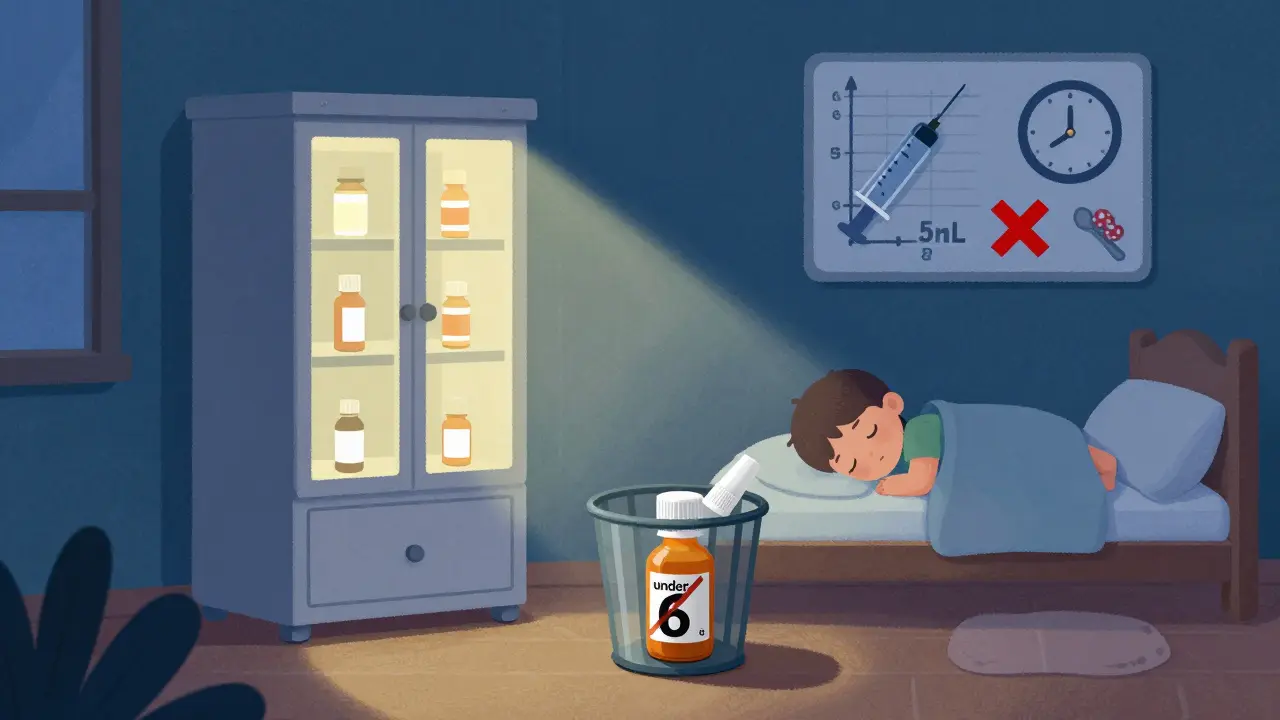
And don’t forget about over-the-counter cough and cold medicines. The FDA and AAP warn: Never give these to children under age 6. They don’t work well in young kids, and they carry serious risks-like slowed breathing or seizures. Even if the bottle says "safe for kids," it’s not.
Another big mistake? Calling medicine "candy." Parents do it to get kids to take a bitter liquid. But that teaches kids that medicine = treat. A 2023 Poison Control report found that 15% of accidental ingestions happened because children believed the medicine was candy.
Labeling and Dosing Tools That Save Lives
Simple changes in how medicine is labeled and measured can prevent a lot of harm.
Always use the dosing device that comes with the medicine-a syringe, dropper, or cup marked in milliliters. Never use kitchen spoons. They vary too much. A teaspoon from your kitchen might hold 3 mL or 7 mL. That’s a huge difference when you’re dosing a baby.
Use pictogram instructions. Studies show they improve correct dosing by 47% in families with low health literacy. Instead of reading "give 5 mL twice daily," a picture shows a syringe filling to the 5 mL line, then a clock showing morning and night. No reading required.
Also, always keep the original packaging. It has the right concentration, expiration date, and instructions. If you transfer pills to a pill organizer, you’re making it easier for a child to get into them-and harder for you to know what’s what.
High-Risk Medicines Parents Should Know
Not all medicines are equal when it comes to danger. Some are deadly in tiny amounts.
Heart medications, like beta-blockers or digoxin, can stop a child’s heart with just one pill. Diabetes drugs like insulin can cause life-threatening low blood sugar. Opioids-even a single tablet-can stop breathing in a small child. And prenatal vitamins? They contain iron, which can be toxic in large doses. A child swallowing 10 of them can need emergency treatment.
If your child is taking any of these, store them in a locked box, not just a cabinet. Consider using a medication lockbox available at pharmacies or online. Keep them away from other medicines-even if they seem harmless.
What You Can Do Today
You don’t need to be a doctor to keep your child safe from medicine accidents. Here’s what to do now:
- Always use milliliters. No teaspoons or tablespoons.
- Use the dosing device that came with the medicine.
- Store all medicines-prescription, OTC, vitamins, creams-in a locked cabinet, out of sight.
- Never call medicine "candy."
- Never give cough or cold medicine to children under 6.
- Program 800-222-1222 (Poison Help) into every phone in your home.
- Teach-back: Ask your child’s caregiver to explain how to give the medicine before you leave the clinic.
- Check expiration dates and throw out old or unused medicines safely.
What’s Changing in the Future
The FDA now requires drug makers to use standardized concentrations for new pediatric medicines. That means all liquid versions of the same drug will have the same strength-no more confusion between 2.5 mg/mL and 5 mg/mL.
More hospitals are training all staff-not just pharmacists-on pediatric dosing. And more states are passing laws requiring poison prevention education in pediatric clinics.
But the biggest change? Awareness. More parents are learning that medicine safety isn’t about being careful-it’s about being intentional. It’s about locking it up. Measuring it right. And never assuming it’s safe just because it’s in a bottle.
Every child deserves to be treated with the care their body needs-not the care we assume they need. The tools are here. The science is clear. Now it’s up to us to use them.




Chris Beckman
1 Mar 2026 at 21:10so like... why do we still use teaspoons?? i gave my kid amoxicillin once and used a regular spoon cause the syringe was lost. turned out it was like 2x the dose. kid was fine but i nearly had a heart attack. why is this still a thing??