

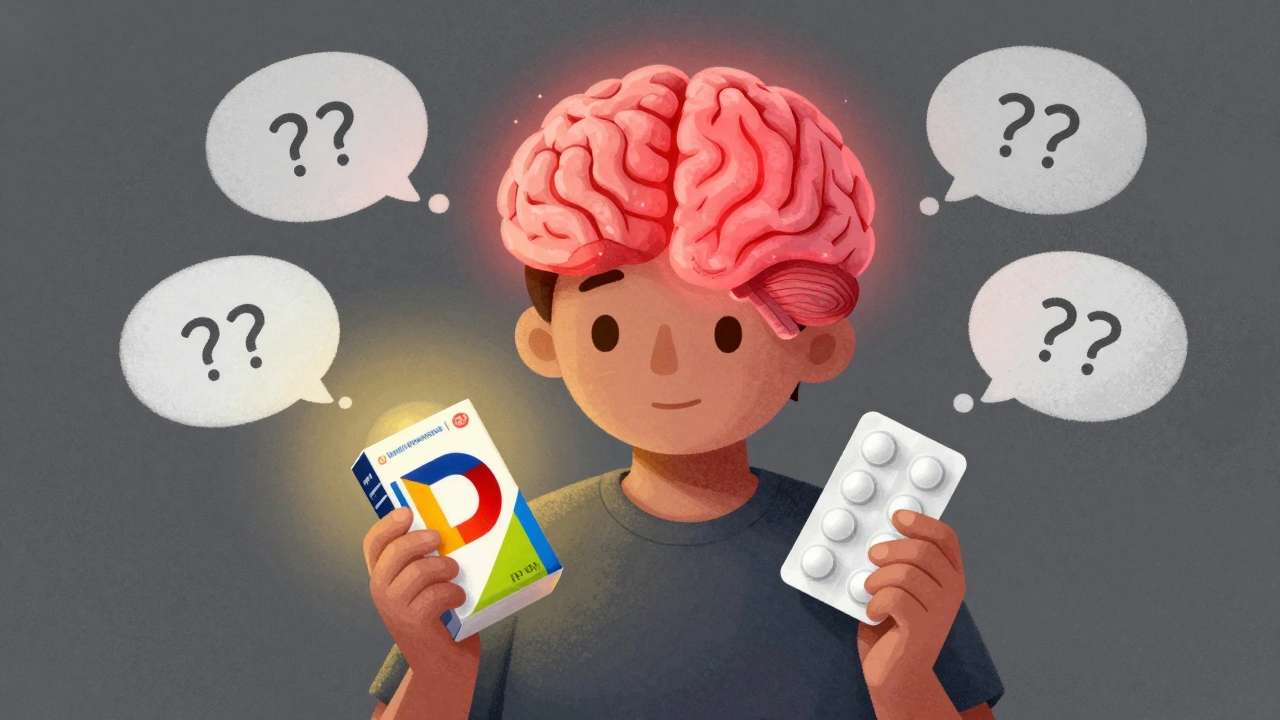

When you pick up a prescription, do you ever wonder why some people swear their generic pill doesn’t work as well as the brand-name version-even though both have the exact same active ingredient? It’s not just in their head. It’s in their perception.
Here’s the hard truth: the difference between a brand-name drug and its generic copy isn’t chemistry. It’s psychology. And that psychology can change how you feel, how much pain you report, and even whether you keep taking your medicine.
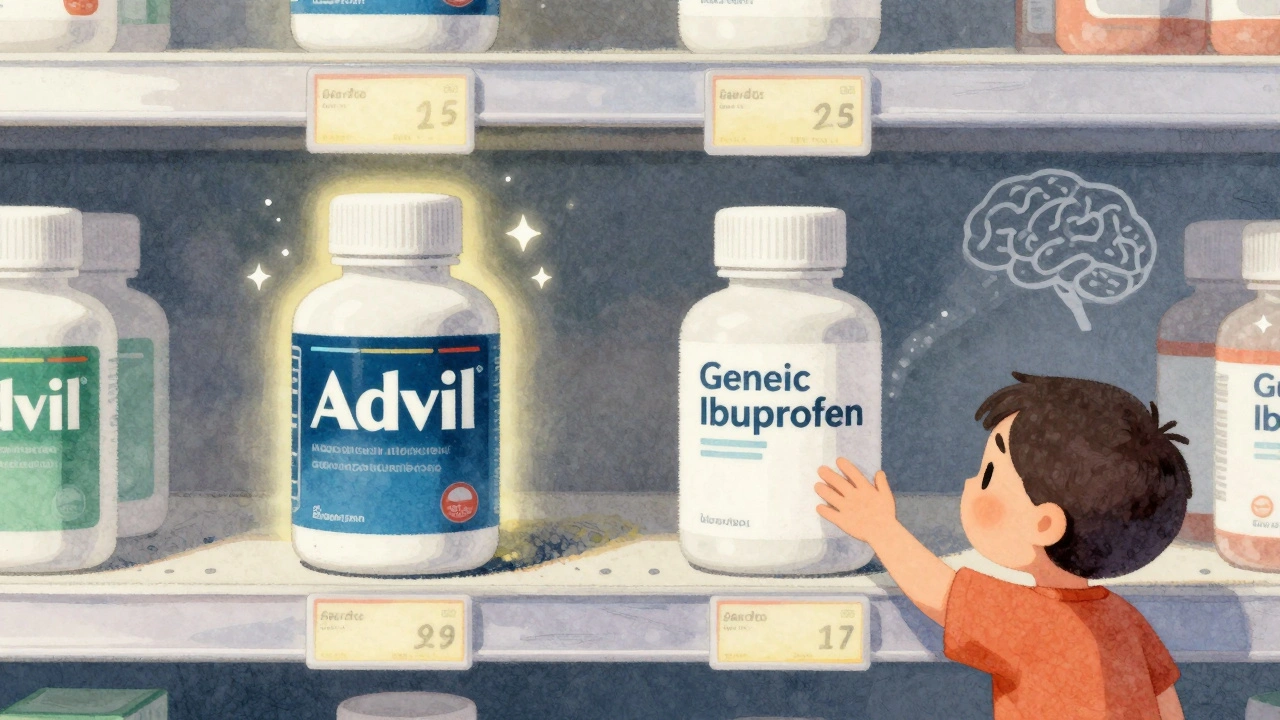
Studies show that people who believe they’re taking a brand-name painkiller like Nurofen report the same level of relief as those taking the real thing-even when they’re given a sugar pill labeled as Nurofen. But if that same sugar pill is labeled "Generic Ibuprofen," the pain relief drops by nearly half. The pill didn’t change. The body didn’t change. Only the label did.
How Your Brain Tricks You Into Feeling Better (or Worse)
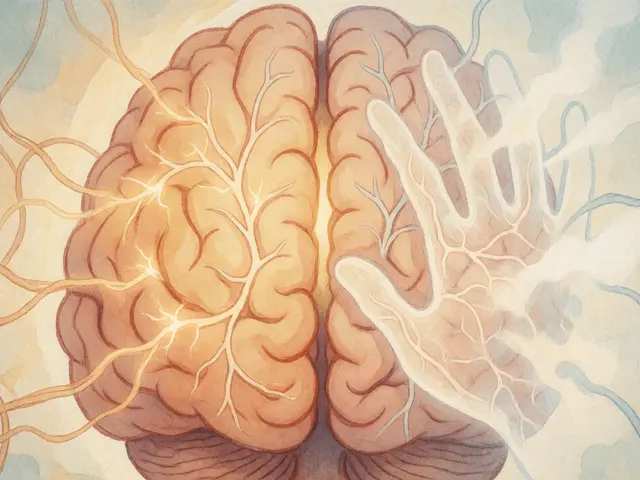
Your brain doesn’t just react to drugs. It reacts to what you think the drug is. This isn’t magic. It’s biology. When you expect a pill to work, your brain releases natural painkillers like endorphins and activates areas tied to reward and expectation-like the dorsolateral prefrontal cortex. Brain scans show this region lights up more when you think you’re taking a branded drug than when you think you’re taking a generic.
It’s not just about pain. In depression, up to 40% of the benefit from antidepressants comes from the placebo effect. That means for many people, the belief that the pill will help is doing nearly half the work. And if you think the generic version is "lesser," your brain doesn’t activate those pathways as strongly. The result? Less relief. More doubt. More trips back to the doctor.
And it works the other way too. If you believe a drug will cause side effects, your body starts showing them-even if the pill has no active ingredients. In one study, people taking fake statins (cholesterol drugs) reported muscle pain at rates as high as 26%. But the pills were just starch and coloring. The pain was real to them because they expected it. That’s called the nocebo effect-the evil twin of the placebo effect.
Price Matters More Than You Think
Here’s a wild example: researchers gave people identical creams-one labeled as expensive, the other as cheap. Both were just moisturizer. But those who thought they were using the expensive cream reported twice as much pain relief. Even more surprising? Their spinal cords showed more pain signals when they thought the cream was pricey. Their bodies were reacting to the price tag, not the cream.
Same thing happens with pills. When patients are told a generic drug costs less, they report more side effects. Just saying "this is cheaper" makes people more likely to notice minor aches, nausea, or fatigue-and blame it on the medicine. One study found that mentioning cost increased side effect reports by 25-40%.
It’s not that generics are worse. It’s that your brain connects price with quality. And when you think something is cheap, your brain assumes it’s less effective-even if science says otherwise.
Branding Isn’t Just Marketing-It’s Medicine
Brand names aren’t just logos. They’re trust signals. People have used Nurofen, Advil, or Lipitor for years. They’ve seen the ads. They’ve heard stories. They know what to expect. Generic versions don’t have that history. They look different. They’re sold in plain packaging. Even the shape and color can trigger doubt.
One study found that patients who switched from brand-name antidepressants to generics were 27% more likely to stop taking them within the first month. Not because the drug didn’t work. Because they believed it wouldn’t. One Reddit user wrote: "My patient told me her generic Zoloft didn’t help like the brand. Blood tests showed identical levels. But she felt it didn’t work. She stopped."
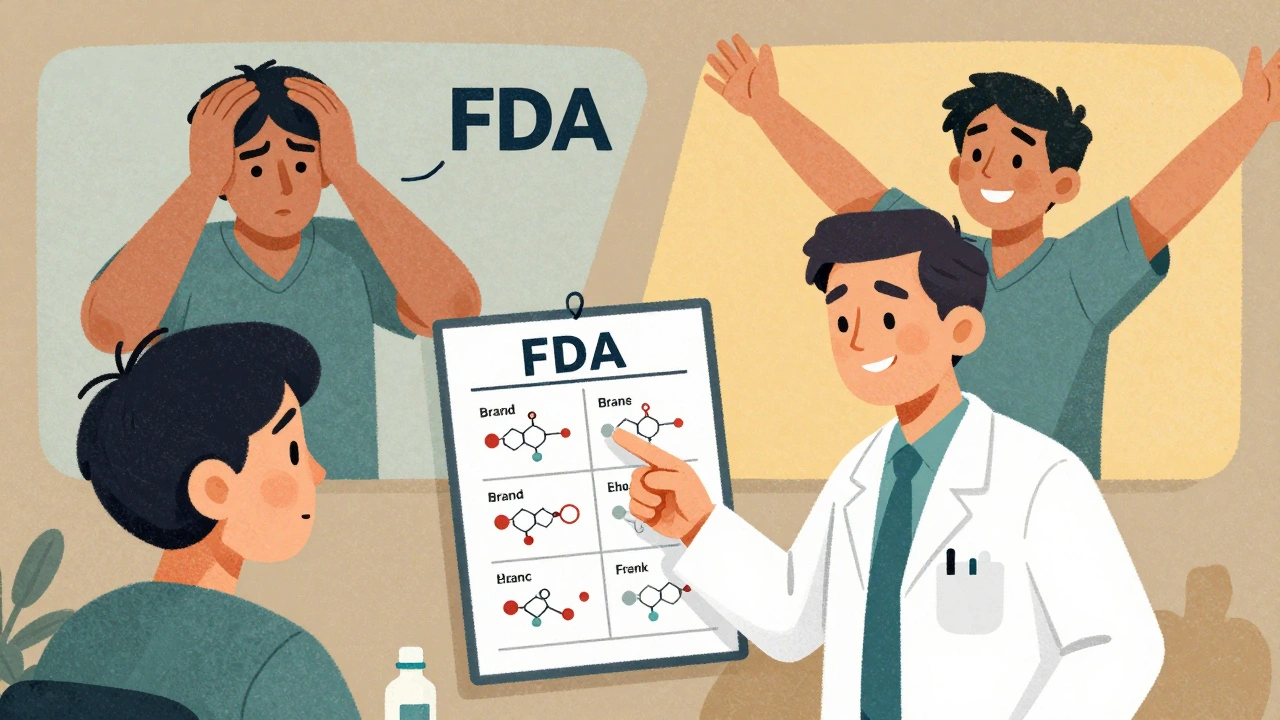
On the flip side, patients who understand the science often do better. When pharmacists explain that generics must contain the same active ingredient within 8-13% of the brand name-and that the FDA requires the same strict testing-adherence goes up by 18-22%. Education works.
Why Packaging Doesn’t Always Fix the Problem
You’d think making generics look fancier would help. Add a nice color scheme. Use better fonts. Put a "FDA-approved equivalent" sticker on the bottle. But research shows it’s not that simple.
One study tested enhanced generic packaging-colorful, professional-looking bottles-and found no improvement in patient outcomes. In fact, plain generic packaging led to slightly better anxiety reduction. Why? Because when patients saw the simple packaging, they didn’t expect perfection. They lowered their expectations-and that reduced stress.
Another study found that adding the phrase "This medication is FDA-approved equivalent to [Brand Name]" to the label boosted patient confidence by 34%. But only if it was clear, honest, and not buried in fine print. The message matters more than the design.
Who’s Most Affected-and Why
Not everyone responds the same way. About 30% of people are highly suggestible. They’re the ones who feel the placebo effect strongly. They’re also the ones most likely to experience nocebo effects. If you’ve ever been told "this medicine might make you tired" and then suddenly felt exhausted, you might be in that group.
Conditions with strong placebo responses-like chronic pain, depression, anxiety, and migraines-are where perception has the biggest impact. For high blood pressure or diabetes, the effect is smaller. Your body’s physical response to the drug overrides your expectations.
But here’s the kicker: even in conditions where the placebo effect is small, perception still affects whether you keep taking the medicine. And that’s what really matters.
What Doctors and Pharmacies Can Do
Healthcare providers have more power than they realize. A simple two-minute conversation can change outcomes.
- Don’t say "It’s just a generic." Say "This is the exact same medicine as the brand name, tested and approved by the FDA."
- Don’t mention price unless asked. If you do, frame it positively: "This saves you money without sacrificing effectiveness."
- Use visual aids. Show the FDA’s official comparison chart. Point out the identical active ingredient on both labels.
Some clinics now use short educational videos before handing out generics. One study found that patients who watched a 90-second video explaining how placebos work had 28% better outcomes than those who didn’t. It’s not about convincing them. It’s about aligning their expectations with reality.
The Real Cost of Misunderstanding
This isn’t just about feeling better. It’s about money. The U.S. spends $28 billion a year extra because people stop taking generics too soon. More doctor visits. More tests. More prescriptions. More hospitalizations.
Generics make up 90% of prescriptions in the U.S. but only 23% of drug spending. That’s because they’re cheaper. But if patients don’t trust them, they don’t take them. And that defeats the whole purpose.
Pharmaceutical companies know this. That’s why some now make "premium generics"-same medicine, better packaging, higher price. Teva’s "Advil Migraine" is just ibuprofen. But it’s sold in a sleek bottle with a special label. And it captures 17% of the migraine market. Not because it works better. Because it feels better.
What You Can Do
If you’re on a generic drug and feel like it’s not working:
- Check the label. Confirm the active ingredient matches your old brand.
- Give it time. It can take weeks for your brain to adjust to a new pill.
- Talk to your pharmacist. Ask them to explain the equivalence. Most will happily do it.
- Don’t assume cheaper means worse. The science says otherwise.
If you’re a caregiver or family member, don’t dismiss concerns. Say: "I get why you feel that way. Let’s look at the facts together."
The placebo effect isn’t a flaw. It’s a feature of how humans heal. Your beliefs shape your biology. And when it comes to generics, the most powerful ingredient might not be on the label-it’s in your mind.
Do generic drugs have the same active ingredients as brand-name drugs?
Yes. The FDA requires generic drugs to contain the same active ingredient, in the same strength, and at the same dosage form as the brand-name version. They must also be absorbed into the bloodstream at the same rate and extent-within 8-13% of the brand. This is called bioequivalence. The only differences are in inactive ingredients like fillers, dyes, or coatings, which don’t affect how the drug works.
Why do some people feel worse on generic medications?
It’s often not the drug-it’s the expectation. If someone believes generics are inferior, their brain may amplify normal sensations like fatigue or mild nausea, interpreting them as side effects. This is the nocebo effect. Studies show patients report more side effects when told a drug is generic or cheap-even when it’s identical to the brand. Changing how the medication is explained can reduce these reports.
Can the placebo effect make generics actually work better?
Yes. If a patient believes a generic will work, their brain triggers natural healing responses-like releasing endorphins or reducing stress hormones-that enhance the drug’s effect. In conditions like depression or chronic pain, where the placebo effect is strong, this belief can account for up to 40% of the benefit. That’s why clear communication from providers is so important.
Is it safe to switch from a brand-name drug to a generic?
Yes. The FDA requires generics to meet the same strict standards as brand-name drugs for safety, purity, and potency. Millions of people switch successfully every year. In fact, 90% of prescriptions in the U.S. are filled with generics. The only exceptions are drugs with very narrow therapeutic windows-like warfarin or thyroid medication-where small changes in absorption matter more. Even then, most patients do fine with generics after careful monitoring.
Why do generics look different from brand-name drugs?
By law, generics can’t look identical to brand-name drugs to avoid trademark infringement. So they may differ in color, shape, or size. But these changes are only in inactive ingredients. The active drug inside is the same. Some patients mistake the different appearance as a sign of lower quality, but it’s purely a legal requirement-not a quality issue.
Do insurance companies push generics just to save money?
Cost savings are a major reason, but it’s not the only one. Generics are proven to be just as effective and safe. Insurance companies encourage generics because they reduce overall healthcare spending-leading to lower premiums and fewer unnecessary doctor visits. When patients stick with generics, the system works better for everyone.



patrick sui
2 Dec 2025 at 06:33The placebo effect isn't just some fluke-it's neurobiology in action. fMRI studies show the dorsolateral prefrontal cortex fires harder when you think you're taking a branded drug. That's not 'mind over matter'-that's your brain literally rewiring your pain perception. The active ingredient is identical, but the expectation triggers endogenous opioid release. It's like your body's built-in morphine pump, activated by branding.
And the nocebo effect? Even scarier. People taking inert pills report muscle pain at 26% rates when told it's a statin. Their bodies are generating real physiological stress responses based on linguistic cues. Language isn't just communication-it's a pharmacological trigger.
Price tagging? Same mechanism. Expensive placebo cream = twice the pain relief. Spinal cord imaging confirmed it. The brain doesn't distinguish between 'real' and 'perceived' efficacy. It just responds to the signal. That's why 'generic' is a dirty word in pharmacology-it's not about chemistry, it's about conditioning.
Pharma knows this. That's why 'premium generics' exist. Teva's Advil Migraine? Same ibuprofen. Different bottle. 17% market share. The pill didn't change. The narrative did. We're not buying medicine-we're buying trust signals wrapped in pill form.
Education works. When patients see the FDA equivalence charts, adherence jumps 18-22%. Knowledge dismantles the placebo ceiling. But most docs just say 'it's just generic'-and that's the worst thing they can do. You're not prescribing a pill. You're prescribing a belief system.
And here's the kicker: the 30% of people who are highly suggestible? They're not weak-minded. They're neurologically primed for top-down modulation. Their brains are more responsive to expectation. That's not a flaw. It's an evolutionary advantage. In ancestral environments, belief in healing rituals improved survival. Now? We just have better pills.
So next time someone says 'my generic doesn't work'? Don't dismiss them. Ask: 'What did they tell you about it?' The answer might be more telling than the bloodwork.