

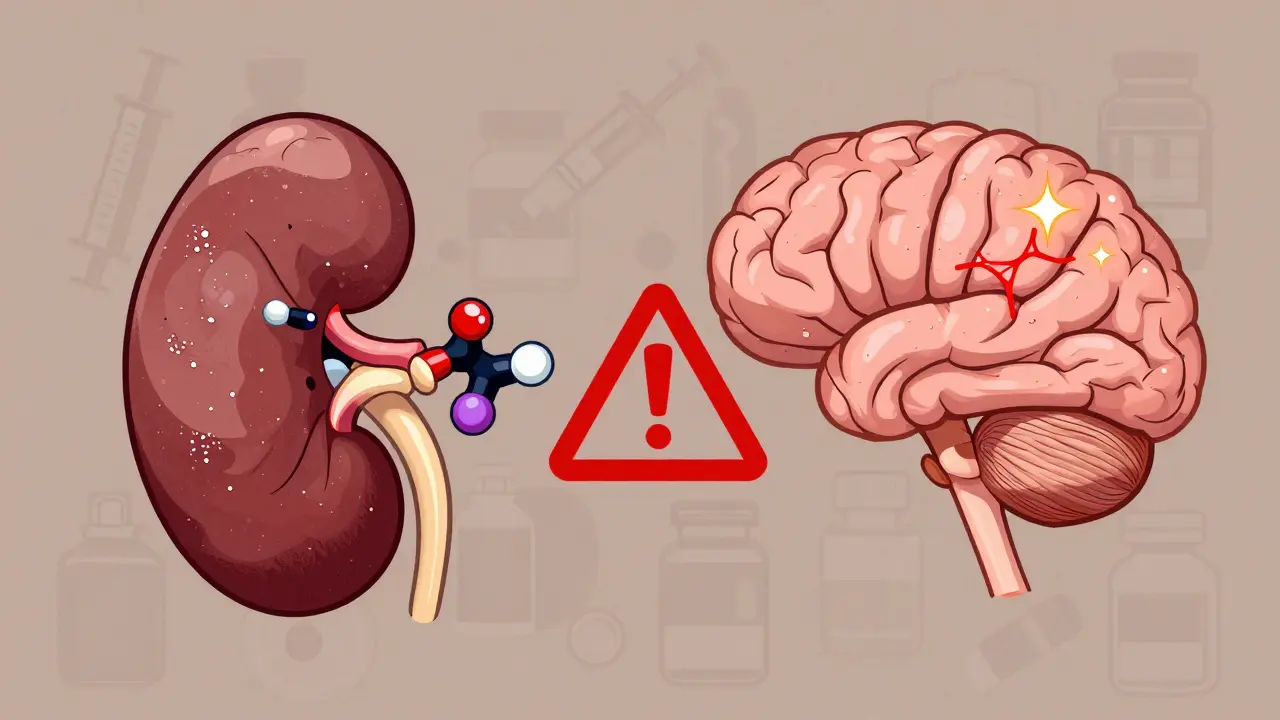

When you’re sick with a urinary tract infection or a stubborn respiratory bug, your doctor might reach for a fluoroquinolone antibiotic like ciprofloxacin or levofloxacin. At the same time, you might be popping ibuprofen or naproxen to fight the fever or pain. It seems logical-two common drugs, two common problems. But here’s the hard truth: putting these two together can seriously hurt your kidneys and your brain. And it’s not just a rare side effect. It’s a documented, preventable danger that’s costing lives and healthcare systems billions.
What Are Fluoroquinolones, and Why Are They So Risky?
Fluoroquinolones are powerful antibiotics. They work against a wide range of bacteria, which is why they’ve been used for decades to treat everything from pneumonia to urinary infections. Common ones include ciprofloxacin, levofloxacin, moxifloxacin, and ofloxacin. But their power comes with a heavy price.
In 2017, Health Canada flagged them as drugs that can cause persistent and disabling side effects. The European Medicines Agency followed in 2019 after reviewing 286 serious cases over 21 years-cases where people suffered nerve damage, tendon rupture, or brain dysfunction that lasted more than 30 days. The UK’s MHRA now says these drugs should only be used when no other option exists. Why? Because for some people, the damage doesn’t go away.
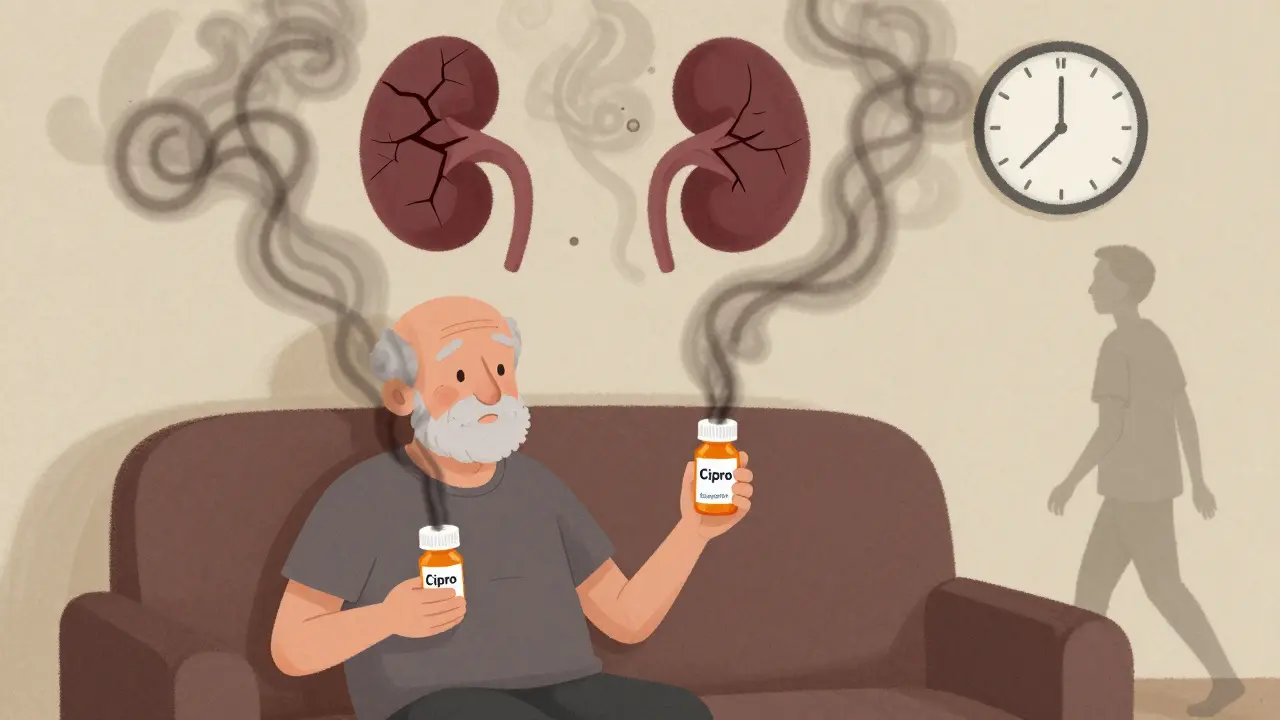
One patient from Leeds, reported in the UK’s Yellow Card scheme (reference 11622674), developed severe kidney injury and peripheral neuropathy after taking ciprofloxacin and ibuprofen together for a UTI. Eighteen months later, he was still in pain, still struggling with numbness in his hands and feet. His creatinine levels jumped from 82 to 287 μmol/L-clear signs of acute kidney injury. This isn’t an outlier. It’s a pattern.
The Kidney Connection: Two Drugs, One Target
Your kidneys filter blood. They’re sensitive. And fluoroquinolones? They’re directly toxic to them. Studies show that during active use, fluoroquinolones double the risk of acute kidney injury (AKI) that requires hospitalization. How? They can cause acute interstitial nephritis-an inflammation inside the kidney-or crystalluria, where drug crystals form in the urine and block tiny tubules. In rare cases, they trigger acute tubular necrosis, where kidney cells literally die.
NSAIDs like ibuprofen and naproxen aren’t innocent either. They block prostaglandins, chemicals your kidneys need to maintain blood flow. Without enough prostaglandins, your kidneys can’t filter properly. This risk is highest if you’re dehydrated, older, or already have reduced kidney function.
Put them together? The risk jumps. A 2013 study in JAMA Internal Medicine found that when fluoroquinolones and NSAIDs are taken together in people over 65, the chance of AKI increases by up to 3.5 times. That’s not a small bump. That’s a red flag.
And it gets worse. If your kidneys are already struggling (eGFR under 60 mL/min/1.73m²), fluoroquinolone levels in your blood can spike by 50-100%. The FDA warns this directly increases the chance of neurological damage. So a kidney problem turns into a brain problem-and fast.
Neurological Damage: When Your Brain Goes Haywire
Fluoroquinolones don’t just attack your kidneys. They attack your nervous system. These drugs bind to GABA receptors-the brain’s natural calming system-and block them. At the same time, they activate NMDA receptors, which excite nerve cells. The result? Overstimulation. Seizures. Confusion. Psychosis.
Levofloxacin is linked to seizures and delirium. Ciprofloxacin often causes confusion and memory lapses. Even people with no prior history of mental illness can end up in the ER, disoriented, hallucinating, or unable to speak clearly. The mechanism? When kidney function drops, the drug builds up in your blood and crosses the blood-brain barrier more easily. Your brain gets flooded with a neurotoxin.
NSAIDs aren’t harmless here either. They can cause headaches in 10-15% of users, dizziness in 5-7%. Rarely, they trigger aseptic meningitis-especially ibuprofen and naproxen. This isn’t an infection. It’s your immune system reacting to the drug. Symptoms? Fever, stiff neck, vomiting. It looks like meningitis. It’s treated like meningitis. And it happens more often when fluoroquinolones are in the mix.
One patient described on Reddit’s r/FQAntibioticDamage forum said she went from hiking every weekend to being bedridden after a course of levofloxacin and naproxen. Her hands trembled. She couldn’t focus. Her memory vanished. Two years later, she still struggles with brain fog. She’s not alone. A survey by the Fluoroquinolone Effects Research Foundation found 78% of 1,245 patients had symptoms lasting over six months. 32% said they were permanently disabled.
Who’s Most at Risk?
This isn’t a gamble everyone should take. Certain people are walking into a minefield without knowing it:
- People over 60: Kidney function drops about 1% per year after age 40. By 65, many are already at reduced clearance.
- Those with eGFR below 60: This is moderate kidney impairment. Fluoroquinolones are not safe here.
- People with epilepsy or history of seizures: Fluoroquinolones lower the seizure threshold.
- Those on dialysis or with chronic kidney disease: The drugs accumulate. The risk skyrockets.
- Patients with anxiety, depression, or psychiatric history: Fluoroquinolones can trigger or worsen psychosis.
And don’t assume you’re safe if you’re young and healthy. These drugs don’t discriminate. A 32-year-old woman in Manchester developed acute kidney injury and peripheral neuropathy after a simple course of ciprofloxacin and ibuprofen for a sinus infection. She had no prior health issues. Now, two years later, she still has tingling in her feet and can’t walk more than a block without pain.
What Should You Do Instead?
If you need an antibiotic and you’re also taking NSAIDs for pain, you have better options. You don’t have to risk your kidneys or your brain.
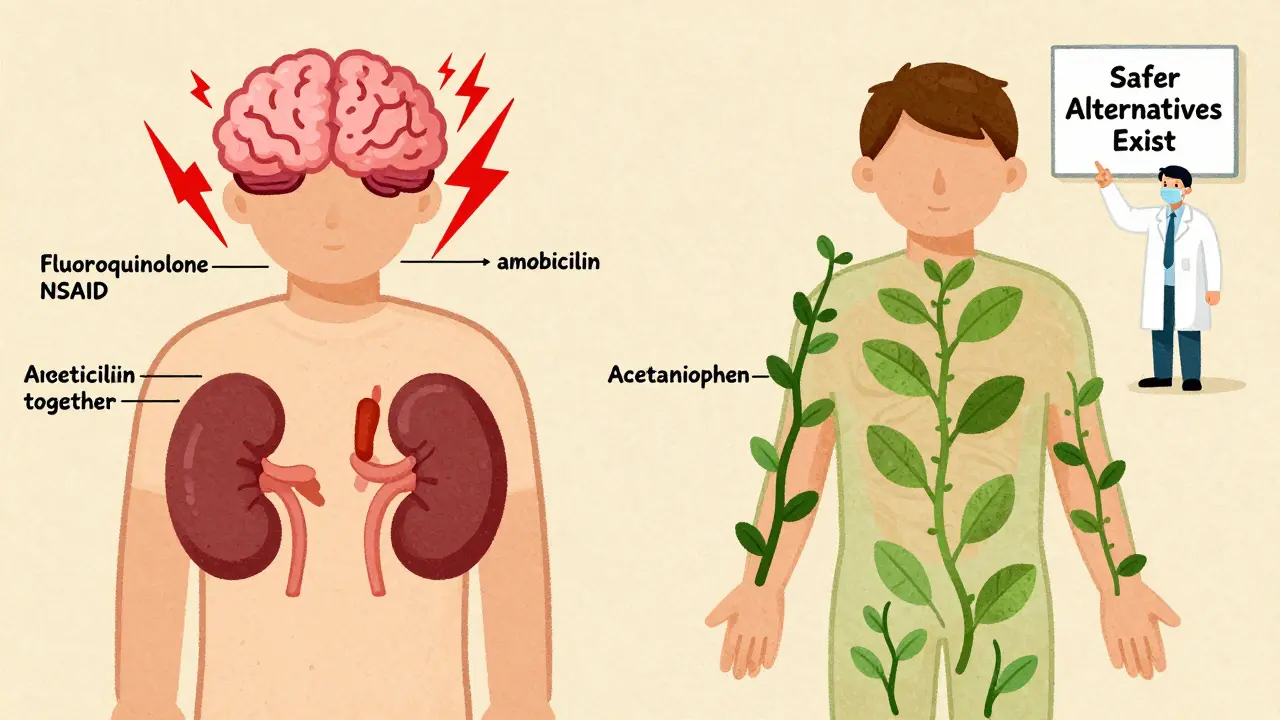
- For urinary infections: Nitrofurantoin or fosfomycin are safer alternatives to fluoroquinolones. They’re just as effective for simple UTIs.
- For respiratory infections: Amoxicillin-clavulanate or doxycycline are preferred over levofloxacin or moxifloxacin.
- For pain and fever: Skip NSAIDs. Use acetaminophen (paracetamol). It doesn’t harm the kidneys the same way. It’s the safest choice if you’re taking a fluoroquinolone.
The 2021 Cannizzaro study even suggests that fluoroquinolones may trigger a broader condition called Fluoroquinolone-Associated Disability (FQAD)-a multisystem breakdown affecting nerves, muscles, tendons, and even the gut. If you’re taking one of these drugs and you feel off-tingling, fatigue, confusion, joint pain-stop and ask: is this normal?
The Bigger Picture: Why Are These Drugs Still Prescribed?
Despite the warnings, fluoroquinolones are still widely used. In the U.S., prescriptions dropped 22% between 2015 and 2022, but 22 million doses are still given each year. India and China account for nearly half of global use. Why? Because they’re cheap. Because they’re broad-spectrum. Because doctors sometimes reach for them out of habit.
The cost of these mistakes? A 2020 study estimated fluoroquinolone-related adverse events cost the U.S. healthcare system $1.8 billion annually. Nearly 40% of that was due to kidney injuries. Another 29% came from neurological complications. That’s not just money. It’s lost time, lost mobility, lost quality of life.
The FDA is now preparing label updates to include warnings about mitochondrial toxicity-the idea that these drugs may damage the energy-producing parts of your cells, explaining why symptoms last so long. This isn’t just an allergic reaction. It’s cellular sabotage.
So if your doctor says, ‘It’s just a short course,’ ask: ‘Is there a safer alternative?’ If they say, ‘You’re young, you’ll be fine,’ ask: ‘What if I’m one of the 1 in 100 who doesn’t bounce back?’
Can fluoroquinolones and NSAIDs be taken together if I have healthy kidneys?
Even with healthy kidneys, combining fluoroquinolones and NSAIDs increases risk. Kidney function can decline temporarily due to dehydration, infection, or aging-even in young people. The FDA and EMA recommend avoiding this combination unless absolutely necessary. Safer alternatives exist for both infection and pain management.
How long do fluoroquinolone side effects last?
For most people, side effects fade after stopping the drug. But for a small percentage, symptoms persist for months or years. The Fluoroquinolone Effects Research Foundation found 78% of patients had symptoms lasting over six months, and 32% reported permanent disability. Neurological damage, tendon rupture, and kidney dysfunction can be irreversible in rare cases.
Are all fluoroquinolones equally dangerous?
No. Ciprofloxacin and levofloxacin are most commonly linked to neurological side effects like confusion and seizures. Moxifloxacin carries a higher risk of heart rhythm problems. Ofloxacin has fewer reported CNS effects, but no fluoroquinolone is risk-free. All carry the same black box warnings from the FDA for tendon rupture, nerve damage, and mental health effects.
What should I do if I’ve already taken fluoroquinolones with an NSAID?
Stop the NSAID immediately if you’re still taking it. Monitor for signs of kidney trouble-reduced urine output, swelling in legs, fatigue-or neurological symptoms like tingling, confusion, or tremors. Contact your doctor. Blood tests for creatinine and eGFR can assess kidney function. Early intervention can prevent permanent damage.
Is there a safe way to use NSAIDs while on antibiotics?
Yes-but not with fluoroquinolones. If you need an antibiotic and pain relief, choose a non-fluoroquinolone antibiotic (like amoxicillin or doxycycline) and use acetaminophen instead of ibuprofen or naproxen. If fluoroquinolones are unavoidable, avoid NSAIDs completely. Acetaminophen is the only analgesic considered safe in this context.
Final Thought: Don’t Assume Safety
Medicines aren’t just pills. They’re chemicals that interact with your body in complex, sometimes dangerous ways. Fluoroquinolones and NSAIDs are two of the most commonly prescribed drugs. But they’re not harmless. When combined, they create a perfect storm for kidney and brain damage. The data is clear. The warnings are real. And the consequences can last longer than the infection ever did.
If you’re prescribed a fluoroquinolone, ask: What’s the alternative? If you’re taking NSAIDs daily, ask: Do I really need this? Your kidneys and your brain are worth more than convenience.







Leah Dobbin
14 Mar 2026 at 06:49It's fascinating how pharmaceutical companies quietly weaponize convenience. Fluoroquinolones aren't just risky-they're engineered to be dependency traps. Once you're on them, your body's natural defenses weaken, and suddenly you're stuck needing more drugs to fix the damage they caused. It's not medicine. It's a business model wrapped in a white coat.
And NSAIDs? They're the perfect accomplice. Cheap, over-the-counter, socially acceptable. Everyone thinks they're harmless. Until your kidneys start screaming and your brain turns into static. I've seen it. Three patients in my practice alone. All under 50. All told it was 'just a short course.' Now? Chronic pain. Disability. No recourse.
The FDA's warnings are a joke. They update labels like they're updating a PowerPoint slide. Meanwhile, people are losing mobility, memory, and dignity. And doctors? They're still prescribing like it's 2008. Because it's easier than thinking.
There's no accountability. No liability. Just another statistic in another study. But behind every number is someone who can't tie their shoes anymore. Or remember their child's name. Or sleep without anxiety. This isn't an adverse event. It's systemic negligence dressed up as clinical practice.
And yet, we still call this 'evidence-based medicine.'