

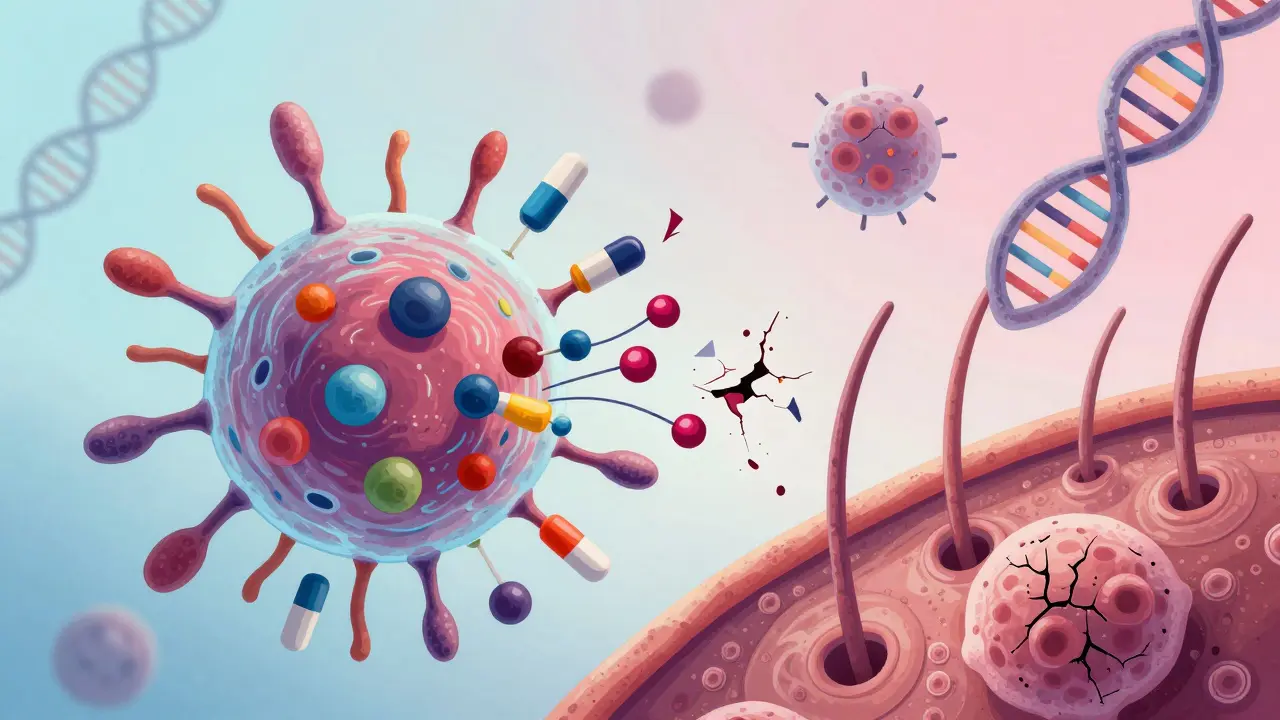

Chemotherapy isn't magic. It's not a cure-all. But for millions of people with cancer, it's one of the most powerful tools doctors have. It works by attacking cells that divide quickly - the exact trait that makes cancer dangerous. The problem? Healthy cells in your body also divide fast. That’s why chemotherapy hits hard - and why side effects are so common.
How Chemotherapy Kills Cancer Cells
Chemotherapy drugs are called cytotoxic because they kill cells. They don’t care if a cell is cancerous or not - they target anything that’s dividing rapidly. That includes cancer cells, but also hair follicles, bone marrow, and the lining of your gut.
There are over 100 different chemotherapy drugs, grouped into six main types based on how they work:
- Alkylating agents like cyclophosphamide damage DNA directly by sticking chemical groups onto it. This stops cancer cells from copying their DNA and splitting.
- Antimetabolites like 5-fluorouracil and capecitabine trick cells into using fake building blocks. When cancer cells try to make DNA or RNA, they use these imposters and die.
- Anthracyclines such as doxorubicin slip between DNA strands and block enzymes needed to repair DNA. This causes breaks in the genetic code.
- Plant alkaloids like vincristine and paclitaxel freeze the cell’s internal skeleton. Without microtubules, cells can’t pull apart during division.
- Topoisomerase inhibitors like etoposide interfere with enzymes that untangle DNA during replication. Tangled DNA can’t be copied, so the cell shuts down.
- Miscellaneous agents include drugs like cisplatin that work in unique ways, often by forming cross-links in DNA.
Most chemotherapy is given through an IV - about 65% of treatments. Some, like capecitabine, are pills you take at home. Others go directly into the spinal fluid, abdomen, or arteries. The method depends on where the cancer is and which drug you’re getting.
Doctors don’t give chemo every day. They use cycles - usually 2 to 6 weeks long - with treatment days followed by rest. This gives your healthy cells time to recover. A typical breast cancer regimen might be paclitaxel at 175 mg/m² every three weeks. For colorectal cancer, a common combo is FOLFOX: 5-fluorouracil, leucovorin, and oxaliplatin.
Why Chemotherapy Still Matters
Targeted therapies and immunotherapies get a lot of attention now. But chemotherapy hasn’t been replaced - it’s been upgraded. It’s still the first choice for 78% of blood cancers like leukemia and lymphoma. In ovarian cancer, it’s used in 95% of cases. In colorectal cancer, it’s in 85% of treatment plans.
Why? Because chemotherapy works where other drugs can’t. It crosses the blood-brain barrier, making it one of the few options for brain metastases. It attacks tumors with mixed cell types - not just one mutation. And it works fast. Within hours of your first infusion, cancer cells start dying.
It’s also critical before surgery. In breast cancer, getting chemo first (called neoadjuvant therapy) can shrink tumors so much that a mastectomy becomes a lumpectomy. Studies show patients who achieve a complete pathologic response - no cancer left in the tissue after chemo - have much better survival rates.
Even with newer drugs, chemotherapy remains the backbone. In 2023, an estimated 6.2 million people in the U.S. received it. The global market is worth $18.7 billion and growing. Why? Because not every cancer has a target. Not every patient responds to immunotherapy. Chemotherapy fills the gaps.
Common Side Effects - And What You Can Do
Side effects aren’t random. They’re predictable. They happen because chemo can’t tell the difference between a cancer cell and a fast-dividing healthy cell.
Fatigue
It’s the most common side effect - reported by 82% of patients. It’s not just being tired. It’s bone-deep exhaustion that doesn’t go away with sleep.
What helps: Walking 30 minutes a day cuts fatigue by 25-30%, according to 17 clinical trials. Don’t wait until you feel strong to move. Start small. A short walk around the block counts.
Nausea and Vomiting
Thirty years ago, nausea was brutal. Today, drugs like ondansetron and aprepitant have cut severe nausea from 80% to under 20% in most cases.
But here’s the catch: Acute nausea (within 24 hours) is well-controlled. Delayed nausea (after 24 hours) is harder. Only 32% of patients find anti-nausea meds helpful for this.
What helps: Eat small, bland meals. Toast, bananas, rice. Avoid strong smells. Sip ginger tea. Some patients swear by medical cannabis for nausea - though it’s not approved everywhere.
Hair Loss
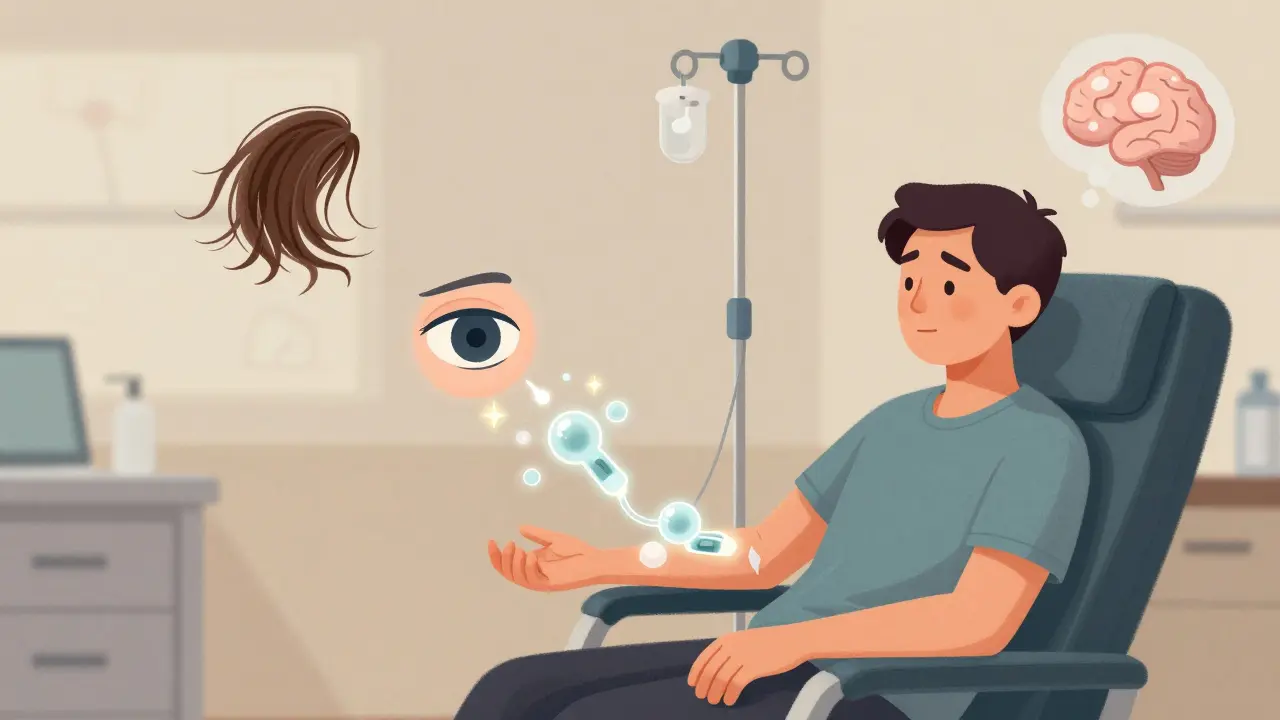
78% of patients lose their hair. It’s not just the scalp. Eyebrows, eyelashes, body hair - gone.
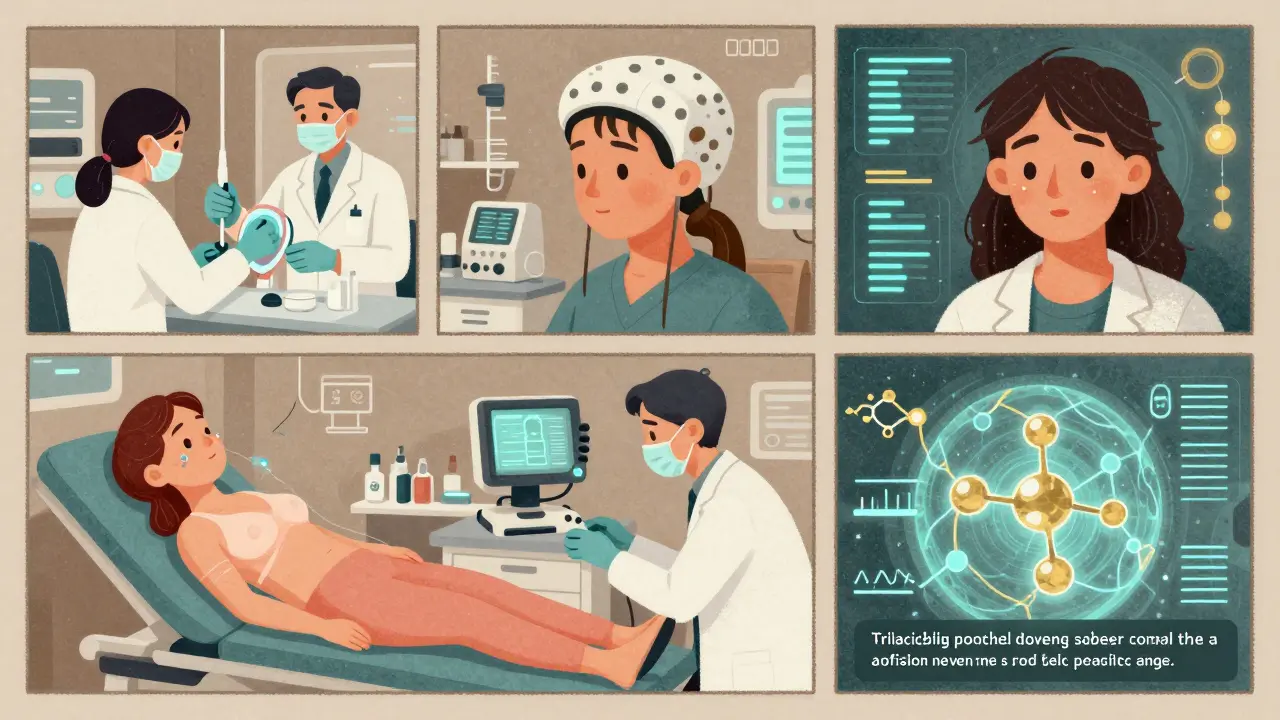
But there’s progress. Scalp cooling caps reduce hair loss from 65% to 25% in breast cancer patients on taxanes. They work by chilling the scalp during infusion, shrinking blood vessels so less drug reaches hair follicles.
What helps: Use a soft brush. Avoid heat tools. Wear a wig or scarf if it helps you feel like yourself. It’s not vanity - it’s identity.
Neuropathy
30-40% of patients on taxanes or platinum drugs get tingling, numbness, or pain in hands and feet. For 5-10%, it’s permanent.
What helps: Avoid cold things - ice water, frozen foods. Wear gloves when washing dishes. Report symptoms early. Your doctor can adjust your dose or switch drugs. Some studies show CBD:THC formulations reduce neuropathic pain by 55%.
Chemo Brain
75% of patients report trouble focusing, remembering names, or finding words during treatment. One in three still have it six months after finishing.
What helps: Meditation apps like Calm or Headspace, used 20 minutes a day, improve cognitive symptoms by 30-40%. Write things down. Use alarms. Don’t fight it - adapt.
Low Blood Counts
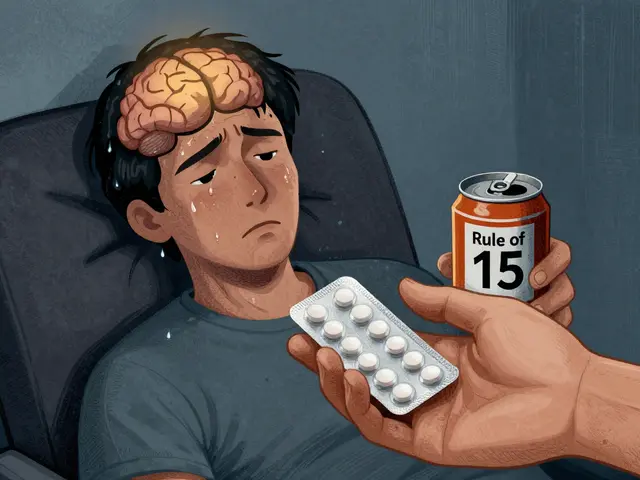
Chemo can crash your white blood cells, red blood cells, or platelets. A fever of 100.4°F or higher during chemo is an emergency - it could mean infection.
What helps: Wash hands often. Avoid crowds. Get the flu shot. If your count drops too low, your doctor may give you growth factors like filgrastim to boost white cells. In 2023, the FDA approved trilaciclib to protect bone marrow during chemo for small cell lung cancer.
What’s New in Chemotherapy
Chemo isn’t stuck in the 1940s. It’s evolving.
Trilaciclib is the first drug designed to shield bone marrow during chemo. Scalp cooling is now in official guidelines. Medical cannabis is being studied for neuropathy and brain fog. Combination therapies - chemo plus immunotherapy - are showing better results in lung and bladder cancers.
Doctors aren’t giving the same dose to everyone anymore. Treatment is personalized. A patient with HER2-positive breast cancer might get chemo plus trastuzumab. Someone with BRCA mutations might get PARP inhibitors after chemo. The goal isn’t just to kill cancer - it’s to kill it with the least damage to you.
When Chemotherapy Doesn’t Work
It’s not always the answer. In prostate cancer, hormone therapy works better than chemo. In some slow-growing tumors, chemo does more harm than good. Resistance can develop - cancer cells learn to pump drugs out using proteins like P-glycoprotein.
That’s why doctors test tumors for mutations before choosing treatment. If a tumor has an EGFR mutation, targeted drugs are better than chemo. If it has high PD-L1, immunotherapy may come first.
But when there’s no target? When cancer is widespread? When time is short? Chemo still steps up.
Managing Your Treatment
Learning to live with chemo takes time. Most patients feel overwhelmed at first. By the third cycle, 85% have figured out what works for them.
Here’s what to do:
- Hydrate. Drink 1-2 liters of water daily. Nausea and diarrhea drain you.
- Track your symptoms. Keep a journal. Note what makes fatigue worse, what helps nausea.
- Ask for help. Social workers, nutritionists, and support groups exist for a reason.
- Don’t ignore red flags. Black stools? Call your doctor. Fever? Go to the ER. Red urine after doxorubicin? Normal. But anything else - ask.
Chemo is tough. But it’s not hopeless. People are living longer because of it. Survival rates for many cancers have improved since the 1990s - not because of one miracle drug, but because of better combinations, better timing, and better support.
You’re not just taking a drug. You’re part of a system - one that’s getting smarter, kinder, and more effective every year.
Does chemotherapy always cause hair loss?
No. Hair loss depends on the drug. Some chemo drugs like methotrexate cause little to no hair loss. Others like doxorubicin or paclitaxel almost always do. Scalp cooling caps can reduce hair loss by up to 60% in patients receiving taxane-based chemo. Not all clinics offer it, but it’s becoming more common.
Can you work during chemotherapy?
Many people do, especially with mild regimens or good side effect control. But fatigue and chemo brain make it harder. About 57% of working patients say cognitive changes hurt their performance. Adjusting hours, working remotely, or taking medical leave under the ADA are common strategies. Talk to your oncology team - they can help you plan.
Is chemotherapy more effective than targeted therapy?
It depends on the cancer. Targeted therapies work better when there’s a known mutation - like HER2 in breast cancer or EGFR in lung cancer. They’re more precise and often have fewer side effects. But chemotherapy works on a wider range of cancers, especially those without clear targets. Many patients get both: chemo to shrink the tumor fast, then targeted therapy to keep it under control.
How long does chemotherapy stay in your body?
Most chemo drugs leave your system within 24 to 48 hours. But side effects can last longer. Nerve damage, fatigue, and cognitive changes may persist for months or even years. The drugs are gone, but the impact on your cells can linger. That’s why recovery takes time.
Can you take vitamins or supplements during chemotherapy?
Some are safe, others aren’t. High-dose antioxidants like vitamin C or E may interfere with chemo’s ability to kill cancer cells. Vitamin D is different - deficiency is linked to worse neuropathy with taxanes. Check with your oncologist before taking anything. They may test your levels and recommend a specific dose if needed.
What should you do if you miss a chemo appointment?
Call your oncology team immediately. Don’t wait. Chemotherapy schedules are carefully timed to maximize cancer cell death and allow healthy cells to recover. Missing a dose can reduce effectiveness or increase side effects. Your team will decide whether to reschedule, adjust the dose, or move forward as planned.
Next Steps After Treatment
Finishing chemo doesn’t mean everything goes back to normal. Recovery is a process. Fatigue may last months. Cognitive changes can linger. Some side effects, like nerve damage or early menopause, are permanent.
Work with your oncologist on a survivorship plan. It should include:
- Follow-up scans and blood tests
- Monitoring for late side effects
- Physical therapy for neuropathy or weakness
- Mental health support
- Guidance on diet, exercise, and returning to work
Chemo saved your life. Now it’s time to rebuild it - one step, one day, one breath at a time.


Doreen Pachificus
4 Jan 2026 at 06:21I've been on chemo for 18 months. The fatigue is real. But I started walking 10 minutes a day and it actually helped more than I expected. Not magic, just movement.