


Digital Pill Success Simulator
Patient & Environment Settings
Simulation Results
Factors Analysis
- BMI Impact: None
- Interference Impact: None
- Orientation Impact: None
Imagine swallowing a pill that doesn't just treat your condition but also tells your doctor exactly when you took it. It sounds like science fiction, but Digital Pill Sensors are drug-device combinations that collect and transmit individual measurement data from patients to monitor medication-taking behavior. This technology is rapidly moving from experimental labs into real-world clinics, promising to solve one of healthcare's biggest headaches: patients forgetting or skipping their meds.
The World Health Organization has long noted that adherence rates for chronic conditions hover around a dismal 50%. That means half the time, treatments aren't working simply because they aren't being taken. Digital pills change this by providing verifiable ingestion data. But beyond just tracking whether a pill was swallowed, these devices are evolving to detect physiological changes, offering early warnings for side effects. For patients with serious mental health issues, HIV, or cardiovascular diseases, this shift could be life-saving.
How Digital Pills Actually Work
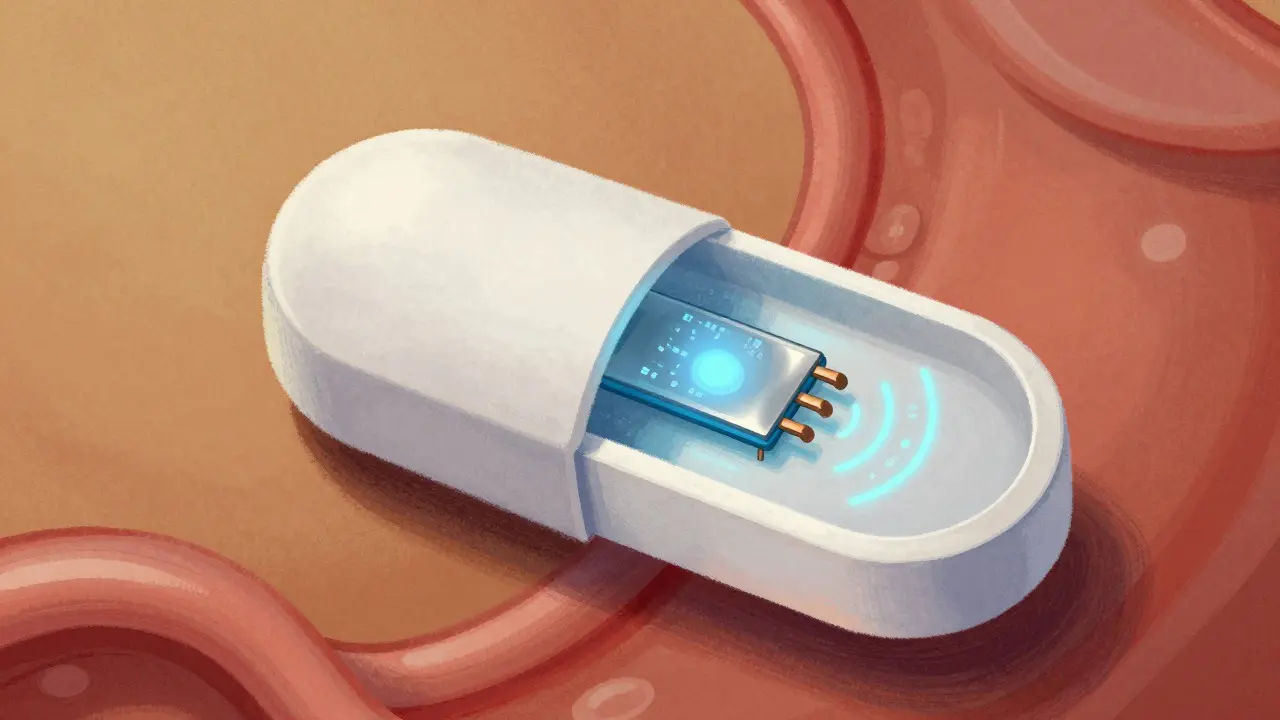
You might wonder how a tiny sensor fits inside a pill without making it huge. The answer lies in microscopic engineering. The core component is an ingestible sensor, typically a silicon-insulated disk about 5 mm in diameter and only 0.3 mm thick. Inside this minuscule device are copper-magnesium electrodes.
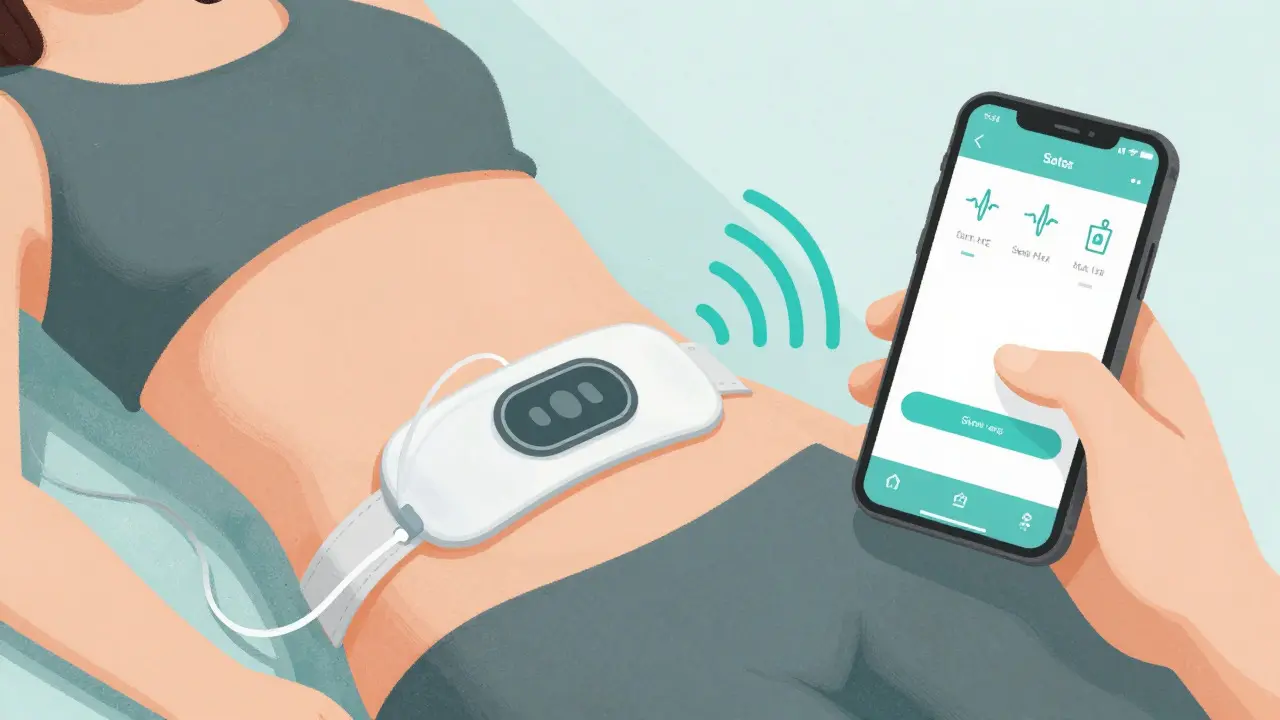
Here is the clever part: the sensor stays dormant until it hits your stomach acid. When gastric fluid contacts the magnesium and cuprous chloride (copper), an electrochemical reaction occurs. This generates roughly 1-2 volts of power-just enough to transmit a unique digital ID code. This signal isn't broadcast to the world; it uses Bluetooth Low Energy (BLE) to talk to a wearable patch on your abdomen. This patch, often powered by a small battery, receives the signal and forwards it via Bluetooth to a mobile app on your phone.
The system relies on three main parts working together:
- The Ingestible Sensor: Activates in the stomach to confirm ingestion.
- The Wearable Patch: Worn on the skin (usually the abdomen) to receive signals and monitor additional metrics like heart rate.
- The Mobile App & Cloud Platform: Displays data to the patient and shares insights with healthcare providers through secure servers.
Companies like Proteus Digital Health pioneered this approach with Abilify MyCite, which received FDA approval in 2017. Other players include etectRx with their ID-Cap system and Philips Research with IntelliCap. These systems use encryption standards like AES or DES to keep your health data private during transmission.
Beyond Adherence: Detecting Side Effects
Tracking if you took a pill is useful, but knowing how your body reacts to it is even more valuable. This is where the "side effect detection" aspect comes in. Modern digital pill systems don't just log ingestion times; they continuously monitor physiological parameters.
The wearable patch associated with these pills often includes sensors for heart rate, measuring accuracy within ±2 beats per minute. Some advanced systems, like the IntelliCap developed by Philips Research, go further. They can monitor gastrointestinal tract temperature (within ±0.5°C) and pH levels (with accuracy of ±0.3 pH units). Why does this matter? Because many drug side effects manifest as changes in heart rate, digestion speed, or stomach acidity before a patient even feels sick.
For example, certain psychiatric medications can cause cardiac arrhythmias. If the wearable patch detects an abnormal heart rate spike shortly after the digital sensor confirms ingestion, the system can alert the care team. This allows for proactive intervention rather than reactive treatment after a hospital visit. The Digital Medicine Society projects that by 2026, 60% of digital pill systems will incorporate these side effect detection capabilities, moving the technology from simple compliance tracking to comprehensive health monitoring.
Who Benefits Most? Real-World Applications
Digital pills aren't for everyone. You probably don't need one for occasional ibuprofen. Their value shines in complex, high-stakes treatment regimens. Currently, adoption is concentrated in specific areas:
| Condition/Treatment Area | Market Share / Adoption Rate | Key Benefit |
|---|---|---|
| Mental Health (Schizophrenia, Bipolar) | 47% | Ensures consistent antipsychotic dosing; reduces relapse risk. |
| HIV/AIDS Treatment | 18% | Critical for viral suppression and preventing drug resistance. |
| Cardiovascular Disease | 15% | Monitors blood pressure meds; detects cardiac side effects. |
| Tuberculosis | Growing (FDA approved 2023) | Prevents incomplete treatment cycles that lead to drug-resistant TB. |
In mental health, the stakes are incredibly high. A 2022 study published in JMIR found that 68% of patients with serious mental health conditions were willing to use digital pills. One user on a pharmaceutical forum shared that seeing ingestion records in the app helped them realize they were skipping doses on weekends-a pattern they hadn't noticed otherwise. This visibility can empower patients to take control of their routines.
However, not all patients are ready for this level of scrutiny. The same study showed that only 42% of patients with less severe conditions like hypertension wanted to use them. Privacy concerns and the feeling of being "monitored" remain significant barriers. About 73% of hesitant patients cited privacy as their main worry, while 61% disliked the sensation of constant surveillance.
Technical Challenges and Limitations
Despite the promise, the technology isn't flawless. Signal transmission is the biggest hurdle. In real-world settings, transmission failure rates range from 8% to 12%. Several factors contribute to this:
- Body Mass Index (BMI): Signal interference increases significantly for patients with a BMI over 35, with failure rates jumping to 18%.
- Sensor Orientation: How the pill lands in the stomach can affect signal strength.
- Electromagnetic Interference: Other electronic devices nearby can disrupt the BLE connection.
Battery life is another constraint. Current wearable patches typically last about 72 hours, meaning patients must remember to replace or recharge them regularly. If the patch dies, the ingestion data is lost. Additionally, some users report skin irritation from the adhesive patches, leading to a 22% discontinuation rate in some clinical trials due to comfort issues.
There's also the issue of what the data actually proves. A digital pill confirms ingestion, not absorption. You might swallow the pill, but if you have vomiting or severe gastrointestinal issues, the drug may not enter your bloodstream. Advanced systems are beginning to address this by monitoring pH and temperature trends, but we aren't quite at the point of verifying full bioavailability yet.
Privacy, Data Security, and Regulation
If a device knows when you take your meds, who else knows? This question keeps patients and advocates up at night. The Electronic Frontier Foundation has raised alarms about the potential for insurers or employers to exploit this sensitive health information. While HIPAA regulations provide safeguards for data transmitted through healthcare channels, the lines can blur when data moves through consumer apps.
Regulatory bodies are taking this seriously. The FDA requires separate approvals for both the drug component and the digital sensor component. This dual approval process adds an average of 22 months to the standard review timeline. In March 2023, the FDA approved the first digital pill for tuberculosis treatment, signaling a broader acceptance of the technology beyond mental health. However, 14 U.S. states have enacted specific digital health privacy laws, creating a complex patchwork of regulations that companies must navigate.
Dr. Michelle M. Mello of Stanford University warned about "therapeutic misconception," where patients might believe the technology provides medical benefits beyond just monitoring. Clear communication is essential to ensure informed consent. Patients need to understand that the device is a tool for insight, not a magic cure.
The Future: AI and Predictive Care
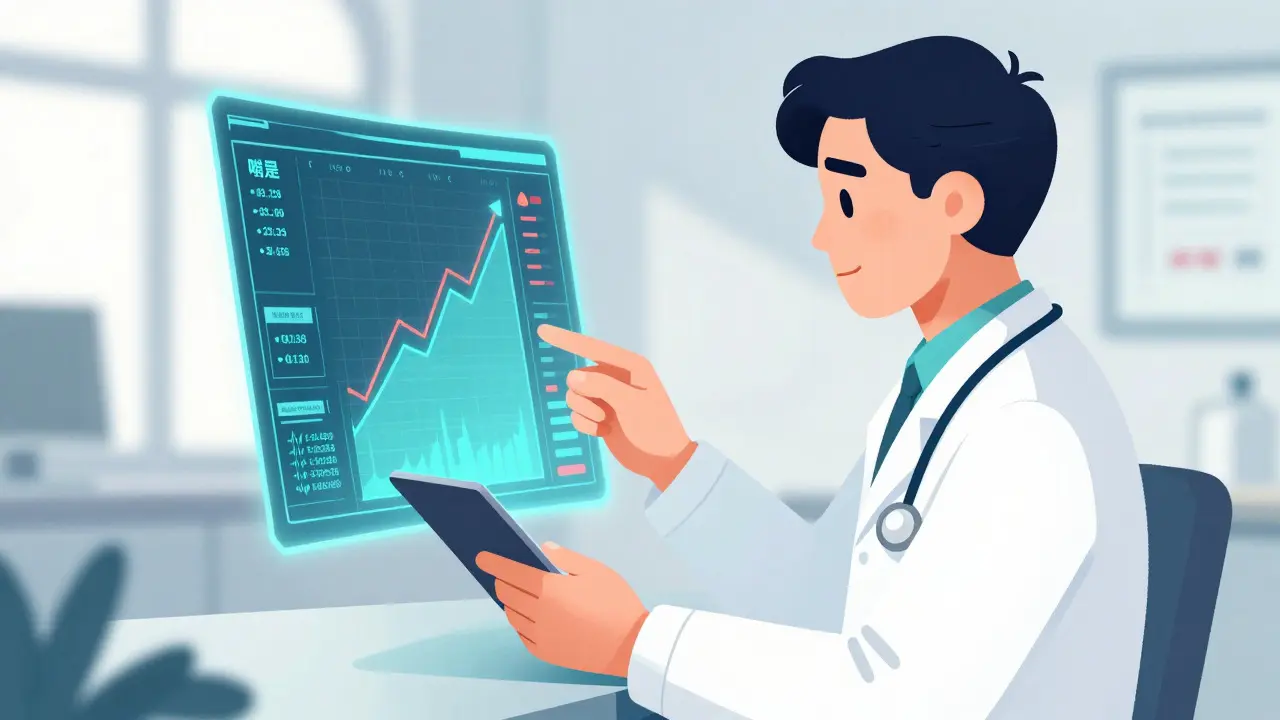
The next frontier for digital pills is artificial intelligence. Companies like etectRx have partnered with IBM Watson Health to develop algorithms that predict adherence lapses. By analyzing historical patterns, device usage, and contextual factors, these AI models can predict non-adherence with up to 82% accuracy. This shifts the paradigm from reacting to missed doses to preventing them.
Imagine a system that notices you've been sleeping poorly and your heart rate variability is dropping. It could nudge you with a personalized reminder or alert your doctor before you miss a dose entirely. Dr. Joseph Kvedar of the American Telemedicine Association predicts that digital pill technology will become standard for high-risk medication regimens within five years. However, he notes it will likely remain niche for routine medications due to cost-benefit considerations.
The global digital pill market is projected to grow from $627.8 million in 2022 to $2.43 billion by 2029. As costs decrease and reimbursement structures improve, we may see wider adoption. But for now, the focus remains on saving lives in critical treatment areas where every dose counts.
Getting Started: What Patients Need to Know
If your doctor recommends a digital pill system, here’s what to expect. The initial setup takes about 15-20 minutes. You’ll download a dedicated app, pair the wearable patch via Bluetooth, and create secure login credentials. Healthcare providers usually undergo 3-5 hours of training to interpret the data correctly, so they should be well-equipped to guide you.
Be prepared for a learning curve. Elderly patients, in particular, may need help connecting the patch to their smartphones. Don’t hesitate to ask for assistance. Also, discuss data access preferences with your provider. Who sees the data? Is it shared with family members? Understanding these details upfront can ease anxiety about privacy.
Finally, remember that the technology is a support tool, not a replacement for human connection. The goal is better health outcomes, not surveillance. Open dialogue with your care team ensures the technology serves your needs, not the other way around.
Are digital pills safe to swallow?
Yes, digital pills are designed to be safe. The sensor components are made from biocompatible materials like silicon, copper, and magnesium. Once activated by stomach acid, the sensor transmits its signal and then passes through the digestive system naturally. The FDA rigorously tests these drug-device combinations to ensure no toxic elements are released during digestion.
How long does the wearable patch last?
Most current wearable patches have a battery life of approximately 72 hours. After this period, the patch needs to be replaced or recharged, depending on the specific system. If the patch battery dies, the ingestion data collected during that time may be lost, so regular maintenance is crucial for continuous monitoring.
Can digital pills detect if I vomited the medication?
Not directly. Digital pills confirm ingestion (swallowing), not absorption. However, advanced systems that monitor gastrointestinal pH and temperature might infer issues if there are sudden changes post-ingestion. But currently, if you vomit shortly after taking the pill, the system may still record it as ingested. Patients are advised to manually log such events in the app for accurate records.
Is my data private and secure?
Data security is a top priority. Systems use encryption protocols like AES or DES to protect data during transmission. HIPAA regulations safeguard health data transmitted through healthcare channels. However, privacy concerns persist regarding third-party apps and potential data sharing. Always check the privacy policy of the specific digital pill system and discuss data access rights with your healthcare provider.
Which conditions benefit most from digital pills?
Digital pills are most beneficial for conditions requiring strict adherence, such as schizophrenia, bipolar disorder, HIV/AIDS, tuberculosis, and certain cardiovascular diseases. In these cases, missing doses can lead to severe relapses, drug resistance, or life-threatening complications. The technology is less common for routine conditions like mild hypertension due to cost and complexity.



Write a comment