

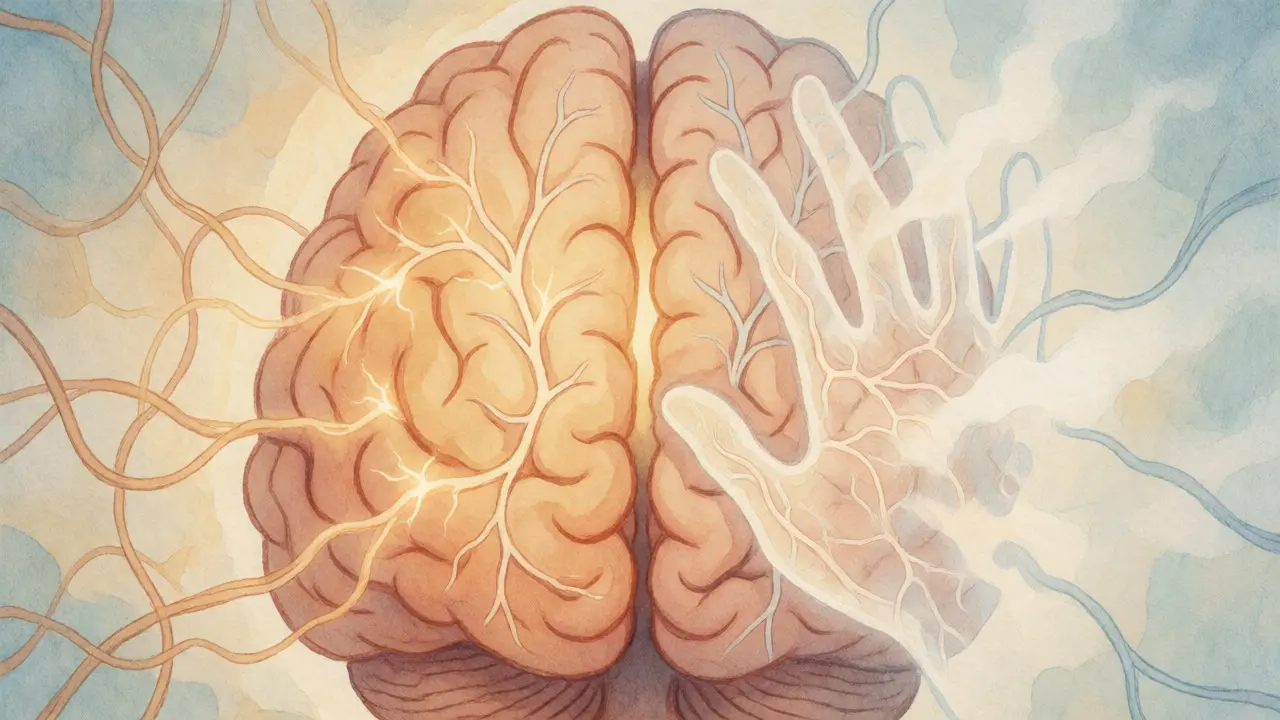

Imagine losing your leg in an accident. The surgery is done, the wound heals, and you’re back on your feet-or rather, one foot. But then, something strange happens. Your missing toes start to burn. Your absent fingers feel like they’re being crushed in a vice. It’s not in your head; it’s Phantom Limb Pain (PLP), a neurological reality affecting up to 85% of amputees. Unlike stump pain, which hurts at the site of the cut, PLP feels like it’s coming from the limb that’s no longer there. If you or someone you know is dealing with this, you’re likely wondering how to stop the fire without drowning in pills. This guide breaks down the two most effective tools: medication and mirror therapy.
Why Does a Missing Limb Hurt?
For decades, doctors dismissed phantom pain as psychological grief. Modern brain scans proved them wrong. When you lose a limb, the nerves don’t just vanish; the map in your brain does too. The area of your brain responsible for feeling your hand doesn’t go silent. Instead, neighboring regions-like those controlling your face or shoulder-invade that space. This process, called cortical remapping, creates crossed wires. Stimulating your cheek might suddenly make your missing thumb tingle. The spinal cord also gets involved, becoming hyper-sensitive to signals that aren’t even coming from a physical body part anymore. This central sensitization means the pain is real, measurable, and often severe enough to disrupt sleep and daily life.
| Feature | Phantom Limb Pain | Stump Pain |
|---|---|---|
| Location | In the missing limb (e.g., missing fingers) | At the end of the residual limb |
| Sensation | Burning, shooting, cramping, crushing | Aching, throbbing, sharp localized pain |
| Cause | Brain rewiring and nerve signaling errors | Tissue damage, neuromas, poor fit |
| Trigger | Stress, weather, fatigue, touch elsewhere | Pressure from prosthetic, movement |
The Role of Medication in Managing PLP
You can’t simply take an aspirin and hope it goes away. Standard painkillers like ibuprofen often fail because PLP is neuropathic-it’s nerve pain, not inflammation. Doctors usually reach for drugs that calm down overactive nerves. Anticonvulsants are frequently the first line of defense. Gabapentin and pregabalin work by dampening the electrical storms in your nerves. You might start on a low dose of gabapentin, say 300 mg, and gradually increase it until you find relief. It takes time, though. These meds aren’t instant fixes; they build up in your system. Side effects like dizziness or weight gain are common, so patience is key.
If anticonvulsants don’t cut it, tricyclic antidepressants like amitriptyline often come next. Don’t let the name fool you; at low doses (10-75 mg), they block pain signals regardless of whether you’re depressed. They help reset the pain thresholds in your spinal cord. For stubborn cases, specialists might try NMDA receptor antagonists like ketamine, administered intravenously in clinical settings. Opioids remain controversial. While they can knock out severe pain, the risk of addiction and tolerance makes them a last resort, typically limited to short-term use under strict supervision.
Mirror Therapy: Tricking the Brain into Relief
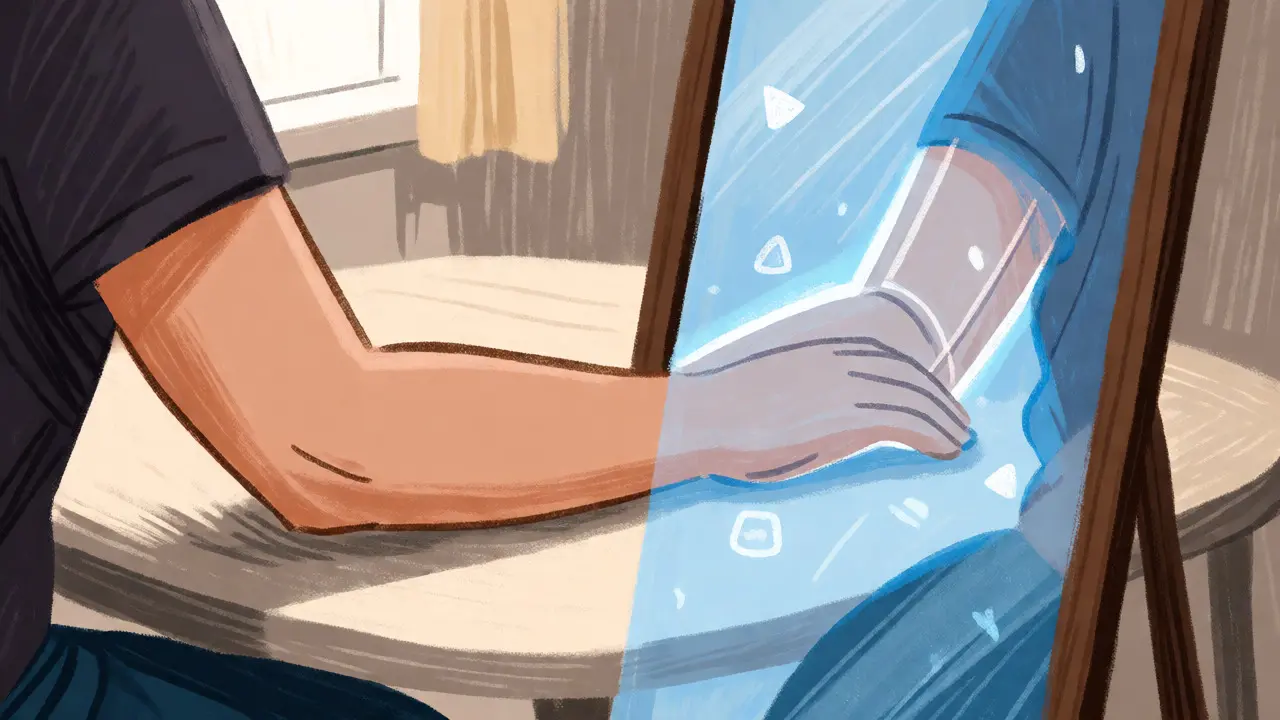
Medication masks the symptoms, but mirror therapy aims to rewire the problem at its source. Developed by neuroscientist V.S. Ramachandran, this technique uses visual feedback to correct the brain’s confused map. Here’s how it works: you place a mirror between your arms or legs so that your intact limb reflects where the missing one should be. When you move your good hand, the mirror shows a "phantom" hand moving in sync. This visual input tells your brain, "Look, the limb is here, and it’s moving painlessly." Over time, this contradicts the painful sensory signals, helping to untangle the crossed wires.
It sounds simple, almost too easy, but consistency matters. Most protocols require 15-30 minutes of daily practice. You watch the reflection while gently moving your intact limb, imagining the missing one doing the same. Some patients report immediate relief; others need weeks. A study noted in physical therapy journals found that adherence drops if the routine isn’t engaging, so many clinics now pair it with guided imagery or relaxation techniques. It’s non-invasive, has zero side effects, and empowers you to actively participate in your recovery.
Combining Approaches for Best Results
Relying on just one method rarely yields optimal results. Current medical consensus favors a multimodal approach. Think of it as attacking the pain from two angles: pharmacology reduces the intensity of the nerve firing, while mirror therapy helps reorganize the brain’s representation of the body. Early intervention is critical. Research indicates that if phantom pain persists beyond six months, spontaneous resolution is unlikely. Starting treatment early increases the chances of long-term relief.
Other adjuncts include Transcutaneous Electrical Nerve Stimulation (TENS), which uses low-voltage currents to block pain signals, and cognitive behavioral therapy (CBT) to manage the stress that exacerbates pain. Newer technologies, like virtual reality mirror therapy, are gaining traction. By immersing you in a digital environment where your phantom limb looks healthy and moves freely, VR can enhance the engagement factor, potentially boosting adherence rates above the traditional 60% seen with standard mirrors.

Practical Tips for Daily Management
- Track your triggers: Keep a diary. Note when pain spikes-is it after a stressful day? Cold weather? Poor sleep? Identifying patterns helps tailor your treatment.
- Check your prosthetic fit: Even if the pain is phantom, pressure on the residual limb can worsen overall discomfort. Ensure your socket fits well to reduce stump pain, which can amplify phantom sensations.
- Stay consistent with mirror therapy: Short, frequent sessions are better than one long weekly session. Aim for daily practice.
- Manage expectations with meds: Titration takes weeks. Don’t quit early because you don’t feel instant relief. Communicate side effects with your doctor promptly.
- Prioritize sleep: Fatigue lowers pain thresholds. Establish a calming bedtime routine to improve rest quality.
Frequently Asked Questions
Is phantom limb pain permanent?
Not necessarily. While some cases persist indefinitely, many people experience a gradual decrease in intensity over time, especially with early and consistent treatment. However, if pain lasts more than six months, it is less likely to disappear on its own without intervention.
How long does it take for mirror therapy to work?
Results vary. Some patients notice relief within a few sessions, while others may need several weeks of daily practice. Consistency is crucial; skipping sessions can delay progress. Most clinical protocols suggest evaluating effectiveness after 4-6 weeks of regular use.
Can I do mirror therapy at home?
Yes, once you’ve learned the proper technique from a therapist. You’ll need a flat mirror and a comfortable setup. Start with gentle movements and avoid forcing the phantom limb into painful positions. A physical therapist can help you design a personalized routine.
Are opioids effective for phantom limb pain?
Opioids can provide temporary relief for severe pain but are generally not recommended for long-term management due to risks of dependence, tolerance, and side effects like constipation and sedation. Neuropathic medications like gabapentin are typically preferred.
What causes phantom limb pain to get worse?
Common triggers include stress, fatigue, changes in weather, infection, and pressure on the residual limb. Emotional distress and lack of sleep can also lower your pain threshold, making sensations feel more intense.

Write a comment