

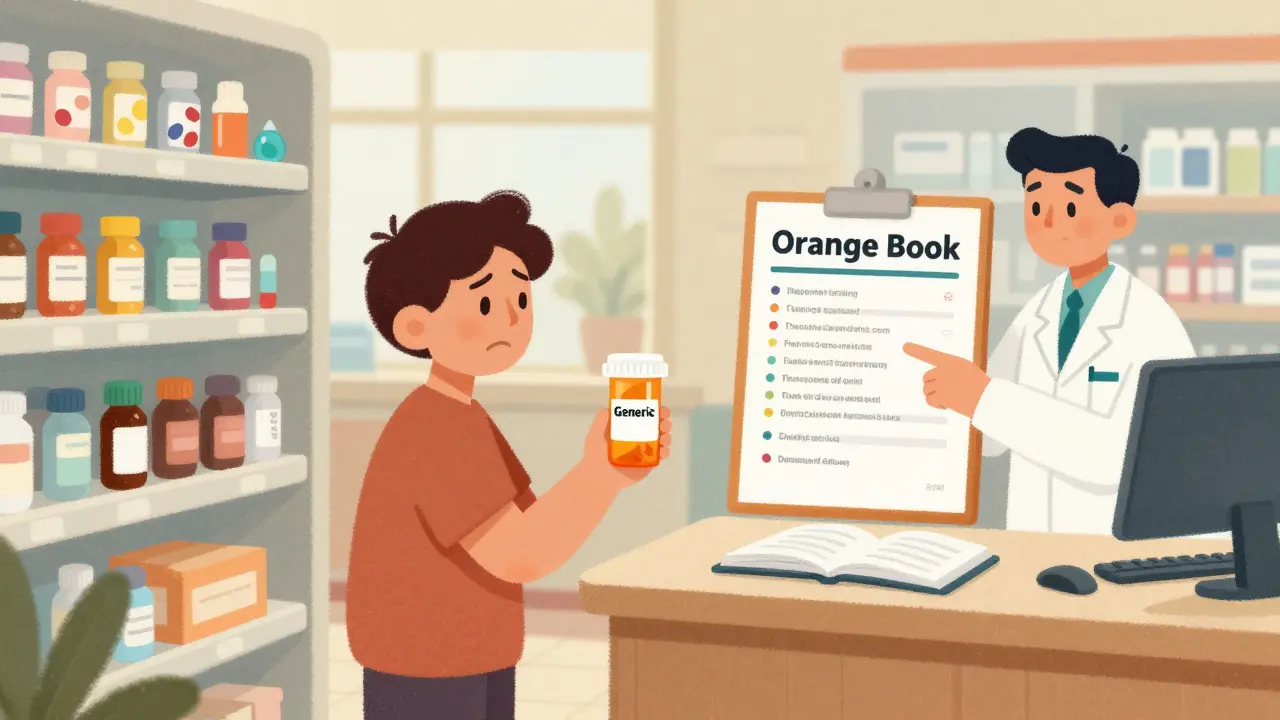

When your prescription comes back from the pharmacy and it’s not the brand-name drug your doctor wrote, you’re not alone. Every day, millions of people in the U.S. get a generic version instead of the brand they expected. That’s generic substitution-and it’s not random. It’s driven by insurance rules, state laws, and cost-saving goals that often leave patients confused, frustrated, or even worried about their health.
Here’s the reality: generic drugs aren’t cheap knockoffs. They’re FDA-approved copies of brand-name drugs with the same active ingredients, strength, and how they work in your body. The FDA requires them to be bioequivalent-meaning they deliver the same amount of medicine into your bloodstream within a narrow range (80%-125%) of the brand. That’s not guesswork. It’s science. And it’s why generics make up 90% of all prescriptions filled in the U.S., while costing just 18% of what brand drugs do.
Why Insurance Companies Push for Generics
Insurance companies don’t push generics because they dislike brand drugs. They do it because it saves money-big time. In 2023, the U.S. healthcare system saved an estimated $373 billion thanks to generic drugs. For example, Sun Life Financial in Canada saw brand-name drug claims average $72 per prescription, while generics were just $27. That’s a 62.5% drop. Those savings get passed down: lower premiums, smaller co-pays, and more people able to afford their meds.
Most private insurers have mandatory generic substitution policies. If you pick a brand-name drug when a generic is available, your plan won’t cover the full cost. You’ll pay the difference out of pocket. Some plans even make you pay the entire price of the brand-name drug unless your doctor says it’s medically necessary. It’s not about controlling you-it’s about controlling costs. And for most people, it works fine.
What the Law Says (It Varies by State)
But here’s the catch: the rules aren’t the same everywhere. In 19 states, pharmacists are required to substitute generics unless the doctor says otherwise. In 7 states and Washington, D.C., they can’t switch your drug without your written consent. In 31 states, you must be notified-even if you don’t have to agree. And in 24 states, pharmacists have the same legal protection whether they dispense the brand or the generic.
Texas has some of the clearest rules. For a substitution to be legal, three things must be true:
- The generic must cost you less than the brand.
- You haven’t refused the switch.
- Your doctor didn’t write "Dispense as Written" or "Brand Medically Necessary" on the prescription.
Pharmacists in Texas must use the FDA’s "Orange Book"-a public list that rates drugs by therapeutic equivalence-to decide what can be swapped. Only drugs rated "A" (meaning they’re interchangeable) qualify.
When You Can Stop a Generic Switch
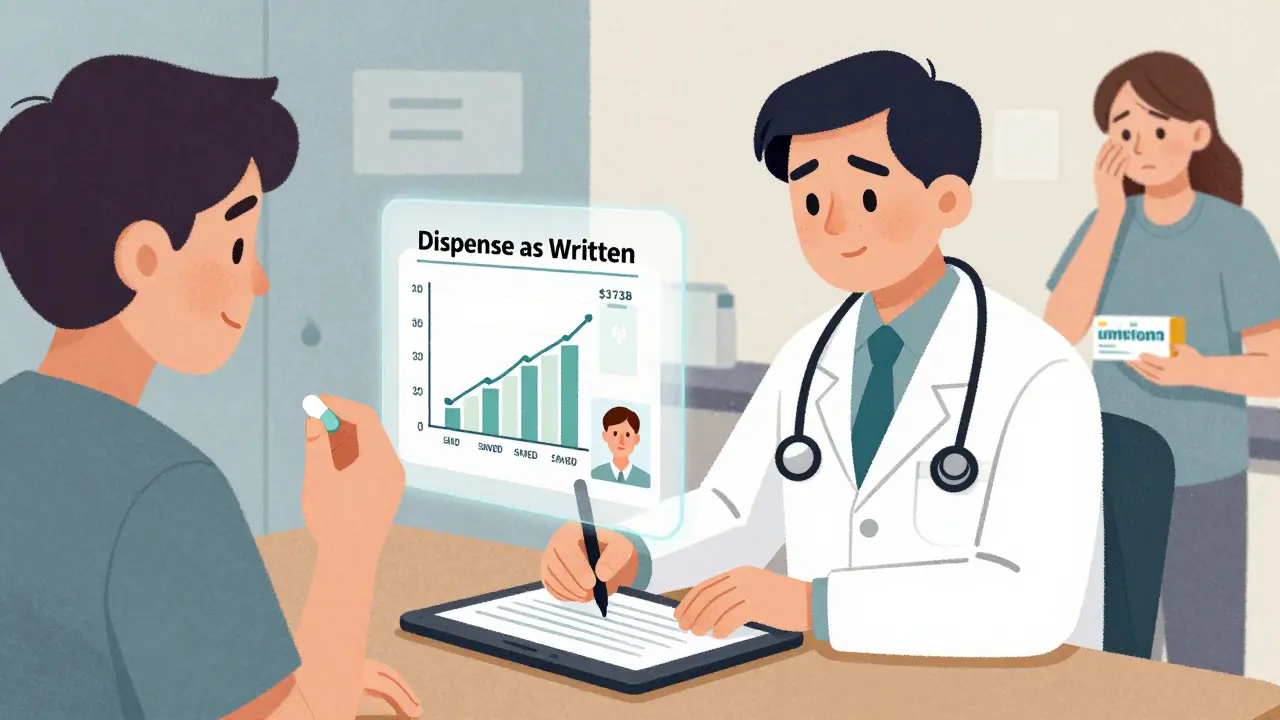
Just because your insurer wants a generic doesn’t mean you have to take it. You have rights. The most straightforward way to block substitution is to have your doctor write "Dispense as Written" or "Brand Medically Necessary" right on the prescription. That’s it. No forms. No calls. Just those words on the paper or in the e-prescription.
That’s especially important for certain drugs. Take levothyroxine, used for thyroid conditions. Some patients report fluctuations in their thyroid levels after switching from Synthroid to a generic. While the FDA says all approved generics are safe, patients with sensitive conditions-like thyroid disease, epilepsy, or heart rhythm disorders-sometimes react differently to inactive ingredients (fillers, dyes, coatings) that vary between manufacturers. One patient on Reddit switched from brand to generic and spent six months adjusting doses. Another saved $45 a month with no issues.
If your doctor agrees the brand is necessary, they can also file a prior authorization with your insurer. This isn’t a formality. Blue Cross Blue Shield of Michigan approved 78% of these requests in 2023 when doctors provided clear documentation of failed generic trials-like lab results showing unstable blood levels or side effects.
What to Do When You Get the Wrong Drug
Let’s say your doctor wrote "Dispense as Written," but you still got the generic. That’s a violation. First, talk to your pharmacist. Ask why the substitution happened. Sometimes it’s a system error-especially with e-prescriptions that don’t carry the "Do Not Substitute" flag correctly.
If the pharmacist insists they followed protocol, ask them to check:
- Is the prescription marked "Dispense as Written"?
- Did your doctor certify medical necessity?
- Is the generic rated "A" in the Orange Book?
If it’s still wrong, call your insurance company. Most have a pharmacy services line. Report the incident. You’re not being difficult-you’re protecting your health.
The Big Exception: Biosimilars and Complex Drugs
Not all drugs are created equal. For simple pills like atorvastatin (generic Lipitor), substitution is straightforward. But for complex drugs-like inhalers, injectables, or biologics-it’s messy.
Biosimilars are the generic version of biologic drugs (like Humira or Enbrel). They’re not exact copies. They’re "highly similar," and the FDA requires extra testing to prove they work the same way. As of November 2023, only 38 biosimilars have been approved in the U.S.-compared to over 10,000 small-molecule generics.
And here’s the kicker: 45 states have special rules for biosimilar substitution. Many require the pharmacist to notify your doctor within 5 business days after switching. Some even require your written consent. These rules exist because switching a biologic can carry more risk-and the data is still growing.
For inhalers and injectables, the problem isn’t just the drug-it’s the device. A generic inhaler might have the same medicine, but if the spray mechanism, dose counter, or mouthpiece is different, it can affect how much you actually get into your lungs. That’s why substitution rates for these drugs are below 50%.
Who’s Really in Control?
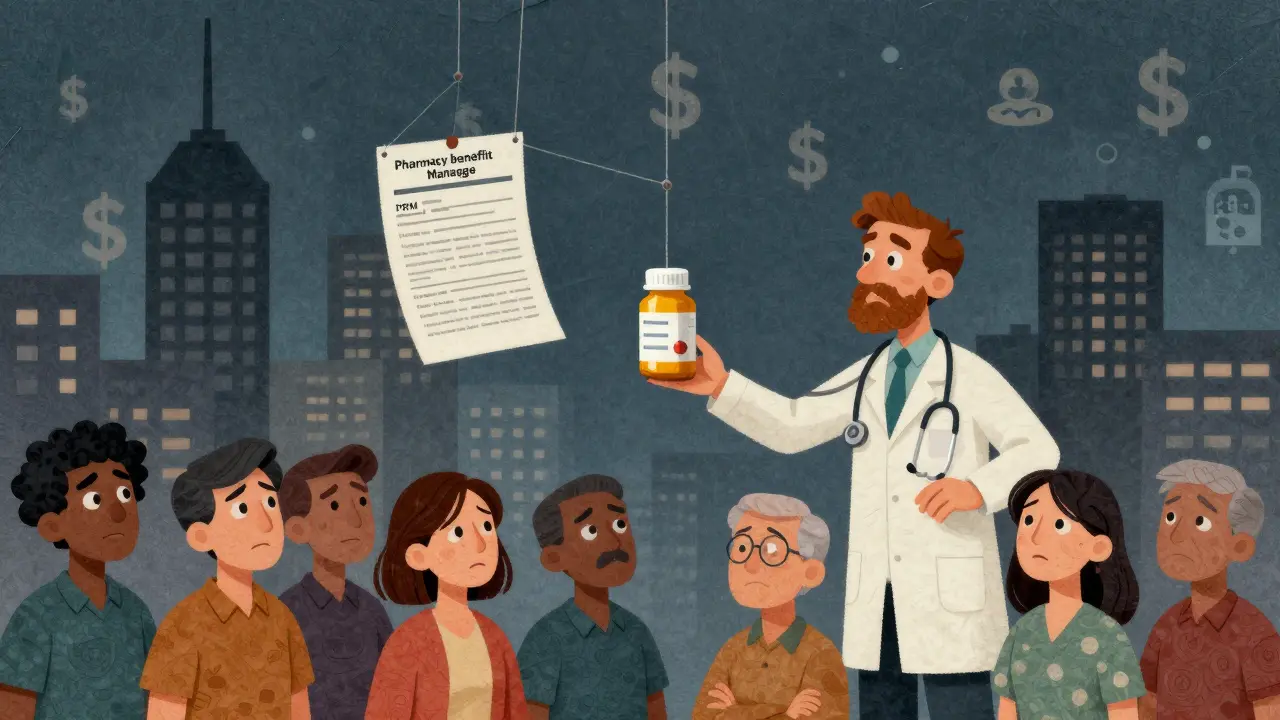
It’s not your doctor. It’s not your pharmacist. It’s the pharmacy benefit managers (PBMs)-companies like Express Scripts, OptumRx, and CVS Caremark. These middlemen manage drug formularies for 270 million Americans. They decide which drugs are covered, which require prior auth, and which get pushed to the bottom of the list.
They’re the ones who create the lists that tell insurers: "This brand is no longer preferred. Switch to this generic." And they’re the ones who get paid based on how much they save. That’s why they push generics so hard.
But here’s the thing: PBMs aren’t evil. They’re responding to a system that’s broken. Prescription drug spending hit $635 billion in 2022. Generics saved $68 billion of that. Without them, millions of people couldn’t afford their meds.
What You Can Do Today
You don’t need to fight every substitution. But you do need to be informed. Here’s your action plan:
- Ask your doctor if your drug has a generic and whether it’s safe for you. Don’t assume it’s fine.
- Check your prescription for "Dispense as Written" or "Brand Medically Necessary." If it’s not there, ask your doctor to add it.
- Call your pharmacy before picking up your script. Ask if a substitution was made. If yes, ask why.
- Track your symptoms after switching. If you feel different-worse fatigue, new side effects, lab results off-tell your doctor immediately.
- Know your plan. Log into your insurer’s website. Look up your drug. See if it’s on the preferred list. If it’s not, find out how to get a prior authorization.
Most people switch to generics with zero issues. But if you’re one of the 10% who have a reaction, you need to know how to push back-and you have the right to do it.
What’s Next?
Generic substitution isn’t going away. In fact, it’s expanding. The Congressional Budget Office predicts Medicare could save $156 billion over the next decade just by increasing generic use. But as more complex drugs come to market-like multi-dose injectables and smart inhalers-the rules will need to catch up.
Right now, the system works best for simple pills. For everything else, the gap between policy and practice is wide. Until we have better standards for complex generics, patients need to be their own advocates.
Generics are a win for the system. But your health isn’t a line item on a balance sheet. If your body reacts differently, speak up. You’re not being difficult-you’re being smart.
Can my pharmacist switch my brand-name drug without telling me?
In most states, yes-but only if your doctor didn’t write "Dispense as Written" on the prescription. Thirty-one states and Washington, D.C. require pharmacists to notify you when they substitute a generic, even if they don’t need your permission. Always check your pill bottle and receipt. If you didn’t get a notice and you’re unsure, call your pharmacy.
Why do I get different-looking generics from the same pharmacy?
Generic drugs are made by different manufacturers. Each one uses slightly different inactive ingredients-fillers, dyes, binders-which can change the color, shape, or size of the pill. The active ingredient is the same, but if you’re sensitive to certain additives (like gluten or dyes), this can cause side effects. If you notice a change in how you feel after switching pill appearance, tell your doctor and pharmacist.
Does the FDA say generics are always safe for every patient?
Yes. The FDA approves all generics for all patients, including those taking drugs with narrow therapeutic indexes like warfarin or lithium. But real-world experience shows some patients have trouble switching. The FDA acknowledges that while bioequivalence is proven, individual responses vary. That’s why doctors are encouraged to monitor patients closely after a switch, especially with critical medications.
What if my insurance denies my request for a brand-name drug?
You can appeal. Most insurers have a formal process. Your doctor needs to submit medical records showing you tried the generic and had adverse effects, lab abnormalities, or no improvement. Blue Cross Blue Shield of Michigan approved 78% of such appeals in 2023. Keep copies of all correspondence. If denied, ask for a peer-to-peer review-where your doctor talks directly to the insurer’s medical director.
Are biosimilars the same as generic drugs?
No. Biosimilars are similar to, but not exact copies of, biologic drugs like Humira or insulin. They’re more complex to make and require additional clinical testing. Unlike generics, they’re not automatically interchangeable. In 32 states, pharmacists must notify your doctor before switching you to a biosimilar. Always check the label-it will say "biosimilar," not "generic."




Donny Airlangga
8 Jan 2026 at 05:16I got switched from Synthroid to a generic last year and my TSH went haywire for months. Took three tries with different generics before I found one that worked. My doctor finally put "Dispense as Written" on the script and my life got back to normal. Don't let anyone tell you it's all the same-your body knows the difference.