


SSRI/SNRI Discontinuation Timeline Calculator
Find Your Withdrawal Timeline
Select your antidepressant to see expected withdrawal symptoms and safe tapering guidance based on medical research
Stopping SSRIs or SNRIs isn’t just about quitting a pill. It’s a physical process your body has to adjust to - and if you rush it, you could end up feeling worse than when you started. Millions of people take these antidepressants every year, and many want to get off them eventually. But the timeline? It’s not one-size-fits-all. Some people feel fine after two weeks. Others spend months - sometimes over a year - slowly lowering their dose just to avoid nasty side effects. The truth? Most doctors still don’t talk about this enough.
Why Stopping Suddenly Can Backfire
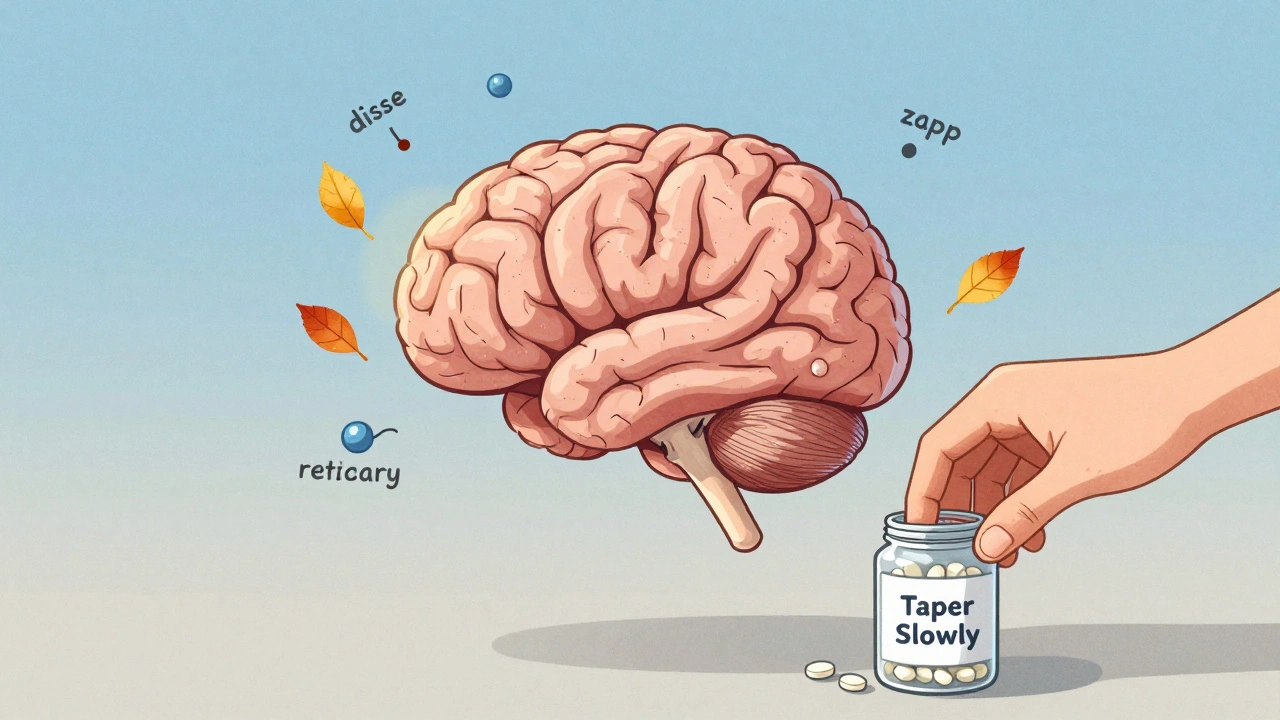
Your brain gets used to having a steady level of serotonin (and norepinephrine, in the case of SNRIs) in your system. When you take an SSRI like sertraline or an SNRI like venlafaxine, your brain adjusts its own production to match the drug’s presence. When you stop, that balance collapses fast. That’s not depression coming back - it’s Antidepressant Discontinuation Syndrome (ADS). And it’s real.Symptoms can hit within hours or days. Dizziness. Brain zaps - those sudden electric shock feelings in your head. Nausea. Insomnia. Anxiety spikes. Flu-like aches. These aren’t signs your depression is returning. They’re your nervous system screaming because it’s been robbed of its chemical crutch. Studies show up to 80% of people experience some form of these symptoms if they quit cold turkey after six weeks or more of use.
The scary part? Many doctors mistake these for relapse. That’s why patients end up back on the same meds - not because they need them, but because no one told them what to expect. A 2015 review found 30% of people who stopped their antidepressants were wrongly diagnosed with returning depression when it was actually withdrawal.
Half-Life Matters More Than You Think
Not all antidepressants are created equal when it comes to quitting. The key is half-life - how long it takes for half the drug to leave your body. Shorter half-life? Faster drop. Bigger crash.Take paroxetine (Paxil) or venlafaxine (Effexor). Both have half-lives under 24 hours. Symptoms can show up in just 1-3 days after your last dose. Venlafaxine is especially rough: 65% of people report severe symptoms, including dizziness (78%) and brain zaps (62%). If you’re on one of these, quitting fast is a recipe for disaster.
Now look at fluoxetine (Prozac). It lingers. With a half-life of 4-6 days, it stays in your system for weeks. That’s why some doctors suggest switching to fluoxetine before quitting - it acts like a built-in buffer. But here’s the catch: even with fluoxetine, symptoms can pop up up to three months later. You can’t just stop and forget about it.
Here’s a quick breakdown:
- Paroxetine (Paxil): Half-life ~24 hours - symptoms in 1-3 days
- Sertraline (Zoloft): Half-life ~26 hours - symptoms in 1-3 days
- Escitalopram (Lexapro): Half-life ~27-32 hours - symptoms in 2-4 days
- Citalopram (Celexa): Half-life ~36 hours - symptoms in 3-5 days
- Venlafaxine (Effexor): Half-life ~5 hours - symptoms in 24-48 hours
- Duloxetine (Cymbalta): Half-life ~12 hours - symptoms in 1-3 days
- Fluoxetine (Prozac): Half-life 4-6 days - symptoms may appear weeks later
Bottom line: If your med has a short half-life, you need a slower, smarter plan.
How Long Should a Taper Really Take?
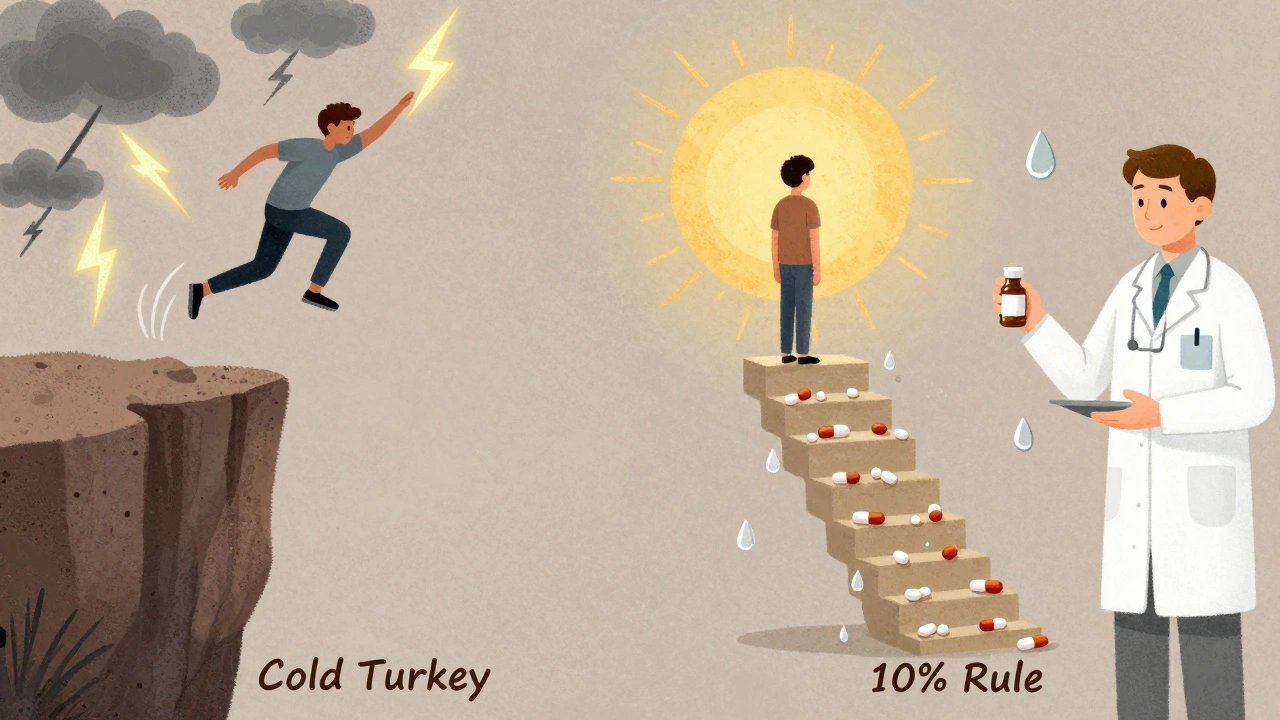
Here’s where things get messy. Official guidelines say 2-4 weeks. Real patients say it takes months - or years.The British Association of Psychopharmacology admits there’s “a lack of evidence” about the best way to taper. The NHS and Cleveland Clinic suggest reducing by 25% every 1-4 weeks. But here’s the problem: that’s still too fast for most people.
Meanwhile, experts like Dr. Mark Horowitz from University College London say tapering should be guided by symptoms, not a calendar. If you feel shaky after a reduction? Pause. Wait. Don’t push through.
Some newer approaches are turning heads. Outro.com’s 2023 guide recommends a “10% Rule”: drop your dose by 10% every 4-8 weeks. As you get lower, the drops get smaller. It’s like walking down a steep hill in tiny steps - not jumping off a cliff. For someone on 40mg of sertraline, that means going from 40 → 36 → 32 → 28 → 25 → 22 → 20 → 18 → 16 → 14 → 12 → 10 → 8 → 6 → 4 → 2 → 0. That’s 16 steps. Takes 8-12 months. Feels manageable.
And then there’s the liquid option. A 2023 University of Toronto study found that using liquid formulations to make tiny 1-2.5% reductions cut severe symptoms by 63%. Most pharmacies can compound these. It’s not magic - but it’s far more precise than cutting pills in half with scissors.
What Patients Are Actually Experiencing
Clinical guidelines don’t always match real life. Look at Reddit’s r/antidepressants community - 285,000 members. Over 15,000 posts about withdrawal. 68% say symptoms lasted longer than the “1-2 weeks” doctors promise. One person on paroxetine took 11 months to taper - and still had brain zaps.The Surviving Antidepressants community surveyed 1,500 people. 73% needed over a year. 31% needed 18+ months. That’s not rare. That’s common.
And here’s the kicker: a 2023 British Medical Journal study found that 68% of people who quit in under 8 weeks had relapse or severe withdrawal. Only 22% of those who took over 20 weeks did. That’s not a coincidence. It’s a pattern.
Patients aren’t being dramatic. They’re just being honest about what their bodies went through.
Red Flags You Can’t Ignore
Not every symptom is just “withdrawal.” Some mean you need help right away.Call your doctor immediately if you experience:
- Suicidal thoughts (reported in 4.2% of discontinuation attempts)
- Severe anxiety or panic attacks (28.7% of cases)
- Brain zaps that feel like seizures or loss of coordination (63.1%)
- High fever, confusion, or muscle rigidity (signs of serotonin syndrome)
These aren’t normal. They’re warnings. If you’re having any of these, stop tapering. Get back on your last stable dose. Then restart slower.
And here’s something no one tells you: switching generic brands can trigger withdrawal. A 2006 study found that different manufacturers can vary by up to 20% in active ingredient. So if your pharmacy switches your sertraline from one brand to another - boom - you might feel like you just skipped a dose.

What Works in Real Life
Successful tapers have three things in common:- They’re slow. Most people who succeed take 6-12 months. Some take longer.
- They’re guided by symptoms. If you feel off, pause. Don’t stick to a schedule.
- They’re supported. Patients who worked with providers experienced in tapering had a 92% success rate. Those who didn’t? Only 47%.
Ask your doctor about:
- Switching to fluoxetine before tapering (if you’re on a short-half-life drug)
- Getting a liquid formulation for micro-drops
- Alternate-day dosing if you can’t get smaller pills
- Monitoring symptoms every 1-3 days after each reduction
Don’t let a 2-week plan be your only option. You’re not weak for needing time. Your brain isn’t broken. It’s just recalibrating.
What’s Changing in 2025
The tide is turning. The FDA now requires updated medication guides that mention individualized tapering. The American Psychiatric Association is preparing new guidelines in 2024 that will include patient-reported outcomes. The European Medicines Agency says current guidelines fail 40-60% of patients - especially those on short-half-life drugs.There are 17 clinical trials underway right now, including the NIH-funded TAPER-SSRI study tracking 1,200 people over 12 months. Results are due in late 2025. We’re finally starting to listen to what patients are saying.
Until then, your best tool is knowledge. Know your drug’s half-life. Know your symptoms. Know your pace. And never, ever feel guilty for needing more time.
How long do SSRI and SNRI withdrawal symptoms last?
For most people, symptoms last 1-2 weeks and fade after restarting the medication or continuing a slow taper. But 10-20% of patients report symptoms lasting months - sometimes over a year. This is especially common with short-half-life drugs like paroxetine or venlafaxine. If symptoms persist beyond 4 weeks, it’s likely not just withdrawal - it’s your nervous system still adjusting. Patience and a slow taper are key.
Can I quit SSRIs or SNRIs cold turkey?
Technically, yes - but it’s dangerous. Quitting abruptly after 6+ weeks of use triggers Antidepressant Discontinuation Syndrome in 20-80% of cases. Symptoms like brain zaps, dizziness, nausea, and anxiety can be severe. For drugs with short half-lives like venlafaxine or paroxetine, symptoms can hit within 24 hours. Cold turkey is not recommended by any major medical body. Always taper under supervision.
Why do some antidepressants cause worse withdrawal than others?
It’s all about half-life. Drugs that leave your system quickly - like venlafaxine (5-hour half-life) or paroxetine (24-hour half-life) - cause sharper drops in serotonin levels. Your brain doesn’t have time to adjust. Fluoxetine, with a 4-6 day half-life, leaves slowly, acting like a buffer. That’s why switching to fluoxetine before quitting is sometimes recommended. Shorter half-life = faster drop = worse symptoms.
Is it safe to use liquid formulations to taper?
Yes - and it’s often the safest option. Liquid formulations allow for tiny, precise reductions (as low as 1-2.5%), which dramatically lowers the risk of severe symptoms. A 2023 University of Toronto study found they reduced severe withdrawal by 63% compared to tablet tapers. Many pharmacies can compound these. Ask your doctor or pharmacist if your medication is available in liquid form.
What should I do if I feel worse after reducing my dose?
Stop reducing. Stay at your last stable dose for at least 2-4 weeks. Symptoms often ease on their own. If they don’t, or if they get worse, go back to your previous dose and taper slower. The goal isn’t speed - it’s comfort. Most experts agree: if symptoms appear, you’re tapering too fast. Slow down. Your nervous system needs time.
Can switching generic brands cause withdrawal?
Yes. Generic versions of the same drug can vary by up to 20% in active ingredient. That’s enough to trigger withdrawal symptoms, even if you didn’t change your dose. If you suddenly feel dizzy, anxious, or have brain zaps after a pharmacy switch, it might not be your mind - it’s your medication. Ask for the original brand or request a consistent generic.
How do I know if I’m relapsing or having withdrawal symptoms?
Withdrawal symptoms usually start within days of a dose change and include physical signs: dizziness, nausea, brain zaps, electric shocks, insomnia. Depression relapse tends to be slower - low mood, loss of interest, fatigue, hopelessness - without the sudden physical symptoms. If your mood drops slowly over weeks, it’s likely relapse. If you feel physically unwell within days of reducing your dose, it’s probably withdrawal. When in doubt, pause the taper and talk to your doctor.




Kyle Flores
7 Dec 2025 at 22:00I was on sertraline for 5 years. Quit cold turkey because my doctor said 'it's fine.' Boy was I wrong. Brain zaps for weeks. Felt like my head was a static radio. Took me 8 months to taper properly after that disaster. Never listen to doctors who don't get it.