

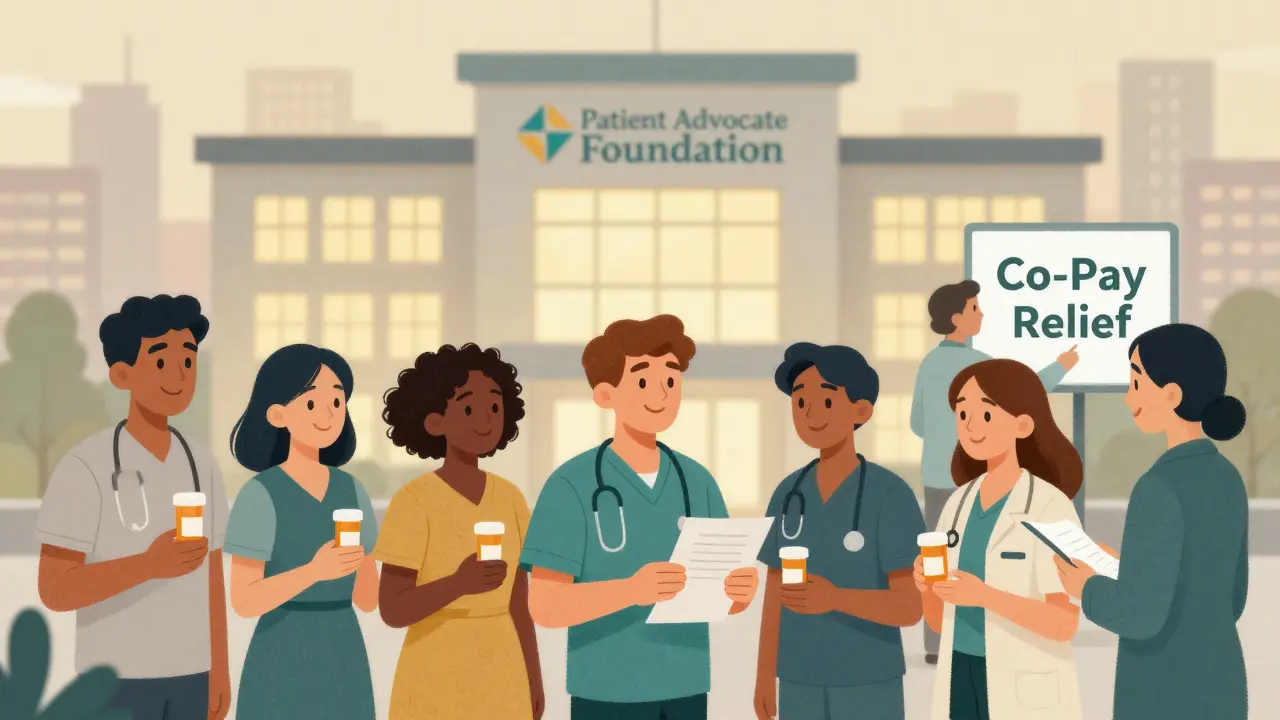

Getting the medication you need shouldn’t mean choosing between paying rent or filling your prescription. Yet for millions of Americans, that’s exactly the choice they face. High deductibles, surprise co-pays, and rising drug prices have turned even basic treatments into financial burdens-even for people with insurance. That’s where patient advocacy foundations come in. These nonprofit organizations don’t just offer hope; they give real, direct financial help to cover the cost of life-saving medications.
What Patient Advocacy Foundations Actually Do
Patient advocacy foundations like the Patient Advocate Foundation (PAF) act as middlemen between patients and the broken parts of the U.S. healthcare system. They don’t make drugs. They don’t run insurance. But they do have money-donated by individuals, foundations, and pharmaceutical partners-that they give directly to patients who can’t afford their meds. These foundations focus on two big problems: uninsured patients who can’t pay out-of-pocket, and insured patients stuck with high co-pays because of their insurance plan. For example, PAF’s Co-Pay Relief Program helps people with commercial insurance who are paying hundreds or even thousands of dollars a month just to fill their prescriptions. The grant goes straight to the pharmacy, so you don’t have to pay anything upfront. Other funds, like PAF’s Financial Aid Funds, are meant for people without insurance or those who’ve maxed out their benefits. These grants can cover not just medication, but also travel to treatment centers, lab tests, or even home care. The key is this: you don’t have to be broke to qualify. You just have to be struggling to pay for treatment that your doctor says you need.Who Qualifies for These Grants?
Eligibility isn’t based on your credit score or how much you have in savings. It’s based on three things: your diagnosis, your treatment status, and your income. First, you must have a confirmed diagnosis of a serious, chronic, or life-threatening condition. Common qualifying conditions include cancer, autoimmune diseases like rheumatoid arthritis or lupus, rare disorders like amyloidosis, and severe infections like sepsis. Some funds are even specific to one disease-like Thyroid Eye Disease or Acute Respiratory Distress Syndrome (ARDS). Second, you need to be in active treatment. That means you’re currently taking the medication, starting it within the next 60 days, or finished treatment within the last six months. If you’re just researching options, you’re not eligible yet. You need a doctor’s prescription and a treatment plan. Third, you must be a U.S. citizen or permanent resident receiving care in the U.S. or a U.S. territory. Income limits vary by fund. For example, the Sepsis/ARDS/TSS fund requires household income to be at or below 500% of the Federal Poverty Level. That’s about $70,000 for a single person in 2026. Some funds don’t have strict income caps but ask for proof of financial hardship-like medical bills, eviction notices, or pay stubs showing you’re spending more than 20% of your income on meds.How to Apply: Step-by-Step
Applying for a medication grant isn’t complicated, but it’s paperwork-heavy. Here’s how to do it right:- Find the right fund. Go to www.patientadvocate.org and click on “Financial Aid Funds.” You’ll see a list of conditions with links to each program. Pick the one that matches your diagnosis. If you’re insured and just need help with co-pays, go straight to the Co-Pay Relief Program.
- Gather your documents. You’ll need: a copy of your diagnosis letter from your doctor, proof of insurance (if applicable), your most recent tax return or pay stubs, and a photo ID. Some funds ask for a utility bill to confirm your address.
- Get your doctor to help. Your doctor must complete a form confirming your diagnosis, treatment plan, and medication. This isn’t optional. Without it, your application won’t move forward. Call their office early-some clinics have a dedicated staff person to handle these forms.
- Submit your application. You can apply online or by phone. Online is faster. For the Co-Pay Relief Program, use the portal at copays.org. For other funds, use patientadvocate.org. If you’re unsure which number to call, use 844-974-0257 for general assistance.
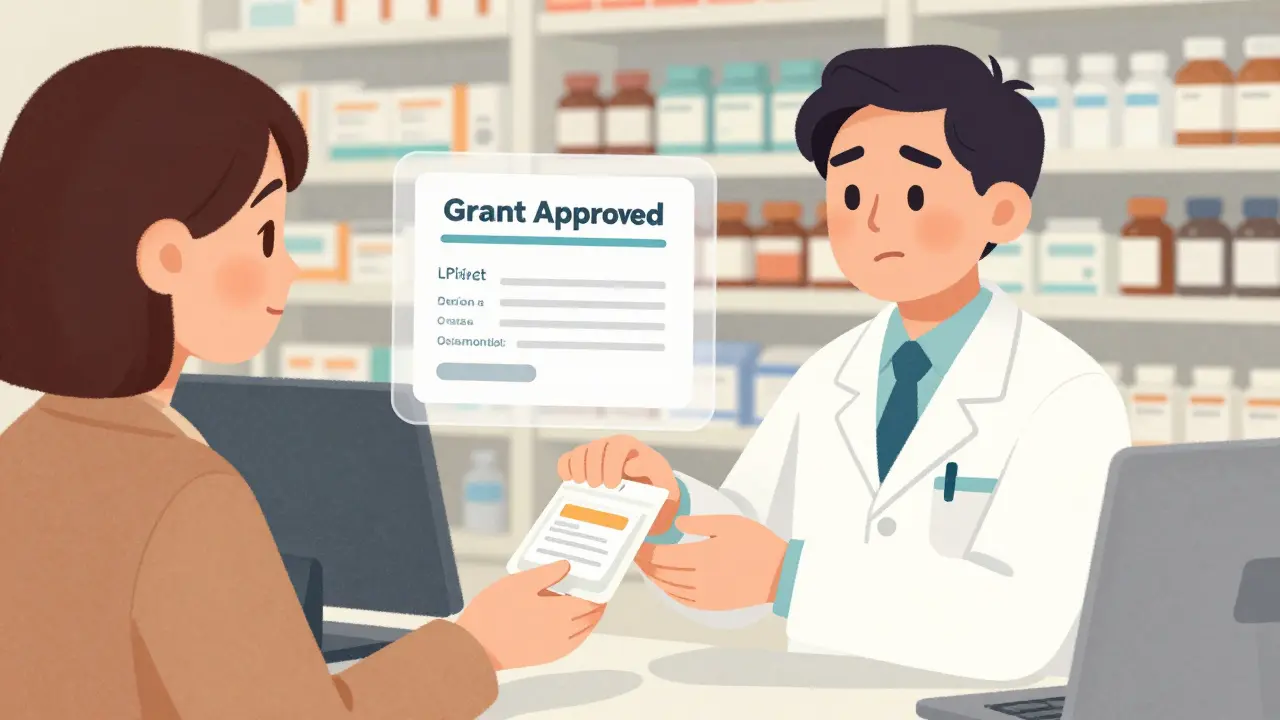
- Wait and follow up. Processing takes 5-10 business days. If your application is approved, the grant is sent directly to your pharmacy or caregiver. You won’t get cash. You’ll get your meds paid for.
What Happens When Funds Run Out?
This is the hard truth: patient advocacy foundations run on donations. That means funding isn’t guaranteed. Some funds-like the one for Sepsis or ARDS-get completely used up by mid-month. Once the money’s gone, applications close until the next month. The best time to apply? The first business day of the month. That’s when most funds reset. If you wait until the 15th, you might miss your chance. Some funds reopen on the first of every month. Others reopen only when new donations come in. That’s why you need to check the status page on the foundation’s website before you apply. If your application is denied because funds are exhausted, don’t give up. Call the foundation. Ask if there’s a waitlist. Some programs keep your paperwork on file and automatically re-apply you when new money arrives. Others will give you a list of alternative resources.How This Compares to Other Assistance Programs
There are other ways to get help with medication costs-but they’re not the same. Pharmaceutical company Patient Assistance Programs (PAPs) give free drugs to uninsured patients. But they only cover one brand-name drug from one company. If you’re on five different medications, you need five separate applications. And most won’t help you if you have insurance-even if your co-pay is $500 a month. Government programs like Medicaid or Medicare Part D help, but they have long waiting periods, strict rules, and coverage gaps. Many people get denied because they make too much for Medicaid but too little to afford their co-pays. That’s the “coverage gap” that patient advocacy foundations were built to fix. PAF stands out because it handles multiple medications, works with insured patients, and offers case management. Their advisors can help you understand your insurance plan, appeal denials, or find local food and housing help while you’re in treatment. Other programs just hand out money. PAF walks with you through the whole process.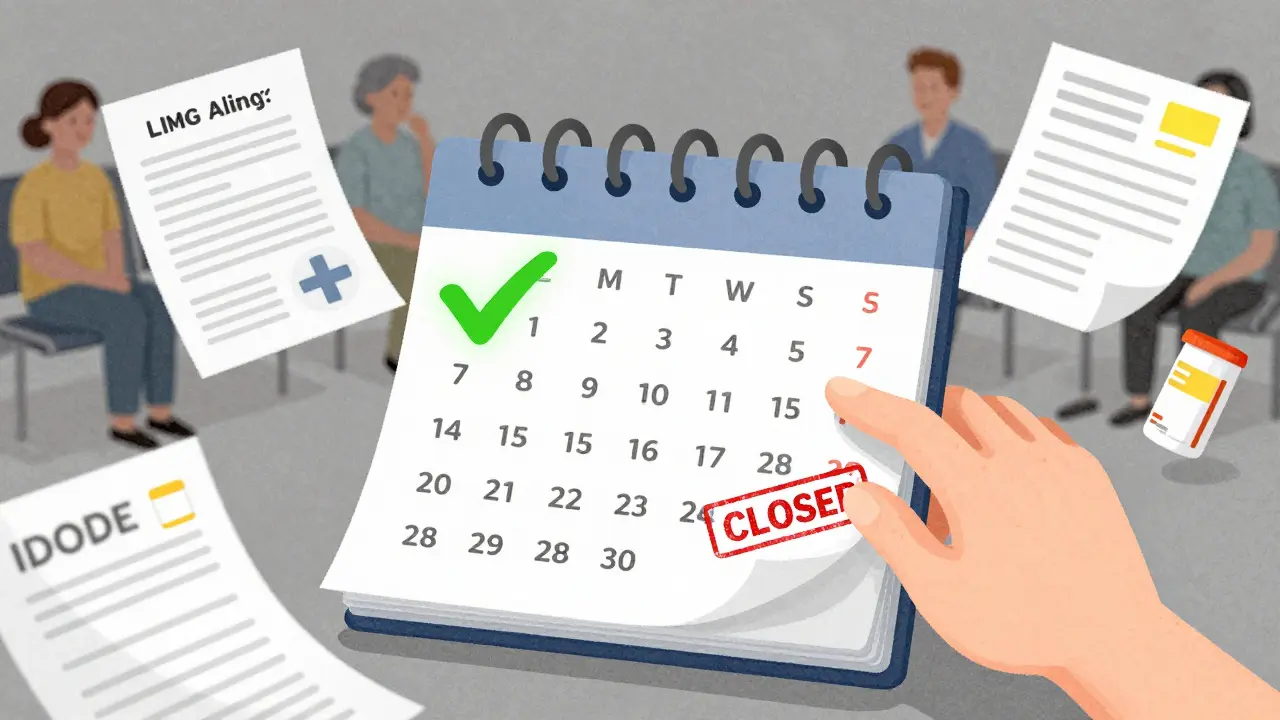
Common Mistakes People Make
Most people who get denied aren’t turned down because they don’t qualify. They’re turned down because they make simple mistakes:- Waiting until the last minute to apply. Don’t wait until your pharmacy says your card was declined.
- Forgetting to get the doctor’s form signed. This is the #1 reason applications get stuck.
- Using the wrong fund. Applying for the cancer fund when you have lupus? That won’t work.
- Not checking if the fund is open. Many people apply and get an automated reply that funds are closed-then they assume they’re ineligible.
- Not updating their info. If your income changes or you switch doctors, call the foundation. Outdated info can delay approval.
What to Do If You’re Still Struggling
If you’ve applied and been denied-or if no fund matches your condition-don’t stop looking. Call PAF’s general line at 1-800-532-5274. They’ll connect you to other nonprofits, state programs, or local charities. Some hospitals have their own financial aid offices. Pharmacies like CVS or Walgreens sometimes offer discount cards. And don’t forget: you can ask your doctor for samples or generic alternatives. There’s no single solution, but there are options. The key is to act early, document everything, and keep asking for help. You’re not alone. In 2025, PAF helped over 120,000 patients get the meds they needed. You can be next.Can I get a medication grant if I have Medicare or Medicaid?
Yes, but only under certain conditions. If you have Medicare Part D and your co-pay for a medication is still too high-even after your plan’s discount-you may qualify for the Co-Pay Relief Program. Medicaid recipients are usually not eligible because Medicaid already covers most costs. But if you’re dual-eligible (Medicare + Medicaid) and still face unaffordable co-pays, call PAF. They’ll check if your situation fits their guidelines.
Do I have to pay back the grant?
No. These are grants, not loans. You don’t have to repay the money, and it doesn’t affect your credit or taxes. The funds come from donations, and the foundation’s goal is to remove financial barriers-not add debt.
How long does the financial help last?
It depends on the fund. Most co-pay grants cover 1-12 months of medication. Some funds renew automatically if you’re still in treatment. Others require you to reapply every 6 months. Always ask when you’re approved-your case manager will tell you the renewal process.
Can I apply for multiple grants at once?
Yes. You can apply to PAF’s Co-Pay Relief Program for one medication and a separate Financial Aid Fund for another. You can also apply to pharmaceutical company PAPs at the same time. Just make sure each application is for a different drug or need. Don’t apply twice for the same medication.
What if my condition isn’t listed on the foundation’s website?
Call them anyway. New funds are added regularly-for example, Thyroid Eye Disease was added in 2024. Even if your condition isn’t listed, PAF’s case managers may know of other nonprofits, hospital programs, or state grants that can help. They’re trained to find solutions, not just match your diagnosis to a fund.



Sami Sahil
31 Jan 2026 at 18:25bro this is life changing. i had to choose between my insulin and rent last year. just applied for the co-pay relief program and got approved in 3 days. no more crying in the pharmacy aisle. you guys are doing god’s work.