

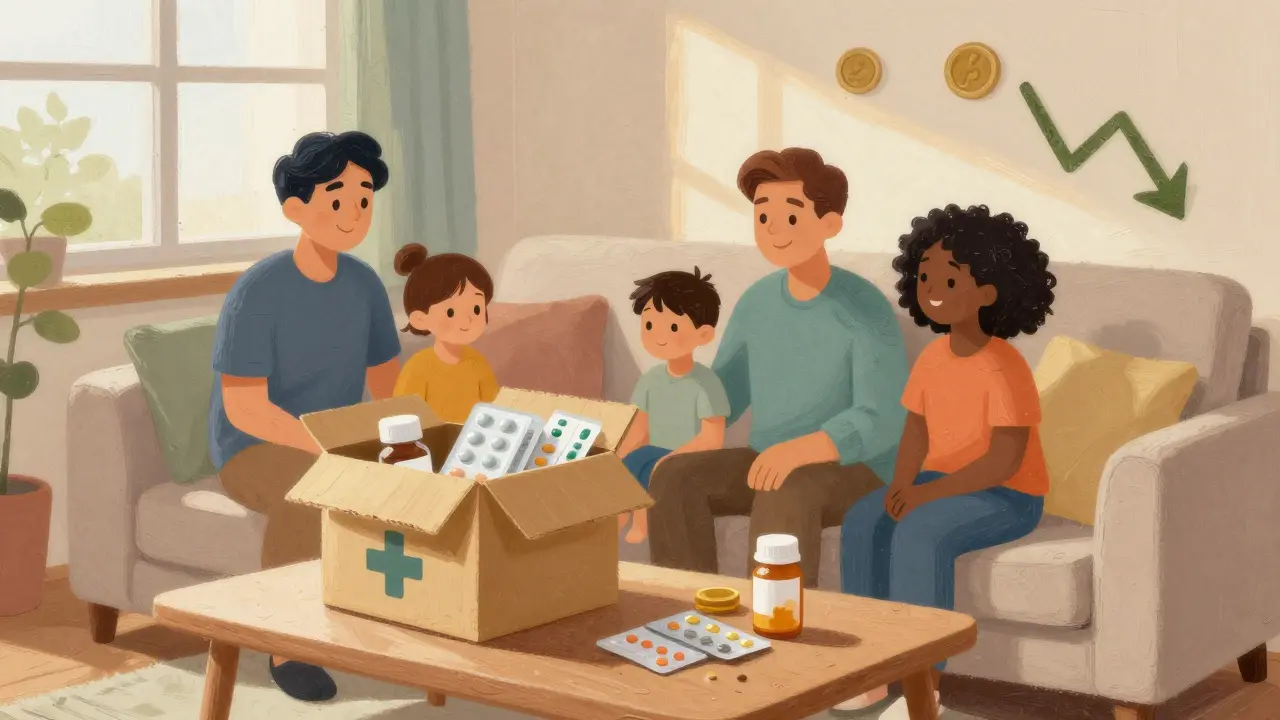

Imagine saving hundreds of dollars a year on your blood pressure medication without changing doctors or insurance plans. That is the promise of mail-order pharmacy services. For millions of people managing chronic conditions, getting prescriptions shipped directly to their doorsteps has become a standard part of healthcare. But does it actually save money for you, or is it just a way for insurance companies to cut costs?
The short answer is yes, it usually saves money-but only if you use it correctly. Mail-order pharmacies are designed specifically for maintenance medications, like those for diabetes, hypertension, or cholesterol. They are not meant for immediate needs, like antibiotics for an infection. Understanding this distinction is the key to unlocking real savings while avoiding frustration.
How Mail-Order Pharmacies Actually Save You Money
The core financial benefit comes from how insurance plans structure their pricing. Most health plans offer a "90-day supply" model through mail-order services. Typically, the cost for a 90-day supply is set at roughly two times the price of a single 30-day retail fill. This means you get three months of medication for the price of two.
Let’s look at a concrete example. If your local pharmacy charges $15 for a 30-day supply of a statin, that adds up to $45 every three months. Through a mail-order service, that same 90-day supply might cost you $30. Over a year, that is a $60 saving on one medication alone. If you take three maintenance drugs, you could save $180 annually. These numbers scale significantly for patients on multiple prescriptions.
Beyond the direct copay difference, Pharmacy Benefit Managers (PBMs) like Express Scripts, CVS Caremark, and OptumRx negotiate bulk discounts with drug manufacturers. According to data from the Pharmaceutical Care Management Association (PCMA), mail-order pharmacies often secure median discounts on brand-name drugs that are 4 to 7 percentage points better than what retail pharmacies get. While these backend negotiations don't always translate dollar-for-dollar to your wallet, they help keep overall plan premiums lower for everyone.
| Factor | Retail Pharmacy (Local) | Mail-Order Pharmacy |
|---|---|---|
| Supply Duration | Usually 30 days | Typically 90 days |
| Copay Structure | Standard per-fill rate | Often ~2x the 30-day rate for 90 days |
| Annual Savings Potential | $0 (Baseline) | $100 - $500+ depending on meds |
| Convenience Fee | Gas/Transportation time | $0 (Delivered to door) |
The Hidden Benefits: Safety and Adherence
Money isn't the only metric. Health outcomes matter just as much. Studies published in PubMed Central show that patients using mail-order services have 5% to 15% better adherence rates for cardiometabolic medications. Why? Because convenience removes friction. When you don’t have to drive to the store, wait in line, or remember to pick up your refill next week, you are less likely to miss a dose.
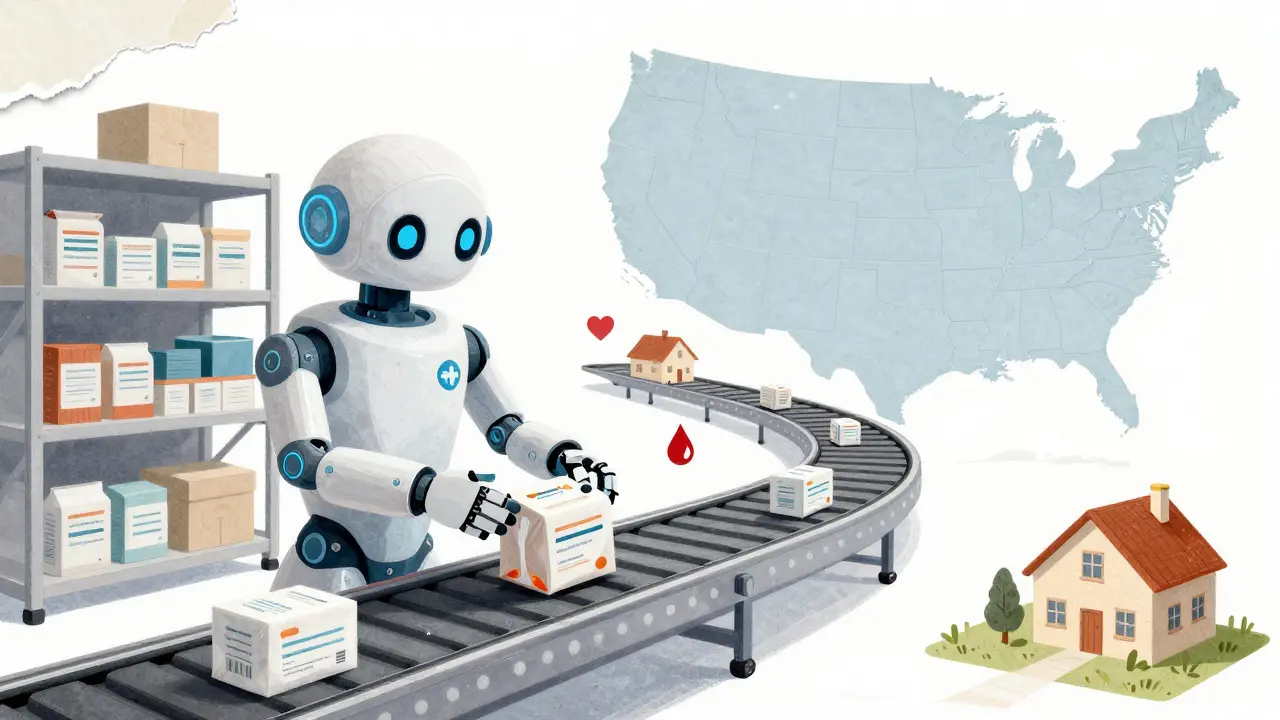
Safety is another major advantage. Mail-order fulfillment centers use highly automated dispensing systems. Data from AMCP.org indicates that error rates in these facilities are approximately 0.016%, compared to 0.04% at typical retail pharmacies. That is a 60% reduction in dispensing errors. Additionally, because all your prescriptions come from one source, pharmacists can review your entire medication profile electronically. This helps catch dangerous drug interactions that might be missed if you split your fills between different local stores.
The Downsides: When Mail-Order Fails You
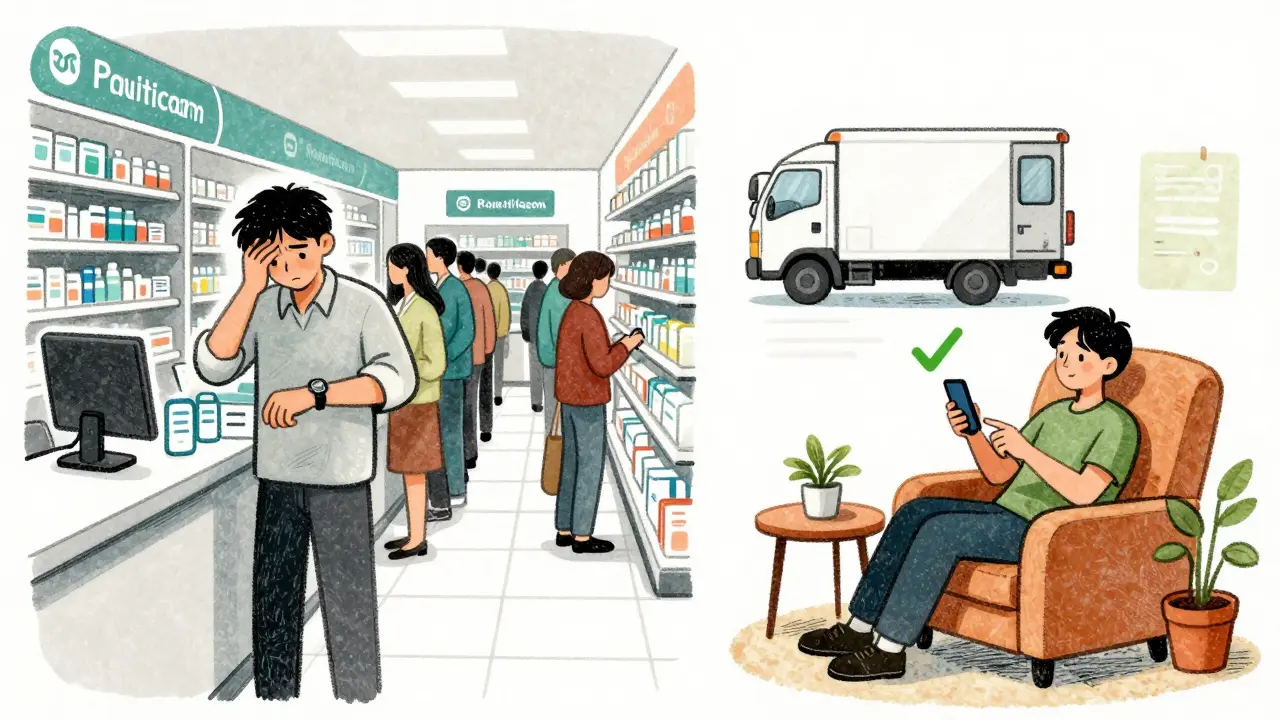
Despite the savings, mail-order pharmacies are not perfect. The biggest drawback is speed. Delivery typically takes 5 to 7 business days. If you suddenly need an antibiotic for a sinus infection or a painkiller after an injury, mail-order is useless. You will still need a local retail pharmacy for acute care.
There is also the risk of logistics. While rare, packages do get lost or damaged. Industry data suggests about 0.5% of shipments experience delivery issues. In one Reddit thread, a user reported losing a shipment of blood pressure medication and having to pay out-of-pocket for an emergency refill at Walgreens. That unexpected expense can wipe out months of savings instantly.
Furthermore, you lose the personal connection with a pharmacist. At a local pharmacy, you can walk up to the counter and ask questions face-to-face. With mail-order, you rely on phone calls or online chats. While 24/7 access is available, some people find impersonal communication frustrating when dealing with complex side effects.
Who Should Use Mail-Order Pharmacy Services?
To decide if this model works for you, consider your specific situation. Mail-order is ideal if:
- You take maintenance medications for chronic conditions like diabetes, high blood pressure, or asthma.
- You live in a rural area or "pharmacy desert" where driving to a store is inconvenient.
- You have mobility issues that make frequent trips to the pharmacy difficult.
- You want to synchronize your refills so all medications arrive at once.
On the other hand, stick with retail pharmacies if:
- You frequently need prescriptions filled immediately.
- You prefer face-to-face consultations with your pharmacist.
- Your insurance plan does not offer a significant discount for mail-order fills.
- You are concerned about package theft or loss at your doorstep.
How to Set Up Your Account Successfully
Getting started is straightforward. Most major health plans include mail-order benefits automatically. Check your insurance card or log into your provider’s portal. Look for a section labeled "Home Delivery" or "Mail Order." You will usually see a dedicated phone number and website.
When transferring prescriptions, expect some administrative lag. A 2024 Kaiser Family Foundation survey found that 32% of new users faced challenges coordinating transfers from their old pharmacies. To avoid gaps, schedule your first transfer at least two weeks before your current supply runs out. Once set up, enable automatic refills. This ensures you never run out of medication and keeps the process hands-off.
Keep track of your deliveries. Major providers like Express Scripts now offer real-time GPS tracking for shipments. If a package seems delayed, contact customer service immediately. Most PBMs have dedicated support lines for mail-order issues, which are separate from general insurance inquiries.
The Future of Prescription Delivery
The landscape is evolving quickly. By 2030, analysts project that 30% to 35% of maintenance medications will be filled via mail-order. Companies are investing heavily in technology. CVS Caremark announced same-week delivery options for most U.S. addresses in early 2025, and cold-chain capabilities for biologic medications are expanding. These improvements address previous concerns about speed and storage.
However, regulatory changes could impact savings. Legislation like the Lower Drug Costs Now Act proposes restrictions on how insurers price mail-order versus retail fills. If passed, patient savings could drop by up to 40%. Until then, the current economic incentives favor home delivery for long-term treatments.
Does mail-order pharmacy really save money?
Yes, for most patients on maintenance medications. The standard pricing model offers a 90-day supply for roughly twice the cost of a 30-day retail fill. This results in annual savings ranging from $100 to over $500 depending on the number and type of prescriptions. However, savings vary by insurance plan, so check your specific formulary details.
Can I use mail-order for urgent prescriptions?
No. Mail-order pharmacies are designed for chronic, maintenance medications. Delivery takes 5-7 business days. For acute needs like antibiotics, pain relievers, or sudden illness treatments, you must use a local retail pharmacy for immediate pickup.
What happens if my medication is lost in transit?
While rare (affecting about 0.5% of shipments), losses do occur. Contact your mail-order pharmacy's customer service immediately. They will typically reship the medication at no cost. In the meantime, you may need to visit a local pharmacy for an emergency refill, which might incur a temporary copay until the issue is resolved.
Is mail-order pharmacy safer than local pharmacies?
Data suggests yes, regarding dispensing accuracy. Automated systems in mail-order centers have error rates around 0.016%, compared to 0.04% at retail locations. Additionally, centralized electronic reviews help identify potential drug interactions across all your prescriptions more effectively.
Which companies provide mail-order pharmacy services?
The market is dominated by three major Pharmacy Benefit Managers (PBMs): Express Scripts (owned by Cigna), CVS Caremark, and OptumRx (part of UnitedHealth Group). Together, they handle the vast majority of mail-order claims in the U.S. Your specific provider depends on your health insurance plan.




Brian Lee
10 May 2026 at 10:53its a good article but i think the savings are not that big for everyone. some plans make you pay more if you use mail order so check first. the delivery time is also too long for me. i like to talk to my pharmacist face to face. it feels safer that way.