

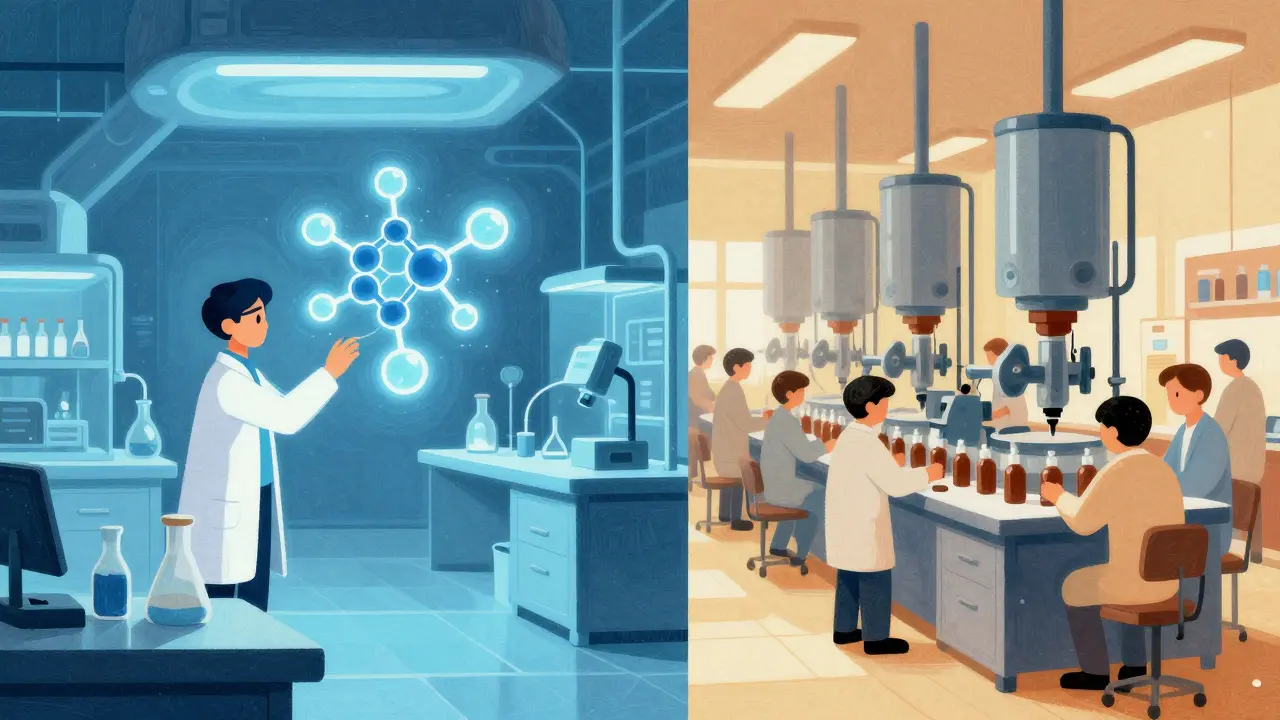

Why does a generic pill cost pennies while the brand-name version costs dollars? It isn’t magic. It’s math, scale, and where the work happens. When you look at the actual money spent on making these drugs, labor is just one piece of a much bigger puzzle. But that piece tells a fascinating story about how the pharmaceutical industry operates today.
Most people assume that because generics are cheaper, they must be made with less effort or lower-quality workers. That’s not true. The difference comes down to efficiency, volume, and geography. In this guide, we’ll break down exactly how labor cost differences between generic and brand production shape the prices you see at the pharmacy counter.
The Real Cost Breakdown: Where Does the Money Go?
To understand labor costs, you first have to look at the total bill. A 2023 analysis by Prosperous America shows that for every $100 spent on generic drugs, only $36 goes toward actual production and manufacturing. Of that $36, roughly half ($18) covers direct production costs like raw materials, formulation, and packaging. The other $18 stays with the manufacturer as gross profit to cover overhead, regulatory compliance, and yes, labor.
In contrast, brand-name drugs often cost 80% to 85% more than their generic counterparts, even when the active ingredients are identical. This huge price gap exists because brand manufacturers need to recoup massive research and development (R&D) investments. According to FDA data from 2023, developing a new molecular entity costs an average of $2.6 billion and takes 10 to 15 years from discovery to market approval. Generic manufacturers skip this entire phase. They don’t pay for the initial clinical trials or the high-risk R&D. This allows them to allocate a much smaller portion of their budget to labor-intensive innovation and focus instead on efficient, large-scale production.
| Cost Component | Generic Drugs | Brand-Name Drugs |
|---|---|---|
| R&D Investment | $0 (No new discovery) | ~$2.6 Billion per drug |
| Production Share of Price | 36% | Variable (Often lower % due to high markup) |
| Labor Share of Manufacturing | 15-25% | 30-40% (Initial phases) |
| Primary Cost Driver | Scale & Efficiency | Recouping R&D & Marketing |
Why Labor Costs Are Lower in Generic Production
If you look strictly at the factory floor, labor makes up about 15% to 25% of total manufacturing costs for generic drugs. For brand-name drugs, especially during the early stages of production, labor can account for 30% to 40% of costs. Why the difference?
Economies of Scale play the biggest role. A benchmark study by Boston Consulting Group (BCG) in 2019 found that generic small-molecule manufacturers reduce unit costs by 27% every time the production volume doubles. Compare that to biopharma companies, which only see a 17% reduction. This means generic factories get much better at what they do very quickly. As volume goes up, each worker produces more units, driving down the labor cost per pill.
Another factor is complexity. Brand-name drugs often involve complex formulations, novel delivery systems, or biologics that require highly specialized scientists and technicians. Generic drugs are usually simple copies of existing molecules. The processes are standardized and well-understood. You don’t need a team of PhDs tweaking a formula; you need efficient operators running proven machinery. This simplifies the workforce requirements and reduces the need for expensive, highly specialized labor.
The Hidden Labor Cost: Quality Control and Compliance
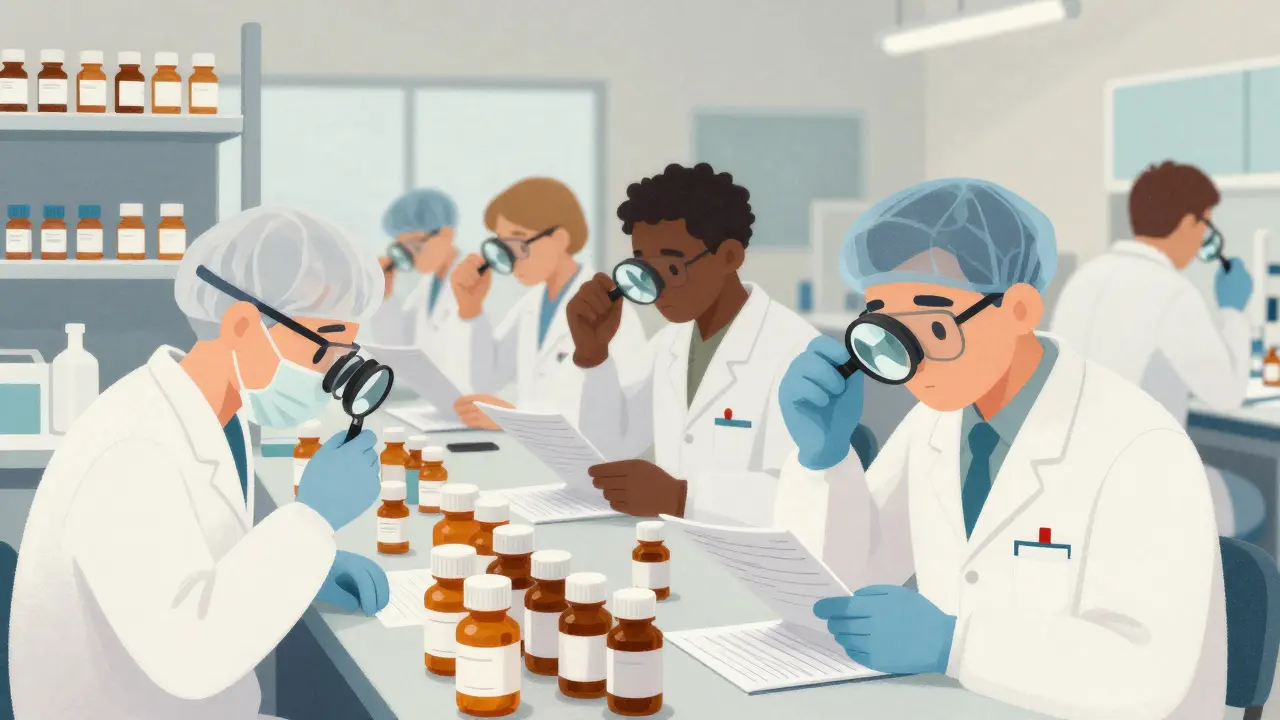
Don’t let the low labor percentage fool you. Generic manufacturing is heavily regulated. In fact, quality control (QC) is one of the most labor-intensive parts of the process. A 2023 analysis by DrugPatentWatch reveals that QC processes alone account for more than 20% of total generic drug production costs.
This includes rigorous testing of raw materials, checking products during manufacturing, and testing final batches. It also involves meticulous documentation to ensure every batch can be traced back to its source. This isn’t optional; it’s required by agencies like the U.S. Food and Drug Administration (FDA). For a medium-sized generic firm with 20 to 500 employees, maintaining these compliance systems costs around $184,000 annually, according to a 2017 FDA analysis. Add in program participation fees and application costs, and the burden grows significantly.
So, while generic makers save on R&D labor, they spend heavily on compliance labor. They invest in prevention costs (training, planning) and appraisal costs (inspection, testing) to avoid internal failures (rework, scrap) and external failures (recalls, lawsuits). A manufacturer that invests in good quality control upfront actually saves money in the long run by reducing waste and ensuring faster release times.
Geography Matters: Where the Work Happens
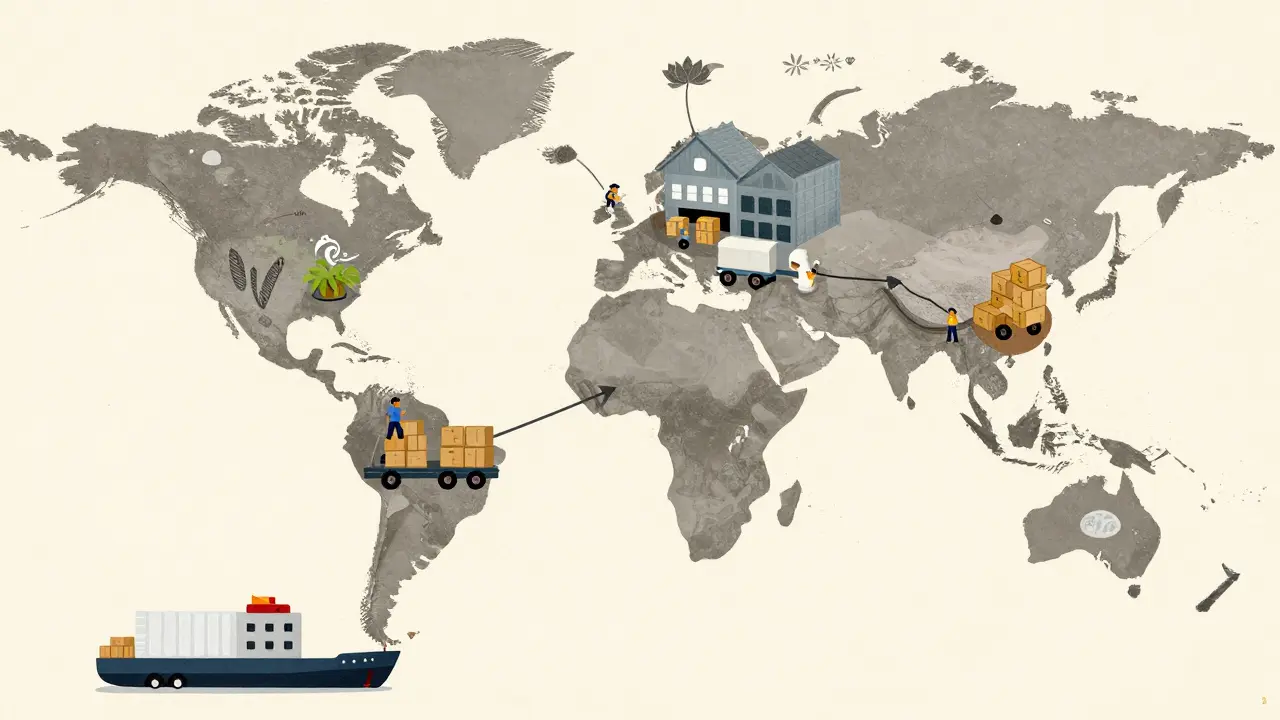
One of the biggest drivers of low labor costs in generic production is location. Many generic manufacturers produce Active Pharmaceutical Ingredients (APIs) in countries like India and China. Prosperous America’s 2023 analysis states that API production in these regions is approximately 42% cheaper than in U.S. facilities.
This geographic arbitrage directly impacts the bottom line. If production accounts for 36% of the generic drug’s cost, and labor is a major part of that production, then shifting labor to lower-cost regions significantly lowers the final price. However, it’s important to note that this isn’t always about efficiency. A 2021 report by the HHS Office of the Assistant Secretary for Planning and Evaluation (ASPE) noted that these international cost advantages often reflect "subsidies, lax labor and environmental standards, and scale dominance" rather than superior productivity.
This creates a structural distortion in the market. U.S.-based generic manufacturers struggle to compete on labor costs alone. To survive, they must rely on extreme efficiency, automation, or strategic outsourcing to Contract Manufacturing Organizations (CMOs). In fact, BCG data shows that biosimilar business units now spend 42% of their Cost of Goods Sold (COGS) on CMOs, compared to just 28% for small-molecule units. This shifts labor from a fixed cost (paying full-time staff) to a variable cost (paying for capacity as needed), allowing companies to optimize labor utilization based on demand.
The Pressure Cooker: Competition and Supply Risks
Here is the catch: intense competition keeps generic prices low, but it also squeezes labor budgets. Nine out of ten prescriptions filled in the U.S. are for generic drugs. This massive volume drives down per-unit costs, but it also means margins are thin. When multiple companies make the same drug, prices drop further. The FDA has noted that this pressure may lead companies to adopt strategies that lower manufacturing costs, which could potentially compromise quality through reduced staffing or less experienced personnel.
This tension between cost-cutting and quality maintenance is a key challenge in the industry. If labor costs are cut too deeply, supply disruptions and shortages can occur. We’ve seen this happen recently with various essential medications. The goal for smart generic manufacturers is to find the sweet spot: investing enough in skilled labor and quality control to prevent errors, while leveraging scale and technology to keep overall costs down.
Summary: The Labor Cost Equation
So, why are generic drugs cheaper to make? It’s not because they use lazy workers or bad equipment. It’s because:
- No R&D Burden: They skip the $2.6 billion research phase, freeing up capital for efficient production.
- Higher Efficiency: Labor costs drop significantly as production volume increases (27% reduction per doubling of volume).
- Simpler Processes: Standardized formulas require less specialized scientific labor.
- Global Sourcing: Producing APIs in lower-cost regions like India and China cuts labor expenses by ~42%.
- Strategic Outsourcing: Using CMOs turns fixed labor costs into flexible variable costs.
Brand-name drugs, on the other hand, carry the weight of innovation. Their higher labor costs in initial phases reflect the need for specialized experts to develop and refine new therapies. Once a drug becomes generic, the labor model shifts from innovation-driven to efficiency-driven. Understanding this shift helps explain why your prescription costs what it does-and why keeping a robust, well-trained workforce in generic manufacturing is critical for both affordability and supply stability.
Do generic drugs use fewer workers than brand-name drugs?
Not necessarily fewer, but different types of workers. Brand-name production requires highly specialized researchers and scientists for development and complex formulation. Generic production relies more on efficient manufacturing operators and quality control technicians. Because generics are produced in much larger volumes, the labor cost per unit is significantly lower due to economies of scale.
Is labor the biggest cost in making generic drugs?
No. Labor typically accounts for only 15% to 25% of total manufacturing costs for generic drugs. The largest costs are usually raw materials (Active Pharmaceutical Ingredients), packaging, logistics, and regulatory compliance. Quality control alone can take up over 20% of production costs, which is largely labor-intensive.
Why are generic drugs so much cheaper if the ingredients are the same?
The main reason is that generic manufacturers do not pay for the original research and development (R&D), which costs billions of dollars and takes over a decade for brand-name drugs. Additionally, generics benefit from massive production volumes, simpler manufacturing processes, and often utilize lower-cost labor markets globally for producing active ingredients.
Does cutting labor costs affect the quality of generic drugs?
It can be a risk. Intense price competition pressures manufacturers to cut costs, including labor. However, strict FDA regulations require rigorous quality control. Reputable manufacturers invest in skilled labor and training to prevent errors and recalls, which are far more expensive than proper staffing. The FDA monitors this closely to ensure safety standards are not compromised for savings.
How does geography impact the labor cost of generic drugs?
Many generic manufacturers produce Active Pharmaceutical Ingredients (APIs) in countries like India and China, where labor costs are approximately 42% lower than in the U.S. This geographic advantage significantly reduces the overall cost of production, allowing generics to be sold at a fraction of the price of domestically produced brand-name drugs.


Write a comment