


When a new warning pops up on a medication label, it’s easy to assume it applies to every drug in that group. But that’s not always true. Some safety alerts hit an entire class of drugs-like all ACE inhibitors or all statins-while others target just one specific medicine. Getting this wrong can lead to unnecessary fear, missed treatments, or even dangerous substitutions. Knowing how to tell the difference isn’t just for pharmacists or regulators. If you’re a doctor, nurse, pharmacist, or even a patient managing multiple meds, understanding class-wide versus drug-specific safety alerts can change how you use medicines safely.
What’s the Difference Between Class-Wide and Drug-Specific Alerts?
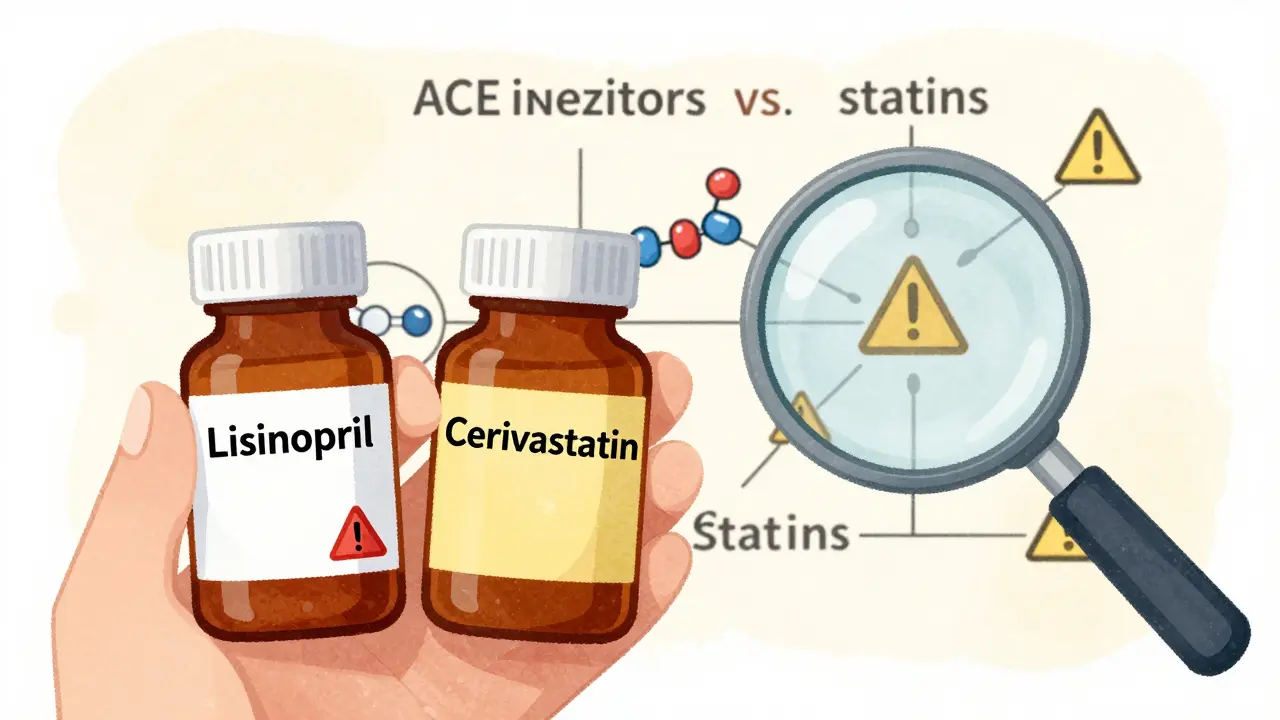
A class-wide safety alert means the risk is tied to how the whole group of drugs works in the body. For example, all ACE inhibitors can cause angioedema-a rare but serious swelling of the face and throat-because they all block the same enzyme. That’s a class effect. If the FDA puts a black box warning on lisinopril, it usually means all ACE inhibitors carry the same risk.
A drug-specific alert is about something unique to one medicine. Take cerivastatin, a statin that was pulled from the market in 2001. It caused severe muscle damage (rhabdomyolysis) at rates far higher than other statins like atorvastatin or rosuvastatin. The problem wasn’t the statin class-it was cerivastatin’s chemical structure and how the body broke it down. Other statins stayed on the market because they didn’t share that exact risk.
The FDA tracks these signals using the FAERS database, which holds over 22 million adverse event reports. But raw numbers don’t tell the whole story. A signal has to be strong, consistent, and backed by more than just one case. That’s where the real work begins.
How Regulators Decide: The Evidence Threshold
The FDA doesn’t slap a class-wide warning on a whim. They look for patterns across multiple sources. Here’s what they check:
- Signal strength: Is the adverse event reported significantly more often for this drug (or group) than expected? Tools like the Proportional Reporting Ratio (PRR) are used. A PRR above 2.0 and a Chi-squared value over 4.0 across multiple databases suggest a real signal.
- Consistency across agents: Does the same problem show up in at least three different drugs from the same class? If only one drug shows a spike in liver injury, it’s likely drug-specific.
- Biological plausibility: Does the mechanism of harm make sense for the whole class? For example, all SSRIs affect serotonin, so a warning about serotonin syndrome might apply broadly. But if only one SSRI causes severe QT prolongation due to a unique metabolite, it’s probably isolated.
- Pharmacokinetic differences: How are the drugs absorbed, broken down, or cleared? Two drugs may have the same target, but if one is metabolized by a different liver enzyme, its risk profile can be very different.
- Real-world data: Did a large study or post-market surveillance show the same pattern? The 2018 class-wide warning on fluoroquinolones came after multiple studies showed disabling tendon and nerve damage across the entire group.
Take testosterone products. In 2016, two specific testosterone gels raised red flags for increased blood pressure. By 2023, after ABPM studies were done on all 12 marketed testosterone products, the FDA issued a class-wide warning. Why? Because every single one showed the same effect-no exceptions.
Why Inconsistent Warnings Cause Confusion
Here’s the messy part: sometimes, the FDA applies a warning to one drug in a class but not others-even when the science suggests it should be broader. A 2011 analysis found that 33% of therapeutic classes with black box warnings had inconsistent labeling. For example, citalopram got a QT prolongation warning in 2011, but escitalopram, its close cousin, didn’t-despite nearly identical mechanisms.
That confusion isn’t just academic. A 2022 survey of 1,200 U.S. physicians found 68% were unsure whether a warning applied to the whole class or just one drug. Primary care doctors, who manage the most medications, were the most confused-73% reported uncertainty. That’s dangerous. One doctor might stop prescribing all statins after hearing about cerivastatin’s risks, even though the rest are safe. Another might ignore a warning because it’s only on one drug, not realizing the whole class could be affected.
And it’s not just doctors. Pharmacists report spending 22% more time verifying prescriptions after class-wide alerts, compared to just 8% for drug-specific ones. Why? Because they have to check alternatives across the whole class instead of swapping one drug for another.
Real-World Impact: When Warnings Change Prescribing
Class-wide alerts don’t just change labels-they change behavior.
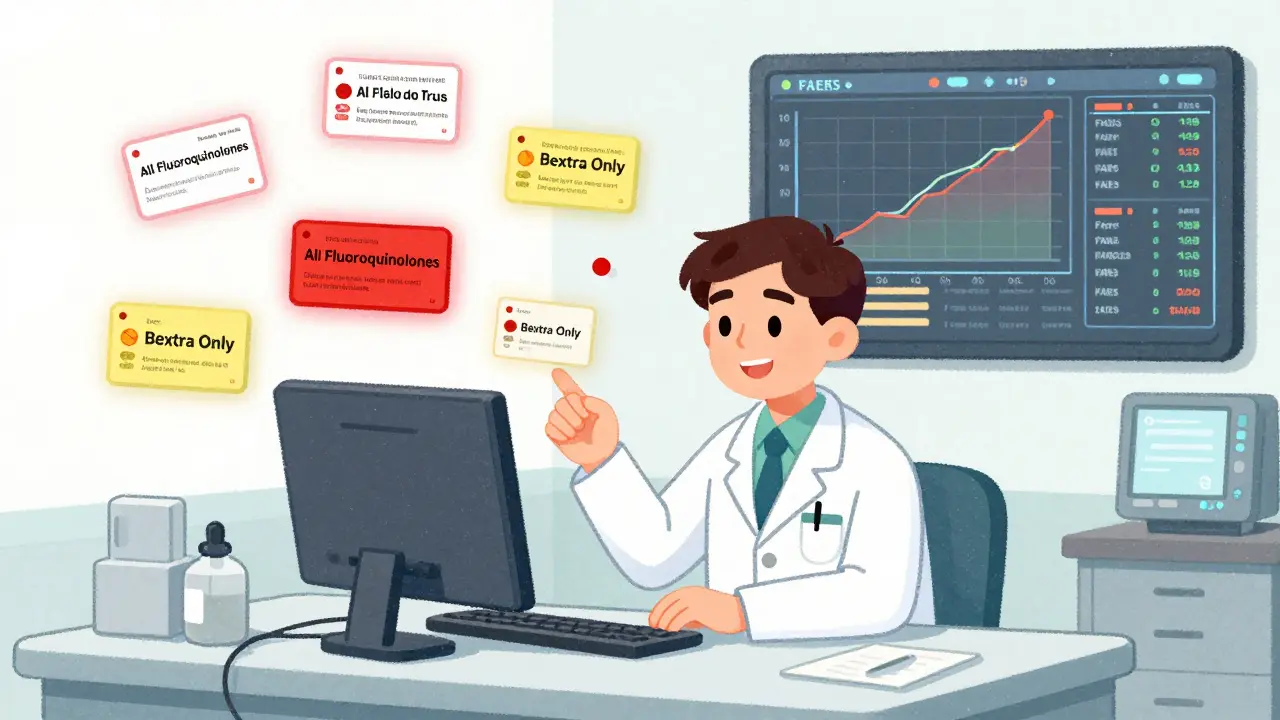
In 2018, the FDA issued a class-wide warning for fluoroquinolone antibiotics due to risks of tendon rupture, nerve damage, and low blood sugar. Within two years, prescriptions for the entire class dropped by 17%, according to IQVIA. That’s a big deal-these were once go-to drugs for urinary and respiratory infections.
Compare that to valdecoxib (Bextra), a COX-2 inhibitor pulled in 2004 for heart attack risk. Celecoxib (Celebrex), another COX-2 inhibitor, stayed on the market because it didn’t show the same level of risk. Prescriptions for celecoxib dipped only slightly, and the class as a whole survived.
Market impact is stark: class-wide warnings can shrink a whole therapeutic category by 15-25% in two years. Drug-specific warnings usually cut a single drug’s sales by 40-60%, but the rest of the class keeps selling.
But here’s the catch: when a class-wide warning hits, patients lose options. Cardiologists follow these warnings 89% of the time because they have alternatives. Psychiatrists? Only 63%. Why? Because for depression or anxiety, there are often fewer safe, effective substitutes. So they take the risk-even when the warning says not to.
How to Check the Scope Yourself
You don’t need to be a regulator to figure this out. Here’s how to verify if a warning is class-wide or drug-specific:
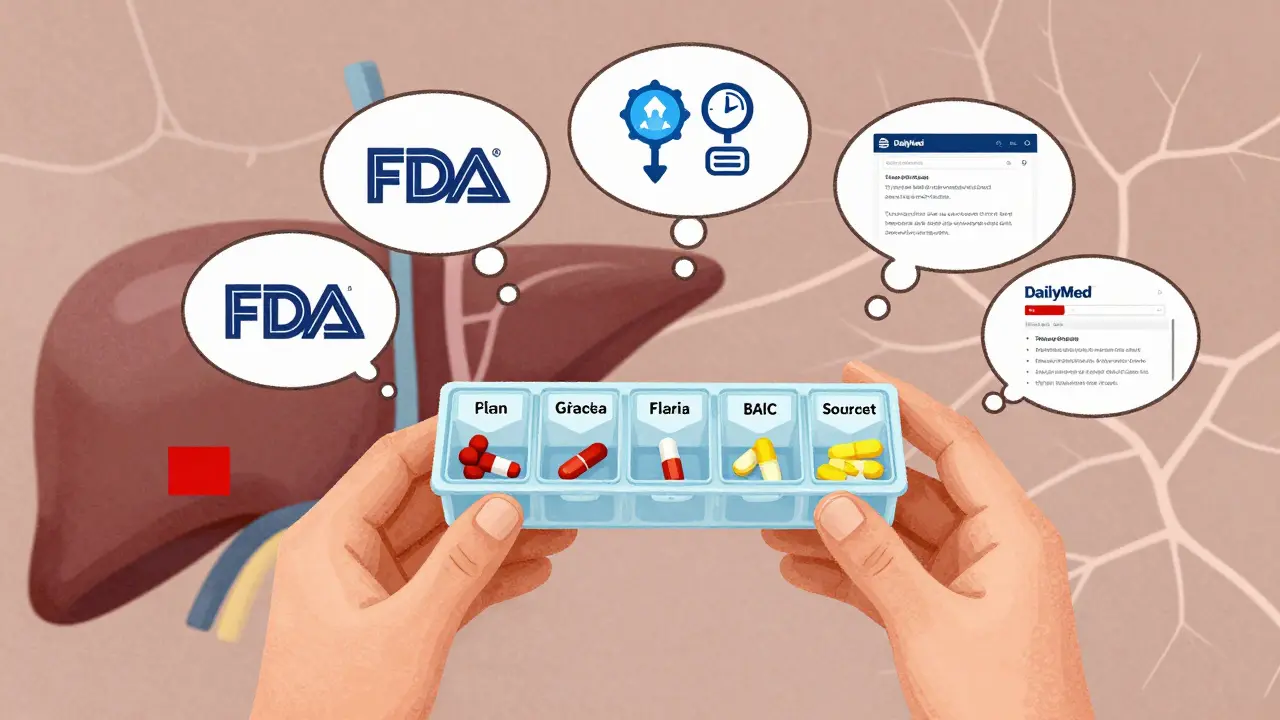
- Check the FDA’s Drug Safety Communications archive. They label alerts by scope. As of 2023, 18% were class-wide, 62% drug-specific, and 20% unclear.
- Look at DailyMed. The National Library of Medicine’s database color-codes warnings. Red means class-wide. Yellow means drug-specific.
- Read the label carefully. If it says “all drugs in this class” or “this class,” it’s class-wide. If it names only one drug, it’s likely specific.
- Use the ATC classification system. Drugs are grouped at level 4 (pharmacological subgroup) and level 5 (chemical substance). If the warning applies to level 4, it’s class-wide. If it’s only at level 5, it’s drug-specific.
- Ask: Are there exceptions? If one drug in the class has a different metabolism, different dosing, or different side effect profile, the risk may not be shared.
Watch out for common traps. Just because two drugs have similar names doesn’t mean they share risks. Cefalexin and ceftriaxone are both cephalosporins, but only certain ones carry a high risk of allergic reactions. And never confuse a drug recall class (Class I, II, III) with a therapeutic class warning. Those are totally different systems.
What’s Changing Now?
The FDA is trying to fix the confusion. In January 2024, they launched a new labeling system that clearly labels warnings as either “Class Risk” or “Agent-Specific Risk.” That’s a big step.
They’re also using AI to predict class effects before they’re obvious. IBM Watson Health’s Drug Safety Intelligence tool analyzes over 15 million FAERS reports and can spot class-wide signals with 89% accuracy. The FDA’s new NEST system, which pulls data from 100+ healthcare networks covering 100 million patients, will soon help determine if a risk is truly class-wide-or just a fluke in one drug’s data.
But the biggest challenge remains: incomplete data. Dr. Janet Woodcock, former FDA acting commissioner, pointed out that 72% of drug classes lack enough post-market data to make confident calls. That means we’re still making decisions with half the picture.
The future? Precision risk communication. Instead of blanket warnings, we’ll see tailored alerts based on patient factors-age, kidney function, other meds, genetics. But until then, knowing the difference between class-wide and drug-specific alerts is your best tool for staying safe.
Common Mistakes to Avoid
- Assuming all drugs with similar names (like ‘-pril’ or ‘-statin’) have the same risks.
- Ignoring a drug-specific warning because it’s only on one product-what if it’s a sign of a hidden class risk?
- Applying a class-wide warning too broadly-stopping all statins because one caused rhabdomyolysis.
- Confusing FDA recall classes (I, II, III) with therapeutic class warnings.
- Not checking the original source. News headlines often oversimplify. Always go to DailyMed or the FDA’s site.
When in doubt, ask: Is this risk tied to the mechanism of action-or just the chemical structure? If it’s the mechanism, think class-wide. If it’s the structure, think drug-specific. And always double-check before changing a prescription.
How do I know if a safety alert applies to all drugs in a class?
Check the FDA’s Drug Safety Communications or DailyMed for official labeling. If the alert says "all drugs in this class," "this class," or applies to multiple agents with the same mechanism, it’s class-wide. Look for evidence from multiple studies, not just one drug. If the warning is only on one drug’s label and doesn’t mention others, it’s likely drug-specific.
Can a drug-specific warning become class-wide later?
Yes. That’s happened before. Rosiglitazone got a boxed warning for heart risks in 2005, but pioglitazone didn’t-until later studies showed both carried similar cardiovascular risks. Class-wide warnings often emerge after more data comes in. Always revisit warnings if new studies are published.
Why do some drugs in the same class have different warnings?
Because not all drugs in a class are identical. Differences in how they’re absorbed, metabolized, or cleared by the body can change their risk profile. For example, cerivastatin was withdrawn because of how it was broken down by liver enzymes, while other statins used different pathways. Pharmacokinetics matter more than chemical similarity.
Are class-wide warnings always accurate?
Not always. They’re based on the best available evidence, but data is often incomplete. Some class warnings are issued too early, causing unnecessary avoidance of safe drugs. Others are delayed because signals are weak or scattered. The FDA is improving this with AI and real-world data, but uncertainty remains.
What should I do if I’m unsure about a warning?
Don’t guess. Check DailyMed.gov or the FDA’s Drug Safety Communications. Talk to a pharmacist-they’re trained to interpret these alerts. If you’re a prescriber, consult a specialist or use the STEPS model: evaluate Safety, Tolerability, Effectiveness, Price, and Simplicity before changing treatment.
Next Steps for Patients and Providers
If you’re a patient: always ask your pharmacist or doctor whether a warning applies to all your meds in that class-or just one. Don’t assume. Write down the names of all your drugs and check them against FDA alerts every six months.
If you’re a provider: make it part of your routine. Before prescribing, scan the label for the scope of the warning. Use DailyMed as a quick reference. Attend the 4-6 hours of continuing education on REMS and risk communication-it’s proven to improve decision-making by 32%.
And if you’re in the industry: push for better labeling. Demand that manufacturers and regulators use the new "Class Risk" and "Agent-Specific Risk" tags. The goal isn’t to scare people-it’s to help them make smarter, safer choices.




Jerry Rodrigues
20 Jan 2026 at 14:46Been prescribing statins for 12 years. Still get tripped up by these alerts. Glad someone finally broke it down without jargon.
Just checked my last 3 scripts - all class-wide. Good to know I’m not crazy.