



Immunosuppressant Level Monitor
Enter your latest lab result to see if it falls within the recommended target range. This tool helps you understand whether your current dosage is likely effective and safe.
Status
--When you start taking immunosuppressive therapy, the goal is clear: stop your immune system from attacking your body or a new organ. But there is a catch. These powerful drugs have a very narrow safety window. Take too little, and you risk rejection or flare-ups. Take too much, and you invite kidney damage, diabetes, or severe infections. This is why regular monitoring during immunosuppressive therapy isn't just a bureaucratic checkbox-it's the lifeline that keeps you safe while the medication does its job.
You might wonder how doctors know exactly where you stand in that safety zone. The answer lies in a combination of blood tests, specific imaging scans, and increasingly, advanced biomarkers. Whether you are a recent transplant recipient or managing an autoimmune condition like lupus or rheumatoid arthritis, understanding what these tests actually measure helps you prepare for appointments and interpret your results without panic. Here is what to expect, why it matters, and how the medical team uses this data to fine-tune your treatment.
Why Monitoring Is Non-Negotiable
Immunosuppressants are not one-size-fits-all. Unlike a standard painkiller where the dose stays the same, drugs like tacrolimus and cyclosporine behave differently in every single person. Genetics, diet, other medications, and even your gut bacteria can change how fast your body processes these drugs. In some patients, the difference between a helpful dose and a toxic one is as small as 2 to 4 times. That tiny margin means guessing is dangerous.
This practice became critical in the 1980s when cyclosporine was introduced. Before then, many transplants failed because doctors couldn't balance the risks. Today, proper monitoring reduces acute rejection rates by nearly 40% and significantly improves long-term graft survival. It transforms immunosuppression from a trial-and-error process into a precise, data-driven science.
The Core of Blood Work: Therapeutic Drug Monitoring
The most vital part of your check-up is therapeutic drug monitoring (TDM). This involves measuring the exact concentration of the drug in your blood at a specific time. For most patients, this means a "trough" level, which is drawn right before your next dose, ensuring the drug hasn't dropped below the effective threshold.
- Tacrolimus: Target levels usually range from 5-10 ng/mL in the first three months after a transplant, dropping to 3-7 ng/mL later on. Higher levels increase the risk of kidney stress and diabetes.
- Cyclosporine: Doctors often look at both trough levels and a 2-hour post-dose level (C2), as the C2 level correlates better with preventing rejection.
- Mycophenolate: Monitoring this drug is trickier because it recirculates in the body. Doctors may look at the total exposure over time (AUC) rather than just a single snapshot, aiming for levels that prevent rejection without causing severe diarrhea or low white blood cell counts.
Labs use different methods to measure these levels. While older immunoassays are cheaper, they can be fooled by similar chemical structures in the blood. The gold standard is liquid chromatography-tandem mass spectrometry (LC-MS/MS). It’s more expensive but far more accurate, offering precision of 95-98%. If you’re asking why your bill is higher for a simple blood test, this technology is likely the reason.
Routine Labs: Catching Side Effects Early
Drug levels tell you if the medicine is working, but routine labs tell you if it’s hurting you. Every 1 to 3 months, your healthcare team will run a panel of tests to watch for common side effects specific to each medication.
| Medication Class | Key Side Effect | Laboratory Test | Typical Concern Threshold |
|---|---|---|---|
| Calcineurin Inhibitors (Tacrolimus/Cyclosporine) | Kidney Damage | Serum Creatinine / eGFR | >30% rise from baseline |
| Calcineurin Inhibitors | Electrolyte Imbalance | Magnesium / Potassium | Hypomagnesemia in 40-60% of patients |
| mTOR Inhibitors (Sirolimus) | High Cholesterol | Fasting Lipids | Hyperlipidemia in 60-75% of patients |
| Antimetabolites (Mycophenolate) | Bone Marrow Suppression | Full Blood Count (CBC) | Leukopenia in 25-30% of patients |
| Corticosteroids | Blood Sugar Spikes | Fasting Glucose / HbA1c | New-onset diabetes risk |
For example, if you are on cyclosporine, your magnesium levels are watched closely because the drug depletes it, leading to muscle cramps and heart rhythm issues. If you are on sirolimus, your cholesterol is checked regularly because high lipids are a very common side effect that increases cardiovascular risk. These aren't just numbers on a page; they are signals to adjust your dose or add a protective medication before problems become serious.
Imaging: Seeing Beyond the Blood
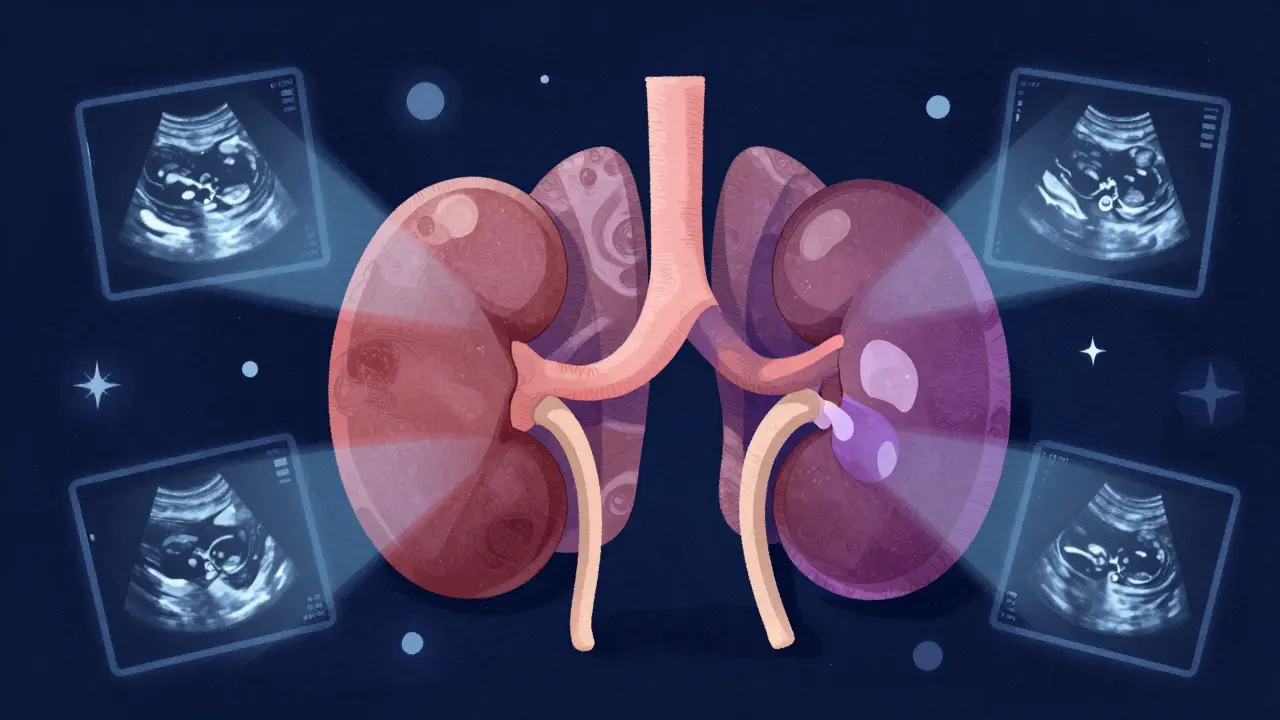
Blood tests give a chemical snapshot, but imaging gives a structural view. Depending on your history, you may need specific scans to ensure organs are physically healthy.
- Renal Ultrasound: If you have a kidney transplant, an annual ultrasound-or one whenever your creatinine levels shift-helps rule out blockages or fluid accumulation around the kidney.
- Chest X-rays: If you develop a persistent cough or shortness of breath, a chest X-ray is essential. It has a sensitivity of 70-85% for detecting pneumonitis, a lung inflammation that can be a rare but serious side effect of certain immunosuppressants like sirolimus.
- Bone Density Scans (DEXA): If you are taking corticosteroids for more than a year, annual bone density scans are recommended. Steroids accelerate bone loss, and early detection allows for calcium, vitamin D, or bisphosphonate interventions to prevent fractures.
The Future: Smarter Monitoring with Biomarkers
Medical science is moving beyond just measuring drug levels. Researchers are now looking at functional markers that show how well your immune system is actually suppressed. One promising tool is Torque Teno Virus (TTV). TTV is a harmless virus found in almost everyone. However, when you are immunosuppressed, your body lets the virus replicate more freely. By measuring the viral load, doctors can get a real-time picture of your immune status.
Studies suggest that a TTV load between 2.5 and 3.5 log10 copies/mL is the sweet spot. Lower than that? You might be under-immunosuppressed and at risk for rejection. Higher than that? You might be over-suppressed and vulnerable to infections. While this isn't yet standard care everywhere, trials like the TTVguideIT study are showing that using TTV to guide therapy can reduce infection rates by 28% and rejection episodes by 22%. As point-of-care devices and AI algorithms mature, we may soon see monitoring that predicts rejection days before symptoms appear, making your care even more proactive.

Practical Tips for Patients
Managing this regimen can feel overwhelming, especially with frequent blood draws. Here is how to make it smoother:
- Be Punctual with Timing: If you need a trough level, take your last dose at the usual time and draw blood exactly 12 hours later (for twice-daily meds). Taking the pill late or early can skew the result, leading to unnecessary dose changes.
- Track Your Symptoms: Keep a simple log of any new symptoms-tremors, mouth ulcers, unusual fatigue, or swelling. Sharing this with your doctor helps them correlate physical signs with lab trends.
- Ask About Interactions: Even over-the-counter supplements can alter drug levels. Always check with your pharmacist before adding anything new to your routine.
- Understand the Cost-Benefit: Yes, comprehensive monitoring adds to annual costs. But it saves thousands more by preventing hospitalizations and rejections. Think of it as insurance for your health.
Frequently Asked Questions
How often do I need to get my blood tested?
In the first year after a transplant, you may need blood tests every 1 to 4 weeks. Once stable, this typically slows down to every 1 to 3 months. The frequency depends on your stability, the type of organ, and which medications you are taking. Your transplant team will set a personalized schedule.
What happens if my drug level is slightly high?
A slightly high level is common and usually managed by reducing the dose slightly or skipping a dose (if instructed). It rarely causes immediate danger unless the level is significantly above the target range. Your doctor will monitor your kidney function and electrolytes to ensure no toxicity is occurring.
Do I need imaging if I don't have a transplant?
Yes, if you are on long-term steroids or specific immunosuppressants for autoimmune diseases. Bone density scans are crucial for steroid users to prevent osteoporosis. Chest X-rays or other imaging may be needed if you develop respiratory symptoms or if your liver/kidney function changes unexpectedly.
Can diet affect my immunosuppressant levels?
Yes. Grapefruit juice, for example, can significantly raise levels of cyclosporine and tacrolimus by blocking their breakdown in the gut. High-fat meals can also delay absorption. Consistency in your diet and timing of medication is key to keeping your levels stable.
Is Torque Teno Virus testing available now?
It is currently used in clinical trials and some specialized centers. It is not yet a universal standard of care, but it is rapidly gaining acceptance. Ask your specialist if they are participating in any studies or if they consider TTV load as part of your personalized monitoring plan.




Write a comment