

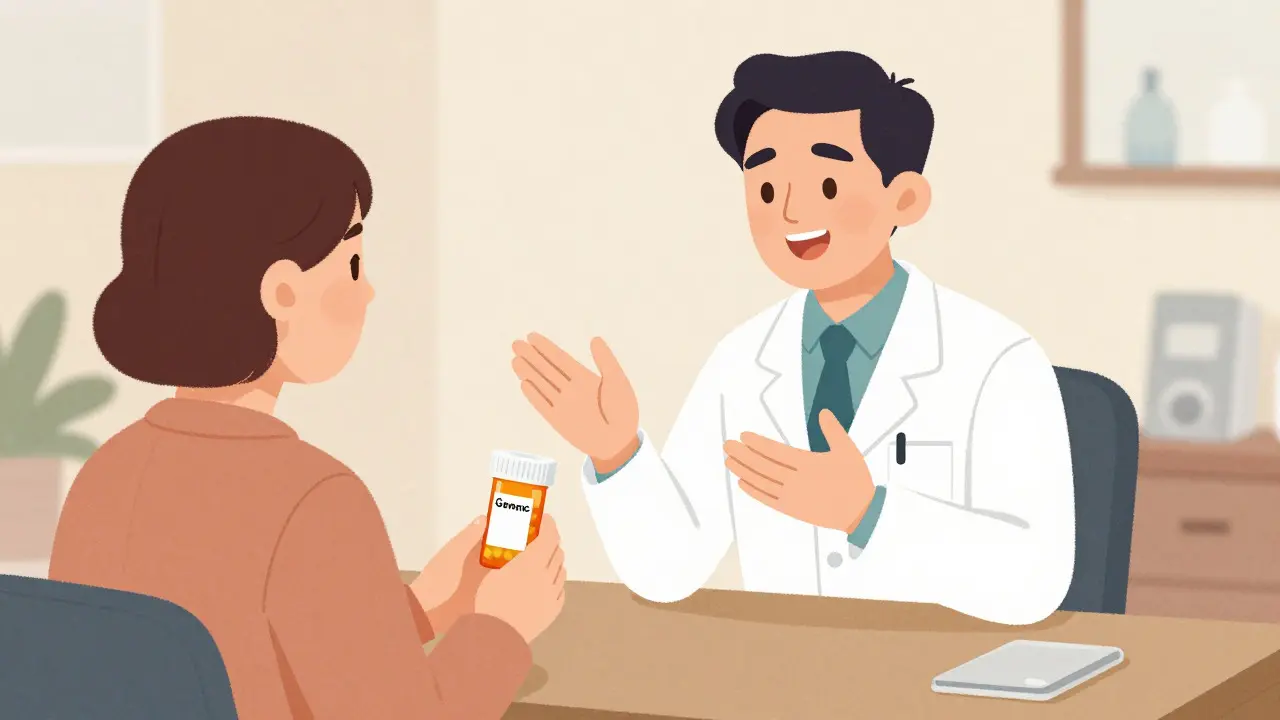

Imagine a patient walking into your clinic with high blood pressure. You prescribe a medication that is clinically identical to the brand-name version but costs a fraction of the price. The patient takes it, feels no different, yet somehow reports more side effects than before. This isn't a medical mystery; it's often a communication gap. Despite rigorous regulatory standards ensuring that generic drugs are medications that contain the same active ingredients as brand-name drugs but are sold at lower prices safe and effective, many healthcare providers still harbor doubts about their efficacy. These doubts trickle down to patients, leading to poor adherence and unnecessary healthcare spending.
The core problem isn't the medicine itself-it's the knowledge gap among clinicians. When providers lack confidence in generics, they hesitate to recommend them or fail to address patient concerns effectively. This article breaks down why provider education matters, what specific misconceptions need correcting, and how structured learning can transform prescribing habits for better patient outcomes.
Why Clinician Knowledge Gaps Matter
You might assume that because doctors learn pharmacology in medical school, they fully understand generic equivalence. However, data tells a different story. A 2017 systematic review published in the *Journal of Managed Care & Specialty Pharmacy* found that 68% of physicians expressed at least some concern about whether generic drugs were truly equivalent to their brand-name counterparts. This skepticism persists despite the fact that the FDA mandates identical active ingredients, strength, dosage form, and route of administration.
Why does this matter? Because your words carry weight. Research from Harvard Medical School (Choudhry, 2022) shows that when providers explicitly endorse generic equivalence, patient-reported side effects drop by 18%. This is known as reducing the "nocebo effect"-where negative expectations lead to negative outcomes. If you tell a patient, "This is just a cheaper version," you might inadvertently signal inferiority. But if you say, "This contains the exact same active ingredient and meets the same safety standards," you build trust. Educated clinicians see a 29% higher rate of initiating generic prescriptions, directly impacting cost-conscious care.
Understanding Bioequivalence: The Science Behind the Swap
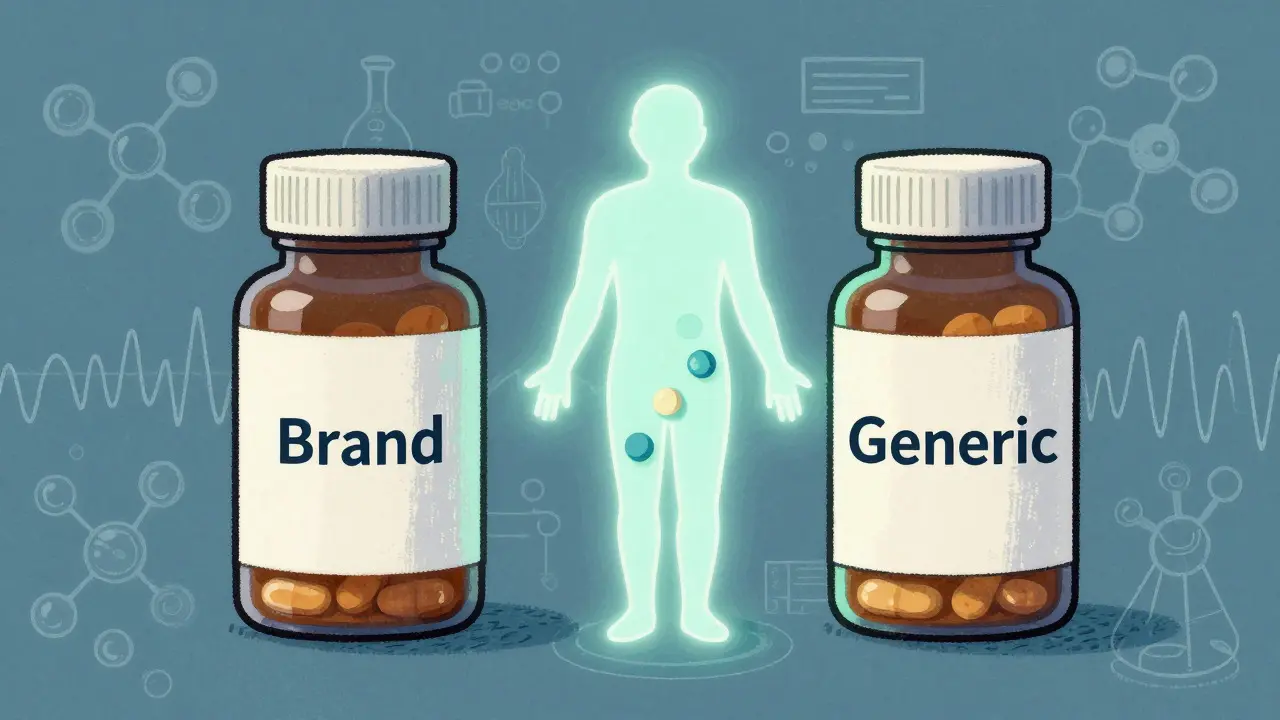
To educate patients confidently, you first need to master the science yourself. The cornerstone of generic approval is bioequivalence is a measure used by regulatory agencies to ensure that a generic drug performs in the body in a similar way to the reference listed drug. It’s not just about having the same chemical structure; it’s about how the body absorbs and processes it.
The FDA requires that the 90% confidence interval for the ratio of population geometric means of AUC (area under the curve) and Cmax (maximum concentration) falls within 80-125%. In plain English, this means the generic drug must deliver the same amount of active ingredient to your bloodstream at roughly the same speed as the brand-name drug. Any variation outside this narrow window would result in rejection. Yet, a common misconception among prescribers is that generics can contain up to 20-25% less active ingredient-a myth that needs debunking. Only 27% of surveyed prescribers correctly understood these bioequivalence standards according to a 2020 U.S. Pharmacist survey.
Another area of confusion involves inactive ingredients. While generics can have different fillers, binders, or dyes, these do not affect safety or efficacy unless a patient has a specific allergy. Misunderstanding this leads to unnecessary brand-name prescriptions. Clarifying that inactive ingredients differ only in non-active components helps reduce hesitation without compromising care.
| Misconception | Regulatory Fact | Impact on Prescribing |
|---|---|---|
| Generics have less active ingredient | Must meet 80-125% bioequivalence range | Unnecessary brand preference |
| Different inactive ingredients mean different effects | Inactives don’t alter therapeutic outcome | Patient anxiety over side effects |
| Manufacturing quality is lower | Same FDA inspection standards apply | Lack of trust in generic supply chain |
The Role of the FDA Orange Book and Therapeutic Equivalence
When evaluating whether a generic is a suitable substitute, the FDA Orange Book is a publication titled 'Approved Drug Products with Therapeutic Equivalence Evaluations' that lists all approved drug products becomes your best friend. This resource provides therapeutic equivalence ratings using two-letter codes. An 'A' rating indicates that the generic is therapeutically equivalent to the brand-name drug, meaning it can be substituted safely. A 'B' rating suggests there may be differences that require further evaluation.
Many clinicians overlook this tool, relying instead on habit or incomplete information. Integrating Orange Book checks into your workflow ensures you’re making evidence-based decisions. For instance, if a patient asks why their new pill looks different, you can explain that while the appearance changes due to inactive ingredients, the 'A' rating confirms it works exactly the same way in the body. This transparency builds credibility and reduces patient resistance.
Effective Strategies for Provider Education
Traditional methods like static fact sheets aren’t enough. A 2021 study in *JAMA Internal Medicine* revealed that clinicians who received interactive, case-based education retained 42% more knowledge six months later compared to those who read passive materials. Why? Because real-world scenarios force you to apply concepts, not just memorize them.
Consider implementing spaced repetition in your training programs. Instead of one long session, break education into four 90-minute modules spread over six months. This approach led to a 52% increase in knowledge retention according to a 2022 U.S. Pharmacist report. Additionally, embedding educational prompts directly into electronic health record (EHR) systems at the point of prescribing has proven highly effective. When a doctor selects a brand-name statin, an alert suggesting a therapeutically equivalent generic with cost savings can nudge behavior without disrupting workflow.
Communication skills are equally important. Train providers to use affirming language. Instead of saying, "We need to switch you to a generic because insurance won’t cover the brand," try, "This generic option has been shown to work just as well and will help keep your costs low." Framing the decision around benefit rather than limitation shifts the conversation positively.
Barriers to Implementation and How to Overcome Them
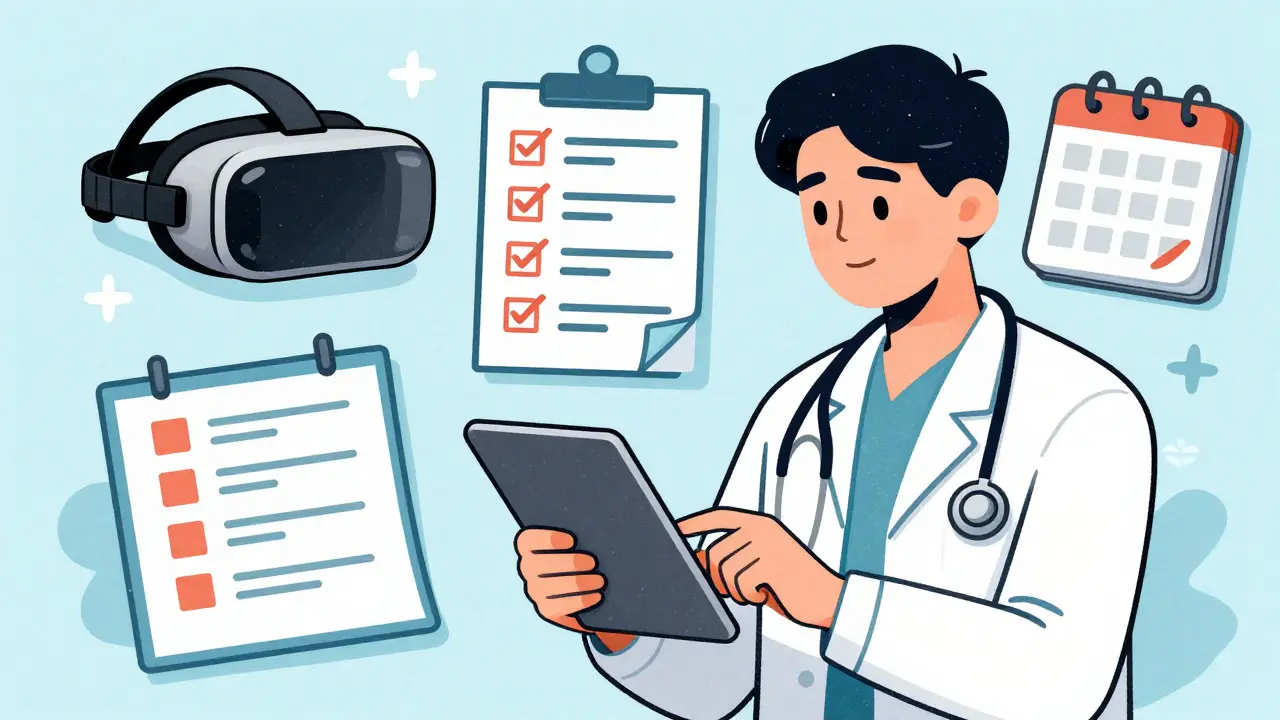
Time is the biggest barrier. An 89% majority of physicians cited time constraints as a major hurdle in adopting comprehensive generic education (AMA, 2021). With packed schedules, dedicating hours to learning feels impossible. The solution lies in integration. Rather than adding another task, weave education into existing routines. Use EHR alerts, brief peer discussions during rounds, or micro-learning videos accessible via mobile devices during downtime.
Another challenge is specialty-specific resistance. Cardiologists and neurologists show the highest hesitation toward generic substitution, with rates of 82% and 79% respectively (AllHealthcareJobs forums). Tailor education content to address specialty concerns. For example, in cardiology, emphasize studies showing no difference in cardiovascular outcomes between generic and brand-name beta-blockers. In neurology, highlight data supporting generic antiepileptics’ stability and efficacy.
State regulations also complicate matters. Thirty-four states allow pharmacist substitution without prescriber notification, while others require explicit permission. Understanding local laws prevents legal pitfalls and streamlines practice. Include state-specific guidance in your educational materials so providers know exactly when they can rely on automatic substitution versus when they must intervene.
Future Directions: AI and Personalized Learning
The landscape of provider education is evolving rapidly. Artificial intelligence is now being used to identify physicians with low generic utilization rates and deliver targeted educational content. UnitedHealthcare’s 2024 pilot program achieved a 28% increase in generic prescribing among participants through personalized interventions. Imagine receiving a notification highlighting areas where your prescribing habits could improve, along with concise resources to bridge those gaps.
Virtual reality (VR) training modules are another emerging trend. The FDA launched VR simulations in 2023 that let providers practice difficult conversations with patients about generics. Early results showed a 41% improvement in communication confidence. As technology advances, expect even more immersive tools designed to make learning engaging and practical.
Looking ahead, CMS plans to include generic prescribing rates as a quality metric in its Merit-based Incentive Payment System (MIPS) starting in 2025. This policy shift underscores the growing importance of generic utilization in value-based care models. Staying informed and educated isn’t just good practice-it’s becoming a professional requirement.
What is the primary goal of provider education on generics?
The main objective is to close knowledge gaps among healthcare professionals regarding generic drug equivalence, thereby increasing confidence in prescribing and improving patient adherence. By addressing misconceptions about bioequivalence and manufacturing quality, providers can make more informed decisions that benefit both clinical outcomes and healthcare costs.
How does bioequivalence ensure generic drugs are safe?
Bioequivalence testing verifies that a generic drug delivers the same amount of active ingredient into the bloodstream at the same rate as the brand-name drug. The FDA requires the 90% confidence interval for AUC and Cmax ratios to fall within 80-125%, ensuring minimal variability. This rigorous standard guarantees that generics perform identically in terms of safety and efficacy.
Why do some patients report more side effects with generics?
This phenomenon is often linked to the nocebo effect, where negative expectations influence perceived outcomes. If a provider expresses doubt or fails to reassure the patient about generic equivalence, the patient may anticipate issues and subsequently report them. Explicit endorsement from the clinician significantly reduces reported side effects.
Can I always substitute a generic for a brand-name drug?
In most cases, yes, especially if the generic holds an 'A' rating in the FDA Orange Book, indicating therapeutic equivalence. However, certain narrow therapeutic index drugs or complex biologics may require careful consideration. Always check state substitution laws and consult clinical guidelines when dealing with specialized medications.
What role does the FDA Orange Book play in prescribing?
The FDA Orange Book serves as a critical reference for determining therapeutic equivalence between brand-name and generic drugs. It assigns ratings ('A' for equivalent, 'B' for non-equivalent) based on extensive review. Using this resource helps clinicians make evidence-based substitution decisions and communicate clearly with patients about medication options.


Write a comment