

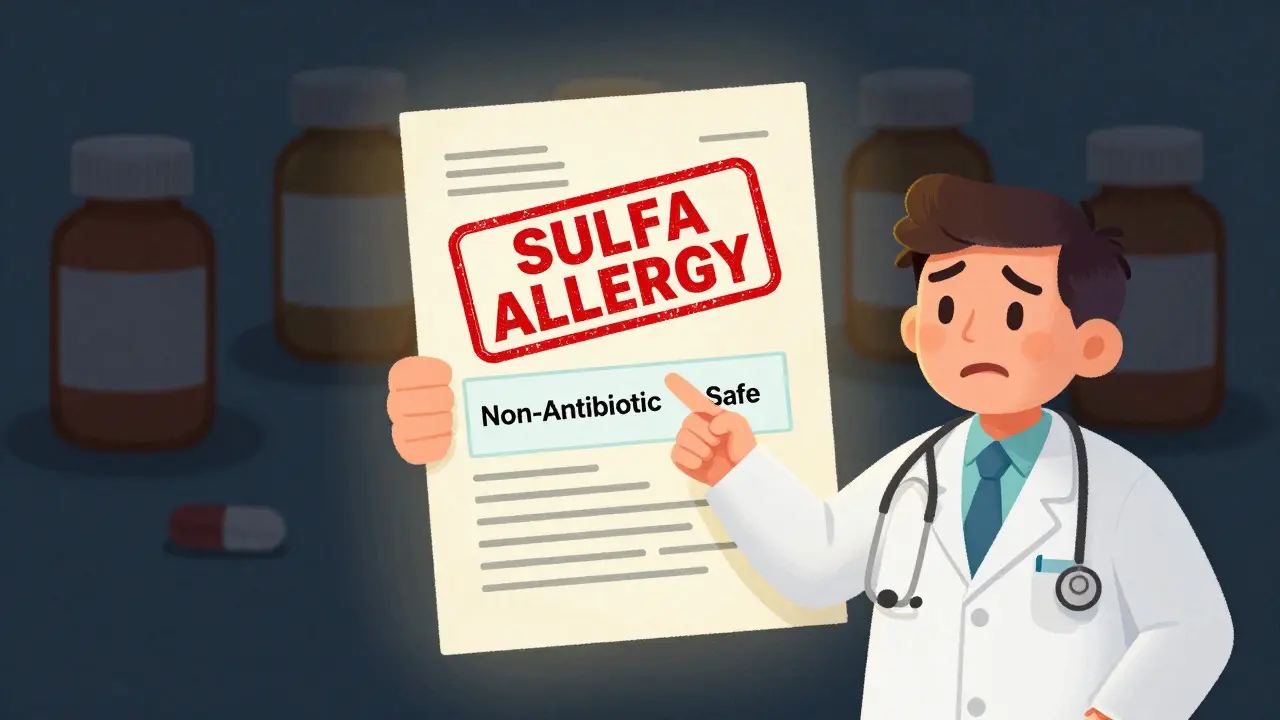

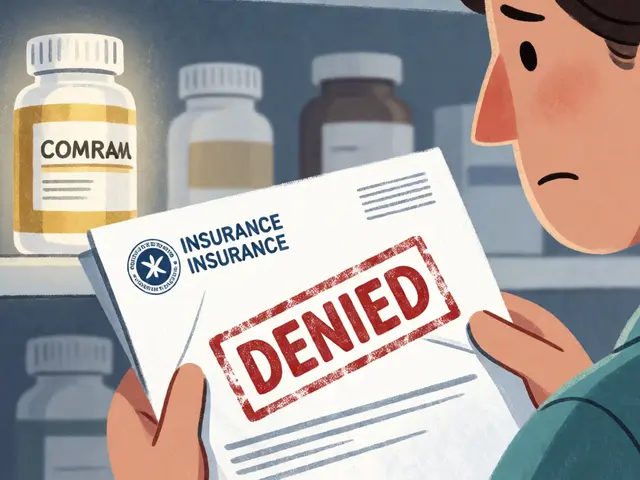
Have you ever been told to avoid a life-saving medication because of a 'sulfa allergy' listed in your medical records? You are not alone. Millions of people carry this label, often restricting their treatment options for high blood pressure, glaucoma, or heart failure based on a misunderstanding that has persisted for decades. The reality is far less scary than the label suggests.
The term 'sulfa allergy' is one of the most common misconceptions in modern medicine. While true allergies exist, they are specific to a narrow group of drugs known as sulfonamide antibiotics, which are medications used to treat bacterial infections containing a specific chemical structure called an arylamine group. Crucially, this allergy does not mean you are allergic to every drug containing sulfur or the word 'sulfonamide.' In fact, most patients labeled with a sulfa allergy can safely take essential non-antibiotic medications like water pills and pain relievers.
Why the Confusion Exists
To understand why this myth persists, we have to look at chemistry. The word 'sulfa' comes from sulfur, a common element found in many biological compounds and medications. Sulfur is everywhere-it’s in your hair, your skin, and even in the preservatives (sulfites) in wine. It is also in Epsom salts (magnesium sulfate). None of these cause issues for someone with a sulfa antibiotic allergy.
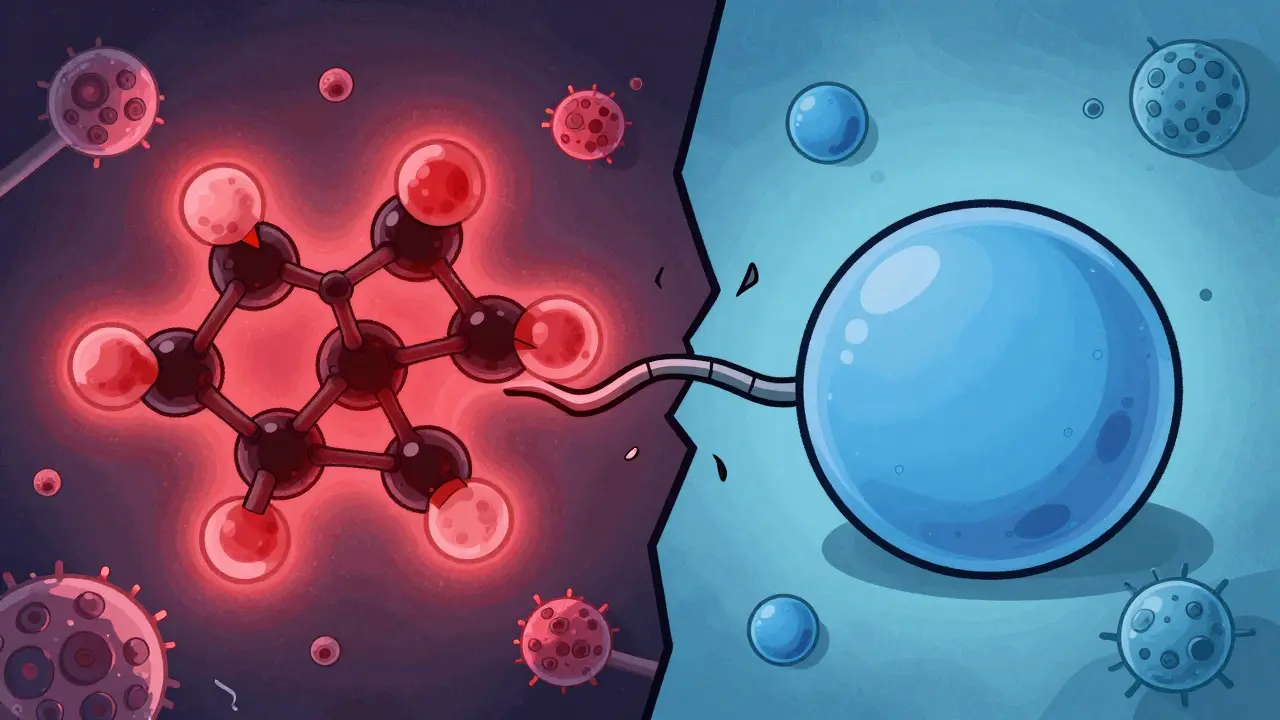
The problem arises because two very different groups of drugs share part of their name: antimicrobial sulfonamides and non-antimicrobial sulfonamides. They sound similar, but they act differently in your body. Antimicrobial sulfonamides contain a specific chemical feature called an arylamine group, which is a molecular structure attached to the nitrogen atom that triggers immune reactions in sensitive individuals. When your liver processes these antibiotics, it creates a reactive byproduct that can bind to proteins and trigger an allergic response.
Non-antibiotic sulfonamides lack this arylamine group entirely. Without it, your immune system doesn’t recognize them as threats, even if you are highly sensitive to the antibiotic version. Think of it like cars: just because you had a bad experience with a Ford Focus doesn’t mean you’ll crash in a Toyota Camry. They might both be vehicles, but their engines-and risks-are completely different.
Which Drugs Are Actually Risky?
If you have a confirmed allergy to sulfonamide antibiotics, you need to avoid other drugs in that same class. These medications share the dangerous arylamine structure. Common examples include:
- Sulfamethoxazole-trimethoprim (known by brand names Bactrim or Septra), commonly prescribed for urinary tract infections.
- Sulfadiazine, sometimes used for eye infections or toxoplasmosis.
- Sulfacetamide, often found in eye drops for conjunctivitis.
- Dapsone, used for leprosy or certain skin conditions, which shares structural similarities.
Cross-reactivity within this group is real. If you reacted badly to Bactrim, there is roughly a 25% chance you will react to another sulfonamide antibiotic. This is why doctors stick to one class or switch to a completely different type of antibiotic when treating infections.
Medications You Can Likely Take Safely
Here is the good news: the vast majority of drugs containing 'sulfa' in their name are safe for you. A landmark study published in the Annals of Internal Medicine by Strom et al. analyzed over 17,000 patients with documented sulfonamide antibiotic allergies. They found no statistically significant increase in reaction rates when these patients took non-antibiotic sulfonamides compared to the general population.
This means you can likely use the following medications without fear:
| Medication Name | Brand Examples | Primary Use | Safety Status |
|---|---|---|---|
| Furosemide | Lasix | Heart failure, edema | Safe |
| Hydrochlorothiazide | HCTZ, Microzide | High blood pressure | Safe |
| Celecoxib | Celebrex | Pain relief, arthritis | Safe |
| Acetazolamide | Diamox | Glaucoma, altitude sickness | Safe |
| Sulfonylureas | Glyburide, Glipizide | Type 2 Diabetes | Safe |
The American Academy of Allergy, Asthma & Immunology (AAAAI) explicitly states there is no clinically significant immunologic cross-reactivity between sulfonamide antibiotics and these non-antibiotic versions. Even celecoxib, a COX-2 inhibitor often feared by patients, shows an odds ratio of only 1.03 for reactions in allergic patients-essentially the same risk as anyone else.
The Hidden Cost of Mislabeling
Why does this distinction matter so much? Because mislabeling costs lives and money. When a patient is incorrectly flagged as having a broad 'sulfa allergy,' doctors often avoid prescribing first-line treatments. For example, instead of using hydrochlorothiazide for hypertension, a doctor might prescribe a more expensive or less effective alternative. In infection cases, avoiding Bactrim might lead to the use of fluoroquinolones, which carry higher risks of tendon damage and C. difficile infections.
A 2023 analysis by the Agency for Healthcare Research and Quality estimated that inappropriate restrictions cost the US healthcare system $1.2 billion annually. More importantly, patients suffer. Imagine being denied furosemide for heart failure or Celebrex for debilitating arthritis pain simply because of a chemical name similarity that doesn’t apply to your biology.
Data from patient forums reveals the scale of this issue. On Reddit’s allergy communities, nearly 80% of respondents reported being unnecessarily restricted from safe medications. One user shared taking HCTZ for 15 years without incident, despite being told it was dangerous. Another was initially denied critical glaucoma treatment until an allergist clarified the risk was negligible.
How to Clarify Your Allergy Status
If you have 'sulfa allergy' written in your chart, don’t panic, but do take action. Here is how to manage it properly:
- Check the details. Ask your doctor what specific reaction you had. Was it a mild rash? Or something severe like Stevens-Johnson Syndrome (SJS)? Mild rashes are often not true IgE-mediated allergies. Severe reactions require stricter avoidance of antimicrobial sulfonamides but still allow non-antibiotics.
- Request a review. Many 'allergies' are actually side effects (like nausea) or viral rashes mistaken for drug reactions. Up to 90% of patients labeled with a sulfa allergy may not actually be allergic upon testing.
- Consider allergy testing. An allergist can perform skin tests or supervised oral challenges. Studies show that over 98% of patients with suspected mild reactions tolerate non-antibiotic sulfonamides perfectly well after a challenge dose.
- Update your records. Push for precise language in your Electronic Health Record (EHR). Instead of 'Sulfa Allergy,' ask for 'Sulfonamide Antibiotic Allergy' or 'Allergic to Sulfamethoxazole.' This helps future doctors make better decisions.
Pharmacists play a huge role here. A 2021 study found that pharmacist-led clarification reduced unnecessary restrictions by nearly 70%. Don’t hesitate to ask your local pharmacist if a new prescription is safe given your history.

Exceptions and Special Cases
While the rule is clear, there is one notable exception: Sulfasalazine (Azulfidine), a drug used for inflammatory bowel disease and rheumatoid arthritis that contains an antimicrobial sulfonamide component. Because it breaks down into sulfapyridine (an antibiotic sulfonamide), about 10% of patients with a true sulfa antibiotic allergy will react to it. This is the only non-antibiotic drug where caution is strongly advised.
Also, remember that sulfur-containing foods and supplements are safe. You can eat eggs, garlic, and onions freely. You can use magnesium sulfate baths. You can drink wine with sulfites. These compounds do not contain the arylamine group that triggers the immune response.
Looking Ahead: Better Documentation
Medical systems are finally catching up. The FDA issued draft guidance in 2023 urging clearer labeling, distinguishing between antimicrobial and non-antimicrobial classes. Major EHR providers like Epic have updated their alert systems to reduce false flags. The Joint Commission now includes accurate allergy documentation as a National Patient Safety Goal.
However, change is slow. A 2023 survey showed that two-thirds of primary care physicians still believe non-antibiotic sulfonamides should be avoided. This highlights why patient advocacy is crucial. You know your body best. If you’ve taken Lasix for years without issue, tell your doctor. Challenge the vague labels. Demand precision.
Understanding the difference between sulfonamide antibiotics and other sulfonamides isn’t just academic trivia-it’s about accessing the right care. By clearing up this confusion, you open doors to safer, more effective treatments and help reduce the burden on the healthcare system. Knowledge truly is power when it comes to your health.
Can I take Lisinopril if I have a sulfa allergy?
Yes. Lisinopril is an ACE inhibitor and does not contain any sulfonamide structures. It is completely safe for patients with sulfa allergies.
Is Tylenol (Acetaminophen) safe for sulfa allergies?
Yes. Acetaminophen is not a sulfonamide and has no cross-reactivity with sulfa drugs. It is widely considered safe.
What is the difference between a sulfa allergy and a sulfur allergy?
There is no such thing as a 'sulfur allergy' in the context of medications. Sulfur is an element present in all living things. A 'sulfa allergy' refers specifically to an immune reaction to the arylamine group found in certain antibiotics, not the sulfur atom itself.
Can I take Celebrex if I am allergic to Bactrim?
Yes. Despite both containing 'sulfa' in their chemical names, Celebrex (celecoxib) lacks the arylamine group found in Bactrim (sulfamethoxazole). Multiple studies confirm they do not cross-react.
How do I know if my sulfa allergy is real?
If you experienced a mild rash or gastrointestinal upset, it may not have been a true allergy. Consult an allergist for skin testing or a supervised drug challenge. Only 1.5-2% of people have confirmed IgE-mediated sulfa antibiotic allergies.
Are there any foods I should avoid with a sulfa allergy?
No. There are no specific dietary restrictions for sulfa antibiotic allergies. Foods containing sulfur, such as eggs, meat, and vegetables, are safe to eat.



Morikeoluwa Ayodeji
9 Aug 2026 at 09:08Yo, this is huge news for so many of us! I’ve been on HCTZ for my blood pressure for like five years now and every time I get a new doctor they give me that look like I’m about to explode because of the 'sulfa' label in my chart. It’s wild how much fear is built into these medical records without any actual science backing it up. This article really breaks down why the arylamine group is the real culprit and not just any sulfur atom. It makes total sense when you think about it chemically but doctors are so busy they just see the word sulfa and panic. We need more awareness on this stuff because people are missing out on better treatments just because of a misunderstanding from decades ago. Keep spreading this info!