



Drug Interaction Simulator: Tizanidine & Ciprofloxacin
Select a medication scenario to see how the liver enzyme CYP1A2 affects Tizanidine levels in the bloodstream.
Imagine taking a pill to relax your muscles and another to clear up a urinary tract infection, only to wake up feeling like you've been drugged into a coma or fainting because your blood pressure has plummeted. This isn't a rare fluke; it's a well-documented, dangerous interaction between Tizanidine is a centrally-acting alpha-2 adrenergic agonist muscle relaxant used to treat musculoskeletal pain and spasticity and Ciprofloxacin is a potent fluoroquinolone antibiotic used for various bacterial infections. When these two meet in your system, they don't just coexist-they collide in a way that can lead to life-threatening drops in blood pressure and extreme sedation.
The Invisible Trigger: How CYP1A2 Works
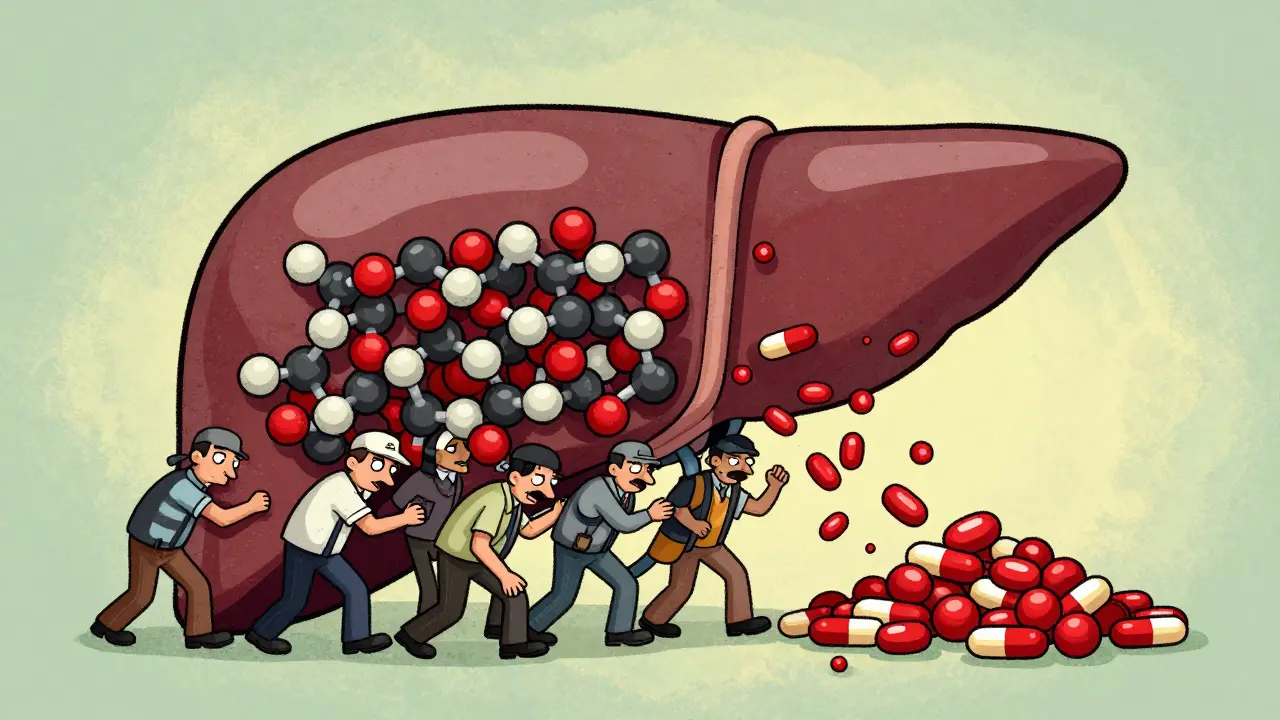
To understand why this happens, we have to look at how your liver processes medicine. Most of the work for tizanidine is done by a specific enzyme called CYP1A2. Think of this enzyme as a specialized disposal crew that breaks down tizanidine so your body can get rid of it. In fact, about 95% of tizanidine's metabolism depends on this one crew.
Now, enter ciprofloxacin. This antibiotic is what doctors call a strong inhibitor of CYP1A2. In plain English: it fires the disposal crew. When ciprofloxacin shuts down the CYP1A2 enzyme, tizanidine has nowhere to go. It piles up in your bloodstream at alarming rates. Research from the Vanderbilt University Medical Center (VUMC) found that adding ciprofloxacin to the mix can spike tizanidine levels in the blood by 10 to 33 times the normal amount. That is a massive overdose happening internally, even if you took your prescribed dose.
The Clinical Fallout: Hypotension and Sedation
When tizanidine levels soar, the drug's effects become exaggerated and unpredictable. The two biggest risks are severe hypotension and profound sedation.
Severe hypotension is a sudden, drastic drop in blood pressure. In clinical studies, this was defined as a systolic pressure of 70 mm Hg or lower. When your blood pressure drops this low, your brain and vital organs don't get enough oxygen. You might feel dizzy, faint, or even lose consciousness (syncope). Data from VigiBase™, the WHO's global database for adverse drug reactions, confirms that hypotension is the most common cardiovascular nightmare associated with this pairing.
Then there is the sedation. Tizanidine already makes people sleepy, but with ciprofloxacin blocking its exit, that sleepiness turns into a heavy, oppressive sedation. Patients report extreme fatigue, somnolence, and a general feeling of weakness (asthenia) that makes it nearly impossible to function. In some real-world cases, this has led to hospitalizations and emergency room visits where patients required intensive care to stabilize their blood pressure.
| Feature | Tizanidine | Cyclobenzaprine |
|---|---|---|
| Primary Metabolism | Almost exclusively CYP1A2 | Multiple (CYP1A2, 3A4, 2D6) |
| Risk of Severe Hypotension | Very High | Lower |
| Metabolic Redundancy | None (Single Path) | High (Multiple Paths) |
| Interaction Severity | Potentially Life-Threatening | Moderate to Low |
Why Tizanidine is Uniquely Vulnerable
You might wonder why other muscle relaxants don't cause this same level of chaos. Let's look at Cyclobenzaprine. While it also interacts with CYP1A2, it has a "backup plan." It can be processed by other enzymes like CYP3A4 and CYP2D6. If ciprofloxacin blocks the CYP1A2 door, cyclobenzaprine just takes the other exits. This is called metabolic redundancy.
Tizanidine has no backup plan. It is entirely dependent on that one enzyme. This is why the American College of Rheumatology has highlighted tizanidine's unique vulnerability. When you use a strong inhibitor like ciprofloxacin or Fluvoxamine (an antidepressant), you are effectively cutting off the only exit for tizanidine, leading to a toxic accumulation.
Who is Most at Risk?
While this interaction is dangerous for anyone, certain people are in much more danger. The VUMC research points to a few high-risk groups:
- The Elderly: Older adults often have slower metabolism and may be more sensitive to blood pressure drops.
- People with Comorbidities: If you already struggle with other health issues, your body is less resilient to a sudden hypotensive crash.
- Hypertension Patients: If you are already taking three or more blood pressure medications, adding this interaction is like throwing gasoline on a fire. Your blood pressure is already being pushed down; tizanidine and ciprofloxacin can push it into the danger zone.
Real-world data shows a 43% increased risk of severe hypotension when these two drugs are combined. That's not a small statistical bump-it's a significant jump in danger.

Practical Steps for Patients and Providers
Despite the FDA and EMA issuing formal contraindications (meaning you should not take them together), these drugs are still co-prescribed. This often happens because the same patient might have chronic back pain (tizanidine) and a sudden UTI (ciprofloxacin). To stay safe, a few rules of thumb apply.
If you are a patient already taking tizanidine and you need an antibiotic, ask your doctor about alternatives that don't mess with CYP1A2. For example, Amoxicillin or Nitrofurantoin are often safer options for UTIs because they don't block the liver's disposal crew.
If for some reason ciprofloxacin is the only option, tizanidine must be stopped completely. Because ciprofloxacin stays in your system for a while, you can't just restart the muscle relaxant the moment the antibiotics end. Experts recommend waiting about 5 to 7 days after the last dose of ciprofloxacin before restarting tizanidine to ensure the CYP1A2 enzymes are fully functional again.
Summary of the Danger
The combination of tizanidine and ciprofloxacin is a textbook example of a pharmacokinetic disaster. By blocking the primary metabolic pathway, ciprofloxacin turns a standard dose of tizanidine into a potential overdose. The result is a dangerous cocktail that can lead to fainting, extreme lethargy, and severe cardiovascular instability. Awareness is the only real cure; whether you're the one writing the prescription or the one taking the pill, double-checking this interaction can literally save a life.
What exactly happens if I take Tizanidine and Ciprofloxacin together?
Ciprofloxacin blocks the enzyme (CYP1A2) that your liver uses to break down Tizanidine. This causes Tizanidine levels in your blood to spike up to 33 times higher than normal, leading to severe drowsiness and a dangerous drop in blood pressure (hypotension).
Can I take a lower dose of Tizanidine to make it safe?
No. Because the increase in drug concentration is so extreme (10- to 33-fold), even a low dose can become toxic. Medical guidelines and regulatory agencies like the FDA list this combination as contraindicated, meaning it should be avoided entirely.
How quickly does this interaction happen?
The reaction typically manifests within hours of co-administration. Because Tizanidine is absorbed quickly and the enzyme inhibition by Ciprofloxacin is potent, the effects on blood pressure and alertness can happen very fast.
Are there any safer antibiotic alternatives?
Yes. Many antibiotics do not inhibit the CYP1A2 enzyme. For common infections like UTIs, drugs such as Amoxicillin or Nitrofurantoin are generally safer alternatives for people taking Tizanidine, though you must always consult your doctor first.
What should I do if I've already taken both?
If you feel extremely dizzy, faint, or excessively sleepy, seek medical attention immediately. Severe hypotension (systolic BP ≤70 mm Hg) can be life-threatening and may require clinical intervention to stabilize blood pressure.





william wang
17 Apr 2026 at 09:44This is a really critical warning. A lot of folks don't realize how specific enzyme pathways like CYP1A2 can create these "bottlenecks" in the liver. It's a great reminder to always double-check every single medication with a pharmacist, even for something as common as a UTI antibiotic.