



Cephalosporin Cross-Reactivity Risk Estimator
This tool helps visualize the estimated risk of reacting to a cephalosporin if you carry a penicillin allergy label. Please note this is for educational purposes only and does not replace professional medical advice.
Recommended Next Steps:
You might have a "penicillin allergy" listed in your medical records. If that’s you, you are part of a massive group-about 10% of people in the U.S. carry this label. But here is the shocking truth: up to 95% of those people can actually take penicillin safely. The confusion around beta-lactam allergies, which include both penicillins and cephalosporins, leads to worse treatments, higher bills, and unnecessary anxiety for millions of patients.
This isn't just about avoiding a rash. It’s about understanding why doctors hesitate to prescribe these powerful drugs and how modern medicine is changing the rules. We need to look at the real risks versus the perceived ones, especially when comparing penicillin reactions to cephalosporin reactions.
The Beta-Lactam Family: What Are You Actually Allergic To?
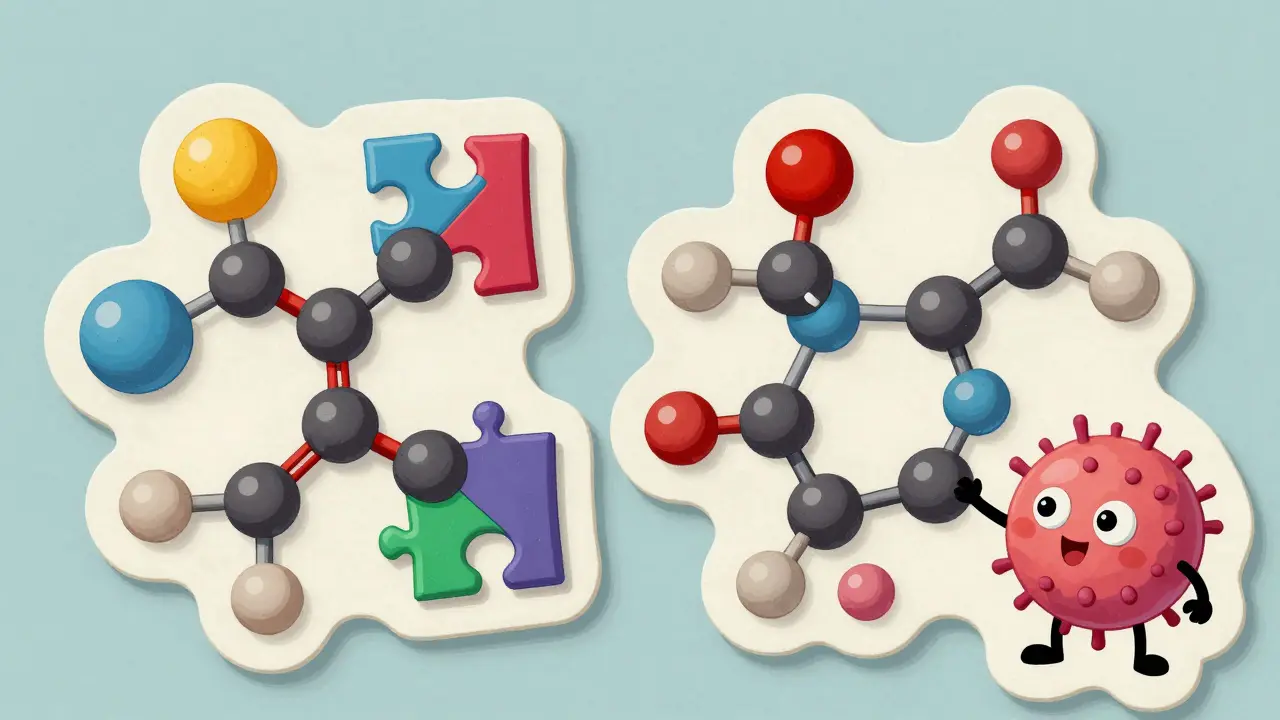
To understand the risk, we first need to look at the chemistry. Both penicillins and cephalosporins belong to a class of antibiotics called beta-lactams. They share a specific chemical structure known as the beta-lactam ring. This ring is what kills bacteria by disrupting their cell walls.
Penicillin, discovered by Alexander Fleming in 1928, was the first of its kind. Decades later, scientists found cephalosporins in a fungus called Cephalosporium acremonium. Because they look similar on a molecular level, doctors used to assume that if you were allergic to one, you were likely allergic to the other. That assumption is largely outdated.
The immune system reacts to parts of the drug molecule, not just the whole thing. These reactive parts are called determinants. In penicillin, the major determinant is the penicilloyl group. Cephalosporins have different side chains. Unless the side chains are identical or very similar, your immune system won’t necessarily recognize the cephalosporin as the enemy it fought before.
Penicillin Reactions: Immediate vs. Delayed
Not all bad reactions are true allergies. This is where most of the confusion starts. A true IgE-mediated allergy happens fast-usually within an hour of taking the drug. Symptoms include:
- Hives (itchy red welts) - seen in about 90% of immediate cases
- Angioedema (swelling of lips, face, or throat) - seen in 50%
- Wheezing or shortness of breath - seen in 30%
- Anaphylaxis - a life-threatening drop in blood pressure and airway closure, occurring in only 0.01-0.05% of courses
Then there are delayed reactions. These happen days or even weeks after starting the medication. They often present as a flat, red rash (maculopapular exanthem). While uncomfortable, these rashes are rarely dangerous and are frequently caused by viruses rather than the antibiotic itself. Yet, many patients get labeled as "allergic" because of a viral rash that appeared while they were on amoxicillin for strep throat.
Cephalosporin Reactions: Lower Risk Than You Think
If you have a confirmed penicillin allergy, can you take a cephalosporin like ceftriaxone or cephalexin? For years, the answer was a cautious "no." Now, the answer is often "yes," depending on the generation of the cephalosporin.
Cross-reactivity-the chance you’ll react to a cephalosporin because you’re allergic to penicillin-is much lower than old textbooks claimed. Here is the breakdown based on current clinical data:
| Cephalosporin Generation | Examples | Estimated Cross-Reactivity Rate |
|---|---|---|
| First Generation | Cephalexin, Cefazolin | Approximately 1-3% |
| Second Generation | Cefuroxime, Cefaclor | Less than 1% |
| Third Generation | Ceftriaxone, Cefotaxime | Negligible / Very Low |
| Fifth Generation | Ceftaroline | Minimal structural similarity |
The key factor here is the side chain. First-generation cephalosporins have side chains that look more like penicillin, hence the slightly higher (but still low) risk. Third-generation drugs like ceftriaxone have completely different side chains. Your immune system is unlikely to trigger a response unless you had a severe reaction to the specific side chain of the penicillin you took previously.
The Cost of Mislabeling: Why It Matters
Why do we care so much about removing false allergy labels? It’s not just comfort; it’s safety and money. When a patient is labeled as penicillin-allergic, doctors avoid beta-lactams. Instead, they prescribe alternatives like vancomycin, clindamycin, or fluoroquinolones.
These alternatives come with downsides:
- Higher Toxicity: Vancomycin requires blood monitoring and can damage kidneys. Fluoroquinolones carry black box warnings for tendon rupture and nerve damage.
- Antibiotic Resistance: Broad-spectrum antibiotics kill good bacteria too, paving the way for superbugs like MRSA and C. difficile infections.
- Cost: The CDC estimates that inappropriate labeling costs the healthcare system $2,000 to $4,000 per patient annually due to pricier drugs and longer hospital stays.
A study published in Clinical Infectious Diseases showed that hospitals with formal delabeling programs reduced broad-spectrum antibiotic use by 23% and cut C. difficile infections by 17%. This is a win-win for public health.

How Doctors Test and Remove the Label
If you think your allergy label might be wrong, you don’t have to live with it forever. Allergists use a step-by-step process to verify or remove the label. This is crucial for conditions like neurosyphilis or syphilis in pregnancy, where penicillin is the only effective treatment.
- Detailed History: The doctor asks exactly what happened. Was it hives within an hour? Or a rash two weeks later? Did you take other medications at the time? About 80% of patients lose reactivity after 10 years anyway.
- Skin Testing: If the history suggests an immediate allergy, the allergist performs skin prick tests and intradermal injections using penicillin derivatives (major and minor determinants). A negative test has a 97-99% predictive value that you are safe.
- Oral Challenge: If skin tests are negative, you take a small dose of oral amoxicillin under observation. If nothing happens after an hour, you take a full dose. This confirms tolerance.
- Graded Challenge: For low-risk histories (like a mild rash over a year ago), some protocols skip skin testing and go straight to a supervised oral challenge with increasing doses (10%, 30%, 60%) every 15-30 minutes.
If testing shows you are truly allergic, but you still need penicillin for a serious infection, doctors can perform desensitization. This involves giving tiny, increasing amounts of the drug over 4-8 hours to temporarily "trick" the immune system into tolerating it. This effect is temporary, so you must stay on the drug continuously until the course is finished.
What Should You Do Next?
If you have a penicillin allergy label from childhood, especially if it was just a rash, talk to your primary care provider or an allergist. Ask if you are a candidate for delabeling. It could open the door to safer, cheaper, and more effective treatments for future infections.
For clinicians, the message is clear: stop writing "penicillin allergy" as a blanket term. Document the specific reaction, the timing, and the severity. This precision saves lives and resources.
Can I take cephalexin if I am allergic to penicillin?
It depends on the severity of your penicillin allergy. Cephalexin is a first-generation cephalosporin with a cross-reactivity rate of about 1-3%. If your penicillin allergy was mild (like a delayed rash), many doctors will allow cephalexin. However, if you had a severe immediate reaction (anaphylaxis or hives within an hour), you should avoid first-generation cephalosporins and consult an allergist for testing.
How long does a penicillin allergy last?
Most people outgrow their penicillin allergy. Studies show that approximately 80% of patients with a reported penicillin allergy lose their sensitivity after 10 years. This is why periodic re-evaluation by an allergist is recommended for anyone with a long-standing label.
What is the difference between a side effect and an allergy?
A side effect is a predictable, non-immune response to a drug, such as nausea, diarrhea, or yeast infections. An allergy is an immune system response involving antibodies (IgE or T-cells) that causes symptoms like hives, swelling, wheezing, or anaphylaxis. Only immune-mediated reactions count as true allergies.
Is penicillin desensitization permanent?
No, desensitization is temporary. It induces a state of temporary tolerance that lasts only as long as you continue to receive the drug. If you stop taking penicillin for even a few hours, you may become allergic again and require another round of desensitization if you need the drug later.
Why do doctors still avoid cephalosporins for penicillin-allergic patients?
Historical caution and lack of updated guidelines contribute to this practice. Many older textbooks cited a 10% cross-reactivity rate, which led to a culture of avoidance. Additionally, commercial skin test reagents for cephalosporins are less available than those for penicillin, making formal evaluation harder. However, recent CDC and AAAAI guidelines encourage the use of later-generation cephalosporins in penicillin-allergic patients when appropriate.



Write a comment