


Chemotherapy isn't just a treatment for cancer; it's a high-stakes operation that requires precision down to the milligram. For decades, we knew these drugs were dangerous to handle. But until recently, the rules for protecting nurses, pharmacists, and patients were often vague or outdated. That changed dramatically with the 2024 ASCO/ONS Antineoplastic Therapy Administration Safety Standards, which are comprehensive guidelines updated by the American Society of Clinical Oncology and Oncology Nursing Society to ensure safe handling and delivery of cancer drugs. These aren't just suggestions anymore. They are the new baseline for how cancer care is delivered in accredited facilities.
If you work in oncology, manage a healthcare facility, or are a patient undergoing treatment, understanding these changes is critical. The shift from "chemotherapy" to "antineoplastic therapy" in the terminology reflects a broader reality: we’re dealing with targeted therapies and immunotherapies now, not just traditional chemo. And with new drugs come new risks, like cytokine release syndrome (CRS), which can be fatal if not managed correctly. Let’s break down what has changed, why it matters, and how you can stay safe.
The Core Shift: From Chemo to Antineoplastic Therapy
The first thing to understand is the scope. The old guidelines focused heavily on cytotoxic chemotherapy. The 2024 standards cover antineoplastic therapy. This includes everything from traditional alkylating agents to modern monoclonal antibodies and bispecific T-cell engagers. Why does this distinction matter? Because the safety profile is different. Immunotherapies, for example, don’t always require the same level of respiratory protection as volatile agents like carmustine, but they do require rigorous monitoring for immune-related adverse events.
The standards are built on four pillars:
- Safe Environment: Facility design must include engineering controls like biological safety cabinets (BSCs) and closed-system transfer devices (CSTDs).
- Patient Consent & Education: Patients must fully understand their diagnosis, drug names, doses, duration, and goals before starting.
- Ordering & Administration Protocols: This is where the biggest change lies-the mandatory fourth verification step.
- Monitoring: Specific protocols for managing complications like CRS during and after infusion.
The Mandatory Fourth Verification Step
Here is the headline change that every nurse and pharmacist needs to know: the introduction of a Fourth Verification Step, which is a mandatory bedside check performed by two licensed clinicians using two patient identifiers before administering any antineoplastic agent. Previously, three checks were standard. Now, a fourth check happens right at the patient’s bedside, in the patient’s presence.
Dr. Gary H. Lyman, lead author of the update, explains that patient identification errors accounted for 18% of chemotherapy-related adverse events in recent data. This final check acts as a hard stop. Two licensed clinicians must verify the patient’s identity against two identifiers (like name and date of birth) while looking at the medication label. It adds 7-10 minutes to the process, yes. But according to early data from pilot programs, it has reduced near-miss errors by over 50% in some facilities.
This isn’t just about checking a box. It’s about creating a culture of pause. In a busy infusion center, distractions are constant. This step forces a moment of focus solely on the patient and the drug. If there is any discrepancy, the administration stops immediately.
Personal Protective Equipment (PPE) and Engineering Controls
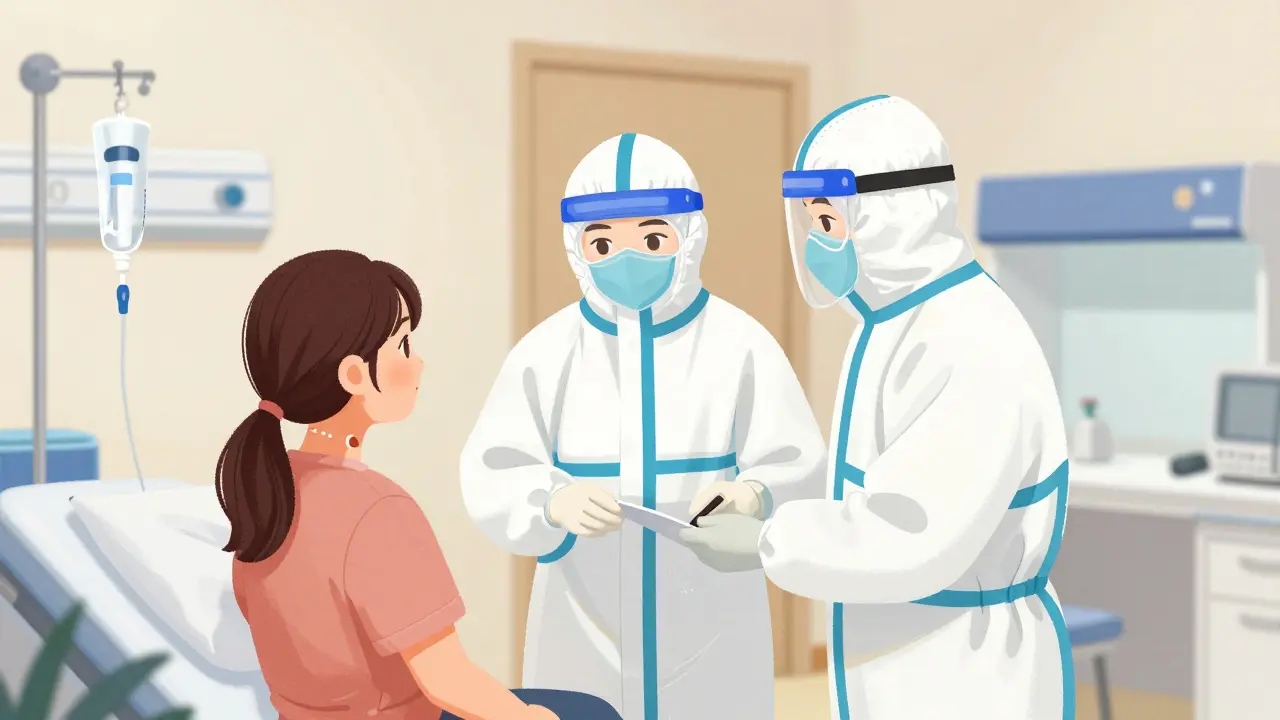
You cannot rely on gloves alone. The standards mandate specific PPE based on the risk category of the drug. For most antineoplastic agents, this means:
- Gloves: Chemotherapy-tested double gloves. NIOSH testing shows that single gloves can allow permeation of certain drugs within minutes.
- Gowns: Impermeable gowns that cover the torso and arms completely.
- Eye Protection: Required when splashing is possible, such as during vial preparation.
- Respiratory Protection: Necessary when aerosols or spills are anticipated, particularly for volatile agents like thiotepa.
A critical point often missed: all PPE is considered contaminated after handling. Studies dating back to 1992 show that contamination transfers from outer gloves to hands and surfaces. You must remove gloves carefully and wash hands immediately after removing them. Never touch your face, phone, or computer keyboard while wearing chemo gloves.
Engineering controls are equally important. Closed-system transfer devices (CSTDs) are now strongly recommended, if not required, for preparing hazardous drugs. These devices prevent vapor escape and liquid spillage during transfer. While the initial investment for CSTDs can range from $18,500 to $25,000 per facility, the ACCC reports that full implementation reduces occupational exposures by 78%. That’s a significant return on investment in terms of staff health and liability reduction.
| Feature | Pre-2024 Guidelines | 2024 ASCO/ONS Standards |
|---|---|---|
| Verification Steps | Three checks (order, prep, admin) | Four checks (including bedside dual-clinician verify) |
| Terminology | Chemotherapy | Antineoplastic Therapy (includes immunotherapy/targeted) |
| CRS Management | General monitoring | Mandatory institutional policies for CRS antidotes |
| CSTD Use | Recommended | Strongly mandated for high-risk agents |
| PPE Contamination | Assumed clean after removal | Explicitly defined as contaminated post-use |
Managing Cytokine Release Syndrome (CRS)
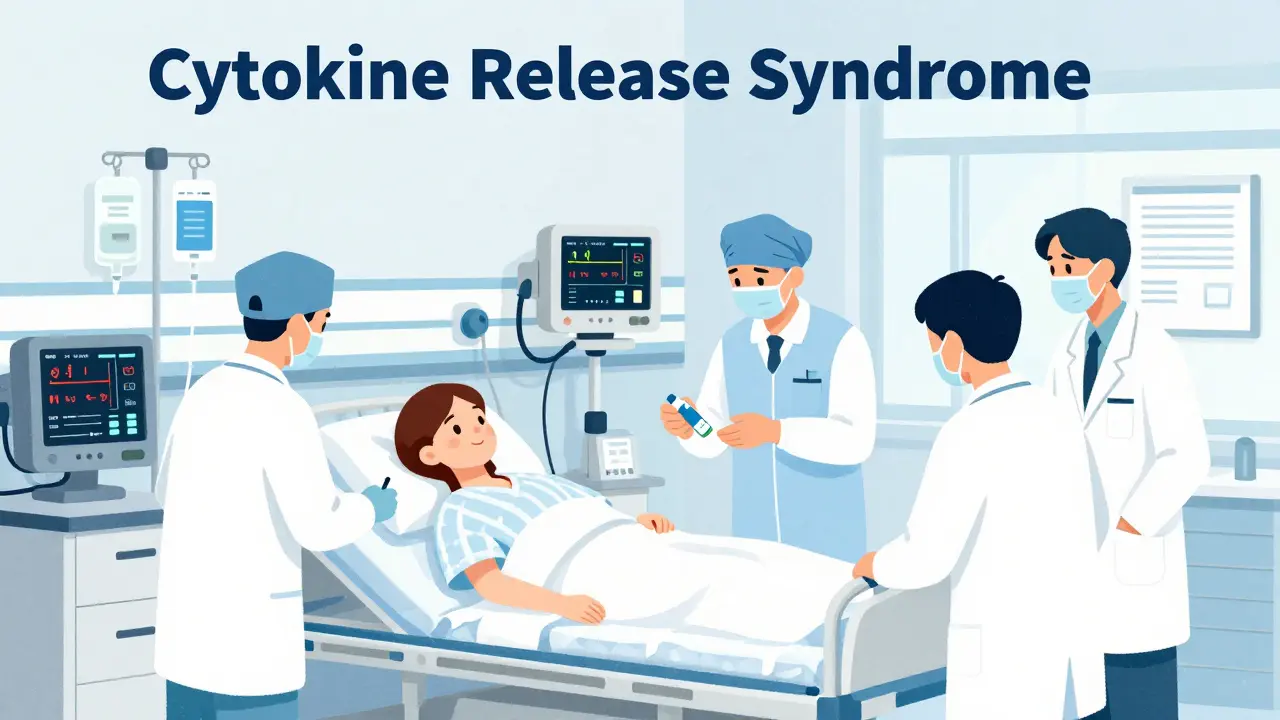
One of the most significant additions in the 2024 standards is the explicit requirement for managing Cytokine Release Syndrome (CRS), which is a systemic inflammatory response triggered by certain immunotherapies that can lead to fever, low blood pressure, and organ failure. With the rise of CAR-T cell therapies and bispecific antibodies, CRS cases have increased by 300% between 2018 and 2022. Without proper management, mortality rates sit between 12% and 15%.
Hospitals must now have written policies ensuring that antidotes (like tocilizumab) and supportive care resources are readily accessible during administration. Nurses need training to recognize early signs of CRS-fever, chills, hypotension-and act quickly. This isn’t just about having the drug in stock; it’s about having a protocol for who calls whom, when to escalate, and how to monitor vital signs continuously.
Home-Based Chemotherapy: The Hidden Risk
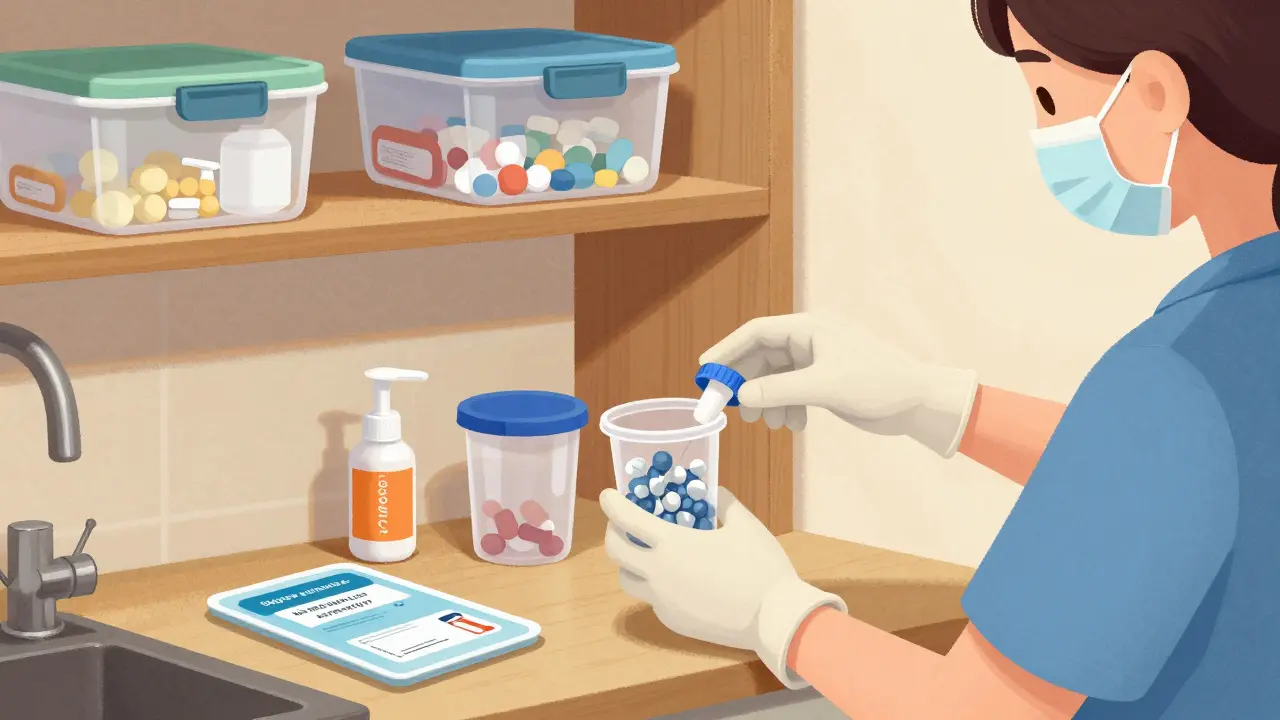
While hospital safety has improved, home-based chemotherapy remains a weak link. The American Cancer Society reports that 22% of home care incidents involve improper disposal of hazardous waste. Another 17% involve inadequate spill management. Caregivers often feel unprepared, with 65% reporting anxiety about handling bodily fluids and sharps.
Safety at home requires specific tools:
- Chemotherapy Spill Kits: Must be available in the home for immediate cleanup.
- Child-Proof Storage: All medications and waste must be stored out of reach of children and pets.
- Bodily Fluid Precautions: For 48-72 hours post-treatment, caregivers should wear gloves when handling urine, vomit, or stool, and flush toilets twice with the lid closed.
- Sharps Disposal: Use FDA-approved sharps containers, never household trash bins.
Facilities using the ASCO-developed Chemotherapy Safety at Home toolkit saw a 41% reduction in caregiver-reported safety concerns. Education is key. Don’t assume patients know these steps. Provide written instructions and demonstrate them.
Implementation Costs and Challenges
Implementing these standards isn’t free. For a medium-sized oncology practice, expect to spend $22,000-$35,000 on facility modifications and $8,500-$12,000 on staff training. Annual costs for PPE and waste disposal run $4,200-$6,800. Additionally, integrating these workflows into Electronic Health Records (EHR) systems often requires custom builds costing $15,000-$40,000 per facility.
The biggest challenge? Time. The fourth verification step adds minutes to each patient encounter. In high-volume centers, this can create bottlenecks. However, the long-term savings are substantial. Preventing even a few serious adverse events can save hundreds of thousands in Medicare costs. Plus, staff confidence improves. 78% of oncology nurses report feeling more secure in their roles after full implementation.
Regulatory Enforcement and Future Outlook
OSHA enforcement is tightening. In 2022, they issued 142 citations for hazardous drug handling violations, up 37% from the previous year. Average penalties hit $14,250 per violation. Compliance is no longer optional. Starting January 2025, the NCCN will integrate these standards into its facility accreditation program. You’ll need documented evidence of fourth verification implementation and CRS protocols to maintain accreditation.
Looking ahead, AI-powered verification systems are being piloted at 12 NCI-designated cancer centers. These systems could reduce the manual burden of verification by cross-referencing EHR data with barcode scans in real-time. By 2026, we may see standardized national certification for chemotherapy administration personnel, further professionalizing the field.
What is the fourth verification step in chemotherapy administration?
The fourth verification step is a mandatory bedside check introduced in the 2024 ASCO/ONS standards. It requires two licensed clinicians to verify the patient’s identity using two identifiers (e.g., name and date of birth) while simultaneously checking the medication label, all in the presence of the patient. This step aims to eliminate patient identification errors, which previously caused 18% of adverse events.
Why did the terminology change from chemotherapy to antineoplastic therapy?
The term "antineoplastic therapy" was adopted to reflect the broader range of cancer treatments now in use, including targeted therapies, immunotherapies, and monoclonal antibodies. Traditional "chemotherapy" refers primarily to cytotoxic drugs, but modern oncology uses many non-cytotoxic agents that still require strict safety protocols due to their potential hazards.
How should caregivers handle bodily fluids after a patient receives chemotherapy?
For 48-72 hours after treatment, caregivers should wear disposable gloves when handling the patient’s urine, vomit, or stool. Toilets should be flushed twice with the lid closed to minimize aerosolization. Any spills should be cleaned immediately with appropriate disinfectants. This prevents exposure to residual drug particles that can remain in bodily fluids.
What is Cytokine Release Syndrome (CRS) and why is it dangerous?
CRS is a severe inflammatory reaction triggered by certain immunotherapies, such as CAR-T cells. Symptoms include high fever, low blood pressure, and organ dysfunction. Without rapid intervention using specific antidotes like tocilizumab, CRS can be fatal, with mortality rates of 12-15%. The 2024 standards mandate that hospitals have ready access to these treatments and clear protocols for managing CRS.
Are Closed-System Transfer Devices (CSTDs) required for all chemotherapy preparations?
While not universally mandated for every single agent, CSTDs are strongly recommended and increasingly required for high-risk hazardous drugs. They prevent vapor escape and liquid spillage during preparation. Facilities implementing CSTDs see a 78% reduction in occupational exposures. Many accreditations now expect their use as a best practice for safety.

Write a comment