



Have you ever wondered why your pharmacist hands you a pill in a different bottle than the one your doctor prescribed, yet claims it works exactly the same? The answer lies in a document that few patients see but which dictates the entire U.S. pharmaceutical market: the FDA Orange Book, officially known as Approved Drug Products With Therapeutic Equivalence Evaluations. It is not just a list; it is the gatekeeper for generic competition and the shield for brand-name patents.
If you are navigating the world of pharmaceuticals, whether as a manufacturer, a pharmacist, or an informed patient, understanding how this book works is crucial. It determines when a cheaper generic version can hit the shelves and which drugs are considered interchangeable. Let's break down exactly how approved generic drugs make it into this critical registry.
The Foundation: What Is the FDA Orange Book?
To understand the listing process, you first need to know what the book actually is. Created under the Drug Price Competition and Patent Term Restoration Act of 1984 (commonly called the Hatch-Waxman Act), the Orange Book serves two main masters. On one hand, it protects intellectual property by listing patents related to brand-name drugs. On the other, it facilitates public health by identifying which generic drugs are therapeutically equivalent to those brands.
The Food and Drug Administration (FDA) maintains this database electronically. As of late 2023, it contained over 16,000 approved drug products. Roughly 90% of all prescriptions filled in the United States today are generics. That means the Orange Book influences the vast majority of medications Americans take. It acts as the definitive reference for pharmacists deciding if they can substitute a brand with a generic, and for payers determining reimbursement rates.
| Component | Description | Purpose |
|---|---|---|
| Prescription Drug Product List | List of approved prescription drugs with their therapeutic equivalence codes. | Determines substitutability for doctors and pharmacists. |
| Over-the-Counter (OTC) Drug Product List | List of approved OTC drugs. | Informational only; no therapeutic equivalence evaluation. |
| Discontinued Drug Product List | Drugs no longer marketed or approved. | Tracks historical data and removed products. |
| Patent and Exclusivity Data | Patents linked to specific drug substances, formulations, or uses. | Protects brand innovators and triggers litigation stays. |
How Generics Get Listed: The ANDA Pathway
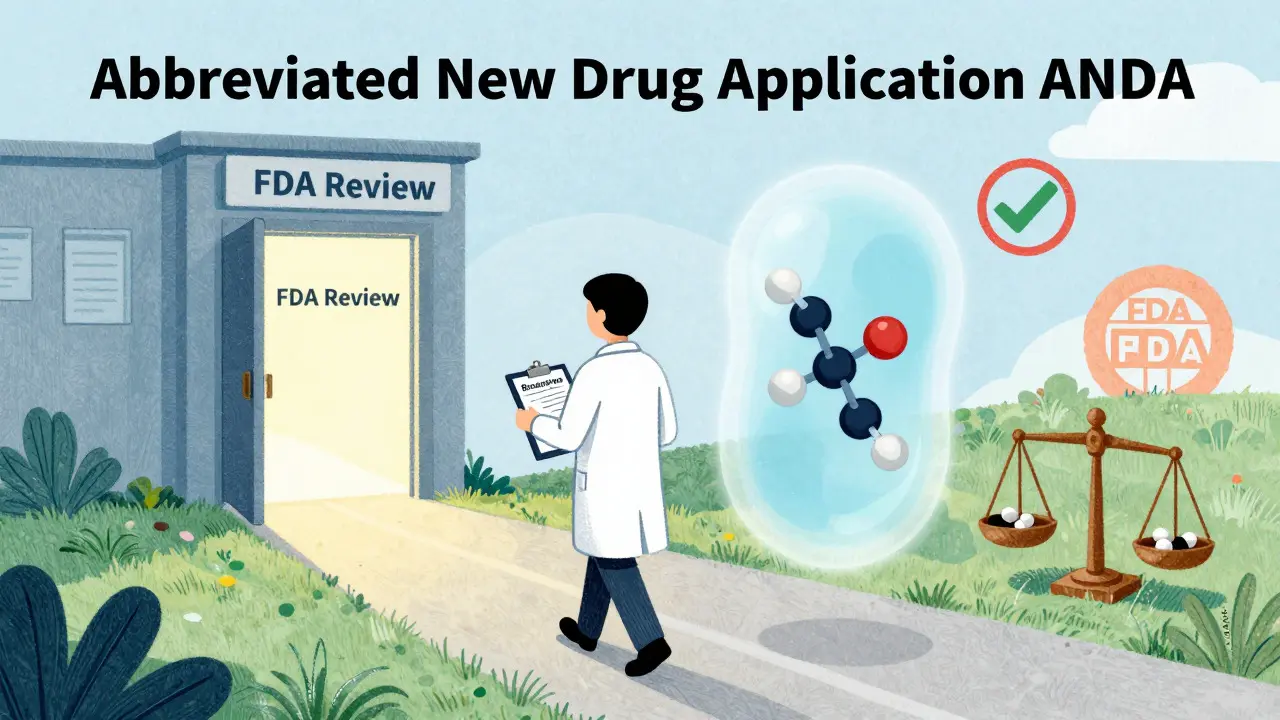
Generic drugs do not go through the same lengthy clinical trials as brand-new medicines. Instead, they follow the Abbreviated New Drug Application (ANDA) pathway. To get listed in the Orange Book, a generic manufacturer must prove that their product is bioequivalent to a Reference Listed Drug (RLD). The RLD is the original brand-name drug that has been deemed safe and effective by the FDA.
Here is how the listing logic works step-by-step:
- Identify the RLD: The generic applicant selects the brand-name drug they intend to copy. This drug must already be listed in the Orange Book with an "RLD Yes" designation.
- Demonstrate Bioequivalence: The manufacturer provides data showing their generic delivers the same amount of active ingredient into the patient's bloodstream at the same rate as the RLD.
- FDA Review: The Center for Drug Evaluation and Research (CDER) reviews the ANDA. If approved, the drug is added to the Electronic Orange Book.
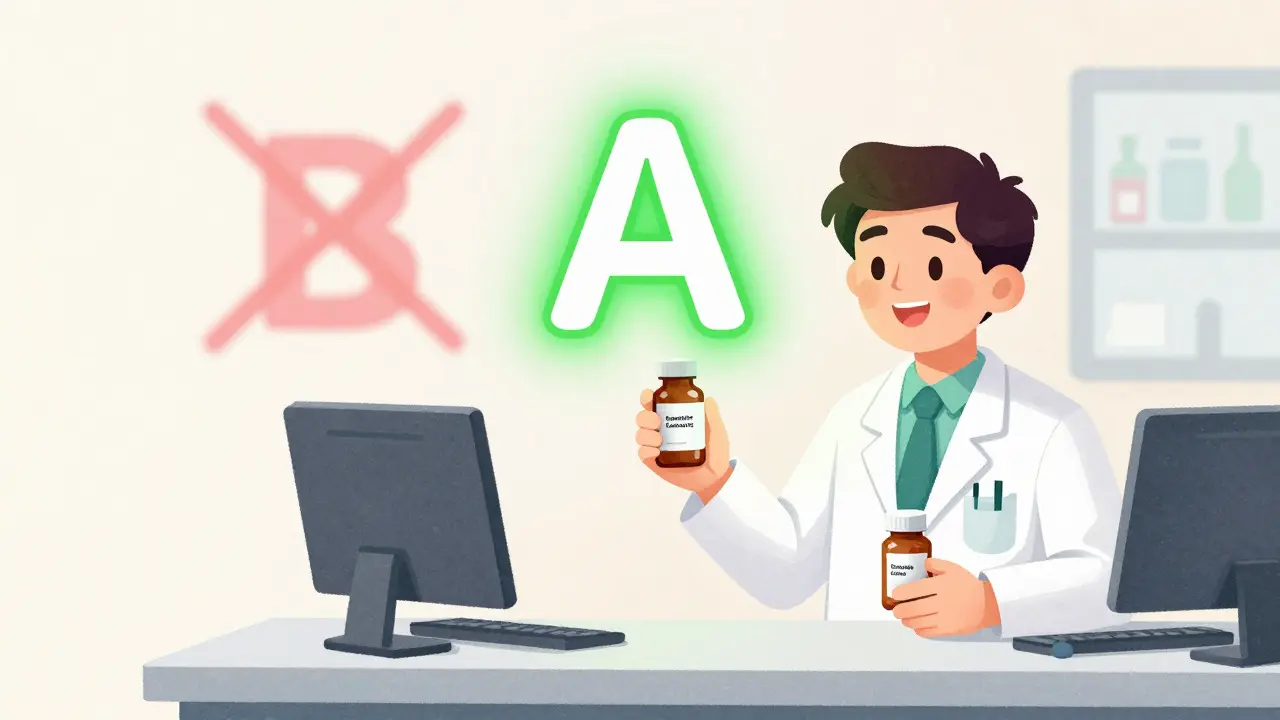
- Therapeutic Equivalence Code Assignment: The FDA assigns a code indicating how comparable the generic is to the RLD. An "A" code means the drugs are therapeutically equivalent and generally substitutable. A "B" code suggests potential issues or lack of proven equivalence.
Once approved, the generic appears in the Active Section of the Orange Book, usually within the month following approval. You can find these listings by searching for the active ingredient, then looking under the specific dosage form and route of administration. The RLD will be marked clearly, followed by its generic equivalents.
Navigating Therapeutic Equivalence Codes
One of the most practical aspects of the Orange Book is the Therapeutic Equivalence (TE) coding system. These codes tell healthcare providers whether a generic can safely replace a brand. However, they are not always straightforward.
An "A" rating is the gold standard. It means the FDA considers the generic therapeutically equivalent to the RLD. Pharmacists can typically substitute these automatically, subject to state laws. But things get tricky with complex products. For instance, inhalers like Trelegy Ellipta involve multiple ingredients and delivery mechanisms. Users on pharmacy forums often report confusion because TE codes don't always capture real-world interchangeability nuances for such devices.
Conversely, "B" codes indicate that the product may not be therapeutically equivalent. This could be due to differences in formulation, lack of sufficient data, or specific clinical concerns. When you see a "BN" code, it means the product is single-source and has not been evaluated for equivalence against others. Understanding these distinctions is vital for prescribers who want to ensure patient safety while managing costs.
The Role of Patents and Exclusivity
The Orange Book is not just about generics; it is also a battlefield for patents. Brand-name manufacturers list patents that cover the drug substance, the product formulation, or specific methods of use. This creates a legal barrier known as "patent linkage."
When a generic company files an ANDA, they must certify their position regarding these listed patents. If they claim the patent is invalid or won't be infringed (a Paragraph IV certification), the brand owner has 45 days to sue. If they do, the FDA's approval clock stops for 30 months. This stay period allows time for court battles, even if the patent later turns out to be weak or improperly listed.
This dynamic has led to criticism. Some experts argue that companies engage in "patent evergreening," filing minor patents to extend exclusivity beyond the core innovation. In 2023, the FDA issued guidance to clarify patent listing requirements and curb this practice. Despite reforms, patent data remains a core part of the Orange Book, influencing market entry timelines significantly. A misclassification here can delay a generic launch by 6 to 18 months, costing manufacturers millions.
Authorized Generics: The Exception to the Rule
You might hear about "authorized generics" and wonder where they fit. These are interesting creatures. An authorized generic is essentially the brand-name drug sold without the brand name, often by the brand manufacturer itself or a licensee. Crucially, they are not listed separately in the Orange Book.
Instead, they fall under the New Drug Application (NDA) of the brand-name product. Under Section 505(t) of the Federal Food, Drug, and Cosmetic Act, the FDA maintains a separate quarterly list of authorized generics on its website. This list includes the trade name, the brand company, and the date the authorized generic entered the market. So, if you are searching the Orange Book for a generic competitor, remember that authorized generics won't show up there-they are hidden inside the brand's NDA listing.
Using the Electronic Orange Book Effectively
The modern Orange Book is entirely digital. The FDA updates it monthly, and since June 2022, an API has allowed healthcare systems and pharmacy benefit managers to query the data directly. This automation handles over 2 million queries a month.
For manual searches, start with the Ingredient Search if you know the active component, or the Proprietary Name search if you have the brand name. From there, drill down by dosage form (e.g., tablet, injection) and route of administration (e.g., oral, intravenous). Pay close attention to the RLD column. Only drugs marked "Yes" serve as references for new generics. Discontinued drugs appear in a separate section and lack TE codes, making them irrelevant for current substitution decisions.
While the tool is powerful, it requires training. Pharmacy students often spend 8-10 hours learning to navigate it effectively. Common pitfalls include confusing tentative approvals (which appear on Drugs@FDA but not yet in the Orange Book) with final approvals, or misinterpreting TE codes for complex multi-ingredient products.
Why This Matters for Patients and Providers
The Orange Book directly impacts your wallet and your health. Therapeutic equivalence ratings correlate with significant price drops. Studies show that multi-source generics (those with "A" codes competing openly) cost 18-22% less than single-source products. By enabling rapid generic entry, the Orange Book helps keep the $67 billion U.S. generic drug market affordable.
However, challenges remain. Complex generics, such as ophthalmic suspensions or inhalers, still face controversial equivalence determinations. State substitution laws also vary, meaning an "A" code in the Orange Book doesn't guarantee automatic substitution everywhere. Pharmacists must balance federal data with local regulations.
As the FDA moves toward a more digital future-with plans for a "Digital Orange Book" featuring real-time updates-the transparency of these evaluations will improve. For now, mastering the current system is essential for anyone involved in medication management. Whether you are checking if a generic is safe to switch to or analyzing market entry strategies, the Orange Book remains the ultimate source of truth.
Is the FDA Orange Book free to access?
Yes, the Electronic Orange Book is freely available on the FDA website. Healthcare professionals and the public can search it without charge. Additionally, the FDA offers an API for automated data integration into pharmacy systems.
What does an "A" code mean in the Orange Book?
An "A" code indicates that the generic drug is therapeutically equivalent to the Reference Listed Drug (RLD). This means it has the same clinical effect and safety profile, allowing pharmacists to substitute it for the brand-name version in most cases.
Are authorized generics listed in the Orange Book?
No, authorized generics are not listed separately in the Orange Book. They are marketed under the brand-name drug's New Drug Application (NDA). The FDA maintains a separate quarterly list of authorized generics on its website.
How often is the Orange Book updated?
The FDA updates the Electronic Orange Book monthly. Newly approved drugs typically appear in the Active Section within the month following their approval. Patent information is updated as submissions are received from manufacturers.
Can I rely solely on the Orange Book for drug substitution?
While the Orange Book is the primary federal reference, you should also consider state-specific substitution laws and clinical guidelines. Some states have restrictions on certain drug classes, and individual patient factors may require sticking to the brand-name product despite an "A" code.
What is the difference between the Orange Book and the Purple Book?
The Orange Book covers small-molecule nonbiologic drugs, while the Purple Book lists licensed biological products. Both serve similar functions regarding patent linkage and therapeutic equivalence but apply to different types of medicinal products.


Write a comment