

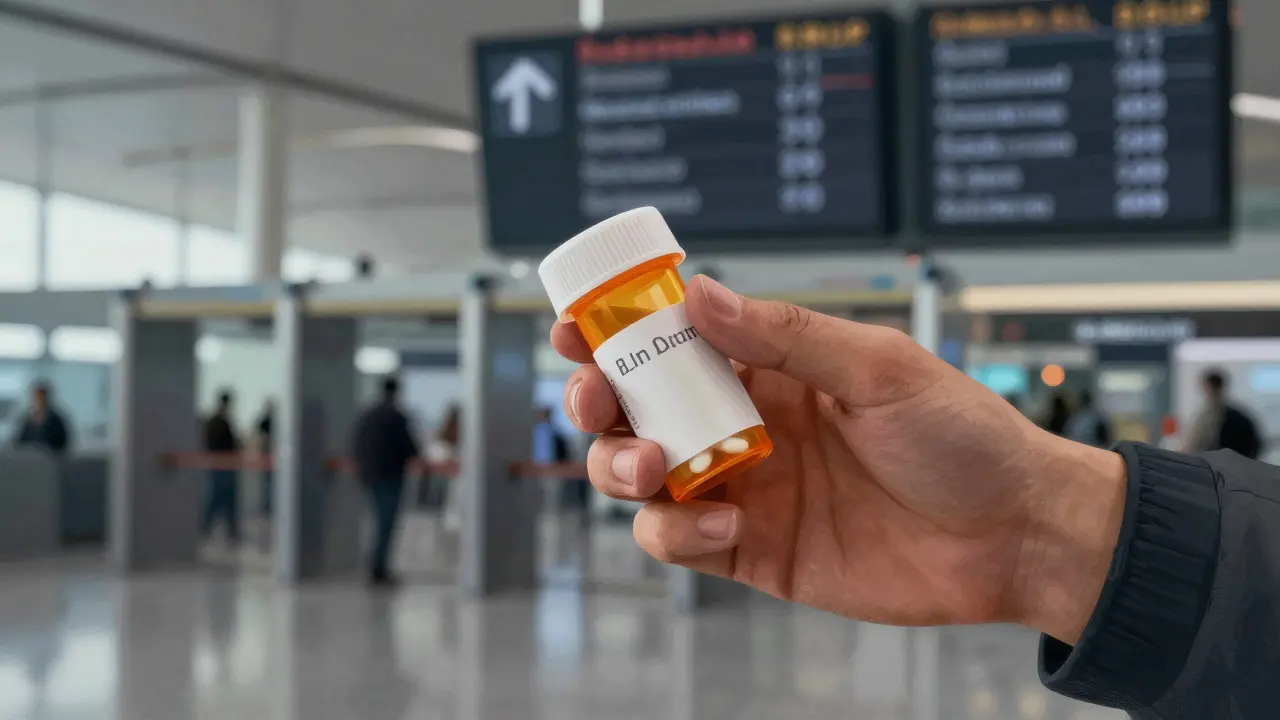

You pack your passport, your clothes, and your charger. You double-check the time zone. But if you’re carrying a prescription for ADHD, pain management, or even severe anxiety, that bottle in your carry-on could land you in jail-or worse-before you even clear customs. It sounds extreme, but it’s happening daily. A common pill that is perfectly legal in the United States or Europe can be classified as a Class A narcotic in countries like Japan, Singapore, or the UAE.
International drug laws are not just strict; they are wildly inconsistent. What one country considers essential healthcare, another views as trafficking. With over 1.4 billion people traveling globally each year, the stakes have never been higher. This guide cuts through the confusion to help you navigate the minefield of global medication regulations so you can travel safely without compromising your health.
The Global Landscape of Drug Control
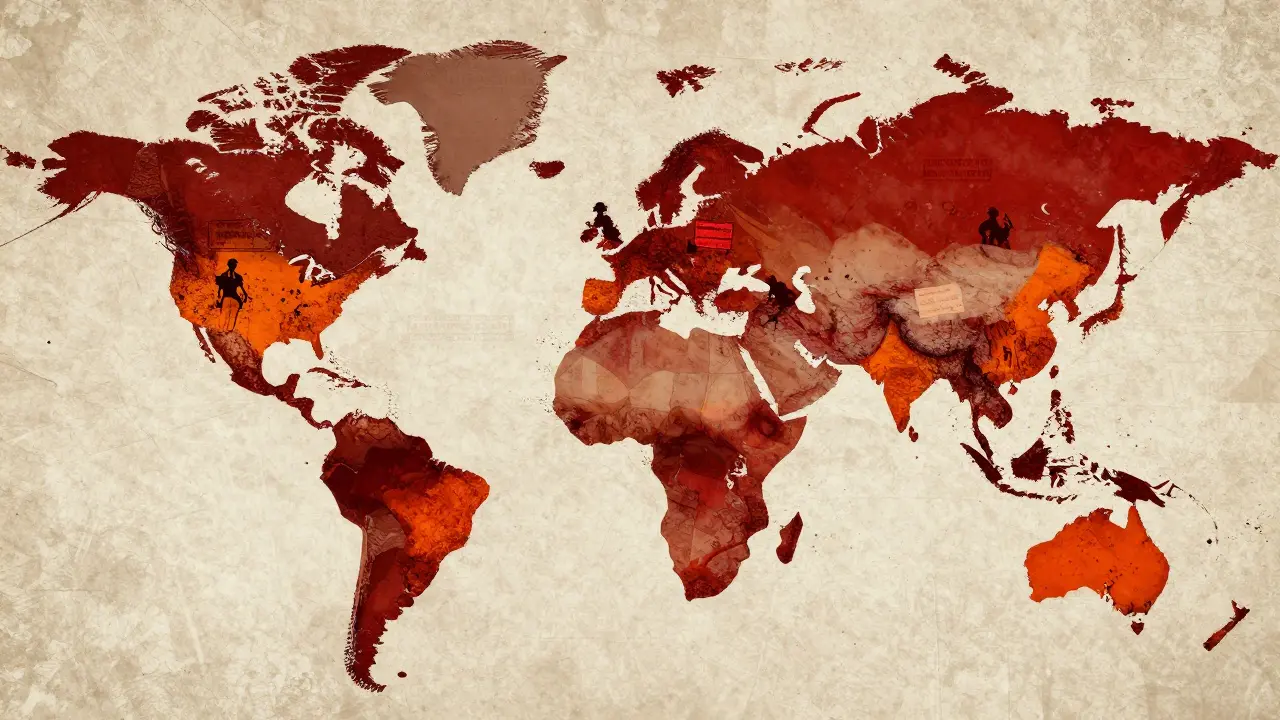
To understand why your medication might be banned, you need to look at the United Nations Conventions on Drug Control. These international treaties, established in 1961, 1971, and 1988, set the baseline for how nations handle narcotics and psychotropic substances. However, individual countries often go far beyond these minimum standards.
The International Narcotics Control Board (INCB) monitors these regulations, but enforcement varies drastically. For example, the United States maintains one of the most extensive lists of controlled substances, banning over 560 drugs according to the DEA. Meanwhile, Germany restricts 464 substances, and Japan bans 328. The sheer volume of restricted items means that unless you check specifically for your medication, you are guessing.
Why do these laws exist? Primarily to prevent abuse and trafficking. But this creates a massive collateral damage zone for legitimate medical travelers. In 2023 alone, incidents related to medication confiscation rose by 4%. The goal isn’t to stop you from taking your medicine; it’s to ensure you aren’t smuggling. Unfortunately, without the right paperwork, you look exactly like a smuggler to border control officers who may not speak your language or understand your medical condition.
High-Risk Destinations: Where Laws Are Strictest
Not all countries are created equal when it comes to medication enforcement. Some nations have zero-tolerance policies that can result in prison sentences, deportation, or permanent bans. Based on data from Universal Drugstore’s 2023 Travel Ban Drug Report and CDC Yellow Book updates, here are the regions requiring extra caution:
- East Asia: Japan is particularly strict about stimulants and decongestants. They ban pseudoephedrine (found in Sudafed) entirely. Japan also enforces a hard limit on supply quantities, which we’ll discuss later.
- The Middle East: Countries like the United Arab Emirates (UAE), Saudi Arabia, and Qatar classify many common sedatives and painkillers as Class A controlled substances. In the UAE, carrying codeine or diazepam without pre-approval can lead to 1-3 years in prison.
- Southeast Asia: Thailand recently increased penalties for stimulant violations to up to 10 years imprisonment. Singapore and Malaysia also enforce severe penalties for unapproved medications.
- Europe: While generally more lenient, countries like Germany require specific documentation for 'appropriate quantities' (usually max 30 days). Italy requires notarized translations of prescriptions, a hurdle many travelers overlook.
If you are visiting any of these places, assume your medication is illegal until you prove otherwise. Do not rely on general advice; verify with the specific embassy or consulate.
The Most Commonly Confiscated Medications
You might think your medication is harmless because it’s prescribed by a doctor. But border agents care about chemical composition, not medical necessity. Certain classes of drugs trigger alarms globally due to their potential for abuse or use in illicit manufacturing.
| Medication Class | Common Brand Names | Restriction Level / Notes |
|---|---|---|
| ADHD Stimulants | Adderall, Ritalin, Concerta | Banned in China, Japan, UAE, and most of Southeast Asia without special permits. High risk of detention. |
| Opioid Painkillers | Vicodin (Hydrocodone), Oxycodone | Restricted in 56% of major travel destinations. Often requires pre-approval in Middle Eastern countries. |
| Sedatives / Benzodiazepines | Xanax (Alprazolam), Valium (Diazepam) | Strictly controlled in UAE, Singapore, and Japan. Often limited to small quantities (e.g., 30-day supply). |
| Decongestants | Sudafed (Pseudoephedrine) | Banned in Japan and South Korea due to methamphetamine production links. Available OTC in US/EU. |
| Sleep Aids | Zolpidem (Ambien) | Restricted in many Asian and Middle Eastern countries. Requires careful documentation. |
Note that generic names matter more than brand names. If your prescription says "Hydrocodone," that is the chemical entity border control checks against their database, not the logo on the bottle.
Documentation: Your Legal Shield
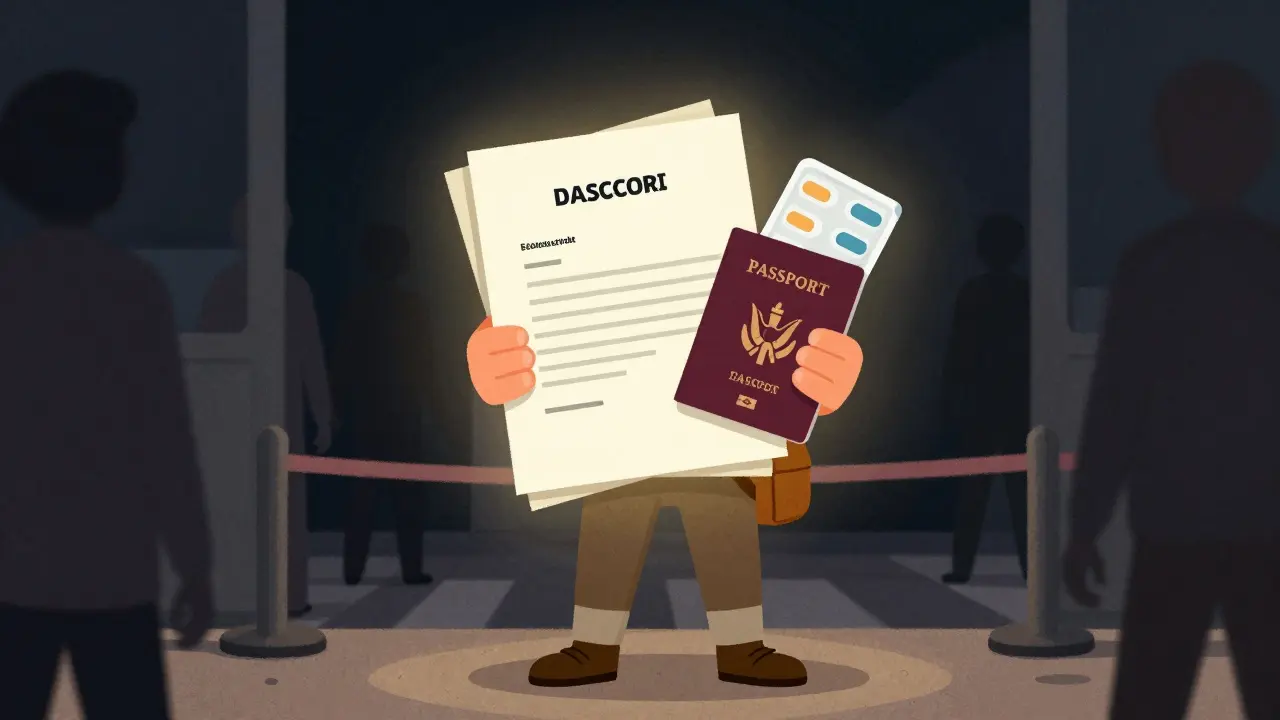
If you must carry restricted medication, documentation is your only defense. A simple pharmacy label is rarely enough. You need a paper trail that proves three things: the medication is yours, it is medically necessary, and the quantity matches your trip duration.
- Doctor’s Letter: Obtain a letter on official letterhead from your prescribing physician. It must state your diagnosis, the medication name (generic and brand), dosage, and that it is essential for your health during travel.
- Original Packaging: Never transfer pills to generic containers. Keep them in the original pharmacy-labeled bottles. The name on the bottle must match the name on your passport and your doctor’s letter.
- Country-Specific Permits: Some countries require advance approval. For example, the UAE has an online portal called 'Medicines for Patients' where you must apply 10-14 business days before arrival. Japan requires an 'Import Permission for Pharmaceutical Products' form submitted via their MHLW website.
- International Certificate: For psychoactive substances, some nations accept an International Certificate for Psychoactive Substances issued by national health authorities.
Start this process 8-12 weeks before your trip. Government processing times are unpredictable, and missing a permit can ruin your vacation.
Practical Tips for Smooth Border Crossings
Even with perfect paperwork, human error happens. Here is how to minimize friction at security checkpoints:
- Carry Only What You Need: Do not bring a 90-day supply for a 10-day trip. Most countries allow a maximum of 30 days’ worth of medication without special justification. Excess pills raise suspicion of resale.
- Keep Meds in Carry-On: Never pack prescription drugs in checked luggage. If your bag gets lost, you’re stranded. If it gets opened by random inspection, there’s no record of who packed it. Carry-ons stay with you.
- Know the Local Terminology: Learn the local word for your medication. In Japan, knowing that 'pseudoephedrine' is strictly banned helps you avoid buying accidental substitutes at local pharmacies.
- Use Digital Tools: Apps like DocHQ’s Travel Medicine Checker can scan your medication list and flag potential issues based on your destination. These tools update frequently as laws change.
- Be Honest but Concise: If asked, declare your medication immediately. Do not hide it. Hiding medication turns a civil infraction into a criminal charge. Present your documents calmly and clearly.
What Happens If You Get Caught?
The consequences vary by severity and location. Minor infractions, like carrying an extra week’s supply of non-controlled meds, might result in confiscation and a warning. However, for controlled substances like ADHD meds or opioids in countries like Singapore or the UAE, the outcome can be dire.
Travelers have faced detention, interrogation, and imprisonment. In Dubai, a traveler was held for 72 hours for carrying codeine-containing painkillers without prior approval. In Tokyo, passengers have had their visas revoked upon arrival due to undeclared stimulants. Always remember: ignorance of the law is not a valid defense in foreign courts.
If you are stopped, remain calm. Request to contact your embassy or consulate. They cannot provide legal representation, but they can monitor your case and ensure you receive fair treatment under local laws.
Future Trends: Will Regulations Harmonize?
Currently, the system is fragmented. The World Health Organization has proposed harmonizing medication travel regulations to reduce incidents by 65%, but political barriers remain high. Only about 31% of countries support international standardization as of 2024.
However, digitalization is improving access. The Philippines introduced a digital pre-approval system in early 2025, cutting processing times from two weeks to three days. As technology improves, expect more countries to adopt online portals for medication verification. Until then, the burden remains on the traveler to research, document, and comply.
Can I take my Adderall to Japan?
Generally, no. Japan strictly prohibits amphetamine derivatives like Adderall. Even with a prescription, entry is denied unless you obtain a special import permit from the Ministry of Health, Labour and Welfare (MHLW) well in advance. Many travelers find it safer to consult their doctor about alternative non-stimulant treatments that are legal in Japan.
How much medication can I carry internationally?
Most countries allow a maximum of 30 days' supply for personal use without special authorization. Some, like Japan, enforce this strictly. For longer trips, you may need to split your journey or obtain multiple permits. Never carry more than you need for the duration of your stay plus a small buffer for delays.
Is Xanax legal in the UAE?
Xanax (alprazolam) is a Class A controlled substance in the UAE. It is not automatically illegal to possess, but it requires mandatory pre-approval from the UAE Ministry of Health and Prevention. Without this approval, possession can lead to arrest and imprisonment. Apply through the 'Medicines for Patients' portal at least 10 days before travel.
What should I do if my medication is confiscated?
Stay calm and do not argue aggressively. Ask for a written explanation of the confiscation. Immediately contact your country's embassy or consulate for assistance. They can help you navigate local procedures and potentially arrange for replacement medication from a local pharmacy if legally permissible.
Do I need a notarized translation of my prescription?
It depends on the country. Italy, for example, mandates notarized Italian translations of all prescriptions. Other countries may accept English versions. Always check the specific requirements of your destination country's health ministry or embassy before departure. When in doubt, get a certified translation.
Write a comment