

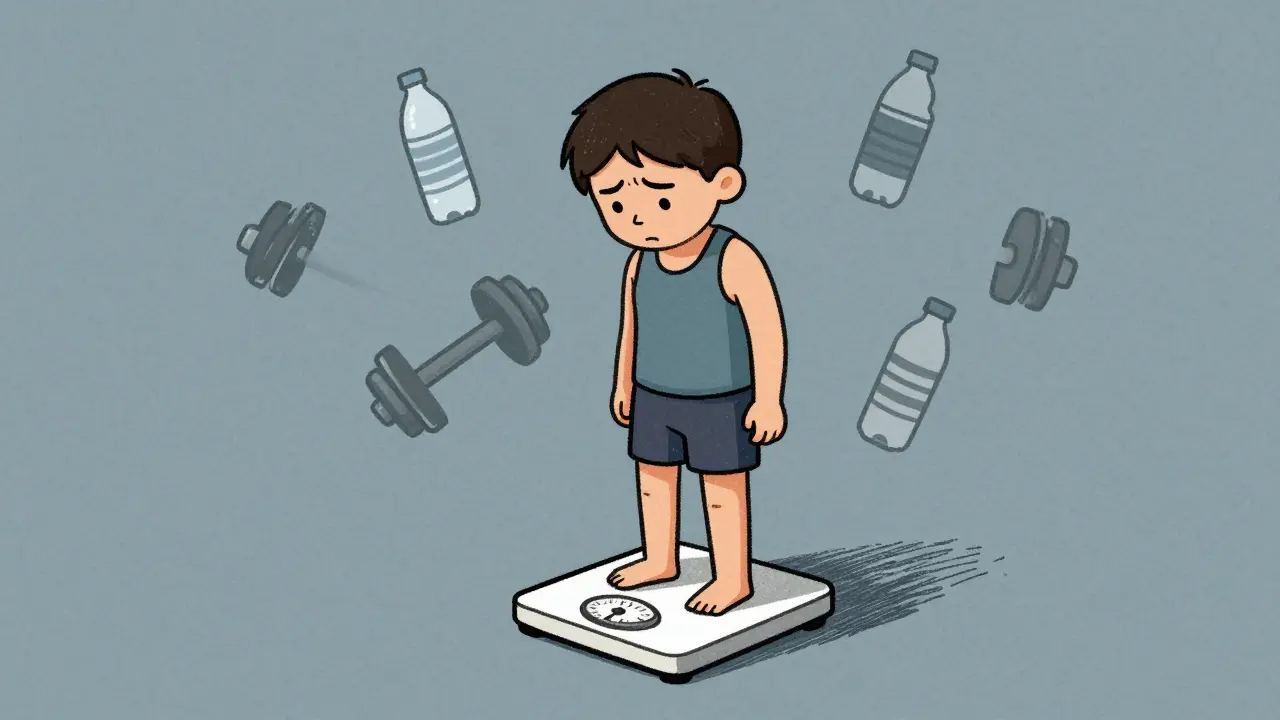

You’ve been doing everything right. You’re tracking your calories, hitting the gym, and drinking plenty of water. Yet, for weeks-or even months-the scale hasn’t budged. It’s frustrating, confusing, and often leads people to believe they’ve failed. But here’s the truth: you haven’t failed. Your body is simply defending itself.
This phenomenon is known as a weight loss plateau, which is a period where weight reduction stalls despite continued caloric restriction or increased physical activity. It is not a sign that your metabolism has "broken." Instead, it is a sophisticated physiological response called metabolic adaptation, also referred to as adaptive thermogenesis. Understanding this mechanism is the key to moving forward without resorting to extreme measures that can harm your long-term health.
What Is Metabolic Adaptation?
To understand why plateaus happen, we need to look at how the body regulates energy. When you lose weight, your body doesn’t just shrink; it changes its operating system to conserve energy. This is an evolutionary survival mechanism designed to protect you from starvation.
Adaptive thermogenesis is the decline in Total Daily Energy Expenditure (TDEE) that exceeds what would be predicted by body mass loss alone. In simpler terms, your body starts burning fewer calories than expected for your new size. Research published in the Journal of the International Society of Sports Nutrition highlights that this adaptation functions to promote the restoration of your baseline body weight.
The concept isn’t new. The famous Minnesota Starvation Experiment, conducted between 1944 and 1945, was one of the first systematic studies to document this. Researchers observed that participants’ metabolic rates dropped by approximately 40% beyond what could be explained by weight loss alone. Today, we know that Resting Energy Expenditure (REE), which is the amount of energy your body uses at rest to maintain vital functions, decreases significantly. A study from the University of Alabama at Birmingham (UAB) found that each 10 kcal/day increase in metabolic adaptation adds about one day to the time required to reach weight loss goals. This means your body is actively working against the deficit you are trying to create.
The Physiology Behind the Stall
Metabolic adaptation isn’t just a vague feeling; it involves specific hormonal and cellular changes. When you restrict calories, your body releases signals to slow down energy use and increase hunger.
- Hormonal Shifts: Levels of leptin, a hormone that signals satiety, can drop by up to 70% after significant weight loss. Simultaneously, cortisol levels may rise, and thyroid hormone production decreases. These changes tell your brain that food is scarce, triggering intense hunger and reduced energy expenditure.
- Cellular Changes: At a microscopic level, brown adipose tissue (BAT), which helps generate heat, reduces its expression of uncoupling proteins (UCP). This reduces thermogenesis, meaning your body produces less heat and burns fewer calories during digestion and movement.
- Sex Differences: Research indicates that females often possess more BAT than males and may experience greater decreases in BAT mass during energy restriction, potentially making them more susceptible to certain aspects of metabolic adaptation.
Dr. Rudolph Leibel, a professor at Columbia University, describes this as the body defending a "defended weight" range. If you try to push below this range too aggressively, your body fights back harder. This explains why many people find that the last 10 pounds are much harder to lose than the first 30.

Why Traditional Calorie Counting Fails During Plateaus
Most weight loss advice relies on static calorie counting: if you burn 2,000 calories and eat 1,500, you should lose weight. However, this model ignores the dynamic nature of human metabolism. As you lose weight, your Total Daily Energy Expenditure (TDEE) drops for two reasons:
- Smaller Body Size: A smaller body requires less energy to move and maintain.
- Metabolic Adaptation: Your body becomes more efficient, burning fewer calories for the same activities.
If you continue to eat at the same restricted level without adjusting for these changes, you might think you are still in a deficit when you are actually at maintenance. For example, if your TDEE drops from 2,000 to 1,800 due to adaptation, but you keep eating 1,500, the gap narrows significantly. Over time, this small deficit becomes negligible, leading to a stall.
Moreover, initial rapid weight loss is often misleading. The Mayo Clinic notes that the first 5-10 pounds lost are largely water weight from glycogen depletion. Once this phase ends, the rate of fat loss slows naturally, which many mistake for a plateau caused by poor adherence. In reality, it is a normal physiological progression.
Strategies to Break Through a Weight Loss Plateau
Fighting metabolic adaptation with more restriction usually backfires. Cutting calories further can deepen the adaptation, increasing hunger and decreasing energy. Instead, consider these evidence-based strategies:
1. Implement Diet Breaks
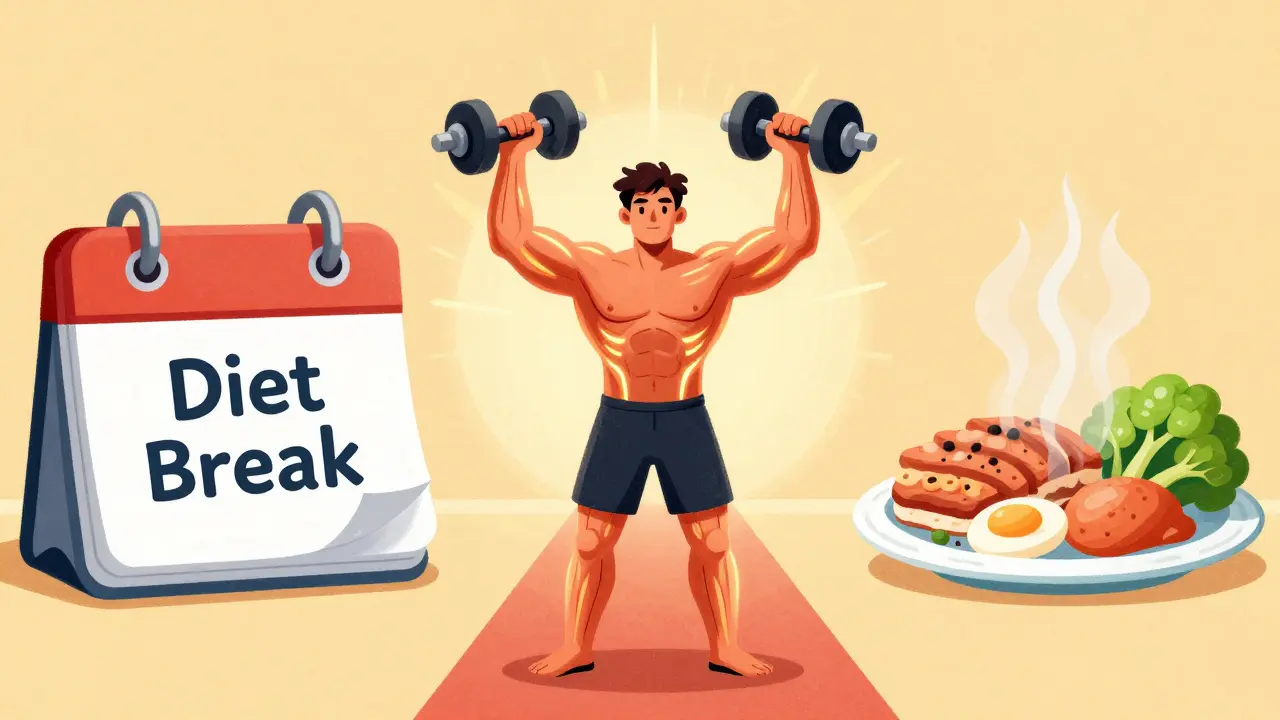
A diet break involves temporarily returning to maintenance calories for 1-2 weeks every 8-12 weeks of restriction. Research suggests this can reduce metabolic adaptation by up to 50%. By signaling to your body that food is abundant, you help restore leptin levels and improve mood and energy. This isn’t cheating; it’s a strategic reset.
2. Prioritize Resistance Training
Muscle tissue is metabolically active. Losing muscle along with fat accelerates the drop in your Resting Metabolic Rate (RMR). Studies show that individuals who engage in resistance training 3-4 times per week experience 8-10% smaller reductions in RMR compared to those who only do cardio. Aim to preserve lean mass by lifting weights and ensuring adequate protein intake.
3. Increase Protein Intake
Protein has a higher thermic effect than fats or carbohydrates, meaning your body burns more calories digesting it. More importantly, it helps preserve muscle mass. Research indicates that consuming 1.6-2.2g of protein per kilogram of body weight can result in greater fat loss and less lean mass loss during caloric restriction. For a 70kg person, this translates to roughly 112-154g of protein daily.
4. Reverse Dieting
Reverse dieting involves gradually increasing calorie intake over several weeks while monitoring weight. This approach aims to slowly raise your metabolic rate without regaining significant fat. It requires patience and careful tracking, but it can help re-establish a higher baseline metabolism.
| Strategy | Mechanism | Expected Benefit | Timeframe |
|---|---|---|---|
| Diet Breaks | Returns to maintenance calories temporarily | Reduces metabolic adaptation by up to 50% | 1-2 weeks every 8-12 weeks |
| Resistance Training | Preserves lean muscle mass | Minimizes RMR decline (8-10% smaller drop) | Ongoing, 3-4 sessions/week |
| High Protein Intake | Increases thermic effect and preserves muscle | Greater fat loss, less lean mass loss | Daily, 1.6-2.2g/kg body weight |
| Reverse Dieting | Gradual calorie increase | Slowly raises metabolic rate | Several weeks to months |
The Role of Modern Interventions
The weight management industry is evolving to account for metabolic adaptation. Programs like WW (formerly Weight Watchers) have updated their systems to include personalized calorie targets that adjust for metabolic changes. Similarly, apps like Noom incorporate "metabolic reset" features based on NIH research.
Pharmaceutical interventions are also emerging. GLP-1 agonists such as semaglutide (Wegovy) have shown significant results, with an average weight loss of 14.9% at 68 weeks. These drugs partially counteract the hunger-increasing effects of metabolic adaptation by targeting gut hormones. However, they are not a standalone solution and work best when combined with lifestyle changes.
Bariatric surgery remains another option for severe obesity. Interestingly, surgery appears to reduce the effects of metabolic adaptation by approximately 60% compared to diet-induced weight loss, likely due to profound hormonal changes induced by the procedure. Nevertheless, it carries surgical risks and requires lifelong commitment.
Managing Expectations and Mental Health
Plateaus are emotionally taxing. Data from online communities shows that users experiencing plateaus report increased hunger, decreased energy, and psychological distress. It’s crucial to remember that non-scale victories matter. Improved blood pressure, better sleep, and increased strength are all signs of progress, even if the number on the scale stays the same.
Instead of viewing a plateau as a failure, view it as feedback. Your body is telling you that it needs a different stimulus. Whether that’s a diet break, a change in exercise routine, or a slight adjustment in macros, listening to your body’s signals is essential for sustainable weight management.
As Dr. David Ludwig from Harvard T.H. Chan School of Public Health states, understanding and working with-rather than against-metabolic adaptation represents the next frontier in sustainable weight management. By adopting a flexible, science-backed approach, you can navigate plateaus effectively and achieve your health goals without compromising your well-being.
How long does a weight loss plateau typically last?
A weight loss plateau can last anywhere from a few weeks to several months. The duration depends on individual factors such as the degree of metabolic adaptation, adherence to dietary protocols, and lifestyle habits. On average, users report plateaus lasting 4-8 weeks before implementing changes.
Is metabolic adaptation permanent?
No, metabolic adaptation is not permanent. It is a reversible physiological response. Strategies such as diet breaks, reverse dieting, and resistance training can help mitigate and eventually reverse the effects of adaptive thermogenesis, allowing your metabolism to recover over time.
Should I cut calories further if I hit a plateau?
Generally, no. Cutting calories further can exacerbate metabolic adaptation, leading to increased hunger, fatigue, and further slowing of metabolism. Instead, consider taking a diet break, increasing physical activity intensity, or focusing on preserving muscle mass through resistance training and adequate protein intake.
How does resistance training help with weight loss plateaus?
Resistance training helps preserve lean muscle mass, which is metabolically active. By maintaining muscle, you prevent a significant drop in your Resting Metabolic Rate (RMR). Studies show that resistance-trained individuals experience 8-10% smaller reductions in RMR during weight loss compared to those who only perform cardiovascular exercise.
What is a diet break, and how do I do it?
A diet break is a temporary period where you eat at your maintenance calorie level instead of in a deficit. Typically, this lasts 1-2 weeks and is implemented every 8-12 weeks of continuous dieting. To do it, calculate your current maintenance calories and consume that amount daily for the specified period. This helps reset hunger hormones and reduce metabolic adaptation.



Write a comment