


Medication Safety Risk Assessment Tool
Medication errors are still killing people - and most of them are preventable
In the UK alone, an estimated 237,000 medication-related incidents occur each year, with nearly 70% of them avoidable. These aren’t just statistics - they’re mothers who got the wrong dose of insulin, elderly patients who took two blood thinners at once, nurses who missed a critical allergy alert because the system flooded them with 40 warnings in 10 minutes. Medication safety isn’t about being perfect. It’s about building systems that make mistakes harder to make - and easier to catch.
What actually counts as a medication error?
It’s not just giving the wrong pill. A medication error happens anytime the patient gets the wrong drug, wrong dose, wrong route, wrong time, or wrong person. That includes handwritten prescriptions that get misread, EHR dropdowns that default to the wrong frequency, or a nurse skipping a barcode scan because they’re running behind. The most dangerous errors? Those involving high-alert medications: intravenous oxytocin, insulin, heparin, and opioids. One typo in the dose of oxytocin can trigger a uterine rupture. One missed decimal point in insulin can send a diabetic into a coma. These aren’t rare. They happen daily in hospitals, clinics, and even home care settings.
The five rights aren’t enough - here’s what works now
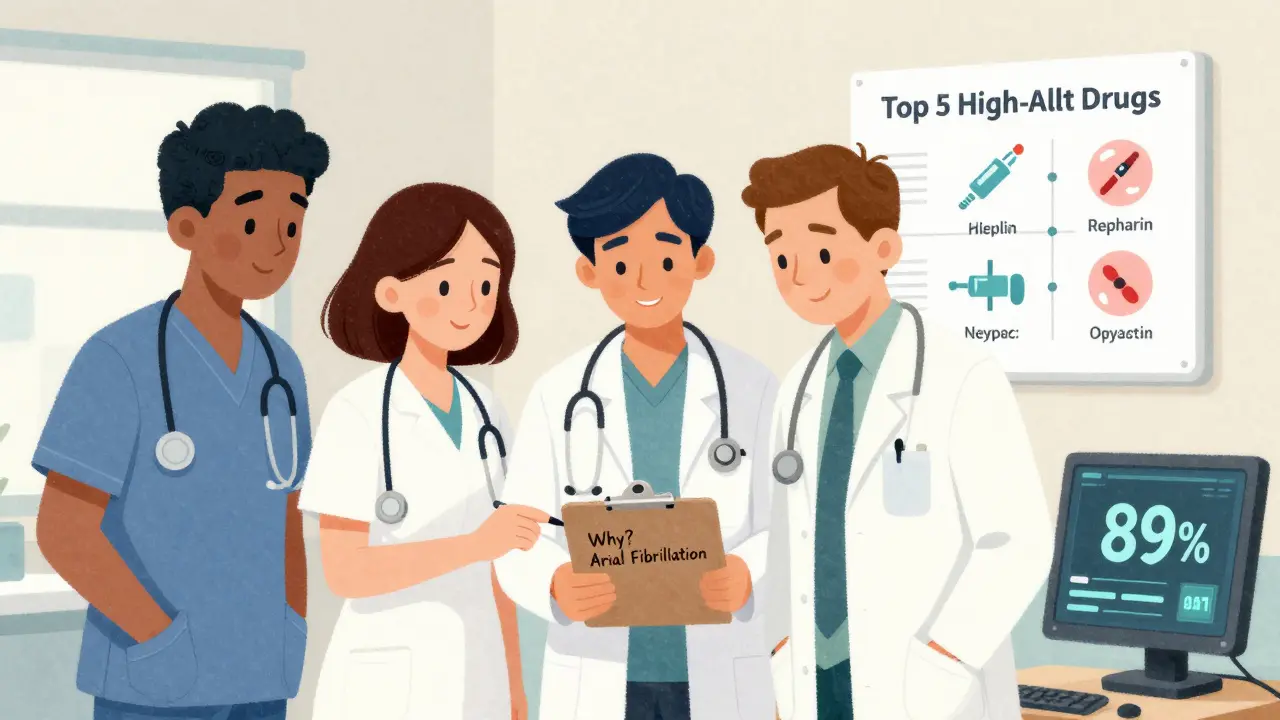
The old mantra - right patient, right drug, right dose, right route, right time - is still taught in nursing school. But it’s not enough. Modern medication safety adds three more: right documentation, right reason, and right education. That means every order must include the clinical reason for the drug. Why is this patient getting warfarin? Is it for atrial fibrillation or a recent DVT? If the reason isn’t written, the pharmacist can’t verify it. And if the patient doesn’t understand why they’re taking it, they might stop it - or take extra.
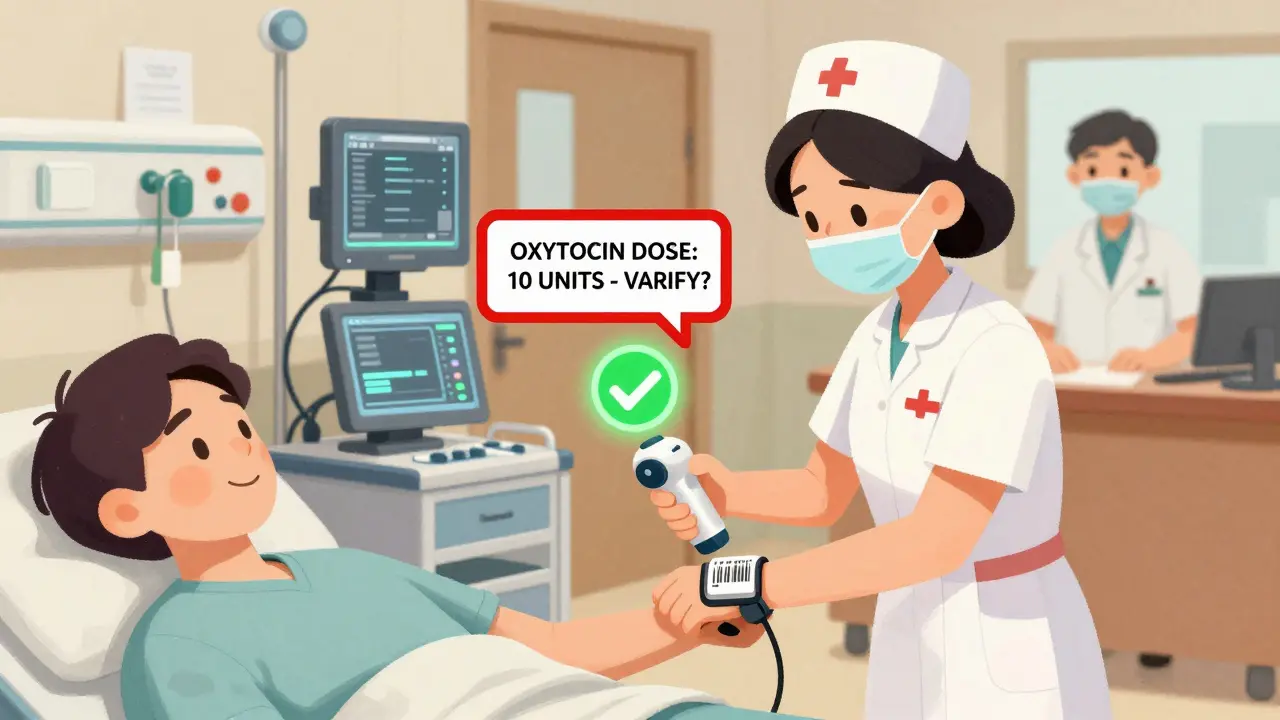
Barcodes changed everything. When nurses scan the patient’s wristband and the drug’s barcode before administration, errors drop by over 40%. But only if they actually do it. In emergency situations, many skip the scan. That’s why top hospitals now pair BCMA (barcode-assisted medication administration) with mandatory debriefs after every override. Why did you bypass the system? Was it safe? Could we have done this better? This turns compliance into culture.
Electronic systems help - until they hurt
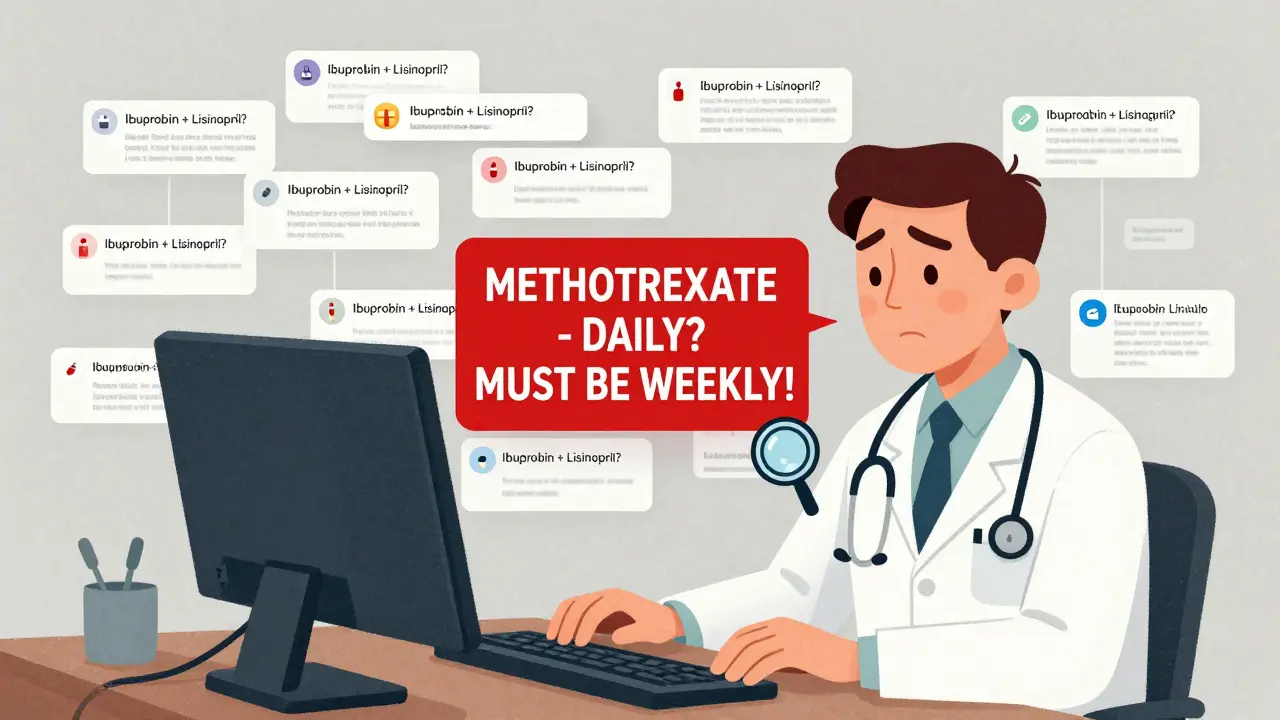
Computerized Provider Order Entry (CPOE) systems cut prescribing errors by nearly half. But they created new ones. A 2021 study from Brigham and Women’s Hospital found that 34% of digital errors came from default settings. A doctor selects ‘daily’ for methotrexate - a drug meant to be taken once a week - and the system doesn’t stop them. That’s a fatal mistake. The ISMP now requires a hard stop: if a doctor orders daily methotrexate, the system locks the order until a specialist confirms it’s intentional.
Alert fatigue is another silent killer. Clinicians override 49% to 96% of drug interaction alerts because most are useless. A patient on lisinopril gets an alert for a possible interaction with ibuprofen - but they’ve been taking both for five years. The system doesn’t know that. So it keeps yelling. The solution? Smart alerts. Systems now learn from past overrides. If a clinician ignores the same alert 20 times for the same patient, the system stops showing it. That’s called adaptive decision support. It’s not magic - it’s data.
Training isn’t a one-time seminar - it’s ongoing
Most hospitals give new staff a 2-hour PowerPoint on medication safety. Then they’re thrown into the ER. That’s not training. That’s negligence. The best programs require 16 to 24 hours of initial training, followed by 8 hours every year. And it’s not lectures. It’s simulations. A nurse gets a simulated patient with kidney failure. The system suggests a standard dose of vancomycin. The nurse must adjust it based on creatinine levels, then explain why. If they get it wrong, the patient code-blue’s. Then they debrief. No blame. Just learning.
Real success comes from embedding pharmacists in units. At Johns Hopkins, pharmacists sit in the ICU. They review every order before it’s given. They catch miswritten doses, duplicate therapies, and drug-allergy mismatches. In two years, medication errors dropped 81%. That’s not luck. That’s presence.
Why culture matters more than technology
Technology can’t fix a culture that punishes mistakes. If a nurse reports a near-miss and gets written up, they’ll stop reporting. And when errors go unreported, systems stay broken. The most effective safety cultures use nonpunitive reporting. If you make a mistake, you talk about it - and the system changes. No names. No blame. Just fixes.
Hospitals that score in the top 25% on the AHRQ Patient Safety Culture Survey have one thing in common: teamwork across units. Nurses, pharmacists, and doctors don’t just tolerate each other - they check each other’s work. A pharmacist spots a wrong dose? They call the nurse. A nurse sees an unclear order? They call the doctor. That’s how safety sticks.
What’s new in 2026?
Artificial intelligence is stepping in. New algorithms can scan a patient’s entire record - lab values, diagnoses, allergies, past prescriptions - and predict which medication order is most likely to cause harm. One study showed AI caught 89% of potential errors before they reached the patient. That’s better than any human. But AI isn’t replacing clinicians. It’s augmenting them. The system flags a risky order. The clinician reviews it. Then they decide.
Telehealth is another frontier. More patients are getting prescriptions via video visits. But how do you verify their weight? Their liver function? Their real-time allergies? New guidelines from WHO and ISMP now require telehealth providers to use integrated lab results and real-time pharmacy verification before sending any high-risk prescription. No more ‘just fill this’ orders.
What’s holding us back?
Cost. A full BCMA system with EHR integration can cost a 300-bed hospital over $1 million. Annual maintenance? Another $200,000. Many clinics can’t afford it. But the cost of not doing it? Higher. One fatal error can cost a hospital millions in lawsuits and lost accreditation.
Outdated policies. A 2021 survey found 31% of hospital medication safety policies hadn’t been updated in three or more years. That’s like using a 2012 map to drive a Tesla. The ISMP updates its best practices every two years. Hospitals need to do the same.
Where to start - even if you’re underfunded
You don’t need a $1 million system to make a difference. Start here:
- Enforce the five rights + reason. Every order must include the clinical reason. No exceptions.
- Identify your top 5 high-alert drugs. Train everyone on them. Post quick-reference cards in every med room.
- Start a simple reporting system. Use a Google Form. No names. Just: What happened? What could have prevented it? Review it weekly.
- Use free tools. Epocrates and Lexicomp are free for most providers. Use them. They have dosing calculators, interaction checkers, and pregnancy safety ratings.
- Pair up. Make pharmacists and nurses check each other’s work. Even if it’s just one extra pair of eyes.
Medication safety isn’t about perfection. It’s about persistence. One less error today. One more check tomorrow. That’s how you save lives - not with flashy tech, but with simple, consistent habits.
What are the most common medication errors in hospitals?
The most common errors involve wrong dose (especially with insulin and heparin), wrong drug (often due to look-alike/sound-alike names like hydralazine and hydroxyzine), and wrong timing (e.g., giving a daily drug every hour). Barcoding and electronic prescribing have reduced these, but human shortcuts - like skipping scans during emergencies - still cause 30% of errors.
How effective are barcode scanning systems?
Barcode-assisted medication administration (BCMA) reduces administration errors by 41.1% when used correctly. But effectiveness drops sharply if staff bypass the system. Hospitals that enforce scanning with real-time feedback and leadership accountability see error rates fall below 1 per 100 orders - down from 6 per 100 before implementation.
Why do clinicians override so many drug alerts?
Most alerts are low-value or irrelevant. A 2020 study found that 95% of drug interaction alerts in busy units were for medications patients had been taking safely for years. When systems generate more than 20 alerts per patient encounter, clinicians start ignoring them all - even critical ones. Smart systems now learn from override patterns and reduce noise over time.
What’s the difference between CPOE and e-prescribing?
CPOE (Computerized Provider Order Entry) is used inside hospitals and health systems - it’s fully integrated with EHRs, labs, and pharmacy systems. e-Prescribing is for outpatient settings - doctors send prescriptions electronically to pharmacies, but often without access to the patient’s full medical record. CPOE reduces errors by 48%; e-prescribing reduces them by 30%, but still allows errors from incomplete data.
Can AI really prevent medication errors?
Yes - but not alone. AI algorithms can analyze a patient’s entire history and flag 89% of potential prescribing errors before they’re sent - outperforming traditional clinical decision support by over 20%. However, AI still needs human oversight. It can’t replace clinical judgment. Its role is to surface risks, not make decisions.
How often should medication safety training happen?
New staff need 16-24 hours of initial training with hands-on simulations. Annual refresher training should be at least 8 hours, focused on real cases from your own facility. The best programs use monthly safety huddles and quarterly mock code scenarios to keep skills sharp. Training that’s just a PowerPoint is useless.
What are high-alert medications?
High-alert medications carry a higher risk of serious harm if misused. These include insulin, heparin, opioids, IV potassium chloride, and intravenous oxytocin. Even small errors - like giving 10 units instead of 1 - can be fatal. They require double-checks, special labeling, and restricted access. All hospitals must have a list of their top 10 high-alert drugs and train staff annually on them.
Do electronic health records improve safety?
Yes - but with caveats. EHRs reduce prescribing errors by 48% and transcription errors by over 80%. But they introduce new risks: default doses, poorly designed dropdown menus, and alert fatigue. A 2022 FDA report found 214 adverse events linked to EHR usability issues - up 37% from 2021. The key is not having an EHR - it’s having a well-designed one with smart alerts and user feedback loops.
How do I know if my hospital’s safety culture is strong?
Look at the AHRQ Hospital Survey on Patient Safety Culture scores. Top performers score above the 75th percentile in ‘organizational learning’ and ‘teamwork across units.’ Ask staff: Can you speak up about a mistake without fear? Do pharmacists routinely check physician orders? Do errors get fixed - not blamed? If the answer is yes, your culture is strong. If not, it’s time for real change.
What’s the biggest mistake healthcare providers make?
Assuming technology will fix everything. A barcode scanner won’t help if a nurse skips it. An alert won’t stop a doctor from overriding it 20 times. The real problem isn’t tools - it’s complacency. The best safety systems combine smart tech with relentless human vigilance. No system is foolproof. But a team that checks, questions, and speaks up? That’s unbeatable.
What’s next for medication safety?
By 2030, safety won’t just be about avoiding harm - it’ll be about personalizing risk. Imagine a system that knows not just your patient’s medications, but their diet, their sleep, their kidney function, even their social support. A diabetic who skips meals? The system warns about hypoglycemia risk before the insulin is even ordered. A patient with no family to help? The system flags them for home medication reviews. This isn’t sci-fi. It’s coming. And it starts with one thing: treating medication safety not as a checklist, but as a promise.


Ritwik Bose
11 Jan 2026 at 08:05This is so important. 🙏 In India, we often see nurses juggling 10+ patients with no barcode scanners - yet they still save lives daily. The five rights + reason? That’s the bare minimum. But culture? That’s the real game-changer. We need more empathy, not just tech.