

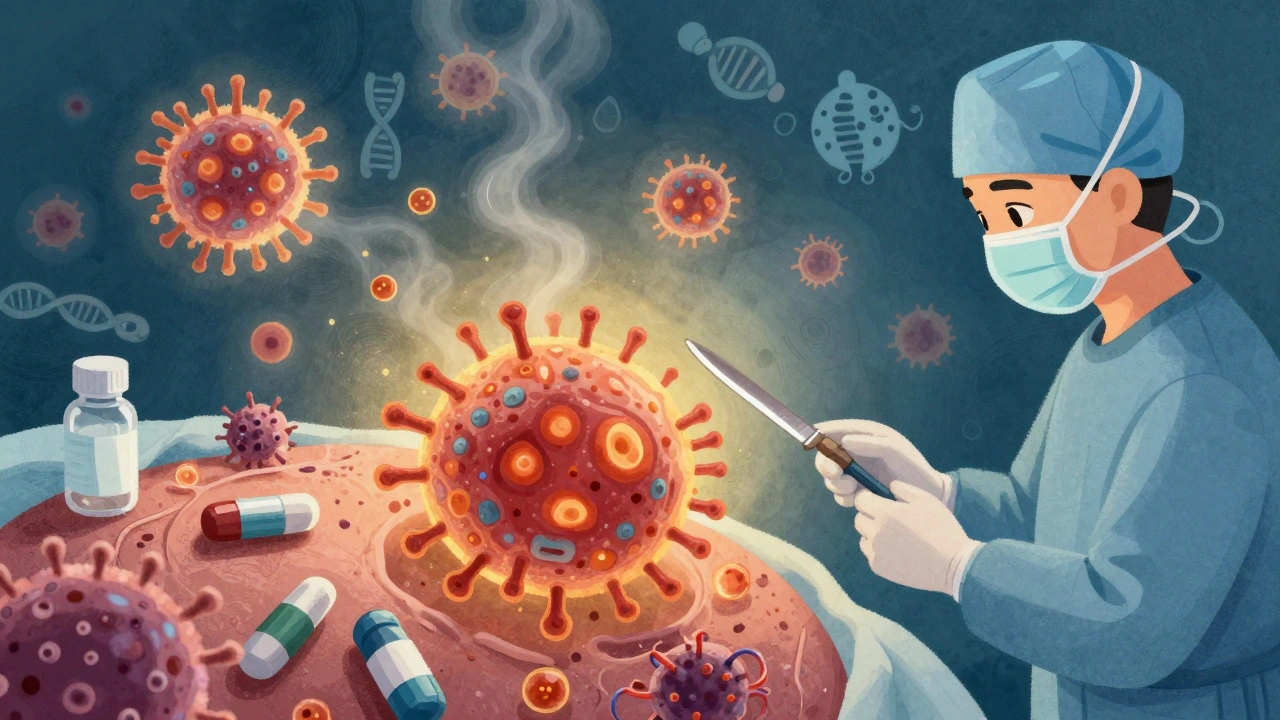

When you're facing a cancer diagnosis that requires surgery, one of the most important decisions isn't about the operation itself - it's about when to give treatment. Should you start chemotherapy or immunotherapy before the tumor is removed? Or wait until after? This isn't just a technical detail. It affects how well the treatment works, how many side effects you endure, and even your chances of long-term survival.
What Neoadjuvant Therapy Actually Does
Neoadjuvant therapy means treatment given before surgery. It’s not a backup plan - it’s a strategic move. The goal? Shrink the tumor so surgery is easier, safer, and more effective. But there’s more to it than that.In lung cancer, for example, tumors that are too large or stuck near vital structures might be impossible to remove cleanly. Neoadjuvant chemo or immunotherapy can shrink them enough to make surgery possible. In triple-negative breast cancer, where tumors grow fast and spread early, giving treatment upfront helps kill hidden cancer cells before they have a chance to settle elsewhere.
But the real power of neoadjuvant therapy? It lets doctors see how your body responds - in real time. After a few cycles of treatment, you get scanned. If the tumor shrinks by 90% or more, that’s a sign the drugs are working. That’s called a pathologic complete response, or pCR. Patients who achieve pCR have significantly better survival rates. It’s not just hope - it’s data. And that data guides what happens next.
For non-small cell lung cancer (NSCLC), the CheckMate 816 trial showed that adding immunotherapy (nivolumab) to chemo before surgery raised the pCR rate from just 2.2% to 24%. That’s more than ten times better. And those patients lived longer without their cancer coming back - median event-free survival jumped from 20.8 months to 31.6 months.
What Adjuvant Therapy Is For
Adjuvant therapy comes after surgery. Its job is simple: clean up what’s left. Even if the surgeon removes every visible tumor, microscopic cancer cells can still be hiding in your body. Adjuvant treatment aims to wipe those out before they grow into something dangerous.This approach has been the standard for decades - especially in breast cancer. After removing a tumor, patients get chemo, hormone therapy, or targeted drugs to reduce the risk of recurrence. It’s like putting up a fence after the fox has already gotten into the barn - better late than never.
But here’s the problem: you don’t know if the drugs are working until months later, when a scan shows a new tumor. There’s no real-time feedback. If the cancer is resistant to the treatment, you’ve spent months giving you side effects - nausea, fatigue, nerve damage - for no benefit.
That’s why many oncologists are rethinking adjuvant-only strategies. In NSCLC, a 2024 meta-analysis of over 3,200 patients found that adding adjuvant immunotherapy after neoadjuvant treatment didn’t improve survival - but it did increase severe side effects. About 30% of patients on the combo had serious reactions, compared to 18% on neoadjuvant-only.
Why Timing Matters More Than You Think
It’s not just about “before” or “after.” It’s about sequencing. And the sequence changes everything.Neoadjuvant therapy gives you a live test. If your tumor responds, you know you’re on the right track. If it doesn’t, you can switch treatments before surgery - or even avoid surgery altogether if the cancer is gone. That’s personalized medicine in action.
Adjuvant therapy, by contrast, is a one-size-fits-all approach. You get the same drugs, regardless of how your tumor reacted. That’s why some patients get treated for six months - only to find out later that the drugs didn’t work at all.
For breast cancer, studies show that neoadjuvant therapy helps identify high-risk patients. Those who don’t achieve pCR are more likely to relapse. That means doctors can give them stronger treatments - like PARP inhibitors or newer targeted drugs - right after surgery. Those who do achieve pCR? They might avoid extra chemo entirely.
In NSCLC, the trend is clear: more patients are getting neoadjuvant chemoimmunotherapy now than ever before. In 2021, only 42% of community oncologists offered it. By 2023, that number jumped to 78%. Why? Because the data says it works better - and often with fewer long-term side effects.
Who Gets Which Treatment?
Not every patient is a candidate for neoadjuvant therapy. It depends on cancer type, stage, and biology.For NSCLC: The National Comprehensive Cancer Network (NCCN) recommends neoadjuvant chemoimmunotherapy for stage IB (tumor ≥4 cm) to IIIA. You need to be healthy enough to handle chemo and immunotherapy first. If your tumor is small and low-risk, adjuvant therapy might still be the better choice.
For breast cancer: Neoadjuvant therapy is standard for HER2-positive and triple-negative cancers, especially if the tumor is large or has spread to lymph nodes. For hormone receptor-positive cancers, it’s used when downsizing the tumor will make breast-conserving surgery possible.
For melanoma: Neoadjuvant immunotherapy is now FDA-approved for stage III melanoma. Trials show higher pCR rates and better survival compared to surgery alone.
What’s not recommended? Neoadjuvant therapy for early-stage cancers that are already small and easily removable. In those cases, surgery first, then adjuvant treatment if needed, is still the safer path.
The Real Cost: Side Effects and Delays
Neoadjuvant therapy isn’t risk-free. You have to wait weeks - sometimes up to three months - before surgery. During that time, your tumor could grow. About 5-10% of NSCLC patients see disease progression during neoadjuvant treatment. That’s why close monitoring with scans and blood tests is critical.Side effects are real. Immunotherapy can cause inflammation in the lungs, liver, or colon. Chemo brings fatigue, low blood counts, and nerve damage. About 10-15% of patients experience delays in surgery because of these side effects. That’s not a failure - it’s a trade-off.
Adjuvant therapy has its own burdens. You’ve already been through surgery. Your body is healing. Now you’re being told to start chemo again. Many patients feel exhausted, overwhelmed, or even guilty for saying no. And because you didn’t get to see how your cancer responded, you’re left wondering: “Was this even necessary?”
What’s Changing Right Now
The field is moving fast. In March 2022, the FDA approved neoadjuvant nivolumab plus chemo for resectable NSCLC - the first time immunotherapy was approved before surgery. Then, in October 2022, the European Medicines Agency followed.Now, new trials are asking: Do we even need adjuvant therapy at all?
The KEYNOTE-867 trial is comparing neoadjuvant chemoimmunotherapy alone versus neoadjuvant plus adjuvant immunotherapy. Preliminary data suggests the extra dose after surgery may not add benefit - just more toxicity.
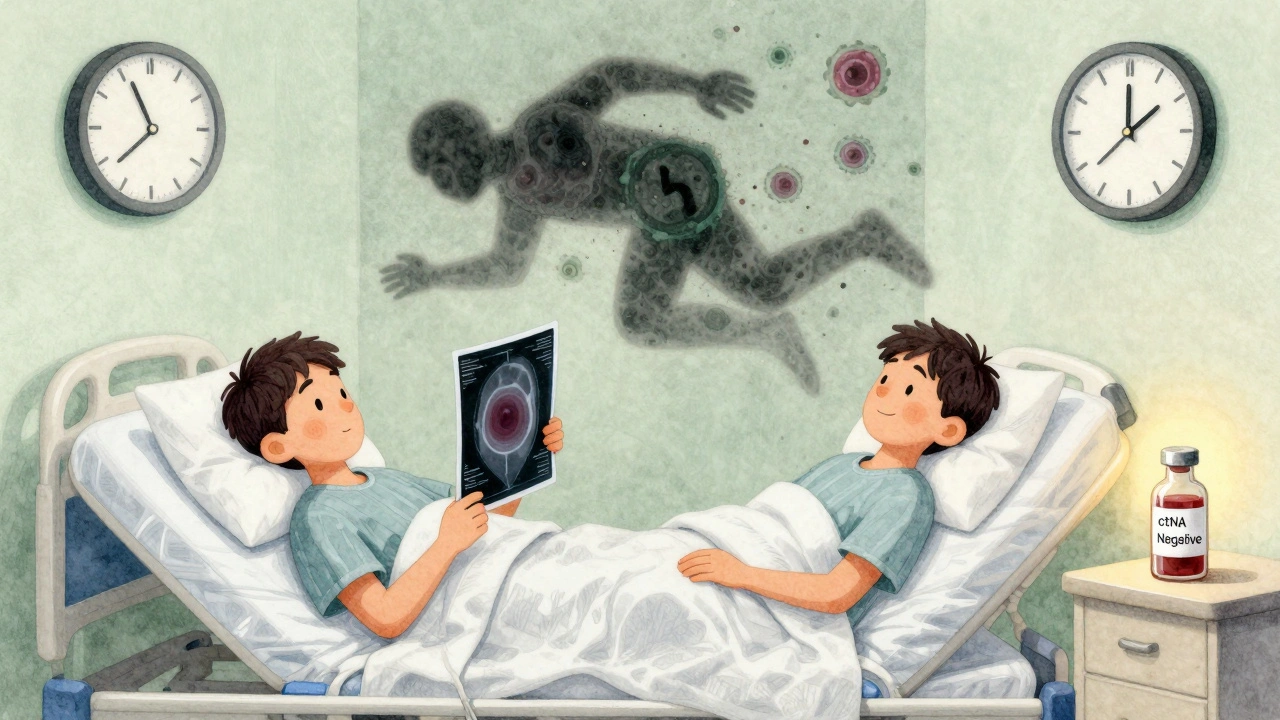
And then there’s ctDNA - circulating tumor DNA. This blood test can detect microscopic cancer cells after surgery. If ctDNA is still present, you get more treatment. If it’s gone? You’re probably fine. Twelve trials are testing this right now. In five years, your treatment plan may be guided not by tumor size, but by a simple blood draw.

What Patients Are Saying
On cancer forums, the stories tell the real story.A lung cancer patient in Ohio said: “My oncologist said, ‘Let’s see if the drugs work before we cut.’ I had a 90% tumor kill. That gave me peace of mind.”
A breast cancer patient in Texas shared: “I chose adjuvant chemo because I didn’t want to wait. But later, I learned I could’ve known if the chemo worked - and maybe avoided extra rounds.”
That’s the heart of it. Neoadjuvant therapy doesn’t just treat cancer. It gives you information. And information gives you control.
What to Ask Your Doctor
If you’re facing surgery for cancer, here are five questions to ask:- Is neoadjuvant therapy an option for my cancer type and stage?
- What’s the chance I’ll achieve a pathologic complete response?
- Will you test for biomarkers like PD-L1 or ctDNA before starting treatment?
- What happens if the tumor doesn’t shrink? Will we change the plan before surgery?
- Are we planning adjuvant therapy after surgery - and if so, why?
Don’t accept “that’s the standard” as an answer. The standard is changing. Your treatment should be tailored - not templated.
The Bottom Line
Neoadjuvant and adjuvant therapy aren’t rivals. They’re tools. And the best tool depends on the job.Neoadjuvant therapy is for when you need to shrink the tumor, test the drugs, and reduce long-term risk. It’s the smart first move for aggressive cancers like NSCLC and triple-negative breast cancer.
Adjuvant therapy is for when surgery removes everything visible, and you need insurance against hidden cells. It still has a place - especially for cancers where neoadjuvant therapy isn’t proven or when patients aren’t candidates for upfront treatment.
But the future? It’s leaning hard toward neoadjuvant-first. With better biomarkers, smarter drugs, and real-time response tracking, we’re moving from guesswork to precision. And that’s not just science - it’s better care.



Kurt Russell
7 Dec 2025 at 06:09Bro, I had neoadjuvant for stage IIIA NSCLC last year. Got the nivo + chemo combo. Tumor shrunk 95%. Surgeon said he’d never seen it that clean. I walked out of surgery with no lymph node involvement. That’s not magic - that’s science. And yeah, I was tired as hell for 3 months. But waking up post-op knowing the drugs already killed the hidden stuff? Worth every second of nausea.