



Statin Risk Estimator: SLCO1B1 Gene Variant
Step 1: Select Your Statin
Choose the statin medication you are taking or considering.
Step 2: Select Genotype
Based on SLCO1B1 rs4149056 test results (if available).
You take your pill every morning. You trust it to lower your cholesterol and protect your heart. But then, the pain starts. Aching muscles, weakness, maybe even a general feeling of being unwell. If you’ve experienced this after starting a statin, you are not alone. About 7% to 29% of people report statin intolerance, primarily due to muscle-related side effects known as statin-associated muscle symptoms (SAMS). For many, this means stopping the medication entirely, which leaves them vulnerable to heart attacks and strokes. But what if the problem isn’t the drug itself, but how your specific body processes it?
This is where pharmacogenomics comes in. It’s a branch of medicine that studies how your genes affect your response to drugs. Instead of guessing which statin might work or tolerating side effects, pharmacogenomic testing looks at your DNA to predict whether you will have a bad reaction. This approach moves us away from trial-and-error prescribing toward precision medicine.
The Genetic Culprit: The SLCO1B1 Gene
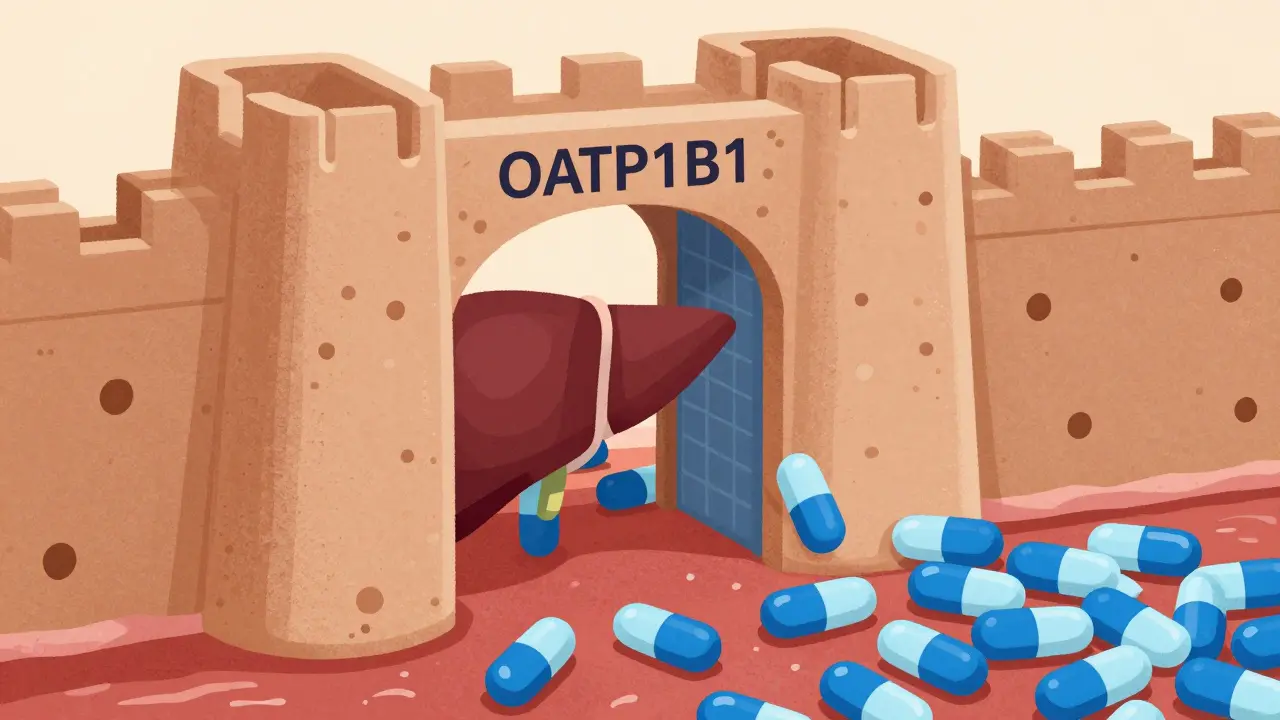
To understand why some people get muscle pain from statins while others don’t, we need to look at a specific gene called SLCO1B1. This gene provides instructions for making a protein called OATP1B1. Think of OATP1B1 as a gatekeeper located on the surface of liver cells. Its job is to transport statins from your bloodstream into your liver, where they do their work lowering cholesterol.
In most people, this gatekeeper works efficiently. However, some people carry a genetic variant in the SLCO1B1 gene, specifically a change known as rs4149056 (or c.521T>C). When you have this variant, the gatekeeper doesn’t open as wide or as often. As a result, less statin enters the liver, and more stays circulating in your blood. Higher levels of statin in the blood mean higher exposure to your muscles, which can lead to damage and pain.
Research has pinpointed exactly how risky this can be. A landmark study published in the New England Journal of Medicine in 2008 identified this link. People who have two copies of the variant allele (the CC genotype) have about a 4.5-fold increased risk of severe myopathy when taking high-dose simvastatin (80 mg) compared to those with the normal genotype. Even having just one copy (the TC genotype) raises the risk by 2.6 times. This isn't a minor statistical blip; it's a clear biological mechanism explaining why certain patients suffer.
Not All Statins Are Created Equal
Here is the good news: the SLCO1B1 gene affects some statins much more than others. This specificity is crucial for anyone considering testing or switching medications.
| Statin Type | Dependence on OATP1B1 Transporter | Risk of Myopathy with SLCO1B1 Variant |
|---|---|---|
| Simvastatin | High | Very High (up to 5.6x odds ratio) |
| Atorvastatin | Moderate | Low/Weak Association |
| Rosuvastatin | Moderate | Low/Weak Association |
| Pravastatin | Low | Minimal (80% lower risk vs Simvastatin) |
| Fluvastatin | Low | Minimal |
Simvastatin relies heavily on the OATP1B1 transporter to get into the liver. If that transporter is broken due to your genetics, simvastatin builds up in your blood. Atorvastatin and rosuvastatin use different pathways to a greater extent, so the SLCO1B1 variant has a much weaker effect on them. Pravastatin and fluvastatin are barely affected by this transporter at all. This explains why guidelines recommend avoiding high-dose simvastatin in people with the CC genotype, while suggesting pravastatin as a safer alternative.
Who Should Get Tested?
Should everyone get a pharmacogenomic test before starting a statin? Currently, the answer is no. The American College of Cardiology states that routine testing for all patients is not recommended because there isn't enough evidence yet that it improves long-term heart outcomes for the average person. However, testing becomes highly valuable in specific scenarios.
You are a strong candidate for testing if:
- You have previously tried simvastatin and developed muscle pain or weakness.
- You have tried multiple statins and failed due to side effects.
- Your doctor wants to rechallenge you with a statin but is unsure which one to pick.
The Clinical Pharmacogenetics Implementation Consortium (CPIC) provides clear guidelines here. They state that for patients with the SLCO1B1*5/*5 (CC) genotype, clinicians should avoid prescribing simvastatin 80 mg. They suggest considering alternative statins or lower doses. This guidance turns a vague complaint of "my muscles hurt" into a concrete medical decision based on your DNA.
Beyond SLCO1B1: Other Genetic Factors
While SLCO1B1 is the star player, it’s not the only actor on stage. Scientists are looking at other genes that influence how statins are metabolized and how muscles respond to them. These include cytochrome P450 enzymes like CYP2D6 and CYP3A4, which break down drugs in the liver. About 7-10% of Caucasians are "poor metabolizers" for CYP2D6, meaning their bodies process certain medications slower, potentially leading to higher drug levels.
Other genes implicated in statin myopathy include ABCB1 (which pumps drugs out of cells), ABCG2, and CACNA1S (related to calcium channels in muscles). A 2021 study in *Circulation: Genomic and Precision Medicine* found modest associations between these genes and muscle symptoms. More recently, the SOAT1 gene has emerged as a potential factor. While these genes add complexity, SLCO1B1 remains the only one with strong, actionable clinical guidelines right now. Future tests may look at a "polygenic risk score," combining variants from 15 or more genes to improve prediction accuracy, but for now, SLCO1B1 is the gold standard.
The Reality of Testing: Costs and Coverage
If you decide to pursue testing, what does it involve? Typically, it’s a simple buccal swab (a cheek swab) or a blood sample sent to a certified laboratory like Mayo Clinic Laboratories, ARUP, or commercial providers like OneOme. Results usually come back in 5 to 10 business days.
The cost can be a barrier. Out-of-pocket prices for standalone SLCO1B1 testing range from $150 to $400. Insurance coverage is inconsistent. As of recent analyses, only about 28% of commercial insurers cover this specific test routinely. Medicare coverage is limited to specific circumstances under its Molecular Diagnostic Services Program. Before ordering, check with your insurer and your doctor’s office to see if pre-authorization is needed.
Interpreting the results can also be tricky. Not all doctors are familiar with pharmacogenomics. A survey found that only 43% of primary care physicians felt comfortable interpreting these results without help. This is why using labs that provide detailed, CPIC-aligned reports is important. Some direct-to-consumer tests give you raw data that is hard to understand, whereas clinical lab reports offer specific dosing recommendations.

Does Testing Actually Improve Outcomes?
This is the million-dollar question. Does knowing your genotype actually help you stay on the drug and protect your heart? The data is mixed but promising.
A 2021 survey at Mayo Clinic showed that 78% of patients with prior statin intolerance were successfully restarted on a statin after genotype-guided selection, compared to 58% in historical controls. That’s a significant improvement. Patients reported fewer side effects and better adherence. However, a 2020 randomized trial published in *JAMA Network Open* found that simply providing SLCO1B1 results to physicians did not significantly improve adherence or reduce self-reported muscle symptoms in the short term. Why the difference? Implementation matters. Doctors need clinical decision support tools-like alerts in electronic health records-to act on the data. Without those tools, the information might sit unused.
User experiences online reflect this nuance. On forums like Reddit’s r/genetics, about 62% of respondents reported improved tolerance after switching based on their genetics. But 38% saw no difference. This suggests that while genetics play a huge role, they aren't the whole story. Muscle pain can also stem from other causes like vitamin D deficiency, thyroid issues, or concurrent medications. Pharmacogenomics solves the genetic piece, but a holistic medical review is still necessary.
Next Steps for Patients
If you are struggling with statin side effects, don’t just stop taking your medication. Talk to your doctor about a pharmacogenomic test. Ask specifically about the SLCO1B1 gene. If you test positive for the high-risk variant, ask about switching to pravastatin or fluvastatin, which bypass the problematic transporter. If you are already on atorvastatin or rosuvastatin and having issues, know that your genetics might not be the sole culprit, and other factors should be investigated.
The field is moving fast. With the launch of initiatives like the Statin Pharmacogenomics Implementation Consortium, more healthcare systems are integrating these tests into routine care. By 2025, we expect standardized protocols across dozens of major hospitals. Until then, advocating for yourself with knowledge of your own genetic profile is the best way to ensure you get the heart protection you need without the pain you don’t.
What is the SLCO1B1 gene and why does it matter for statins?
The SLCO1B1 gene codes for a protein that transports statins into the liver. A common variant in this gene reduces this transport, causing higher levels of statin to remain in the bloodstream. This increases the risk of muscle pain and damage, particularly with simvastatin.
Which statin is safest for someone with an SLCO1B1 variant?
Pravastatin and fluvastatin are generally considered safer options for individuals with SLCO1B1 variants because they rely less on the OATP1B1 transporter for uptake into the liver. Simvastatin should typically be avoided or used at very low doses in these patients.
Does insurance cover pharmacogenomic testing for statins?
Coverage varies widely. As of recent data, only about 28% of commercial insurers routinely cover SLCO1B1 testing. Medicare covers it in limited circumstances. Out-of-pocket costs typically range from $150 to $400. Always check with your provider and insurer before testing.
Can pharmacogenomic testing prevent all statin side effects?
No. SLCO1B1 explains only about 6% of the total risk for statin-associated muscle symptoms. Other factors include other genes, drug interactions, vitamin deficiencies, and underlying muscle conditions. Testing helps identify genetic risks but is not a complete solution for all side effects.
How long does it take to get results from a statin pharmacogenomic test?
Most clinical laboratories provide results within 5 to 10 business days after receiving the sample. Direct-to-consumer tests may take slightly longer depending on shipping and processing times.




Write a comment