

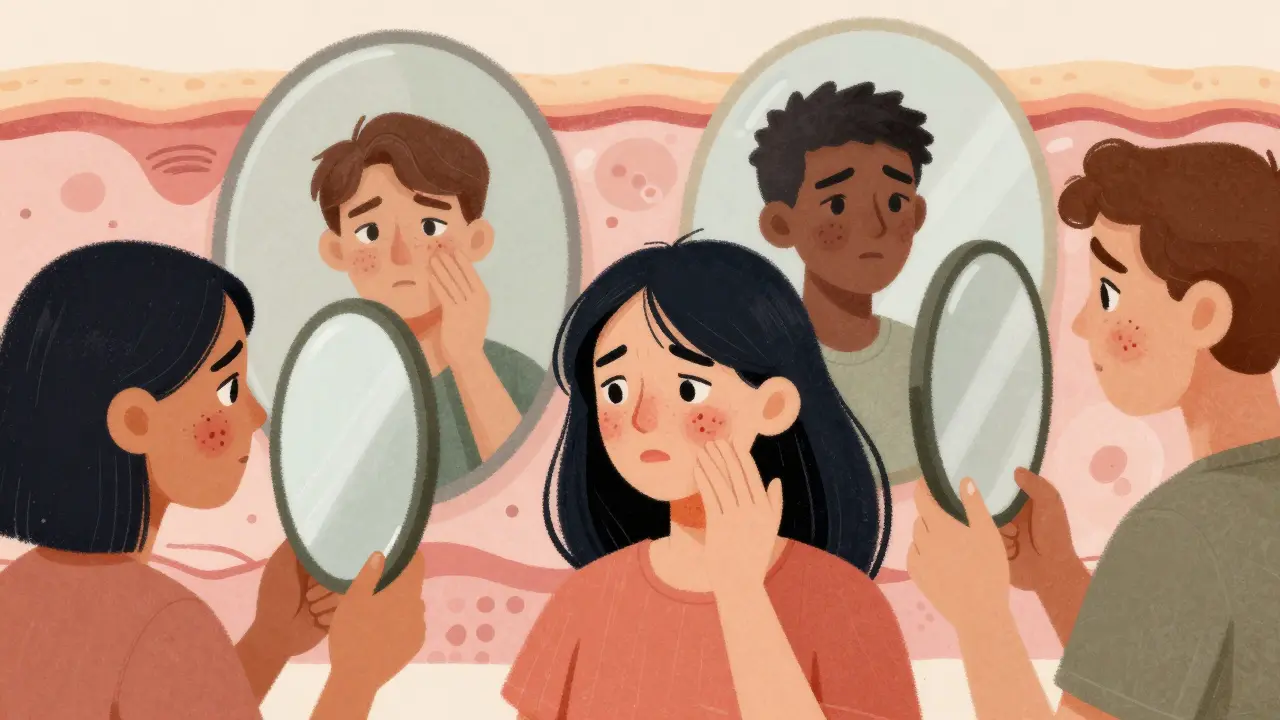

Looking in the mirror and seeing indentations where your skin should be smooth is frustrating. You might think those marks are permanent damage from past breakouts, but they aren't just stains on the surface. They are structural changes to your skin's architecture. According to the American Academy of Dermatology, about 95% of people with acne vulgaris develop some form of scarring. The good news? Modern dermatology has moved far beyond hoping time will heal all wounds. Today, we have precise tools-like microneedling, advanced lasers, and targeted topicals-that can actually rebuild that lost tissue.
This isn't about quick fixes or cover-up makeup. It’s about stimulating your body’s natural healing response to create new collagen. But choosing the right path matters. A treatment that works wonders for one person might cause hyperpigmentation or prolonged downtime for another. Let’s break down exactly how these treatments work, which ones fit your specific scar type, and what you can realistically expect.
Understanding Your Scar Type Matters
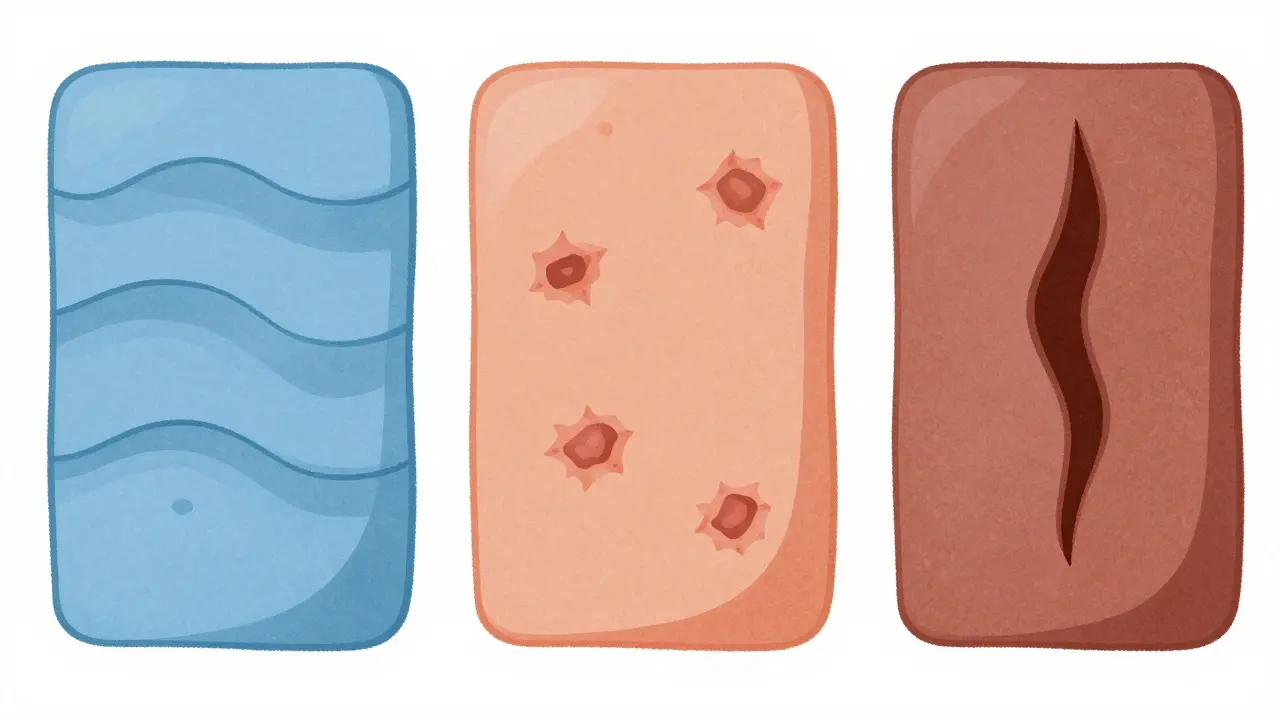
Before booking a procedure, you need to know what you’re dealing with. Not all acne scars are created equal. Dermatologists classify them primarily into two camps: atrophic (depressed) and hypertrophic (raised). Atrophic scars make up 80-90% of cases. Within this group, there are three distinct shapes that respond differently to treatment:
- Rolling scars: These look like wide, wave-like depressions with sloping edges. They often give the skin an uneven, undulating texture. Fortunately, these respond best to most treatments, with improvement rates around 75%.
- Boxcar scars: Imagine a small crater with sharp, defined edges and a flat bottom. These are more challenging than rolling scars, typically showing 55-60% improvement with standard therapies.
- Ice pick scars: These are narrow, deep pits that extend deep into the dermis. They are the toughest nut to crack, often yielding only 30-35% improvement with surface-level treatments alone.
Knowing your dominant scar type helps set realistic expectations. If you have mostly ice pick scars, a single session of any treatment won’t erase them. You’ll likely need a combination approach, possibly including subcision or TCA cross chemical peels alongside energy-based devices.
Microneedling: Controlled Injury for Collagen Growth
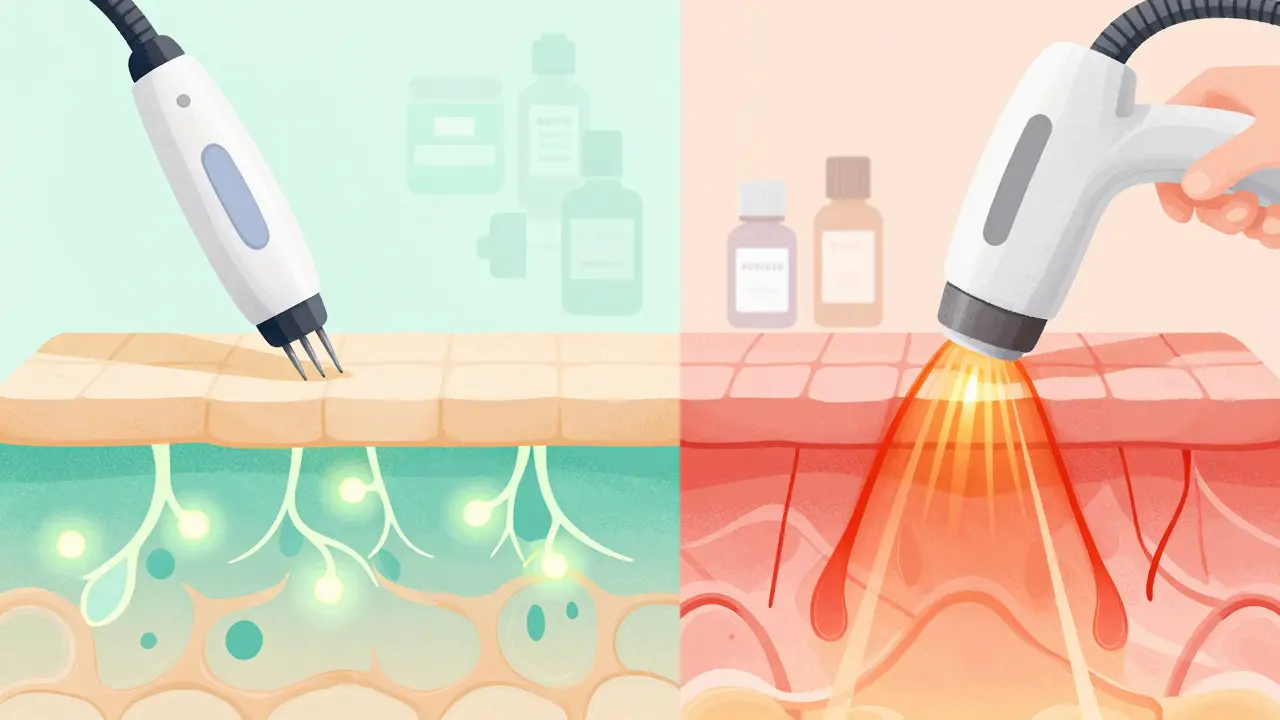
Microneedling is a minimally invasive procedure that uses fine needles to create micro-injuries in the skin, triggering the body's wound-healing process and stimulating collagen production. Think of it as poking thousands of tiny holes to tell your skin, “Hey, something’s wrong here, fix it.” Your body responds by rushing collagen and elastin to the site, filling in those depressions over time.
Standard microneedling uses mechanical needles ranging from 0.25mm to 3.0mm. For acne scars, depths between 1.5mm and 2.5mm are typically effective. Automated devices like the Dermapen punch at 100-200 times per second, making the process faster and less painful than manual rollers. Most patients need 3 to 6 sessions, spaced 4 to 6 weeks apart. The downtime is mild: expect redness and slight swelling for 24 to 48 hours.
However, the game-changer in this space is Radiofrequency (RF) Microneedling. Devices like Morpheus8 combine needle penetration with bipolar radiofrequency energy. The needles deliver heat directly into the deeper layers of the dermis without damaging the surface epidermis. This dual action tightens skin while remodeling scar tissue. Studies show RF microneedling is particularly safe for darker skin tones (Fitzpatrick types IV-VI), where traditional lasers carry a higher risk of post-inflammatory hyperpigmentation. In fact, hyperpigmentation occurs in only 5-8% of microneedling cases compared to 15-20% with lasers in these skin types.
Laser Treatments: Precision Energy for Resurfacing
If microneedling is gentle persuasion, lasers are precise demolition and reconstruction. Laser therapy uses light energy to remove damaged outer layers of skin and heat the underlying tissue to stimulate collagen. The choice of laser depends heavily on your scar severity and your tolerance for downtime.
| Laser Type | Wavelength | Best For | Downtime | Sessions Needed |
|---|---|---|---|---|
| Fractional CO2 (Ablative) | 10,600 nm | Severe boxcar and rolling scars | 7-14 days | 1-3 |
| Er:YAG (Ablative) | 2940 nm | Superficial resurfacing, sensitive skin | 5-7 days | 2-4 |
| Fraxel (Non-Ablative) | 1540 nm / 1927 nm | Mild to moderate scarring, pigment issues | 3-5 days | 4-6 |
| Nd:YAG (Non-Ablative) | 1064 nm | Deeper penetration, vascular components | 1-3 days | 3-5 |
Ablative fractional CO2 lasers are the heavy hitters. They vaporize columns of skin, forcing significant regeneration. A 2023 study in the *Journal of Cosmetic Dermatology* found that ablative CO2 laser produced more pronounced reductions in lesion severity compared to RF microneedling. However, this power comes with a cost: intense erythema (redness), swelling, and a recovery period where your skin looks raw for up to two weeks. There’s also a higher risk of prolonged redness lasting 4-8 weeks.
Non-ablative lasers, like the 1540nm Fraxel, leave the surface intact while heating the dermis. They require more sessions (often 4-6) but offer much shorter downtime. For someone who can’t afford two weeks off work or social events, non-ablative options provide a safer, albeit slower, path to improvement.
Topical Strategies: The Unsung Heroes
You might hear experts talk about high-tech lasers and assume creams are useless. That’s a dangerous misconception. Dr. Angela Lamb, writing in *JAMA Dermatology*, warned that 70% of treatment failures stem from poor post-procedure skincare compliance. Topicals don’t replace procedures, but they amplify results and maintain gains.
Here are the key players in topical scar management:
- Tretinoin (Retinoids): Prescription-strength tretinoin (0.05%) increases cell turnover and collagen synthesis. A 2023 study showed that using tretinoin nightly for 12 weeks before a procedure increased efficacy by 22%. It primes the skin to respond better to energy-based treatments.
- Silicone Gel: Applied after procedures, silicone gel creates a protective barrier that reduces transepidermal water loss. It lowers the risk of hyperpigmentation by 35% and helps flatten raised scars.
- Vitamin C and Niacinamide: These antioxidants protect against UV damage and inhibit melanin production, crucial for preventing dark spots after aggressive treatments.
- Alpha Hydroxy Acids (AHAs): Glycolic and lactic acids exfoliate the surface, helping to blend the edges of shallow boxcar scars over time.
Newer formulations, like Skinbetter Science’s AlphaRet Scar Correcting Treatment, combine growth factors with stabilized retinaldehyde. Independent testing demonstrated 30% scar improvement in 12 weeks with consistent use. While not a magic eraser, this consistency supports the structural changes made by in-office procedures.
Microneedling vs. Lasers: Which Is Right for You?
Choosing between microneedling and lasers isn’t just about budget; it’s about your skin type, scar depth, and lifestyle. Here is a practical decision framework:
Choose Microneedling (especially RF) if:
- You have darker skin tones (Fitzpatrick IV-VI) and want to minimize pigmentation risks.
- You have mild to moderate rolling or boxcar scars.
- You cannot tolerate more than 2-3 days of visible redness or downtime.
- You prefer a lower pain threshold (though RF can be uncomfortable, many find it less intense than ablative lasers).
Choose Lasers if:
- You have severe, deep boxcar or mixed scarring that needs aggressive remodeling.
- You have lighter skin tones (Fitzpatrick I-III) where hyperpigmentation risk is lower.
- You want faster results with fewer total sessions (ablative lasers often achieve max results in 1-3 visits).
- You can dedicate 1-2 weeks to recovery and strict wound care.
The trend among dermatologists is shifting toward combination therapy. The *Journal of the American Academy of Dermatology* suggests starting with 3 sessions of RF microneedling to build a foundation of collagen, followed by a single fractional laser treatment to address residual texture. This hybrid approach balances efficacy with safety, achieving up to 78-85% scar reduction in clinical case studies.
Realistic Expectations and Aftercare
No treatment offers 100% eradication. Even with the best technology, the goal is significant improvement-usually 50-80% reduction in visibility. Patience is critical. Collagen remodeling takes months. You won’t see final results until 3-6 months after your last session.
Aftercare is non-negotiable. Both lasers and microneedling compromise your skin barrier. Sun exposure is the enemy. You must avoid direct sun for 8-12 weeks post-treatment and wear broad-spectrum SPF 50+ daily. Skipping this step can undo months of progress by causing dark spots that mimic old scars.
Pain levels vary. On a scale of 1-10, microneedling usually sits at a 4-6, while ablative lasers can hit 7-8 during the procedure and afterward due to inflammation. Most clinics use numbing cream, but discuss pain management options beforehand.
How long does it take to see results from microneedling for acne scars?
You may notice smoother texture after the first session, but significant improvement typically requires 3-6 sessions spaced 4-6 weeks apart. Full collagen remodeling continues for 3-6 months after the final treatment. Consistency is key; skipping sessions delays results.
Is laser treatment safe for dark skin tones?
It carries higher risks. Ablative lasers can cause post-inflammatory hyperpigmentation in 15-20% of patients with Fitzpatrick skin types IV-VI. Non-ablative lasers and RF microneedling are safer alternatives, with hyperpigmentation rates dropping to 5-8%. Always consult a dermatologist experienced with diverse skin types.
Can topical creams remove deep acne scars?
No. Topicals like retinoids and AHAs improve surface texture and color but cannot fill deep atrophic scars. They are supportive treatments that enhance the results of in-office procedures like microneedling or lasers, not standalone cures for deep pitting.
What is the difference between rolling, boxcar, and ice pick scars?
Rolling scars are wide, wave-like depressions with sloping edges. Boxcar scars are crater-like with sharp, vertical edges. Ice pick scars are narrow, deep pits extending into the dermis. Rolling scars respond best to treatment; ice pick scars are the most difficult to correct.
How much downtime do I need for fractional CO2 laser?
Expect 7-14 days of significant downtime. Your skin will be red, swollen, and crusty for the first week. Social downtime often lasts longer due to persistent pinkness. Plan for occlusive ointment application and strict sun avoidance during this period.

Write a comment