

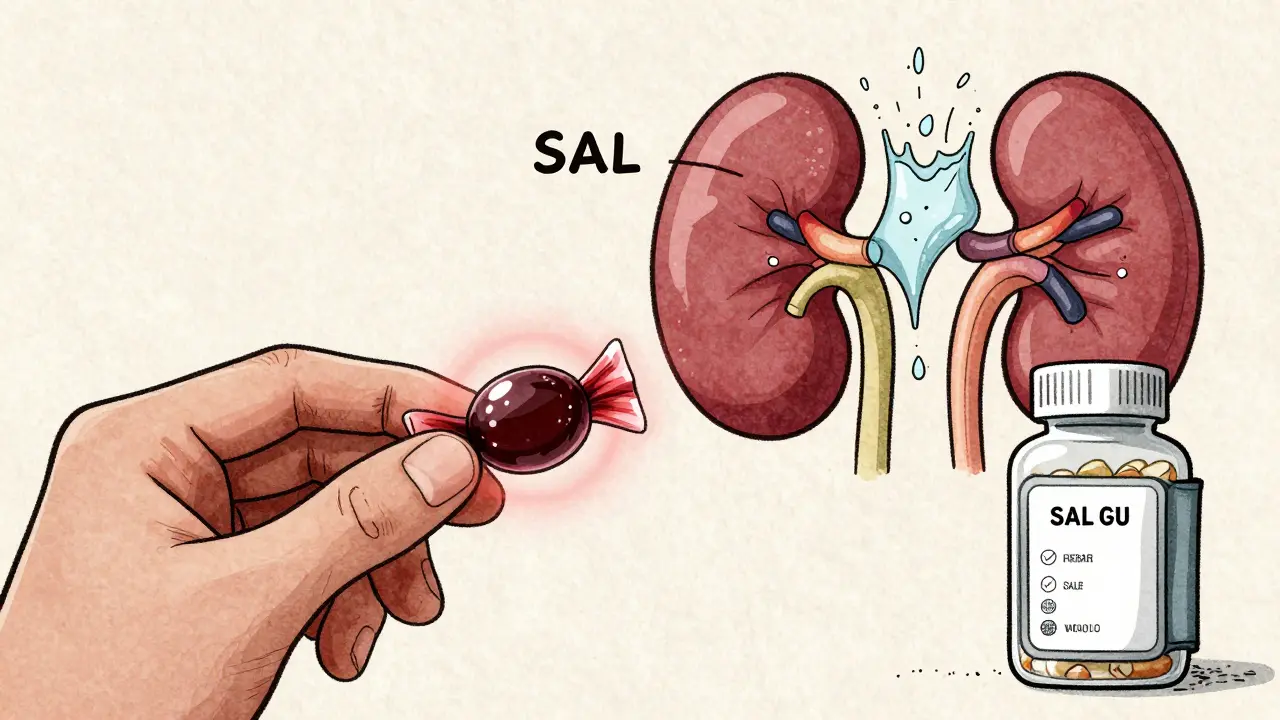

Have you ever reached for a piece of black licorice candy when you’re stressed or craving something sweet? If you’re taking medication for high blood pressure, that snack might be doing more harm than good. Licorice isn’t just a flavor-it’s a powerful substance that can interfere with your blood pressure meds in ways most people don’t realize. And it’s not just about candy. Licorice shows up in teas, supplements, herbal remedies, and even some tobacco products. The active ingredient, glycyrrhizin, doesn’t just taste sweet-it triggers real, measurable changes in your body that can undo the work of your prescription drugs.
How Licorice Throws Off Your Blood Pressure
Glycyrrhizin breaks down in your gut into glycyrrhetic acid, which then blocks an enzyme in your kidneys called 11β-HSD2. This enzyme normally keeps cortisol-a stress hormone-from acting like aldosterone, a hormone that tells your body to hold onto salt and water while flushing out potassium. When 11β-HSD2 is blocked, cortisol takes over, and suddenly your kidneys start behaving like they’re flooded with aldosterone. The result? Your body holds onto extra fluid, your blood volume goes up, and your blood pressure rises. At the same time, you lose potassium. This combination is called pseudoaldosteronism, and it’s not theoretical-it’s been documented in medical journals since the 1950s.
Studies show that consuming more than 100 mg of glycyrrhizin per day-roughly equivalent to 60 to 70 grams of black licorice candy-can raise systolic blood pressure by over 5 mmHg and diastolic by nearly 2 mmHg on average. That might not sound like much, but for someone already struggling to control hypertension, it’s enough to push them out of their target range. And if you’re on medication to lower your blood pressure, this effect directly counters what the drug is trying to do.
Which Blood Pressure Medications Are Most Affected?
It doesn’t matter if you’re taking ACE inhibitors, beta-blockers, calcium channel blockers, or diuretics-licorice can reduce their effectiveness. But some combinations are especially dangerous.
Diuretics like hydrochlorothiazide already make you lose potassium. Add licorice, and your potassium levels can drop even further. Low potassium doesn’t just cause muscle cramps or fatigue-it can trigger irregular heart rhythms, which can be life-threatening.
Digoxin, a drug used for heart failure and atrial fibrillation, is one of the most dangerous combinations. Potassium normally helps keep digoxin from binding too tightly to heart cells. When licorice drains your potassium, digoxin binds more aggressively, leading to toxicity. There are documented cases of older adults developing heart failure after taking herbal laxatives containing licorice while on digoxin.
ACE inhibitors like lisinopril or captopril work by relaxing blood vessels and reducing fluid buildup. Licorice does the opposite-it increases fluid. So even if you’re taking your pill every day, the licorice candy you eat after dinner could be canceling out the benefit.
Even potassium-sparing diuretics like spironolactone, which are designed to keep potassium levels up, can be undermined. Licorice forces potassium out through a different pathway, so the drug can’t fully compensate.
Who’s at the Highest Risk?
Not everyone reacts the same way. Some people can eat a small amount of licorice without issue. But certain groups are far more vulnerable:
- People over 60-aging kidneys are less able to handle the salt and potassium imbalance
- Women-studies show higher sensitivity to glycyrrhizin, possibly due to hormonal differences
- Anyone with existing high blood pressure or heart disease
- Those taking multiple medications that affect electrolytes
Even moderate consumption-like a few pieces of licorice candy a day over several weeks-can build up to dangerous levels in these groups. And because the effects are slow and subtle, many people don’t connect their worsening blood pressure to their daily snack.
What’s in Your Licorice? Not All Licorice Is the Same
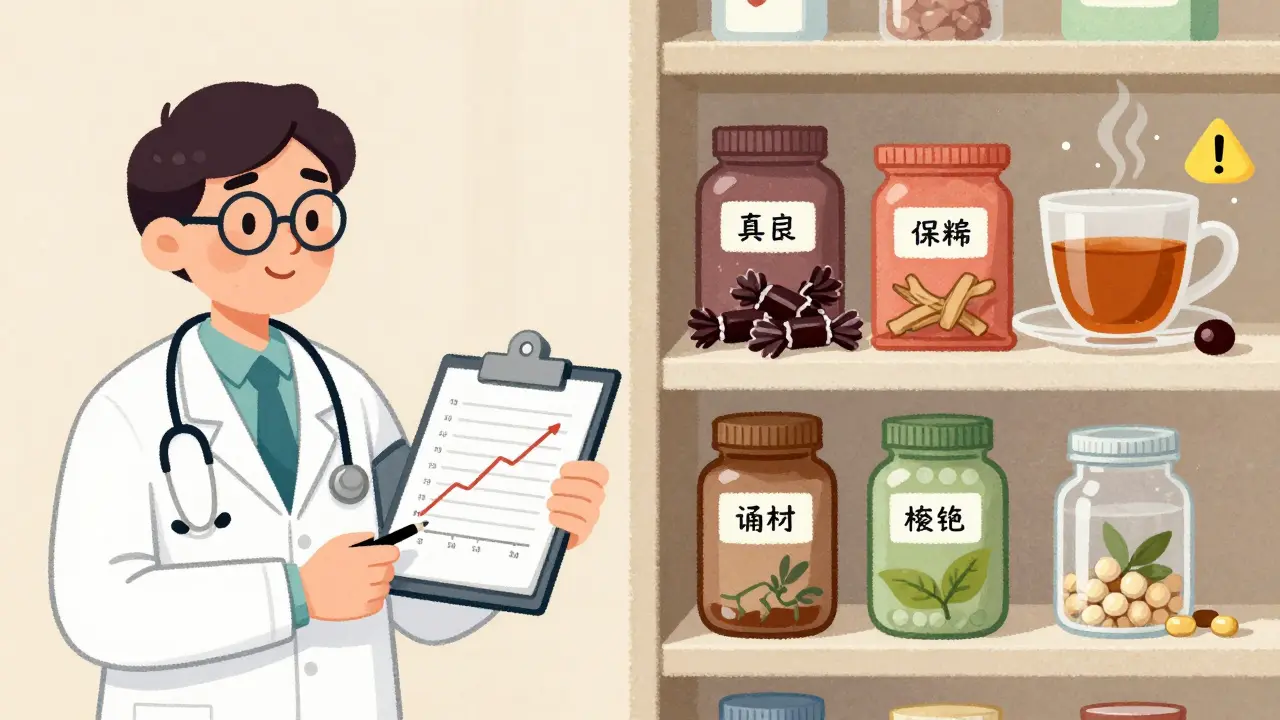
Here’s the tricky part: not all products labeled "licorice" contain glycyrrhizin. In the U.S. and many parts of Europe, most red licorice candy is actually flavored with anise oil, not licorice root. But black licorice? That’s a different story. Traditional black licorice, especially imported brands or artisanal versions, often contains real licorice extract. Herbal teas labeled "licorice root tea" can contain concentrated amounts. And supplements? Those are the biggest blind spot.
There’s no legal requirement in the U.S. or U.K. for supplement labels to list glycyrrhizin content. So you could be taking a "liver support" or "digestive aid" capsule that contains 200 mg of glycyrrhizin per serving-twice the safe limit-and have no idea.
Check the ingredient list. If it says "Glycyrrhiza glabra," "licorice root," or "licorice extract," it contains glycyrrhizin. If it just says "natural flavor" or "anise flavor," you’re probably safe. When in doubt, assume it’s risky.
Signs You Might Be Having a Reaction
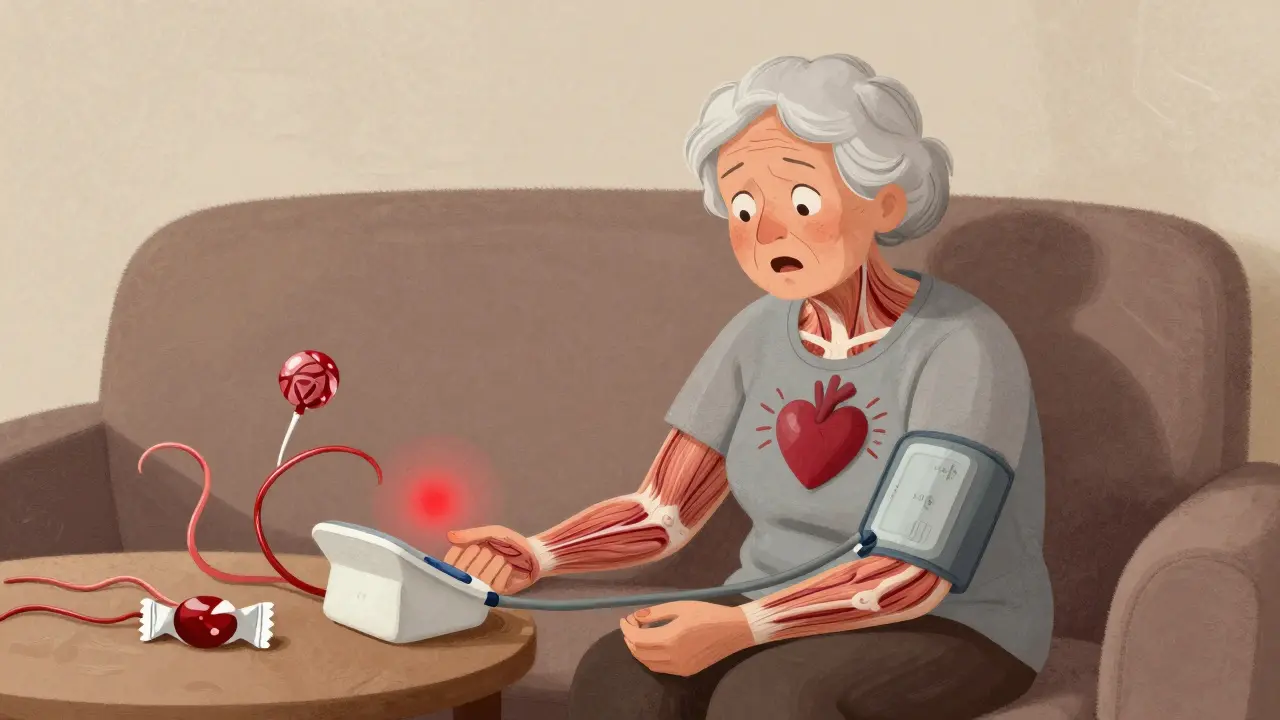
Many people don’t realize something’s wrong until symptoms become severe. Watch for:
- Unexplained rise in blood pressure-even if you’re taking your meds
- Muscle weakness, cramps, or feeling unusually tired
- Heart palpitations or irregular heartbeat
- Swelling in ankles or legs (edema)
- Frequent urination or unusual thirst
Low potassium can cause flaccid paralysis in extreme cases. That means your muscles go limp-something that can happen overnight if you’ve been consuming large amounts of licorice over weeks.
Doctors can test for it. A blood test showing low potassium and high sodium, combined with low levels of renin and aldosterone, plus a high cortisol-to-cortisone ratio, points strongly to licorice-induced pseudoaldosteronism.
What Should You Do?
If you’re on blood pressure medication:
- Avoid black licorice candy, licorice root tea, and herbal supplements containing licorice
- Read labels on everything-even chewing gum and some energy bars
- If you’ve been eating licorice regularly, stop immediately and tell your doctor
- Ask your pharmacist to review all your supplements and herbal products
- Get your potassium and blood pressure checked if you’ve been consuming licorice in the past month
There’s no need to panic if you’ve had a small amount once or twice. But if you’ve been eating licorice daily for weeks, especially if you’re older or on diuretics or digoxin, it’s time to act. Your blood pressure meds are working-but licorice might be sabotaging them behind the scenes.
What About Licorice for Other Health Reasons?
Some people take licorice for digestive issues, sore throats, or adrenal support. But the risks outweigh the benefits, especially if you have high blood pressure. There are safer alternatives for all these conditions. For heartburn, try deglycyrrhizinated licorice (DGL)-a form where the harmful glycyrrhizin has been removed. For coughs, honey and herbal teas without licorice root work just as well.
Don’t assume natural means safe. Licorice is a plant, but its active compound acts like a synthetic hormone in your body. That’s why it’s listed as a high-risk interaction in the Merck Manual and other top medical references.
Bottom Line
If you’re managing high blood pressure, licorice isn’t just a harmless treat-it’s a hidden threat. The science is clear: glycyrrhizin raises blood pressure, lowers potassium, and interferes with nearly every class of antihypertensive drug. The threshold for harm is well-established at 100 mg per day. That’s less than two ounces of black licorice candy. For many people, even one piece a day adds up.
Check your snacks. Read your supplement labels. Talk to your doctor. Your blood pressure meds are doing their job. Don’t let a sweet treat undo it.



Nancy Kou
19 Dec 2025 at 20:00My grandma used to swear by licorice root tea for her digestion. She’d drink it daily for years. Last year she ended up in the ER with a potassium level of 2.1 and a heart rhythm that looked like a seizure on the monitor. Turns out, her doctor had no idea she was drinking it. She didn’t even know it was licorice root - just thought it was ‘that herbal stuff.’ Now she avoids anything that says ‘licorice’ on the label. Don’t assume natural = harmless.