

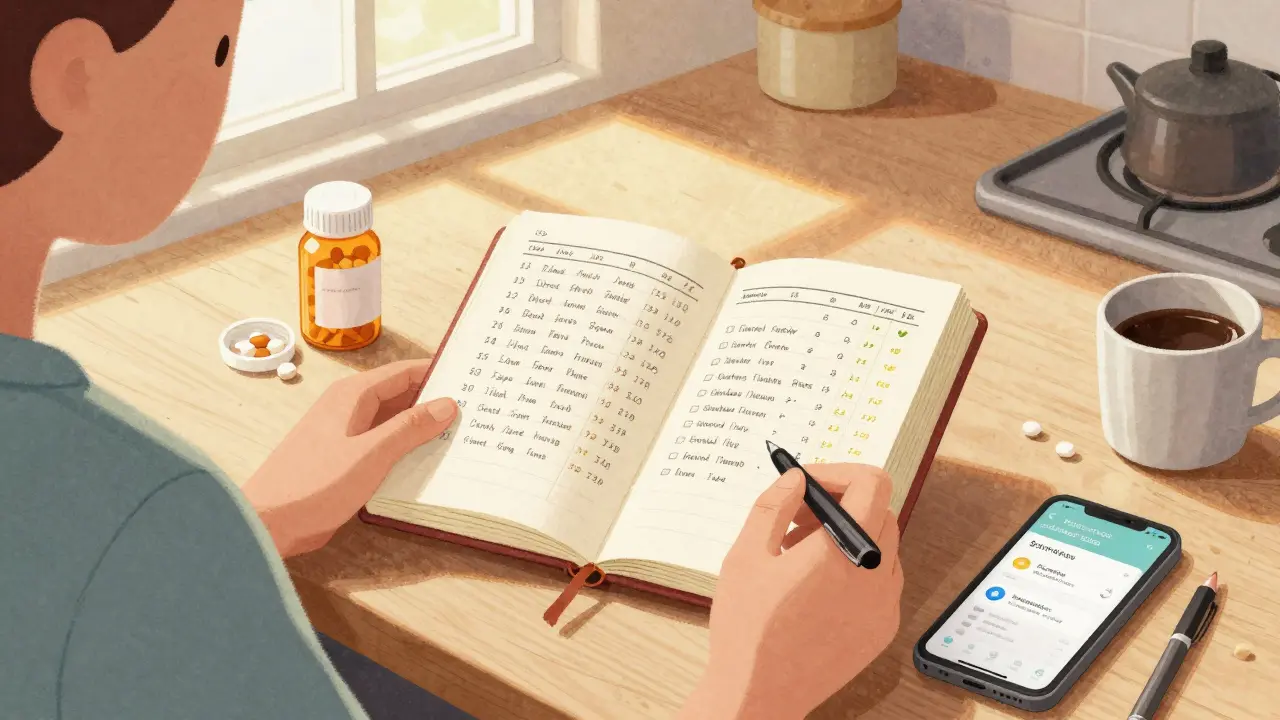

When you start a new medication, you might notice something off-dizziness, a rash, nausea, or fatigue. But is it the drug? Or is it stress, a virus, or just bad luck? Without a clear record, it’s easy to brush it off… until it gets worse. That’s where a symptom diary changes everything. It’s not just a notebook. It’s your best tool to figure out what’s really happening in your body-and to make sure your doctor takes you seriously.
Why a Symptom Diary Matters
Most people rely on memory when they talk to their doctor about side effects. But memory is unreliable. Studies show that patients who try to recall symptoms after a few days get it wrong over 60% of the time. By the time you see your doctor, you might forget when the rash appeared, what you took that day, or whether you were stressed out at work. That’s dangerous. A symptom diary fixes that. It creates a real-time log of what you’re feeling and when. The FDA and NIH both recommend it because it helps separate true drug reactions from unrelated health issues. For example, if you feel dizzy after taking blood pressure medicine, is it the drug-or did you stand up too fast? Your diary can show the exact timing: Did the dizziness start 20 minutes after you took the pill? Or was it after you climbed three flights of stairs? That difference changes everything. In one case, a patient in Leeds kept a daily log of their levodopa doses and dizziness episodes. Their neurologist had dismissed their complaints for months. Once they showed the diary-clearly linking each dose to a spike in symptoms-the doctor adjusted the timing and dosage within 48 hours. That’s the power of data.What to Record in Your Symptom Diary
You don’t need to write a novel. But you do need to capture nine key details every time you take a medication or notice a new symptom. Here’s what works:- Date and time - Record the exact minute you took the drug. Don’t guess. Use your phone’s clock.
- Medication name and dosage - Write the full name (e.g., “Metformin 500mg”) and how much you took. Include over-the-counter pills, vitamins, or herbal supplements.
- Route of administration - Did you swallow it? Apply it to your skin? Inject it? This matters.
- Symptom description - Be specific. Don’t say “felt bad.” Say “sharp pain in left chest, 6/10 intensity, started 35 minutes after pill.”
- Location of symptom - Where exactly? Head? Stomach? Behind the knee?
- Onset time - How long after taking the drug did the symptom start? 5 minutes? 3 hours?
- Duration - Did it last 10 minutes? All day? Did it come and go?
- What you did - Were you walking? Sleeping? Stressed? Hot? This helps spot triggers.
- What you did to fix it - Did you drink water? Take an antihistamine? Lie down?
- Resolution - Did it go away? Did it get worse? Did you need medical help?
For severity, use the CTCAE scale: Grade 1 = mild, doesn’t interfere with daily life; Grade 2 = moderate, limits activity; Grade 3 = severe, needs medical care; Grade 4 = life-threatening; Grade 5 = death. You don’t need to memorize it-just pick the closest match.
Paper vs. Apps: Which One Works Better?
You can use a notebook, a printable template, or a phone app. But here’s the truth: most people quit paper diaries within three days. A 2023 study found that 57% of people who used paper logs stopped after 72 hours. Why? It’s inconvenient. You forget your notebook. You don’t have a pen. You’re too tired to write. Apps like Medisafe, CareClinic, and MyTherapy solve this. They send reminders when it’s time to take your pill-and when to log symptoms. They auto-time-stamp entries. You can add photos (great for rashes). They even generate charts showing which drugs line up with which symptoms. If you’re not tech-savvy, start with a simple printable template from the NIH website. Print it out. Tape it to your bathroom mirror. Keep a pen next to your pill box. That’s enough to get started.
What Not to Do
A lot of people make the same mistakes:- Writing too much - Don’t log every tiny headache or burp. Focus on new, unusual, or worsening symptoms. If you’ve had heartburn for years, it’s probably not the new drug.
- Waiting too long - If you feel something strange, log it within 15 minutes. Memory fades fast. After 48 hours, accuracy drops sharply.
- Forgetting other meds - You take ibuprofen for your knee? That’s important. So is your fish oil, CBD gummy, or herbal tea. These can interact.
- Ignoring environment - A rash might be from the drug-or from laundry detergent. Note if you changed soap, wore new clothes, or spent time outside.
One patient in Manchester kept a perfect diary-but included every sneeze and yawn. Her doctor spent hours sifting through noise. She missed the real signal: a swelling tongue that started 12 minutes after her new antibiotic. That was anaphylaxis. She survived because she’d recorded it. But she almost didn’t get help because the diary was buried in clutter.
How to Use Your Diary at the Doctor’s Visit
Don’t just hand your diary to your doctor and say, “Help.” Be ready. Bring your diary to every appointment. Highlight the three most concerning entries. Say: “I noticed this pattern-every time I take X drug, I get Y symptom within Z time. I’m worried it’s a reaction.” Doctors respond better to data than to “I feel weird.” A 2024 survey of UK GPs showed that 72% of them changed a prescription when a patient brought a clear, timed symptom log. Without it, only 18% did. If you’re seeing a specialist-like an allergist or neurologist-email your diary ahead of time. Many clinics now accept digital logs via secure portals. Some even sync with NHS apps.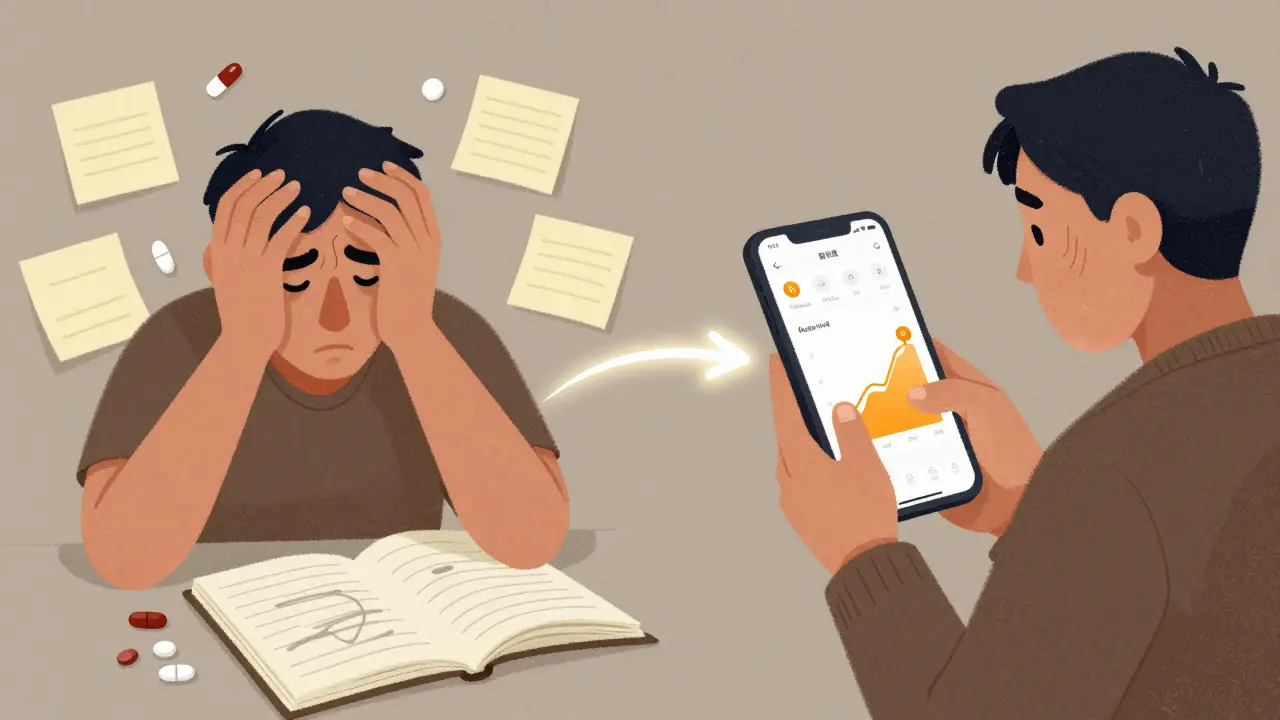
When to Seek Immediate Help
Not every symptom needs a diary. Some need 999. Stop logging. Call emergency services if you have:- Swelling of the face, lips, tongue, or throat
- Difficulty breathing or wheezing
- Chest pain or rapid heartbeat
- Sudden confusion or loss of consciousness
- Severe skin blistering or peeling
These are signs of serious reactions. Your diary won’t help you now-your phone will. Call for help first. Then, if you survive, start the diary so it doesn’t happen again.
Keeping It Going
The hardest part isn’t starting. It’s sticking with it. Set a daily alarm: “Log symptoms.” Pair it with something you already do-like brushing your teeth or having breakfast. Use an app with notifications. Reward yourself after a week. Track your progress: “I’ve logged 14 days straight.” If you miss a day, don’t quit. Just restart. Even partial logs are better than none. One patient in Leeds kept a diary for only 11 days before switching meds. That was enough. Her doctor saw the spike after her new statin and switched her to a different one. No hospital visit. No biopsy. Just a log.The Bigger Picture
Your diary isn’t just for you. It’s part of a global system. Every time you report a reaction, you help other people. The FDA and EMA use data from patients like you to update drug warnings, change labels, and even pull dangerous drugs off the market. In 2024, the FDA started allowing direct patient reports in their safety database-no doctor needed. That means your diary could help prevent someone else’s tragedy. This isn’t about being perfect. It’s about being present. You’re not just tracking symptoms. You’re taking control of your health.What if I don’t know if a symptom is serious?
If you’re unsure, log it anyway. Better to record something harmless than miss something dangerous. You can always delete or ignore entries later. The goal is to capture everything unusual-especially if it’s new, worse than before, or happens right after taking a drug. Your doctor will help sort it out.
Do I need to log every single pill I take?
Yes-even over-the-counter meds, vitamins, and supplements. Some reactions happen because of combinations. For example, taking aspirin with a blood thinner can increase bleeding risk. Even a daily multivitamin might interact. Write down everything you swallow, inject, or apply to your skin.
Can I use my phone’s health app instead?
Apple Health and Google Fit can track medication intake, but they don’t let you log symptoms in detail. Use them to remind you to take pills, but use a separate diary or app to record how you feel. The best approach is to link your medication log with a symptom tracker like CareClinic or MyTherapy.
How long should I keep the diary?
Keep it for at least 2-4 weeks after starting a new drug. Some reactions take time to show up. If symptoms go away and you don’t have any new issues, you can stop. But if you switch to another drug, start again. Keep old diaries-you might need them later if a problem reappears.
What if my doctor ignores my diary?
If your doctor dismisses your log, ask for a referral to a pharmacist or specialist in pharmacovigilance. Many hospitals now have medication safety teams. You can also report the reaction directly to the Yellow Card Scheme in the UK (medicines.org.uk/ycs). Your data matters-even if your doctor doesn’t act right away.
If you’re struggling to start, begin with just one day. Write down what you took, when, and how you felt. That’s enough. You don’t need to be perfect. You just need to be consistent. Your body is talking. A symptom diary helps you listen.



Andrew Freeman
14 Jan 2026 at 12:02why tf do u need an app for this i just write shit on my fridge with dry erase marker and call it a day