


Cancer Recurrence Risk Calculator
Assess Your Personal Risk
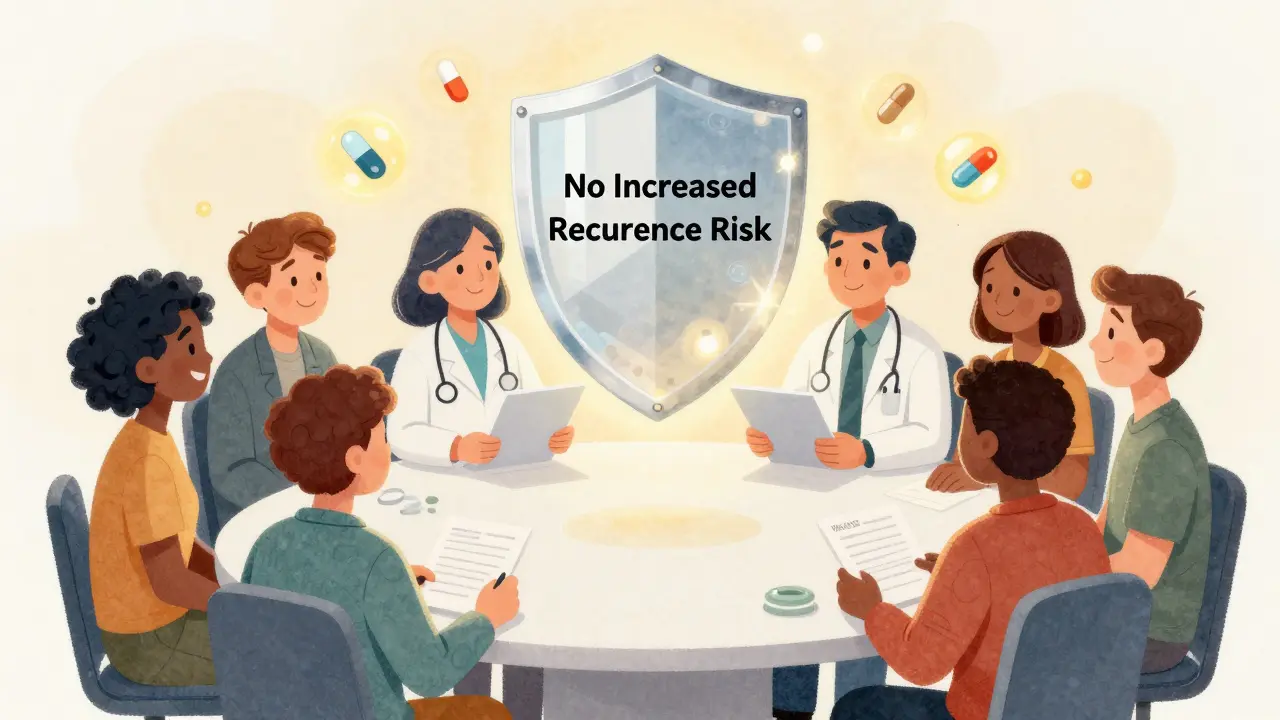
Based on the latest evidence from over 24,000 patients, this calculator provides an individualized assessment of cancer recurrence risk when starting immunosuppressants after cancer treatment.
Can immunosuppressants bring back cancer?
For years, doctors told patients with a history of cancer to wait at least five years before starting immunosuppressants. The fear was simple: if your immune system is turned down, it might not catch cancer when it tries to come back. But that advice? It was based on guesswork, not hard data.
Now we know better.
A massive review of over 24,000 patients with autoimmune diseases like rheumatoid arthritis, Crohn’s disease, or psoriasis - and a past cancer diagnosis - found no increase in cancer recurrence whether they took anti-TNF drugs like adalimumab, methotrexate, or even combination therapies. The numbers didn’t just look similar - they were statistically the same. That’s not a small detail. It’s a full reset of clinical thinking.
What immunosuppressants are we talking about?
Immunosuppressants aren’t one thing. They’re a group of drugs that quiet down an overactive immune system. For someone with severe rheumatoid arthritis, these drugs stop joint damage. For someone with ulcerative colitis, they prevent constant bleeding and pain. But if you’ve had cancer, the question always comes up: is this safe?
The main types studied in recent research include:
- Anti-TNF agents: Infliximab, adalimumab, etanercept - these block a key inflammatory protein called tumor necrosis factor.
- Traditional immunomodulators: Methotrexate, azathioprine, 6-mercaptopurine - older drugs that have been used for decades.
- Newer biologics: Ustekinumab, vedolizumab, JAK inhibitors like tofacitinib - these target different parts of the immune system.
- Combination therapy: Often anti-TNF plus methotrexate or azathioprine.
Here’s the surprising part: even though combination therapy had the highest *number* of cancer recurrences in the studies (54.5 cases per 1,000 person-years), it wasn’t significantly higher than the others. That means the extra drugs didn’t make things worse - it just meant those patients were sicker to begin with.
Timing doesn’t matter - not the way we thought
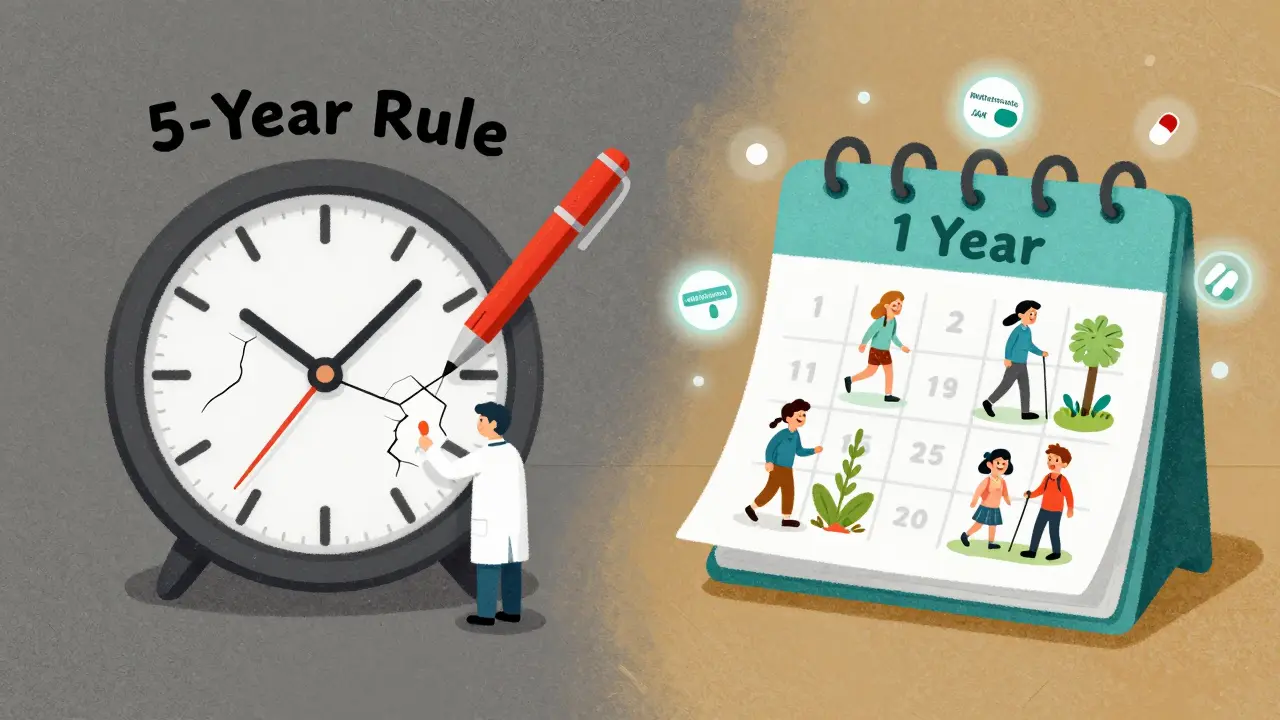
For decades, the rule was: wait five years after cancer treatment before restarting immunosuppressants. Five years felt safe. It was the magic number doctors clung to.
But the data says otherwise.
A 2024 analysis looked at patients who started immunosuppressants within five years of cancer diagnosis - and those who waited longer. No difference in recurrence rates. Not even close. The P-value was 0.43. That’s not a trend. That’s noise.
What does this mean for you? If your cancer was caught early, treated successfully, and you’ve been in remission for even one year, there’s no reason to delay treatment for your autoimmune disease just because of an arbitrary clock. The risk isn’t in the timing - it’s in the cancer itself.
Some cancers still need caution
Not every cancer is the same. And not every immunosuppressant behaves the same way across all types.
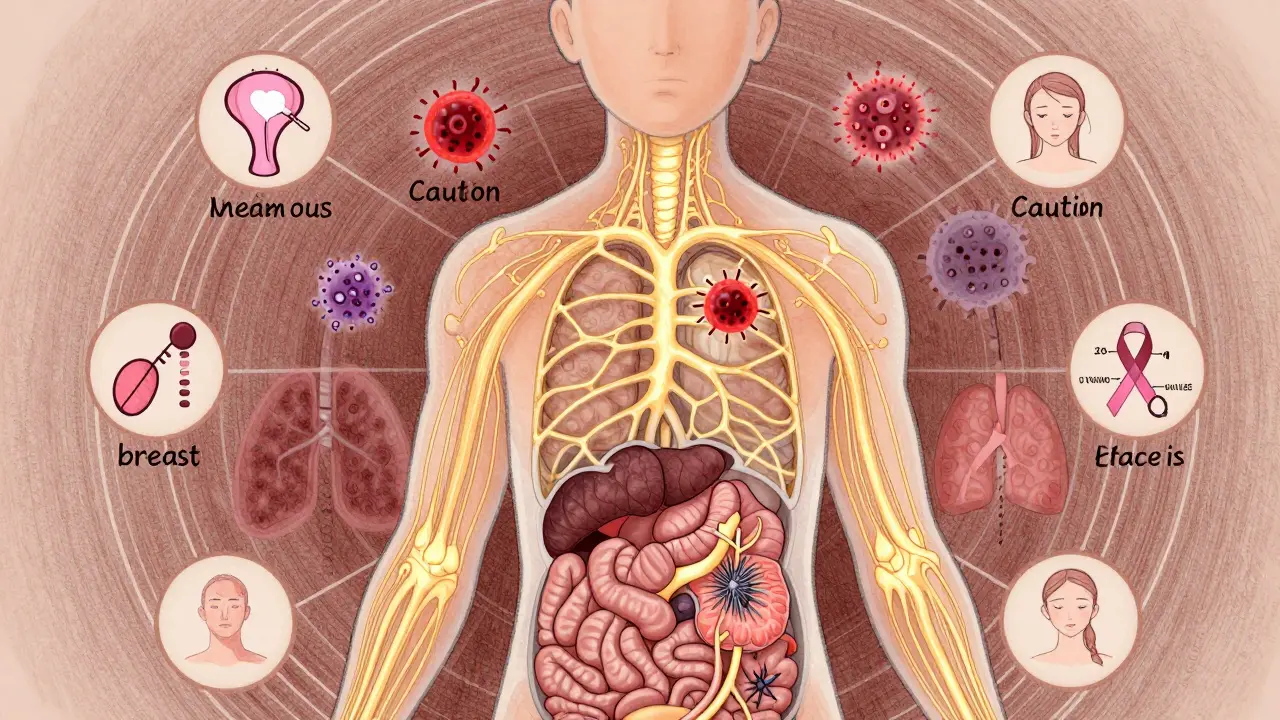
While most cancers - including breast, lung, colon, and prostate - show no increased recurrence risk with immunosuppressants, there are two exceptions that still raise red flags:
- Melanoma: Skin cancer that spreads fast. Immune surveillance plays a bigger role here. Some experts still advise waiting longer, especially if the melanoma was thick or had spread.
- Hematologic cancers: Leukemia, lymphoma, myeloma - cancers of the blood and bone marrow. These are trickier because they already involve immune system dysfunction. Restarting strong immunosuppressants too soon could interfere with recovery.
That’s why blanket rules don’t work. Your oncologist and rheumatologist (or gastroenterologist, or dermatologist) need to talk - not just to you, but to each other. A patient with early-stage colon cancer and mild RA can likely start treatment sooner than someone with stage III melanoma and severe psoriasis.
What the big studies really found
Let’s cut through the noise. Here’s what the largest, most rigorous studies concluded:
- The 2016 Gastroenterology meta-analysis of 11,702 patients found no significant difference in cancer recurrence between those on anti-TNF, traditional drugs, combination therapy, or no treatment.
- The 2024 update, with over 24,000 patients and 85,000 person-years of follow-up, confirmed those results and added newer drugs like JAK inhibitors - still no increased risk.
- Even patients who restarted immunosuppressants within a year of cancer treatment showed no spike in recurrence.
- There was no difference in new cancers versus old cancers coming back.
The American College of Rheumatology, the European League Against Rheumatism, and the FDA all updated their guidelines based on this. The FDA changed drug labels in 2022 to say: “Clinical studies have not shown an increased risk of cancer recurrence in patients with prior malignancy treated with [this agent].”
This isn’t just theory. Real-world data from IQVIA shows that after these studies came out, prescriptions for immunosuppressants in cancer survivors jumped by 18.7% between 2017 and 2022. Doctors stopped holding back - and patients got better.
How to monitor for recurrence - now that you’re on immunosuppressants
Just because the risk isn’t higher doesn’t mean you stop watching.
You still need the same cancer surveillance you had before starting immunosuppressants. Here’s what that looks like:
- Keep your cancer screening schedule: Mammograms, colonoscopies, skin checks - don’t skip them. Your doctor will tell you the right frequency based on your cancer type.
- Know your body: New lumps, unexplained weight loss, night sweats, persistent cough, or changes in bowel habits? Report them immediately. These aren’t “side effects” of the drug - they’re warning signs.
- Coordinate care: Your rheumatologist should know your oncology history. Your oncologist should know what drugs you’re on. Use a shared care plan. Don’t assume they’re talking to each other.
- Don’t skip follow-ups: Even if you feel great, regular blood tests and imaging (if needed) are part of your safety net.
There’s no magic test that tells you if cancer is coming back. But staying on schedule gives you the best shot at catching it early - when it’s still treatable.
What this means for your treatment plan
If you’re on immunosuppressants and have a cancer history, you’re not a risk. You’re a person with two chronic conditions - and both need managing.
Uncontrolled rheumatoid arthritis can lead to permanent joint damage. Untreated Crohn’s disease can cause bowel perforation. Severe psoriasis increases heart disease risk. Letting those diseases run wild because you’re afraid of cancer recurrence? That’s a bigger danger.
Today, the goal isn’t to avoid immunosuppressants. It’s to use them wisely. That means:
- Choosing the right drug for your cancer history - your doctor will pick based on your specific situation.
- Starting at the lowest effective dose - you don’t need to go full throttle unless necessary.
- Monitoring closely - not because the drugs are dangerous, but because you’re someone who needs extra attention.
The days of waiting five years are over. The science doesn’t support it. The guidelines don’t require it. And your quality of life shouldn’t be held hostage by outdated fear.
What’s next in research?
Science doesn’t stop here. Two major studies are still running:
- RECOVER (NCT04567821): Tracking IBD patients with prior cancer on various immunosuppressants. Results expected in mid-2026.
- RHEUM-CARE (NCT04321987): Following 5,000 RA patients with cancer histories to find patterns between specific drugs and cancer types.
These studies will help us fine-tune things even more. Maybe one day we’ll know that ustekinumab is safer than methotrexate for someone with a history of breast cancer. Or that JAK inhibitors carry a slightly higher risk for lung cancer survivors. We’re not there yet - but we’re getting closer.
Bottom line: You can manage both
You don’t have to choose between controlling your autoimmune disease and staying safe from cancer. The evidence is clear: immunosuppressants don’t cause cancer to come back.
What matters now is personalization. Your cancer type. Your stage. Your time in remission. Your disease severity. Your life goals.
Work with your doctors. Ask questions. Demand a plan - not a pause.
Living with a past cancer diagnosis doesn’t mean living in fear. It means living with awareness. And with the right care, you can live well - without holding back.




Zina Constantin
25 Dec 2025 at 18:08This is the kind of update that changes lives. I was told to wait five years after my breast cancer remission before starting my RA meds. I waited three. My joints still ache, but my soul? It’s free. Finally, science catches up to real people living with chronic illness. Thank you for writing this.
Shoutout to every doctor who listened to the data and stopped playing it safe with outdated fear.