

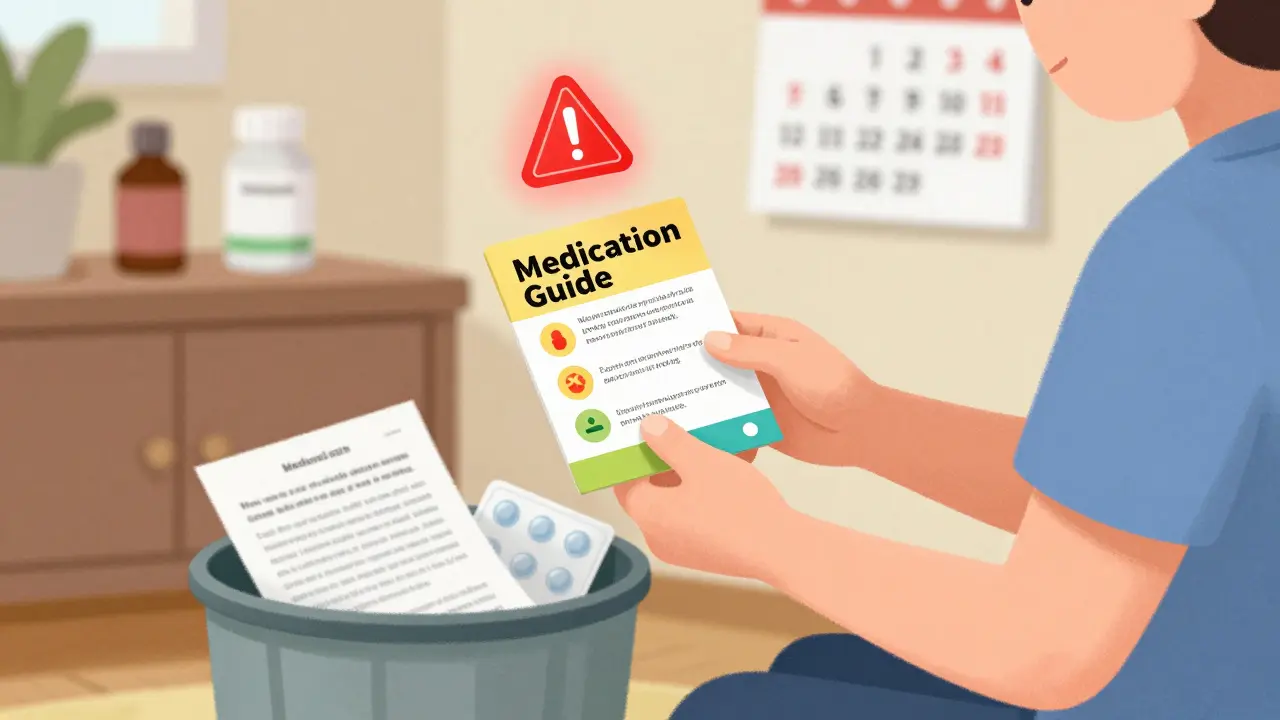

Medication Safety Knowledge Check
This tool helps you understand why Medication Guides are important and what critical information they contain. Test your knowledge about common medication risks, then read your Medication Guide to see if you know the facts.
Question 1
Results
You scored out of 5.
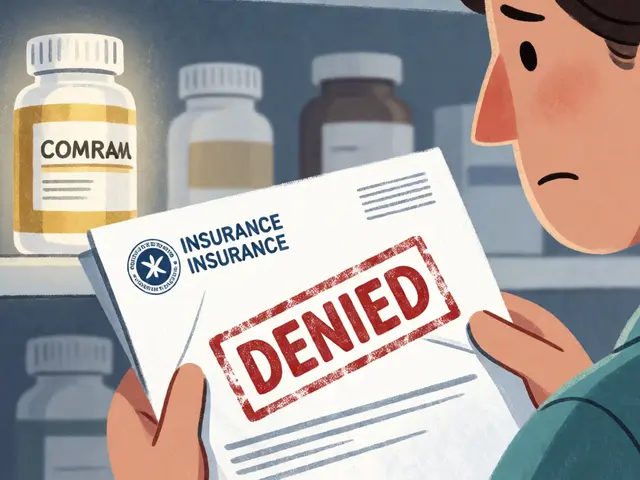
Every time you pick up a prescription, there’s a small paper booklet tucked inside the bag-often ignored, often thrown away. But that little guide could be the difference between staying safe and ending up in the hospital. These are Medication Guides, and they’re not just paperwork. They’re a lifeline designed by the FDA to protect you from serious, sometimes deadly, side effects of certain drugs.
What Exactly Is a Medication Guide?
A Medication Guide is a printed handout that comes with specific prescription medications. It’s not the same as the tiny label on the bottle or the long, confusing insert in the box. Those are for doctors. Medication Guides are written for you-real people, not medical professionals. They’re required by the U.S. Food and Drug Administration (FDA) for drugs that carry serious risks. That means if you’re getting something like an opioid, a blood thinner, a biologic for rheumatoid arthritis, or certain psychiatric meds, you’ll get one. These guides aren’t optional. By law, pharmacies must give you one every time you fill or refill the prescription. The manufacturer has to make sure they’re available. The FDA reviews every single word before it’s printed. This isn’t marketing fluff. It’s a legal safety document.Why the FDA Made Them
Back in the early 2000s, the FDA started seeing a pattern: patients were getting seriously hurt-sometimes dying-because they didn’t understand the risks of their meds. They didn’t know they couldn’t drink alcohol with their antibiotic. They didn’t realize their new antidepressant could cause suicidal thoughts. They didn’t know to watch for numbness or vision changes that could signal a life-threatening reaction. So the FDA stepped in. Under 21 CFR Part 208, they created a system where drugmakers had to write clear, plain-language guides for the riskiest medications. The goal? Help patients make smarter choices. Reduce preventable harm. Give people the facts they need to ask questions or stop taking the drug if something feels wrong. Today, about 150 prescription drugs require a Medication Guide. That’s only 5% of all prescriptions-but those 5% account for the majority of serious, avoidable drug reactions.What’s Inside a Medication Guide?
Don’t skip this part. Here’s what you’ll find in every FDA-approved Medication Guide:- Brand and generic name of the drug
- What it’s approved for (and what it’s NOT approved for)
- Serious side effects-the ones that could kill you or cause permanent damage
- Who shouldn’t take it (allergies, pregnancy, other health conditions)
- What to avoid (alcohol, other drugs, certain foods)
- What to do if you miss a dose
- How to store it (some need refrigeration, others can’t be in sunlight)
- How to dispose of it safely (don’t flush it-here’s how to do it right)
Why You Can’t Rely on Your Pharmacist Alone
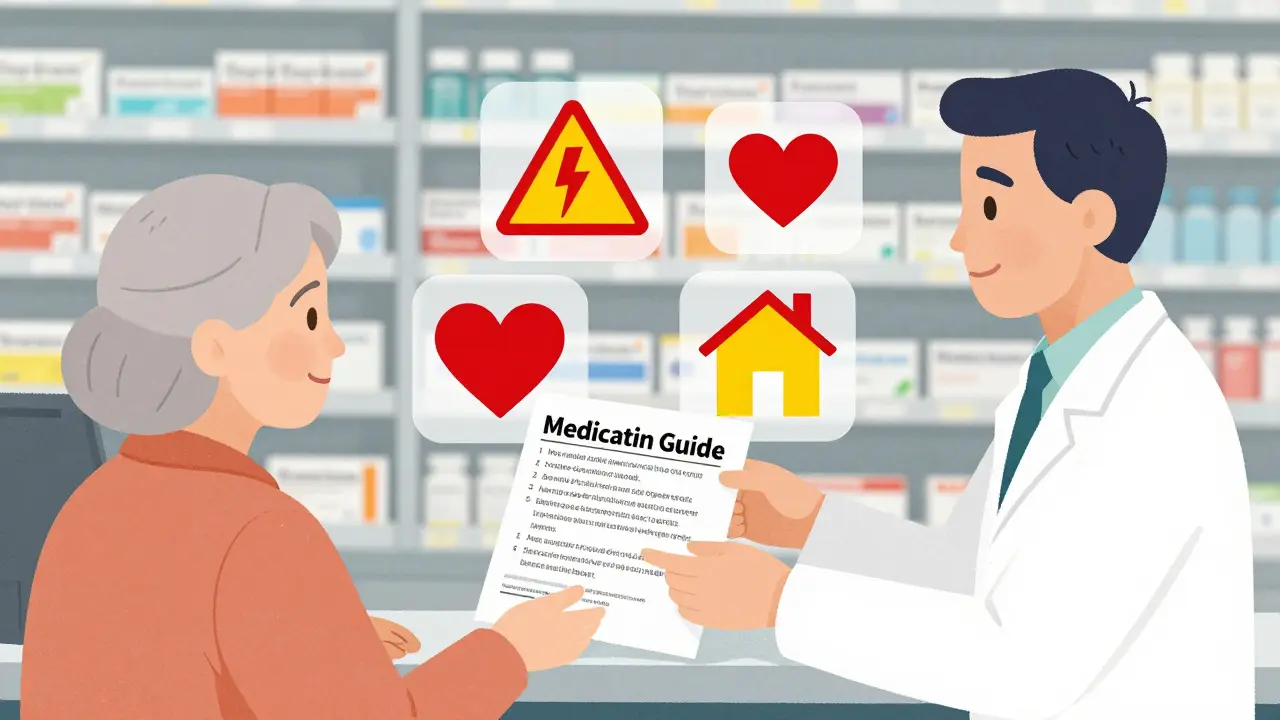
You might think, “My pharmacist explained it to me.” That’s great. But here’s the truth: pharmacists are overwhelmed. A 2022 study found they spend an average of just 47 seconds per Medication Guide. That’s not enough time to explain everything. Plus, not every pharmacy gives the same info. Some use generic handouts. Others rely on quick verbal tips. But a Medication Guide? It’s standardized. It’s FDA-approved. It’s the same no matter where you go. One 2022 study showed patients understood the risks 37% better when they read the Medication Guide than when they only got verbal advice. That’s huge. And if you’re not fluent in English, or if you’re stressed, tired, or overwhelmed after a diagnosis, reading it later-when you’re calm-can make all the difference.Real Stories: When the Guide Saved Someone
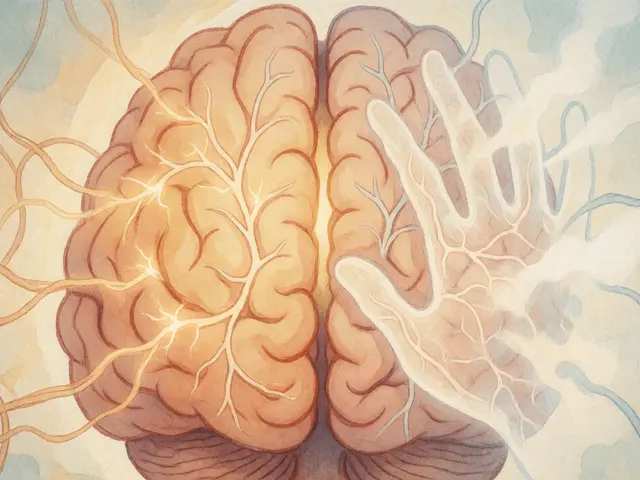
There’s a patient named “MSWarrior42” on PatientsLikeMe who got the Medication Guide for Tysabri, a drug for multiple sclerosis. The guide warned about a rare but deadly brain infection called PML. She didn’t know what it was, so she looked it up. She noticed she was having vision changes and balance issues-symptoms listed in the guide. She called her doctor right away. Tests confirmed early-stage PML. She stopped the drug. She got treatment. She avoided permanent disability. That’s not a rare case. A 2023 meta-analysis in The Lancet found that when Medication Guides were used properly, serious adverse events dropped by nearly 20%. That’s thousands of hospitalizations avoided every year.Why So Many People Ignore Them
Here’s the uncomfortable truth: most people don’t read them. A Reddit thread with nearly 300 pharmacist responses found that 63% said patients throw the guides away without opening them. Why?- “It’s too long.”
- “I already talked to the pharmacist.”
- “I didn’t think it was important.”
- “It’s just another piece of paper.”
What’s Changing? Digital Guides and Better Design
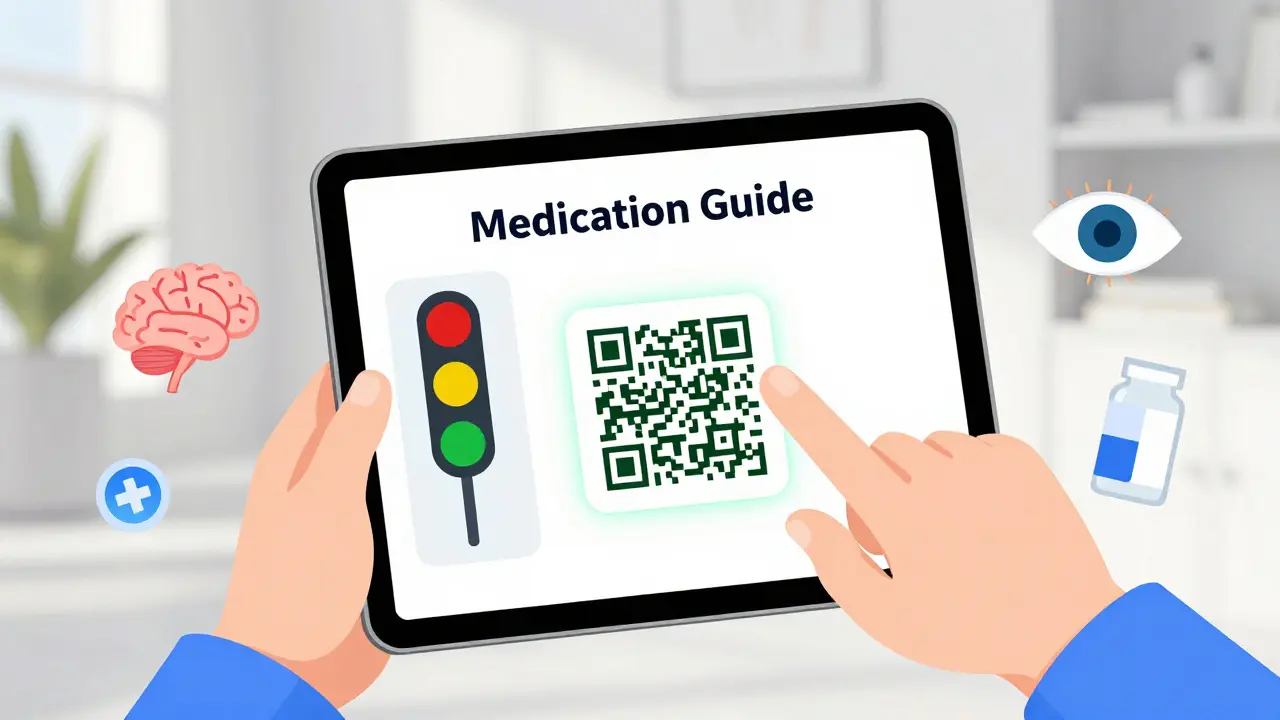
The FDA knows these guides aren’t perfect. In 2023, they approved the first “Interactive Medication Guide” for Jardiance, a diabetes drug. It includes a QR code that links to a video explaining the risks in plain language, with animations and patient testimonials. New rules require all future guides to use visual icons for risk levels (like traffic lights: red, yellow, green). Multilingual versions for the top 25 non-English languages are coming by early 2025. And now, patients can request digital copies via email or apps-18% are already choosing this option in pilot programs. The goal? Make the guide harder to ignore. Make it easier to understand. Make it something you actually want to read.What You Should Do Right Now
If you’re on a prescription that comes with a Medication Guide:- Don’t toss it.
- Read it-really read it-when you get home.
- Highlight the warnings that apply to you.
- Write down any questions you have.
- Call your doctor or pharmacist and ask about those points.
- Keep it in a safe place. You might need it later.
Final Thought: It’s Not About Trusting Your Doctor
You trust your doctor. You trust your pharmacist. But medicine isn’t about blind trust. It’s about partnership. The Medication Guide is your tool to be an active partner in your own care. It gives you the facts so you can spot danger before it happens. It lets you say, “Wait-I read this. This symptom is listed. I need help.” It’s not perfect. But right now, it’s the only legally required, scientifically backed safety net designed just for patients. And if you’re taking a drug that needs one? You’re not just a patient. You’re a person who deserves to know the truth.Are Medication Guides the same as package inserts?
No. Package inserts (also called Prescribing Information) are written for doctors and contain highly technical details like clinical trial data, dosing studies, and pharmacokinetics. Medication Guides are simplified, plain-language versions made specifically for patients. They focus only on the most critical safety information.
Do I get a Medication Guide every time I refill my prescription?
Yes. By FDA law, pharmacies must give you a Medication Guide with every new prescription and every refill of a drug that requires one. If you don’t receive one, ask for it. If they say they’re out of stock, report it to the pharmacy and the FDA.
Can I get a digital copy instead of paper?
Yes. Since 2022, the FDA allows electronic delivery of Medication Guides if you request it. Some pharmacies now offer email, app, or QR code access. Digital versions can include videos, interactive risk checkers, and reminders. Ask your pharmacist if they offer this option.
What if I don’t understand something in the guide?
Call your pharmacist or doctor. Don’t guess. Even if the guide is written in simple language, some terms or risks might still be confusing. Ask them to explain it again. Use the “teach-back” method: say it back in your own words to confirm you got it right.
Why do some drugs have Medication Guides and others don’t?
The FDA only requires them for drugs with serious, potentially life-threatening risks that patients need to understand to use safely. These include drugs linked to rare but deadly side effects, high potential for abuse, or where adherence is critical to effectiveness. Most common meds like antibiotics or blood pressure pills don’t need one because their risks are well-known and manageable.
Is there a list of all drugs that require a Medication Guide?
Yes. The FDA maintains a public list of all prescription drugs that require a Medication Guide. You can search it on the FDA’s website under “Drug Safety and Availability.” It’s updated regularly. If you’re unsure whether your drug has one, check there or ask your pharmacist.
Can I share my Medication Guide with someone else who takes the same drug?
Yes, but with caution. Medication Guides are personalized to your prescription-dosage, warnings, and risks may vary slightly based on your condition. While the core safety info is the same, it’s best for each person to get their own copy. Sharing is okay for general awareness, but never rely on someone else’s guide for your own treatment decisions.



Teresa Marzo Lostalé
30 Dec 2025 at 05:51I used to toss these guides like junk mail... until my aunt ended up in the ER because she didn't know her blood thinner couldn't be taken with grapefruit. Now I read every single one. 🙏