



When you walk into a doctor’s office, urgent care, or hospital, the first thing they ask is usually: What medications are you taking? It sounds simple. But if you’re on five, ten, or even fifteen different pills, supplements, or creams - and you’ve been to three different doctors this year - remembering everything is nearly impossible. And that’s where things get dangerous.
Every year in the U.S., tens of thousands of people are harmed because their medical history wasn’t fully shared. Not because anyone was careless - but because the system relies on memory, paperwork, and fragmented records. The truth is, your safety doesn’t depend on how good your doctor is. It depends on how accurately you share what you’re taking.
Why Your Medication List Matters More Than You Think
Medication reconciliation isn’t just a formality. It’s a life-saving process. When you’re admitted to the hospital, transferred between units, or discharged, healthcare teams compare your current medications with what’s on paper. They look for missing drugs, wrong doses, duplicates, or dangerous combinations.
Here’s the hard part: up to 50% of all medication errors happen during care transitions - like moving from hospital to home. And 20% of those errors cause real harm. That could mean a bad reaction to a drug you didn’t know you were still taking, or a dangerous interaction between your blood pressure pill and that new supplement you started.
Patients taking five or more medications have an 88% higher chance of having a medication error. That’s not a small risk. That’s a major one. And it’s not because doctors are bad. It’s because the system breaks down when information is incomplete.
What Exactly Should Be on Your List?
Most people think their list should only include prescription drugs. That’s not enough.
Your full medication list must include:
- Every prescription drug - including antibiotics, painkillers, and inhalers
- All over-the-counter medicines - like ibuprofen, antacids, or sleep aids
- Vitamins, minerals, and supplements - even if you think they’re "natural" or "harmless"
- Herbal remedies and teas - St. John’s Wort, ginkgo, garlic pills - these can interfere with blood thinners and heart meds
- Topical creams and patches - like lidocaine patches or nicotine patches
- Injectables - insulin, allergy shots, or hormone injections
Don’t forget the dose and how often you take it. "I take aspirin" isn’t enough. "I take 81 mg aspirin every morning" is what they need.
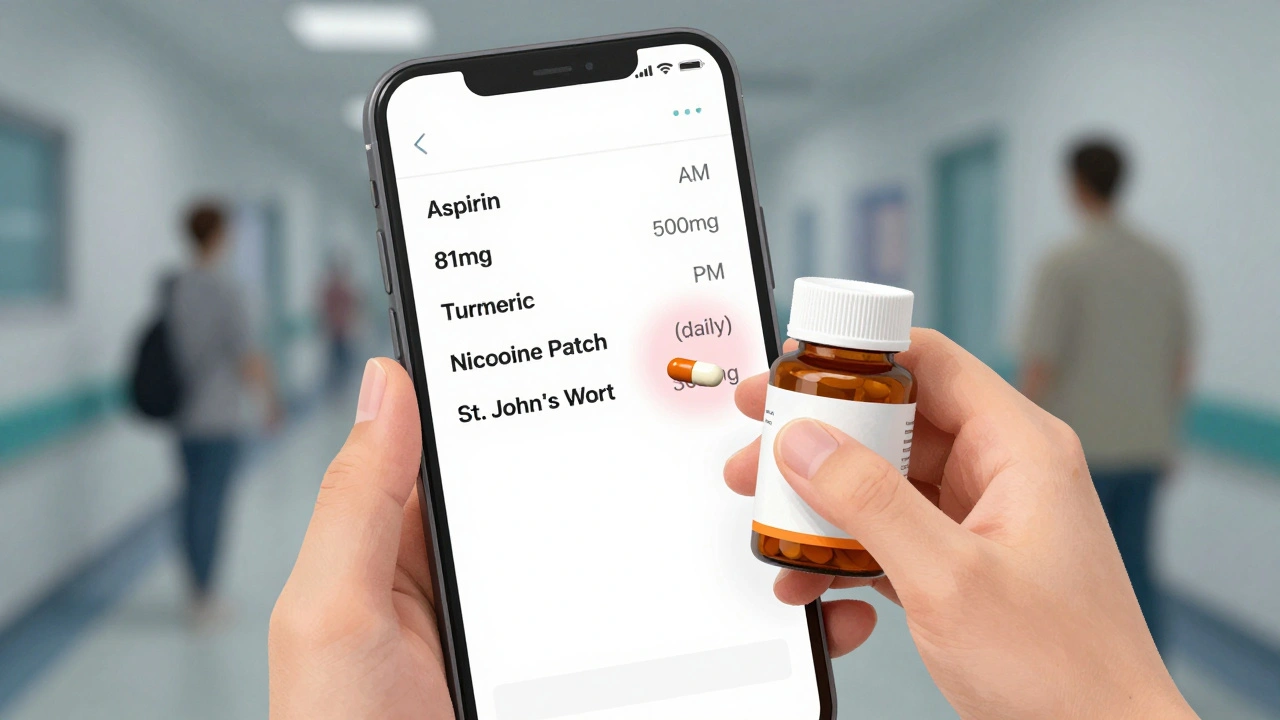
And here’s a real tip: keep your list in your phone. Use the Notes app. Update it every time your doctor changes something. Don’t wait for your next appointment. If you’re on a new drug, add it right away. If you stop one, cross it out.
The Brown Bag Method: A Simple Trick That Works
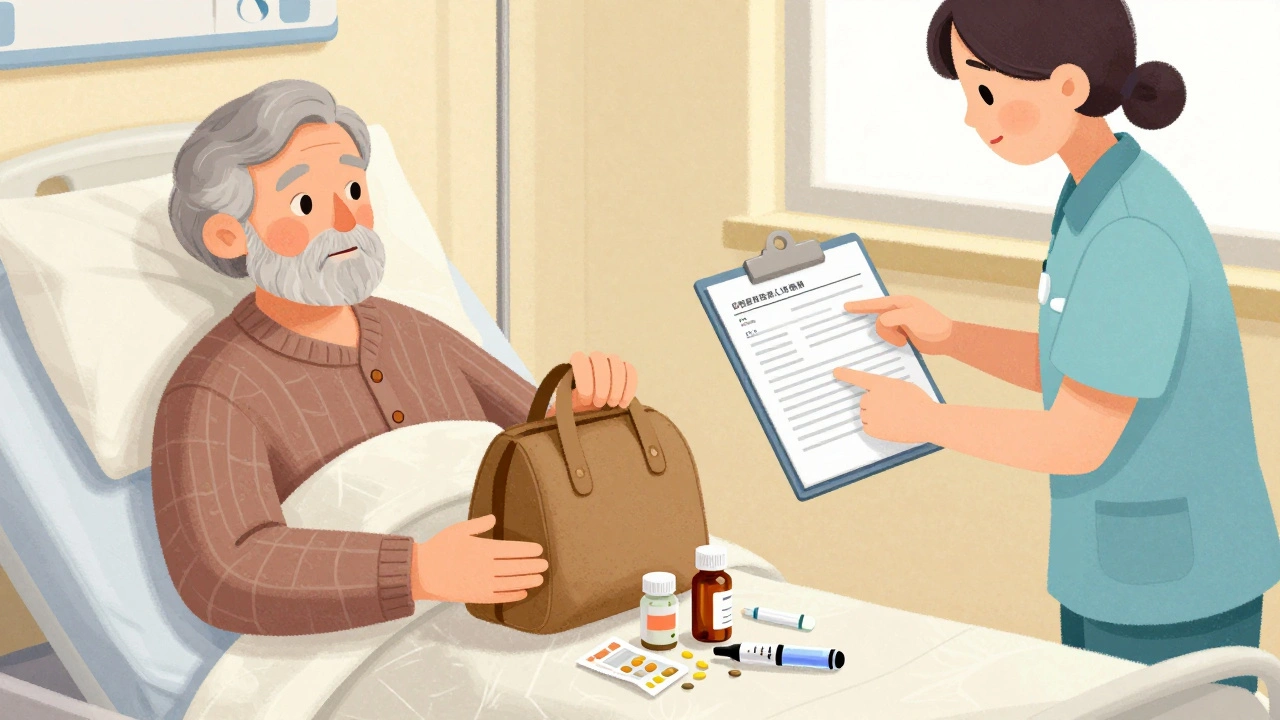
One of the most effective ways to make sure nothing gets missed is the brown bag method. Before your appointment, gather every pill bottle, capsule, patch, and liquid you take - even the ones you haven’t used in months. Put them all in a brown paper bag and bring them with you.
Why does this work? Because memory is unreliable. People forget. They misremember doses. They think, "Oh, I don’t take that anymore," when they actually do. When you bring the actual bottles, your provider can see the labels, check expiration dates, and spot duplicates.
Studies show this method reduces medication discrepancies by 40% compared to just telling your doctor what you take. That’s not a small improvement. That’s life-changing.
Even if you use a patient portal or app to track your meds, bring the bag. Technology isn’t perfect. Your pills are.
What Happens When You Don’t Share Everything?
Let’s say you take a daily aspirin for heart health. You also started turmeric capsules for joint pain. You didn’t think either mattered.
Then you get admitted for knee surgery. The surgeon orders a blood thinner to prevent clots. The anesthesiologist doesn’t know about your aspirin or turmeric. Both thin the blood. The result? You bleed internally after surgery. You need a transfusion. Your recovery is delayed. You’re in the hospital longer.
This isn’t hypothetical. It happens every day.
Over-the-counter drugs and supplements are the most commonly missed items. A 2023 study found that 67% of patients don’t accurately report their OTC use. Why? Because they don’t think it’s "medicine." But your body doesn’t care if it’s from a pharmacy or a health food store. It reacts the same way.
And allergies? Don’t just say, "I’m allergic to penicillin." Say exactly what happened. "I broke out in hives and my throat closed up after taking amoxicillin in 2018." Vague answers lead to dangerous guesses.
How Technology Helps - and Where It Fails
Hospitals now use electronic systems that pull your medication history from pharmacies. Surescripts, for example, connects to 98% of U.S. pharmacies and delivers over 3 billion medication records a year. That sounds perfect, right?
But here’s the catch: these systems miss cash-pay prescriptions. They don’t track supplements. And they can’t tell if you stopped taking a drug last week. One study found that relying only on pharmacy data catches only 61% of actual discrepancies.
Even the best tech can’t replace you. Your input is still the most accurate source. Electronic records can flag potential interactions, but they also flood doctors with too many alerts. Clinicians ignore nearly half of them because so many are false alarms.
That’s why the most effective systems combine technology with human verification. Your provider uses the system to generate a list - then they ask you: "Does this match what you’re actually taking?"
What You Can Do Right Now
You don’t need to wait for your next appointment to make a difference. Here’s what to do today:
- Open your medicine cabinet. Take out every bottle, box, and packet.
- Write down the name, dose, frequency, and reason for each one.
- Include anything you take less than daily - like pain relievers or antacids.
- Update your list every time you get a new prescription or stop one.
- Keep a printed copy in your wallet and a digital copy on your phone.
- Bring your brown bag to every appointment - even if you think you’re just getting a flu shot.
And don’t be shy. If your doctor doesn’t ask about your supplements, ask them yourself: "Should I be worried about this one?"
When You’re the Caregiver
If you’re looking after an elderly parent or someone with memory issues, your role is even more critical. A 2023 survey found that 83% of family caregivers struggle to track medications, and 41% have experienced at least one medication error in the past year.
Use pill organizers with alarms. Set phone reminders. Keep a shared digital list with other family members. Don’t assume the pharmacy or doctor has it right. Verify. Ask questions. Speak up.
And if your loved one is in the hospital, go with them. Bring the brown bag. Sit with them during discharge. Ask the nurse to walk through every change. Write it down. Don’t rely on memory.
Final Thought: Your Voice Is Your Shield
Healthcare providers are trained to save lives. But they can’t do it without the full picture. You are the only person who knows exactly what you take, when, and why. No app, no database, no nurse can replace that.
Sharing your medical history isn’t about being perfect. It’s about being honest. It’s about showing up with your bottles, not your guesswork. It’s about saying, "I’m not sure if this still matters, but here it is."
That’s how mistakes get caught. That’s how lives get saved.




Arun kumar
3 Dec 2025 at 12:39man i used to think supplements were just "good for you" until my uncle ended up in the ER after mixing turmeric with his blood thinner. now i keep a google doc with every pill, tea, and weird powder i swallow. even the ones i only take when i feel like it. your body doesn't care if it's organic or not - it just reacts.